Showing posts with label people - Duffy; Philip. Show all posts

Aug 10, 2024

Mark Thornton reviews 'A Tale of Four Cities'

Book reviews typically don't fit nicely into the mission of this podcast, which is to bring current issues under the microscope of Austrian economics.  We also bring attention to issues that are not in the mainstream media or academia that Austrian economists consider important.  However, today I'm going to review a new book.  It's a book that's almost entirely about history.  However, the book's purpose and message, as I see it, is about addressing an unraveling the burning issues of today.  And moreover, it addresses them with powerful insights based in part on Austrian economics.  I am sure that my audience will appreciate reading the commentary quoted from various Austrian economists, Old Right writers and the sage advice of history concerning important issues, instead of just various minions of the state.

The book is titled, A Tale of Four Cities: From Invisible Hand to Cancel Culture.  The author is Philip Duffy.  I'm going to avoid telling the author's story, but just for your curiosity, the four cities from the title are Paris, London, Rome and Munich, in that historical order, and that provides some clues.

~ Mark Thornton, "Minor Issues: A Tale of Four Cities," Mises.org, August 3, 2024


Apr 3, 2024

Kevin Duffy on Phil Duffy's new book 'A Tale of Four Cities'

To economic historians, the “hockey stick of human prosperity” is that irresistible bright shiny object. Up until 1800, the human population and living standards grew at a snail’s pace, but then a strange thing happened: both took off.


[...] 

In A Tale of Four Cities, Phil Duffy asks an intriguing question: “What if the real inflection point took place 100 years or so earlier?”  Have economic archeologists been unearthing evidence in all the wrong places?  Have they drawn false conclusions?

Challenging simple narratives often leads to valuable, contrarian insights.  By shifting the timeline of the starting gun on human progress back a century, Duffy unlocks a treasure trove.  First, he asserts that the actual dawning was the Agricultural Revolution, which laid the foundation for the Industrial Revolution.  Second, he discovers Richard Cantillon, the first economist to recognize the critical role of the entrepreneur in creating wealth.  Cantillon’s Essay on the Nature of Trade in General was written in 1730, long before Adam Smith’s seminal work, The Wealth of Nations.  Third, he makes a compelling case that Smith suppressed Cantillon’s work and removed the role of the entrepreneur, paving the way for misguided theories which treated entrepreneurship as vulgar and exploitative.

This would largely explain why many people in America, far from appreciating their good fortune, are openly hostile towards ultra-rich entrepreneurs like Amazon’s Jeff Bezos.  It also explains why those same billionaires give openly to anti-capitalistic charities.  It explains why so many countries have destroyed themselves by ingesting toxic theories on wealth creation, from sub-Saharan Africa, to the former Soviet Union, to Cuba and Venezuela.  It explains why governments in the West have grown to oppressive levels, threatening to strangle their productive hosts. 

If Duffy is correct, much of the world today enjoys a level of wealth unimagined by our ancestors despite worshipping false idols like Adam Smith, paper money and democracy.  Future economic progress is not a guarantee.  In fact, the human experiment appears to be at a crossroads.  Choosing the right path may just require getting the timeline right on that bright shiny object.

~ Kevin Duffy, Forward to A Tale of Four Cities, April 8, 2023


Feb 3, 2024

Phil Duffy on the ancient Jewish claim to Palestine

In the final analysis, the Zionists are asking the world, but particularly the United States, to issue them a license to commit genocide. 

I believe that the Zionist claim is that God awarded them Palestine.  I have seen various versions of this, and would welcome any Zionist to point to their version of the story.  It always comes down to this:
  1. The Jews voluntarily left Palestine for greener pastures in Egypt (the story of Joseph).
  2. At first things worked out but ultimately the Egyptians enslaved the Jews. 
  3. Moses led the Jews out of Egypt and into the desert (Exodus). 
  4. Moses died and was succeeded by Joshua who led the Jews against the Canaanites who had then homesteaded Palestine. 
  5. The Jews massacred the Canaanites and took possession of Palestine.
I have some reservations about this account.  I don’t think Jesus would have recommended to his fellow Jews that they act similarly during his time on Earth, but I’ll accept the Zionist version, with a question – “Is that all you have as proof that Palestine belongs to you?”

The Jewish Diaspora (dispersion) presents a theological challenge for Jews.  After 70 AD when the Romans destroyed the Temple, huge numbers of Jews left Judea, leading to the claim by Zionists that they were driven off the land that was legitimately theirs.  The claim does not square with history.  Zionists are not claiming they have a right to Judea, but to the larger landmass that was occupied by Jews of Judea and the 10 lost tribes of Israel.  Those 10 tribes split with the two tribes of Judea after the death of Solomon and have been assimilated into other cultures.  Further calling into question the claim that Jews were driven from Judea is that many remained and lived side-by-side with Arabs.  Those who left after 70 AD and became a part of the Diaspora were probably only a fraction of the number of Jews already in the Diaspora.  A large number already had left Israel to live their lives elsewhere.

In summary, most of the Jews who left Israel did so voluntarily, and those who left after 70 AD, although feeling the pressure of having lost to the Romans in an unsuccessful uprising, did so voluntarily.

~ Phil Duffy, February 1, 2024


Dec 10, 2023

Phil Duffy on the future

History is not set in stone.  The future is not predetermined by the past.  History is made by the decisions of individuals.  There are social, there are economic, there are political, there are all kinds of other forces at work that no doubt shape human history and shape our collective actions.  But ultimately, human beings are free and rational individuals who can discern the good, who can freely choose the good, or can choose to pursue other paths.  

So, my advice is to remember that the future is not set in stone.  The future really depends on what we do now.  And I think all of us want to wake up in ten, twenty, thirty years and be able to tell the next generation that we stood up and did everything in our power – regardless of the outcome – to make sure that we were handing on a world to them that was humane, that was livable, that was just, and that was free.

~ Phil Duffy


Nov 22, 2023

Phil Duffy on how embargoes have turned out in history

Wikipedia initially blames the Continental System on Napoleon’s Berlin Edict of November 1806 for barring trade with the British Empire. Only later in the first paragraph do we learn that the Berlin Decree was in response to,
… the naval blockade of the French coasts enacted by the British government on 16 May 1806.
Napoleon and his troops ate fairly well, as did the leaders and troops of the British. Both got the external enemy they needed to acquire more power. The British and French people did not fare so well.

The runup to World War I included interference of free trade according to Historic UK:
Britain declared war on Germany on August 4th 1914, but rivalry between the two countries had been growing for years. Germany resented Britain’s control of the world’s oceans and markets, while Britain increasingly viewed a Europe dominated by a powerful and aggressive Germany as a threat which must be contained.
The Mises Institute has a good summary of the situation that led to World War I:
After creating a powerful and industrializing German federation which threatened Europe's "balance of power," Bismarck worked to prevent war. He reconciled Austria, maintained friendly relations with Russia, and got along as well as possible with France. He worked against Germany's "encirclement" by France and an ally-to prevent a two-front war. After Bismarck's dismissal in 1890 by the impulsive young Kaiser Wilhelm II (a crowned TR), German policy drifted into the encirclement Bismarck feared.
Much of the analysis of the runup to World War I focuses blame on Wilhelm II’s clumsy efforts at diplomacy. It seems the theme of Barbara Tuchman’s first chapter in The Guns of August, The Funeral [of Edward VII of Britain]. But a timeline sheds a different light on the matter, with the Entente Cordiale of April 1904 being the leading event. The Gov.UK site states this about the Anglo-Russian Entente of 1907:
On 31 August 1907, Britain and Russia signed an agreement in St Petersburg which put in place the final piece of the alliance system which has widely been considered to have been a major contributing factor regarding the outbreak of the First World War.
There was some real concern in Germany about “encirclement.” It is too easy to become distracted by “Who started World War I?,” and lose sight of the lesson that comes out of that period. Europe had flourished with the defeat of Napoleon at Waterloo and the Congress of Vienna in 1815, which led to Europe’s most peaceful time until the outbreak of World War I in 1914 (Crimean War the exception on the continent). That corresponded with a move away from mercantilism/militarism toward classical liberalism and free trade. Peace and economic flourishing were shattered when mercantilism made its comeback, and the fault may be laid on the leadership of all of the nations involved in that war. The people surely were not seeking war. It was the political elites that wished it and expected to benefit from it. The armistice and Treaty of Versailles did nothing to resolve the underlying problem of economic warfare. After the devastation of Germany and surrounding countries, European leaders finally came to their senses with the Treaty of Rome in March of 1957 which led to the creation of the European Economic Community.

~ Phil Duffy, November 21, 2023

Nov 20, 2023

Phil Duffy on history

History is messy.  Until you learn that lesson, you are nothing more than a receiver and transmitter of propaganda.

~ Phil Duffy

As far as I am aware, Eamon Duffy is no relation to
 my father, Phil Duffy, just a wonderful coincidence.


Jul 22, 2022

Phil Duffy on Adam Smith vs. Richard Cantillon

[Adam] Smith’s Wealth of Nations had the advantage of a half century more of observation over Cantillon’s Essay, and yet it was the latter’s insights into the agricultural revolution and the guiding role of the entrepreneur in achieving economic progress that separated the two economists. It is high time Richard Cantillon and the British Agricultural Revolution got their due respect.

~ Phil Duffy, "The British Agricultural Revolution Gets No Respect," Mises Wire, July 22, 2022


Jan 9, 2022

Philip Duffy on three rounds of economic stimulus: "for every $1 received by individuals, $8 went to special interests"

Stimulus came in three waves: 
  1. Coronavirus Aid, Relief, and Economic Security Act, also known as the CARES Act, is a $2.2 trillion economic stimulus bill passed by the 116th U.S. Congress and signed into law by President Donald Trump on March 27, 2020. The spending includes $300 billion in one-time cash payments to individual people who submit a tax return in America (with most single adults receiving $1,200 and families with children receiving more. 
  2. Consolidated Appropriations Act, 2021 is a $2.3 trillion spending bill that combines $900 billion in stimulus relief for the COVID-19 pandemic in the United States with a $1.4 trillion omnibus spending bill for the 2021 federal fiscal year (combining 12 separate annual appropriations bills). The bill was passed by both houses of Congress on December 21, 2020, with large bipartisan majorities in support. The bill was the product of weeks of intense negotiations and compromise between Democrats and Republicans during the lame-duck session. After initially criticizing the bill, President Donald Trump signed it into law on December 27. Of the $900 billion in “stimulus rel;ief, the vast majority went to special interests while only $166 billion went for a $600 stimulus checks, for most Americans with an adjusted gross income lower than $75,000. 
  3. American Rescue Plan Act of 2021, Public Law No. 117-2 (March 11, 2021), was a $1.9 trillion bill passed by the 117th United States Congress and signed into law by President Joe Biden on March 11, 2021. $1,400 direct payments to individuals was a part of this legislation. Of the $1.9 trillion, “more than $242 billion” was allocated for individual payments. 
Critics of the above analysis are likely to claim that the Consolidated Appropriations Act allocated $900 billion to stimulus relief for individuals, but delving deeper into those numbers reveals that only $166 billion went into stimulus checks for individuals and the remainder was allocated to special interests. Thus by combining the figures from the three acts it is clear that only $708 billion of the $6.4 trillion funds allocated found its way into the pockets of individuals as opposed to $5.692 trillion into the pockets of special interests. Stated simply, for every dollar received by individuals, 8 dollars were expended for special interests.

~ Philip Duffy, January 9, 2022

President Trump signs CARES Act
March 27, 2020


Oct 27, 2021

Phil Duffy on politics

In politics one can't win by being a better version of the opposition.

~ Phil Duffy


Jun 27, 2021

Philip Duffy on centralization

If you commit yourself to centralization, you doom yourself to conflict.

~ Philip Duffy, June 27, 2021

Phil Duffy with daughter Erin
Linderhof Palace in Ettal Germany
May, 2009


Sep 30, 2020

Phil Duffy on the Trump-Biden debate

In 2016 something strange happened. The people were so frustrated with the socialist Democratic Party that they accepted Donald Trump's bombastic style and made him president. That infuriated the Democrats who then used the FBI to spin a wild scheme of collusion with the Russian government somehow fixing the 2016 election. When that blew up in their faces, the Democrats doubled down with impeachment. That caused them to lose votes and the Senate failed to convict so they doubled down once again with Covid-19 lock-downs and violence in the streets of Democratic Party-controlled cities. Then the Democrats made the mistake of selecting the weakest candidate for the presidency in the nation's history and a man cognitively impaired to boot. The critical first presidential debate occurred yesterday evening with everything stacked in Trump's favor. In 90 minutes he managed to snatch probable defeat out of the jaws of victory with boorish behavior that conflicted with the image of being presidential that was necessary to win the evening. 

I have several Republican friends who were already planning to vote for Biden based upon Trump's earlier behavior. Today they have to be confirmed in their earlier decision. But let's assume these voters were irretrievably lost to Trump before the debate began yesterday evening. What was the strategic purpose of the debate from a Republican perspective? Only to win over the 8 to 10% of the voters who remain uncommitted. What did it actually accomplish? For people like [Sean] Hannity, it seemed to be the invigoration of Trump's base. But those votes were already "in the can" to use Hollywood lingo. For voters on the fence, yesterday's ugly performance probably turned the remaining uncommitted into Biden votes. Ironically Trump is considered to be the super salesman and yet he disregarded a fundamental rule of selling - never continue selling when the sale has been made. The idea is to move on to the next prospect. By playing to his most avid supporters, Trump ignored what he needed to do yesterday evening. He appeared to be winging it. 

Trump's campaign had agreed to the rules of conduct of the debate, but then he violated those continually. He was first warned by the moderator and then publicly scolded by the moderator. He continued to blow through stop signs right to the end of this shoddy performance. Ironically, he had the cognitively impaired Biden on the ropes several times, but by interrupting him, he allowed those moments of temporary confusion to be unnoticed while giving Biden time to reorganize his thoughts. Clearly Biden did not win the debate yesterday evening - Trump lost it (not only the debate, but his image of a president under control).

~ Phil Duffy, September 30, 2020


Aug 31, 2020

Will and Ariel Durant on the French Revolution "eating its children"

The slate seemed clear; all groups that had challenged the Committee of Public Safety had been eliminated or suppressed.  The Girondins were dead or dispersed; the sansculottes had been divided and silenced; the clubs - excepting the Jacobin - had been closed; the press and the theater were under strict censorship; the Convention, cowed, left all major decisions to the committee.  Under their tutelage, and instructed by its other committees, the Convention passed laws against hoarders and speculators, proclaimed free, universal education, abolished slavery in the French colonies, and established a welfare state with social security, unemployment benefits, medical aid for the poor, and relief for the old.  These measures were in large part frustrated by war and chaos, but they remained as ideas to inspire succeeding generations.

~ Will and Ariel Durant, The Age of Napoleon, "The Revolution Eats Its Children," pp. 78-79

The Age of Napoleon by Will Durant

Interpretation by Phil Duffy:

In the first four chapters of The Age of Napoleon, the Durants describe the multi-stage French Revolution.  The first stage deposed the king and the Catholic Church in favor of rule by the Girondins, the political group representing the rising commercial class (the bourgeoisie).  Then the Revolution became radicalized with the street mob of Paris (the sansculottes) gaining control.  They were represented in the legislative body (the Convention) by members of the Jacobin club, including the infamous Maximilien Robespierre of A Tale of Two Cities fame.  By eliminating his enemies with the guillotine, Robespierre, heading the powerful Committee of Public Safety, had emerged as the dictator of France.  But emerging victorious in a revolution only forces the winner to govern effectively.  Like most politicians, Robespierre was long on promises and short on delivery.  His fellow revolutionaries realized that Robespierre was in a position to eliminate all of them, so they sent him to the guillotine in a preemptive strike designed to protect their lives, concluding the radical stage of the French Revolution.

Wars and the chaos of revolution crippled the French economy during this period.  It destroyed the wealth that would have been necessary to pursue the utopian socialist dream first expressed in the French Revolution.  But the French Revolution impressed Karl Marx a half century later as he wrote The Manifesto of the Communist Party

Aug 30, 2020

Phil Duffy on the importance of learning macroeconomics

[T]he chickens will come home to roost during [Trump's] second administration if he's elected.  There's no question about that in my mind.  And that's why I think there has to be a fundamental change in thinking amongst the non-progressives, if you will, in the citizenry.  They have to understand macroeconomics and they're going to have to learn macroeconomics in a hurry or we are headed for real disaster.

~ Philip Duffy, The Law Matters interview, 24:20 mark, August 28, 2020

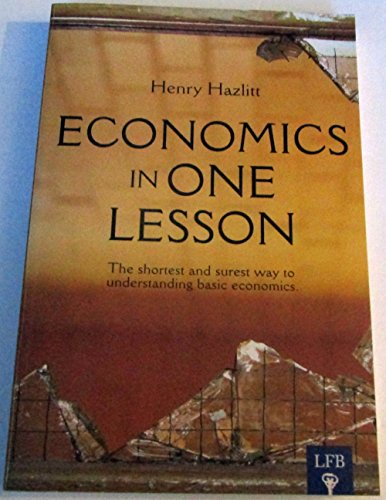
Economics in One Lesson: Henry Hazlitt

Aug 7, 2020

Phil Duffy on the 2020 and 2024 elections


Trump's best chance is to keep everything together with baling wire and paper clips until November 3, which is 86 days away.  He should win and if there is a reaction to the street violence, he could win big, but again, as a member of the Silent Generation, I can't relate to most of what Millenials believe.  To me they appear to be both economically and politically clueless.  As my generation wanes, theirs waxes.

We need to start preparing for Election 2024 now.  The only thing a Trump re-election will do is to keep the crazy progressive socialists out of the presidency.  Economic reality will come crashing in on the United States during his second administration.  Trump is clueless about macroeconomics in spite of (or perhaps, because of) a Wharton School education.  He believes the government can counterfeit its way out of the financial mess our politicians have created.  He also believes that trade wars are the answer.  Hawley and Smoot must be smiling in their graves.

~ Phil Duffy, August 7, 2020

Trump 2020 Rectangle Car Magnet by Coziegirl - CafePress

May 1, 2020

Phil Duffy on lessons from the Nazi era applied today

By now I'm one of the few left who lived through most of the Nazi years.  I believe the death toll from WWII from both direct and indirect causes was 100 million, far beyond any threat we face today with Covid-19. I started following WWII when I was 6 in 1941. Because I was reading the newspapers every day it probably expanded both my language and geography skills. At age 10 when the war ended and the news about the Holocaust and the Nuremberg Tribunals filled our lives, there were many deeper questions that were raised, but the answers then seem silly in retrospect. You've heard the saying, perhaps wrongly attributed to Edmund Burke, that all that is necessary for evil to triumph is that good people do nothing. Americans aimed that accusation at ordinary Germans who had done nothing to prevent the crimes of the Nazi regime, bunkering down instead and pretending that nothing was morally wrong. We Americans rationalized that Germans were morally inferior to Americans. Indeed, those who fought WWII on the allied side, and particularly Americans, who "fought to be free."

By the time I was 21, that whole explanation was beginning to unravel. I had met my wife, and the German side of her family. They had been born in Germany, but had left to come to the United States. If there was something defective in the German DNA, clearly these people were outliers. Then I was stationed in Germany and met many fine Germans. Again, wonderful people.

I recognize that I had been exposed to simplistic propaganda during the Nazi and post-WWII years. More troubling was that I recognized the same attributes in Americans that were responsible for the do-nothing attitude of the German people during the Nazi period. The lesson that should have come out of that period should have been, "There but for the Grace of God go I!"

As a result, I committed to studying why and how people become a nation of sheep, to use the title of Judge Andrew Napolitano's book. That commitment included acting as well as reading and talking.  I still don't have all of the answers, but I have a lot of them. It is not a pretty picture, but the good news is that the current generation is positioned in history to do something about the corruption that inevitably occurs when masses of people bunker down and shut their eyes to what is going on.

That opportunity to learn who we really are is right around the corner, arriving as early as a month out as the Covid-19 Panic passes. If it is business as usual, then shame on us for looking the other way as our freedoms were trampled under the feet of the many petty Hitlers who crawled out of the woodwork during this period. Just as the WWII generation was called "The Greatest Generation", this generation will be the subject of derision and contempt in the future. It will be recognized how easily we traded our liberty for a $1,200 bribe, this generation's 30 pieces of silver.

~ Phil Duffy, note to his grandson, April 30, 2020

Coronavirus Devastates Detroit Police, From the Chief on Down ...

Mar 28, 2020

Phil Duffy on the Covid-19 scare and telecommuting

The electronic cottage idea was at first opposed and mocked by the old order.  Today, during the COVID-19 scare, many organizations are requiring employees to telecommute and use the Internet from their electronic cottages.  At first we rushed to mob grocery stores to hoard staples such as toilet paper, then realized that we were compounding our exposure to this newly discovered risk.  Reacting, we started to return to a method of acquiring groceries abandoned in the 1950’s ordering on line for delivery...

Futurists, curiously, do not predict the future – they open our eyes to the possibilities.  But only if we allow our minds, which are certainly capable, to consider the deeper forces of progress and resistance that are in constant conflict.  We are in the middle of the newer force for decentralization against the old order of centralization.

~ Phil Duffy

Mar 21, 2020

Phil Duffy on civilization and what is at stake

We are at the fork in the road as a nation.  If we take the left fork, the nation (and the world) will be plunged into economic chaos and the certainty of war. Freedom will have vanished, replaced by Big Brother and socialist tyranny. On the other hand, if COVID-19 abates and the necessary work of objective critique is quickly undertaken, the fatal conceit that government can defeat every new virus that is born while exercising total control over our lives will be revealed as an absurdity. The inherent strength of the free market and the desire for human freedom will triumph. That is the right road for humanity.

~ Phil Duffy

Image result for orwell 1984

Mar 20, 2020

Phil Duffy: "We have reached the fork in the road for this nation"

The Trump Administration appears to be solidly behind compensating anybody who can spell Coronavirus, and Democrats would make the rest eligible as well. The other evening a chef at a high end restaurant made a very intelligent plea to rescue him and his fellow chefs.  Only Rand Paul has suggested that some of this might be overkill and that if we are going to do it, perhaps we ought to switch existing funds from unconstitutional foreign aid.

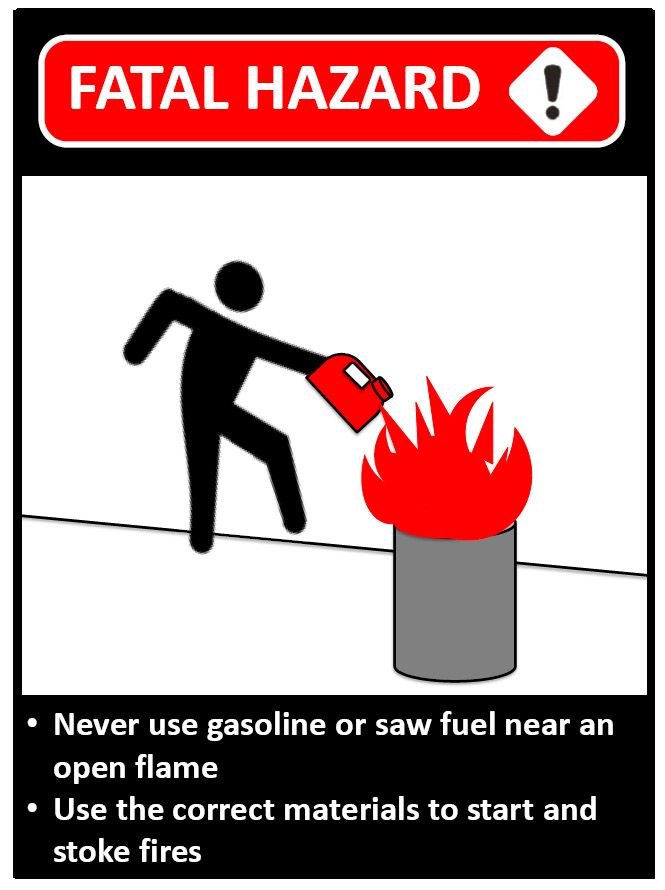
In the past, Fed interest rate reductions and rumors of government interventions into the economy could be guaranteed to accelerate financial markets upward.  The latest number for federal giveaways is $1 trillion which under the best scenario would saddle the government with a $2 trillion deficit, double the currently projected deficit. Never before in U.S. history has this occurred. Meanwhile the Fed has dropped interest rates effectively to zero and announced a $700 billion program of "quantitative easing" (purchasing of questionable assets). The desperation in that move sparked greater panic in financial markets with the Dow falling another 913 points. Clearly the federal government has run out of bullets and is only throwing gasoline on the economic fire.

We have reached the fork in the road for this nation. Either the people step in and tell government they have had enough, or they will pay the price of going down the road to Venezuela.

~ Phil Duffy, March 20, 2020

Image result for throwing gasoline on a fire

Feb 3, 2020

Phil Duffy on constitutional experts

Don't trust me, and don't trust the so-called experts. Get to know the Constitution and trust yourself...  [W]ith relatively little study, you can challenge politicians, lawyers and even Supreme Court justices on their interpretations of the Constitution.

~ Phil Duffy

Image result for scott 991 stamp"
U.S. Supreme Court
National Capital Sesquicentennial
1800-1950

Jan 24, 2020

Phil Duffy on the truth

The truth rarely fits on a bumper sticker.

~ Phil Duffy

Image result for bumper sticker truth