Showing posts with label people - Churchill; Winston. Show all posts

Apr 5, 2026

Winston Churchill on the Irgun and Stern Gang

If our dreams for Zionism are to end in the smoke of assassins' pistols and our labours for its future to produce only a new set of gangsters worthy of Nazi Germany, many like myself will have to reconsider the position we have maintained so consistently and so long in the past.  If there is to be any hope of a peaceful and successful future for Zionism, these wicked activities must cease, and those responsible for them must be destroyed root and branch. 

The primary responsibility must, of course, rest with the Palestine authorities under His Majesty's Government.  These authorities are already engaged in an active and thorough campaign against the Stern Gang and the larger, but hardly less dangerous, Irgun Zvai Leumi.

~ Winston Churchill, speech in the House of Commons, November 17, 1944, delivered shortly after the assassination of his friend Lord Moyne by Lehi (Stern Gang) members 

Murder of Lord Moyne, 1944 ...

Dec 1, 2024

Winston Churchill on diplomacy

Diplomacy is the art of telling people to go to hell in such a way that they ask for directions.

~ Winston S. Churchill


Nov 28, 2023

Ralph Raico on Winston Churchill's love of war

But while Winston had no principles, there was one constant in his life: the love of war.  It began early.  As a child, he had a huge collection of toy soldiers, 1500 of them, and he played with them for many years after most boys turn to other things.  They were "all British," he tells us, and he fought battles with his brother Jack, who "was only allowed to have colored troops; and they were not allowed to have artillery."  He attended Sandhurst, the military academy, instead of the universities, and "from the moment that Churchill left Sandhurst … he did his utmost to get into a fight, wherever a war was going on."  All his life he was most excited—on the evidence, only really excited—by war.  He loved war as few modern men ever have—he even "loved the bangs," as he called them, and he was very brave under fire.
 
In 1925, Churchill wrote: "The story of the human race is war."  This, however, is untrue; potentially, it is disastrously untrue.  Churchill lacked any grasp of the fundamentals of the social philosophy of classical liberalism.  In particular, he never understood that, as Ludwig von Mises explained, the true story of the human race is the extension of social cooperation and the division of labor.  Peace, not war, is the father of all things.  For Churchill, the years without war offered nothing to him but "the bland skies of peace and platitude."  This was a man, as we shall see, who wished for more wars than actually happened.

When he was posted to India and began to read avidly, to make up for lost time, Churchill was profoundly impressed by Darwinism.  He lost whatever religious faith he may have had—through reading Gibbon, he said—and took a particular dislike, for some reason, to the Catholic Church, as well as Christian missions.  He became, in his own words, "a materialist—to the tips of my fingers," and he fervently upheld the worldview that human life is a struggle for existence, with the outcome the survival of the fittest.  This philosophy of life and history Churchill expressed in his one novel, Savrola.  That Churchill was a racist goes without saying, yet his racism went deeper than with most of his contemporaries.  It is curious how, with his stark Darwinian outlook, his elevation of war to the central place in human history, and his racism, as well as his fixation on "great leaders," Churchill's worldview resembled that of his antagonist, Hitler.

~ Ralph Raico, "Rethinking Churchill," The Costs of War: America's Pyrrhic Victories, by John Denson


Feb 26, 2021

Winston Churchill on the South Sea bubble

The mania for speculation broke loose.  Stock soared in three months from 128 to 300, and within a few months more to 500.  Amid the resounding cries of jobbers and speculators a multitude of companies, some genuine and some bogus, was hatched.  By June 1721 the South Sea stock stood at 1050.  Robert Walpole himself had the luck to make a handsome profit on his quiet investment.  At every coffeehouse in London men and women were investing their savings in any enterprise that would take their money.  There was no limit to the credulity of the public.  One promoter floated a company to manufacture an invention known as Puckle's Machine Gun, "which was to discharge round and square cannon-balls and bullets and make a total revolution in the art of war," the round missiles being intended for use against Christians and the square against the Turk.  Other promoters invited subscriptions for making salt water fresh, for constructing a wheel of perpetual motion, for importing large jackasses from Spain to improve the breed of English mules, and the boldest of all was the advertisement for "a company for carrying on an undertaking of Great Advantage, but no one to know what it is."  This amiable swindler set up a shop in Cornhill to receive subscriptions.  His office was besieged by eager investors, and after collecting £2,000 in cash he prudently absconded.

The Government took alarm, and the process of suppressing these minor companies began.  The South Sea Company was only too anxious to exterminate its rivals, but the pricking of the minor bubbles quickened and precipitated the slump.  An orgy of selling began, and by October the South Sea stock stood at 150.

~ Winston S. Churchill, The Age of Revolution, pp. 110-111


Dec 1, 2019

Winston Churchill on positive attitude

Success consists of going from failure to failure without loss of enthusiasm.

~ Winston Churchill

Image result for success and failure

Jan 14, 2019

Winston Churchill on independent thinking

When you’re 20 you care what everyone thinks, when you’re 40 you stop caring what everyone thinks, when you’re 60 you realize no one was ever thinking about you in the first place. You have enemies? Good. That means you’ve stood up for something, sometime in your life.

~ Winston Churchill

Jun 13, 2017

Winston Churchill on brevity

This report, by its very length, defends itself against the risk of being read.

~ Winston Churchill, British prime minister

May 24, 2008

Pat Buchanan on Winston Churchill

Churchill was the indispensable war leader who held on until Hitler committed his fatal blunders, invading Russia and declaring war on America.  He was also the man most responsible for Britain's fall from mistress of the greatest empire since Rome to an island dependency of the United States.

About the character of the Bolshevik regime in 1919 and Nazi regime in 1933, Churchill had been right. About British rearmament, he had been right.  But Churchill was also often disastrously wrong.

He led the West down a moral incline to its own barbarism by imposing a starvation blockade on Germany in 1914 and launching air terror against open cities in 1940.  These policies brought death to hundreds of thousands of women and children.

He was behind the greatest British military blunders in two wars: the Dardanelles disaster of 1915 and the Norwegian fiasco of 1940 that brought down Chamberlain and vaulted Churchill to power.

While excoriating Chamberlain for appeasing Hitler, Churchill's own appeasement of Stalin lasted longer and was even more egregious and costly, ensuring that the causes for which Britain sacrificed the empire – the freedom of Poland and preventing a hostile power from dominating Europe – were lost.

~ Patrick J. Buchanan, "Churchill’s Colossal Blunders," LewRockwell.com, May 24, 2008

2009


Jan 27, 2008

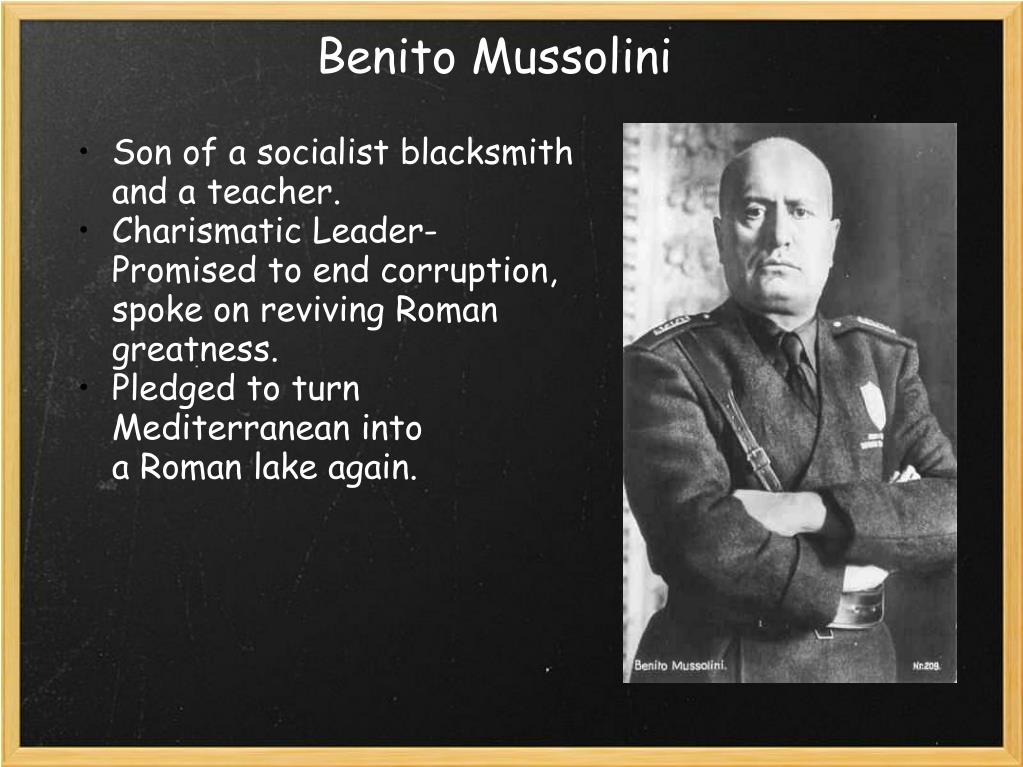
Winston Churchill on Mussolini (1938)

It would be a dangerous folly for the British people to underrate the enduring position in world history which Mussolini will hold; or the amazing qualities of courage, comprehension, self-control and perseverance which he exemplifies.

~ Winston Churchill, 1938

Image result for mussolini greatness

Nov 6, 2007

Churchill on appeasement

An appeaser is one who feeds a crocodile, hoping it will eat him last.

~ Sir Winston Churchill

Image result for feeding a crocodile

Churchill on positive attitude

A pessimist sees the difficulty in every opportunity; an optimist sees the opportunity in every difficulty.

~ Sir Winston Churchill

Image result for winston churchill

Oct 25, 2007

Churchill on arbitrary arrest and imprisonment

The power of the Executive to cast a man into prison without formulating any charge known to the law, and particularly to deny him the judgment of his peers, is in the highest degree odious and is the foundation of all totalitarian government whether Nazi or Communist.

~ Sir Winston Churchill

Image result for rotting in prison

Oct 21, 2007

Churchill on democracy

The best argument against democracy is a five-minute conversation with the average voter.

~Winston Churchill

Related image