~ James Clear, author of Atomic Habits, podcast interview, The Tim Ferris Show, 1:23:35 mark, January 4, 2023
Showing posts with label writing. Show all posts
Jan 12, 2023
James Clear on writing a bestselling book
Write something timeless, write something universal, write something that fascinates you. And do all of that with the intention of creating something genuinely remarkable, or that creates value for people.
Dec 2, 2022
Christine McVie on writing music
Learn your instrument. Be honest. Don't do anything phony. There is so much crap floating around. There is plenty of room for a bit of honest writing.
~ Christine McVie, 1943-2022
Sep 7, 2022
Jim Grant on writing
If it appears effortless, that's good. That means the sweat was worth it. But I assure you, there ain't no effortless in it.
~ Jim Grant, interview with William Green, mark, August 20, 2022
Mar 31, 2022
Nov 2, 2021
Nassim Taleb on maintaining quality
When you write books, when you do anything, you should never let the person have doubts about the quality of the product. So if you're not sure about something, you say "I'm not sure, it's not my specialty." Don't voice an opinion; you devalue yourself. Or don't produce anything that devalues your product.
~ Nassim Taleb, "Nassim Nicholas Taleb on Skin in the Game," interview with Katrine Marçal, 10:45 mark, October 1, 2019
Labels:
consumer brands,
people - Taleb; Nassim,
quality,
writing
Mar 2, 2021
Dec 10, 2020
William Makepeace Thackeray on writing
There are thousands of thoughts lying within a man that he does not know till he takes up the pan and writes.
~ William Makepeace Thackeray
Dec 5, 2020
Feb 22, 2020
Malcolm Forbes on writing
Putting pen to paper lights more fire than matches ever will.
~ Malcolm Forbes
~ Malcolm Forbes
Jan 1, 2020
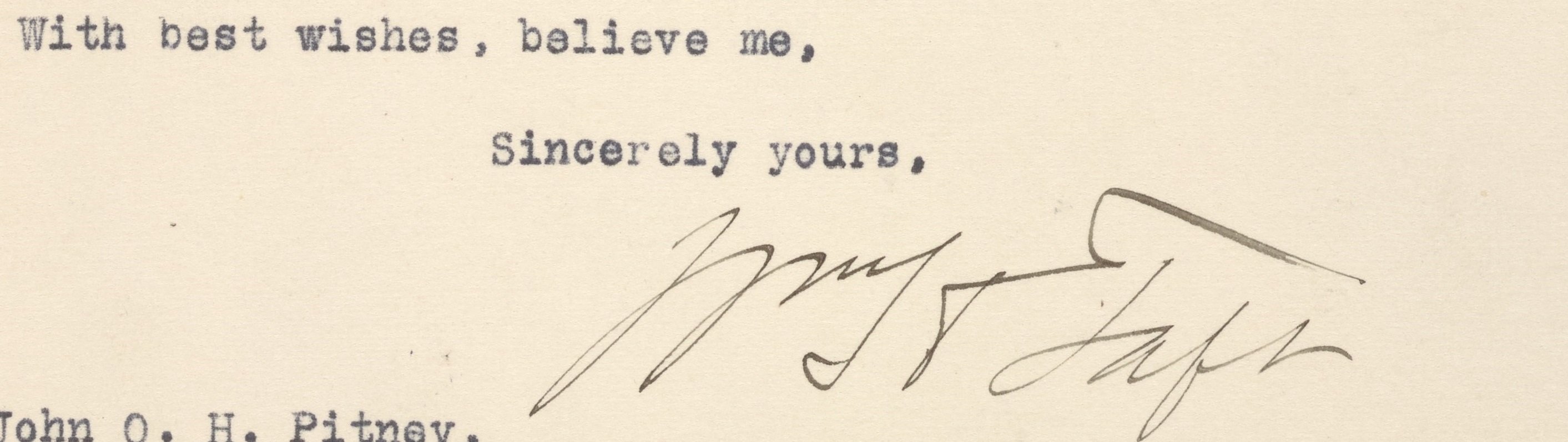
William H. Taft on writing
Don't write so that you can be understood, write so that you can't be misunderstood.
~ William H. Taft
~ William H. Taft
Jan 17, 2011
Nassim Taleb on writing
Writing is the art of repeating oneself without anyone noticing.
~ Nassim Taleb, The Bed of Procrustes, p. 43
Feb 26, 2008
David Gelertner on feminism neutering the English language
How can I teach my students to write decently when the English language has become a wholly-owned subsidiary of the Academic-Industrial Complex? Our language used to belong to all its speakers and readers and writers. But in the 1970s and '80s, arrogant ideologues began recasting English into heavy artillery to defend the borders of the New Feminist state. In consequence we have all got used to sentences where puffed-up words like "chairperson" and "humankind" strut and preen, where he-or-she's keep bashing into surrounding phrases like bumper cars and related deformities blossom like blisters; they are all markers of an epoch-making victory of propaganda over common sense.
We have allowed ideologues to pocket a priceless property and walk away with it. Today, as college students and full-fledged young English teachers emerge from the feminist incubator in which they have spent their whole lives, this victory of brainless ideology is on the brink of becoming institutionalized. If we mean to put things right, we can't wait much longer.
Our ability to write and read good, clear English connects us to one another and to our common past. The prime rule of writing is to keep it simple, concrete, concise. Shakespeare's most perfect phrases are miraculously simple and terse. ("Thou art the thing itself." "A plague o' both your houses." "Can one desire too much of a good thing?") The young Jane Austen is praised by her descendants for having written "pure simple English." Meanwhile, in everyday prose, a word with useless syllables or a sentence with useless words is a house fancied-up with fake dormers and chimneys. It is ugly and boring and cheap, and impossible to take seriously.
But our problem goes deeper than a few silly words and many tedious sentences. How can I (how can any teacher) get students to take the prime rule seriously when virtually the whole educational establishment teaches the opposite? When students have been ordered since first grade to put "he or she" in spots where "he" would mean exactly the same thing, and "firefighter" where "fireman" would mean exactly the same thing? How can we then tell them, "Make every word, every syllable count!" They may be ignorant but they're not stupid. The well-aimed torpedo of Feminist English has sunk the whole process of teaching students to write. The small minority of born writers will always get by, inventing their own rules as they go. But we used to expect every educated citizen to write decently--and that goal is out the window.
~ David Gelertner, "Feminism and the English Language," The Weekly Standard, February 25, 2008
We have allowed ideologues to pocket a priceless property and walk away with it. Today, as college students and full-fledged young English teachers emerge from the feminist incubator in which they have spent their whole lives, this victory of brainless ideology is on the brink of becoming institutionalized. If we mean to put things right, we can't wait much longer.
Our ability to write and read good, clear English connects us to one another and to our common past. The prime rule of writing is to keep it simple, concrete, concise. Shakespeare's most perfect phrases are miraculously simple and terse. ("Thou art the thing itself." "A plague o' both your houses." "Can one desire too much of a good thing?") The young Jane Austen is praised by her descendants for having written "pure simple English." Meanwhile, in everyday prose, a word with useless syllables or a sentence with useless words is a house fancied-up with fake dormers and chimneys. It is ugly and boring and cheap, and impossible to take seriously.
But our problem goes deeper than a few silly words and many tedious sentences. How can I (how can any teacher) get students to take the prime rule seriously when virtually the whole educational establishment teaches the opposite? When students have been ordered since first grade to put "he or she" in spots where "he" would mean exactly the same thing, and "firefighter" where "fireman" would mean exactly the same thing? How can we then tell them, "Make every word, every syllable count!" They may be ignorant but they're not stupid. The well-aimed torpedo of Feminist English has sunk the whole process of teaching students to write. The small minority of born writers will always get by, inventing their own rules as they go. But we used to expect every educated citizen to write decently--and that goal is out the window.
~ David Gelertner, "Feminism and the English Language," The Weekly Standard, February 25, 2008
Labels:
English language,
feminism,
political correctness,
writing
Subscribe to:
Posts (Atom)