Showing posts with label American Revolution. Show all posts

Mar 25, 2025

Ryan McMaken on the Boston Tea Party, mercantilism and the American Revolution

On the night of the Boston Tea Party in 1773, American insurrectionists donned disguises and destroyed a shipment of tea imported by the East India Company.  The protestors boarded privately owned ships in the harbor and threw the tea overboard.  Later that night, the activists discovered another tea shipment that had been unloaded at a warehouse.  Not content with having destroyed most of the company's import, they broke into the warehouse and destroyed that tea, too.  The total damages amounted to more than $1.5 million in today's dollars.

This was the work of the Sons of Liberty, a group which would become known for acts of resistance, arson, and violence against tax collectors and other agents of the crown.

But why destroy the tea of a private company if the group's target was the British state?  The answer, of course, is that the East India Company was essentially an adjunct of the regime and private in name only.  This was the era of mercantilism, when colonial governments used protectionism and monopoly powers to enrich the state and its supporters through supposedly private companies.  The Sons of Liberty understood the system well and targeted the "private" East India Company.

The success of the American Revolution struck a heavy blow against the mercantilist system.  But unfortunately, the wound was not mortal.  Many old mercantilist policies persisted under new labels and were promoted with new claims of helping "the people."  The regime of the new republic, too, used the tools of cartelization, monopoly, regulation, and taxation to support certain corporate friends at the expense of the ordinary people.

~ Ryan McMaken, "From the Editor," The Misesian, p. 5, January-February 2025
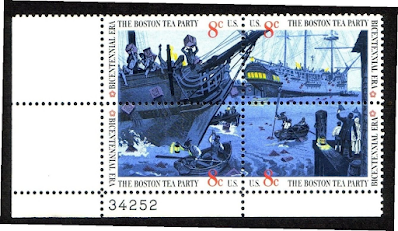
1973


Jul 5, 2020

Allan Stevo on the tension between the Declaration of Independence and U.S. Constitution

Fireworks or obeisance to the flag do not hit at the heart of what July 4 is. The spirit of 1776 is very different from the spirit of 1787. One was decentralizing and about individual autonomy. The other was centralizing and about governmental power.

The US Constitution (1787) is nearly the opposite of the Declaration of Independence(1776). As such, it is certainly not the Constitution that makes America great. That tension between the two is constantly at play in American society.

~ Allan Stevo, "On July 4th, I'll Be Celebrating Walter Block," LewRockewell.com, July 4, 2020

Allan Stevo | The Epoch Times

Jan 1, 2020

Benjamin Franklin on the difference between war and revolution

War is when the government tells you who the bad guy is. Revolution is when you decide that for yourself.

~ Benjamin Franklin

(This quote may be misattributed.  According to Phil Duffy, "'bad guy' doesn't sound like 18th century language.")

Benjamin Franklin
1912-1914


Nathan Hale on independence from England

Liberty?  Independence?  Are they to remain only words?  Gentlemen, let us make them fighting words!

~ Nathan Hale

Nathan Hale
1922-1925


Nov 11, 2007

David Boaz on the signers of the Declaration of Independence

More than 200 years ago Thomas Jefferson and the other signers of the Declaration of Independence committed themselves to the cause of American liberty with these words: "And for the support of this Declaration, with a firm reliance on the protection of Divine Providence, we mutually pledge to each other our Lives, our Fortunes and our sacred Honor."

And they weren't kidding. Twelve signers had their homes ransacked and burned by the British. Nine more died from wounds or hardships of the Revolutionary War. None, however, lost their sacred honor.

~ David Boaz, executive VP, Cato Institute, "The Coming Century of Liberty," Fall 2007

Image result for david boaz