Showing posts with label preemptive war. Show all posts

Mar 8, 2026

Otto von Bismarck on preemptive war

Starting a preemptive war is like committing suicide for fear of death.

~ Otto von Bismarck

Otto von Bismarck - Wikipedia 

Jun 12, 2025

Kevin Duffy on modern warfare

Warfare today is all about pinning the “aggressor” label on the opposing side and claiming victim status.  This allows the self-proclaimed victim to act with impunity – civilians be damned – all in the name of “self-defense.”  Thus modern warfare is filled with an endless litany of false flag operations, baiting the other side into firing the first shot, preemptive strikes and sensationalized propaganda (usually involving “killing babies”) all meant to gain the moral high ground and justify cutting the dogs of war loose.

~ Kevin Duffy, "Gaza: What Would Rothbard Think?," The Libertarian Alliance, June 8, 2025


Dec 26, 2023

Richard Becker on the myth that the Six-Day War was "preemptive"

Most of the mainstream media, along with Israel’s apologists in the United States, propagated the notion that the war was a rerun of the biblical “David versus Goliath” battle.  Israel was pictured as the heroic underdog, with God once more on its side. 

The misnamed, U.S.-based “Anti-Defamation League,” which has long served as propagandist for the Israeli regime, said that “Israel launched a preemptive strike against Egypt,” suggesting that it only did so to avert annihilation. 

None other than the extreme right-wing Israeli Prime Minister Menachem Begin later exposed the utter falsity of such claims.  Fifteen years after the war, in an Aug. 2, 1982, speech to the Israeli National Defense College, Begin said: “We must be honest with ourselves. We decided to attack him [Egyptian President Gamal Abdul Nasser].” 

It was not just Begin who exposed the myth.  Ten years earlier, Gen. Mattiyahu Peled, one of the Israeli commanders in the 1967 Six-Day War, told the Israeli newspaper Ha’aretz: “The thesis that the danger of genocide was hanging over us in June 1967 and that Israel was fighting for its physical existence is only a bluff, which was born and developed after the war.” 

In 1997, Israel’s minister of defense at the time of the Six-Day War, Moshe Dayan, talked to the New York Times about the events leading up to the war on the Syria-Israel front.  He stated that the Israeli kibbutz (cooperative farm) residents in the area wanted to take over the rich farmland of Syria’s Golan Heights: “They didn’t even try to hide their greed for that land.” 

Describing Israel’s tactics on its border with Syria, Dayan told the Times: 
We would send a tractor to plow some area where it wasn’t possible to do anything, in the demilitarized area, and knew in advance that the Syrians would start to shoot.  If they didn’t shoot, we would tell the tractor to advance further, until in the end the Syrians would get annoyed and shoot.  And then we would use artillery and later the air force also, and that’s how it was. …  The Syrians, on the fourth day of the war [June 9, 1967], were not a threat to us.
By the 1967 war, Israel succeeded in achieving its long-held objective of expansion.  The remaining 22 percent of historic Palestine—the West Bank and Gaza—was conquered by Israel’s surprise attack, along with Syria’s Golan Heights and Egypt’s Sinai Peninsula. 

More than 35,000 Arabs were killed, many of them burned to death by Pentagon-supplied napalm bombs.  Thousands more were wounded. Most of the Egyptian, Syrian and Jordanian air and armor forces were destroyed in the opening days of the surprise attack.  The Israeli army drove more than 90,000 Syrians and Palestinians out of the Golan Heights, an agriculturally rich region north of the Sea of Galilee. 

Many of the Syrian villages and Golan’s main city, Quneitra, were bulldozed by the Israeli military.  Israeli settlers began arriving in Golan in July 1967.  In 1981, the Israeli Knesset (parliament) passed a law annexing the Golan Heights.  The continuing occupation of Golan, as well as the West Bank and Gaza, defies scores of United Nations resolutions.

~ Richard Becker, "Fifty years later: Myths and facts about the Six Day War," Liberation, June 7, 2017

(This article is based on a talk by Richard Becker at a PSL forum in San Francisco on June 3, 2017.)


Dec 18, 2023

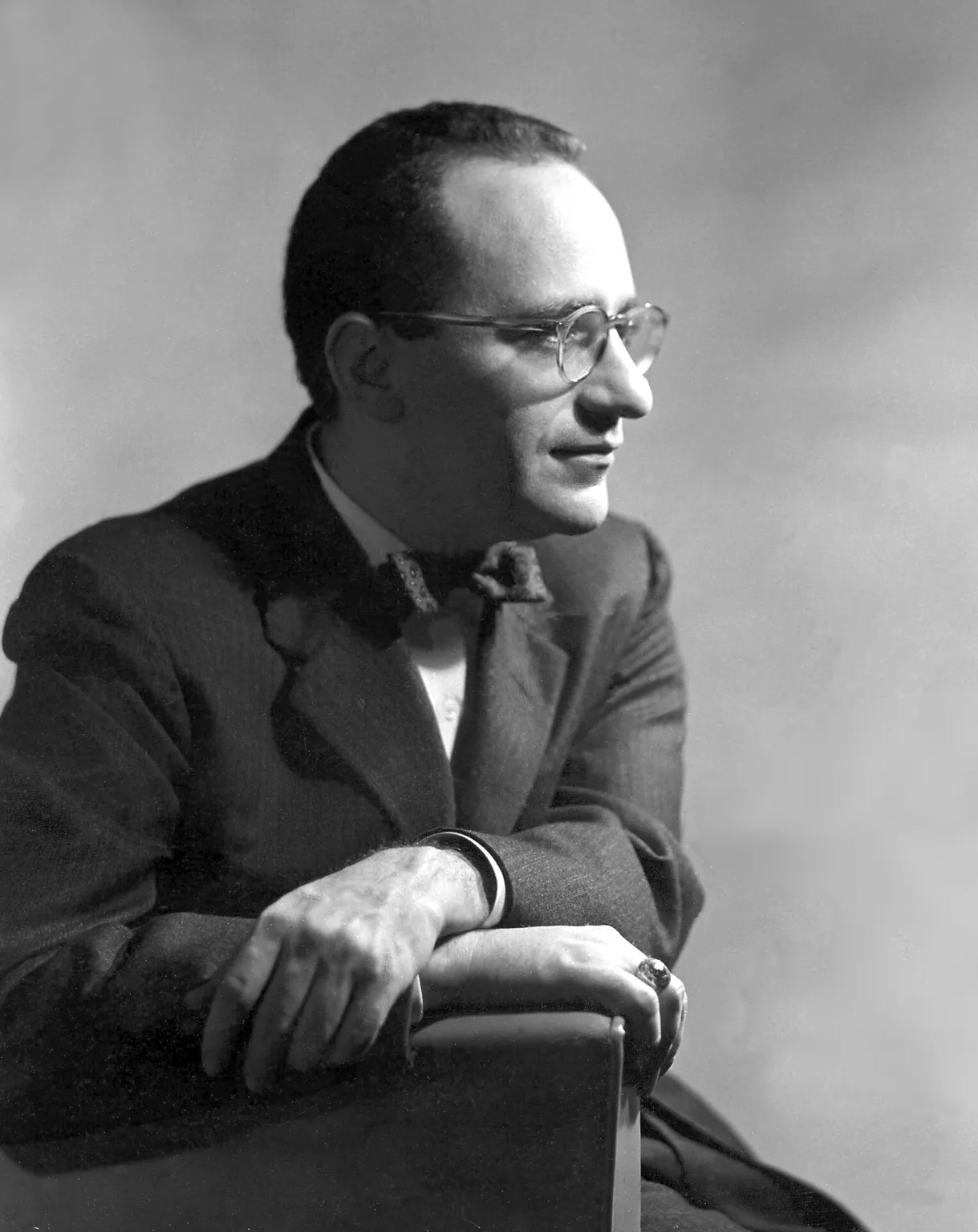
Menachem Begin on launching a preemptive war against the Arab States (1955)

I deeply believe in launching a preventive war against the Arab States without further hesitation.  By doing so, we will achieve two targets: firstly, the annihilation of the Arab power; and secondly, the expansion of our territory.

~ Menachem Begin, leader of the Irgun and founder of the Herut (“Freedom”) party, speaking before the Knesset on October 12, 1955


Feb 5, 2008

Brink Lindsey on preventive war and the Iraq War (2003)

So on the general question of preventive war -- whether to make war now in order to avoid a worse war later -- my position is: It depends on the circumstances. The decision whether to go to war should turn on a pragmatic assessment of relative risks. Sometimes the balance will tilt in favor of action, sometimes not. In the particular case of Iraq in 2002, I believe the balance tilts strongly toward action.

Accordingly, it seems to me that a no-exceptions policy against preventive war rests ultimately on an untenable assumption: that unrousable passivity on the part of the greatest and most powerful country that ever existed will somehow yield the most favorable achievable conditions in the world -- that, in an intricately interconnected world, leaving everything outside our physical borders to the wolves will ensure that everything turns out for the best.

I don't buy it. Hostile regimes bent on relentless expansion and pursuing weapons of mass destruction are a threat to global security. Hostile regimes that could put weapons of mass destruction into the hands of terrorists are a direct threat to the lives of Americans. If regimes fitting either of these descriptions don't change their ways, military action against them should be an option.

Brink Lindsey, senior fellow at the Cato Institute, "Should We Invade Iraq?," Reason, January 2003

Image result for brink lindsey

Nov 6, 2007

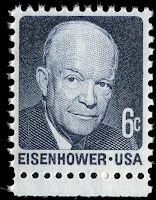
Eisenhower on preemptive war

Preventive war was an invention of Hitler.  Frankly, I would not even listen to anyone seriously who talked about such a thing.

~ Dwight D. Eisenhower


Ron Paul on the danger of a preemptive first strike doctrine

Military force is only justified in self-defense; naked aggression is the province of dictators and rogue states.  This is the danger of a new "preemptive first strike" doctrine.

~ Congressman Ron Paul, September 4, 2002