Showing posts with label libertarianism. Show all posts

Jun 6, 2025

Murray Rothbard on how libertarians view war

Libertarians favor liberty as a natural human right, and advocate it not only for Americans but for all peoples.  In a purely libertarian world, therefore, there would be no “foreign policy” because there would be no States, no governments with a monopoly of coercion over particular territorial areas.  But since we live in a world of nation-states.  And since this system is hardly likely to disappear in the near future, what is the attitude of libertarians toward foreign policy in the current State-ridden world? 

Pending the dissolution of States, libertarians desire to limit, to whittle down, the area of governmental power in all directions and as much as possible… 

Specifically, the entire land area of the world is now parcelled out among various States, and each land area is ruled by a central government with monopoly of violence over that area.  In relations between States, then, the libertarian goal is to keep each of those States from extending their violence to other countries, so that each State’s tyranny is at least confined to its own bailiwick.  For the libertarian is interested in reducing as much as possible the area of State aggression against all private individuals.  The only way to do this, in international affairs, is for the people of each country to pressure their own State to confine its activities to the area it monopolizes and not to attack other States or aggress against their subjects.  In short, the objective of the libertarian is to confine any existing State to as small a degree of invasion of person and property as possible.  And this means the total avoidance of war.  The people under each State should pressure “their respective States not to attack one another, or, if a conflict should break out, to withdraw from it as quickly as physically possible.

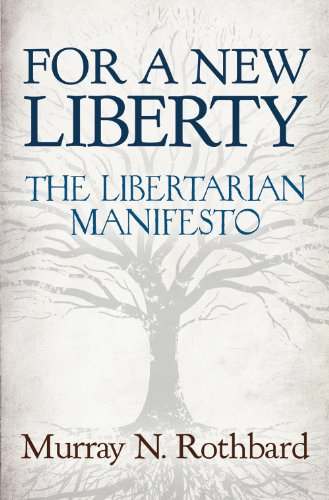
~ Murray Rothbard, For a New Liberty, "War and Foreign Policy," pp. 331-332

1919 (published posthumously)

Nov 22, 2023

Murray Rothbard on why libertarians should oppose war

Many libertarians are uncomfortable with foreign policy and prefer to spend their energies either on fundamental questions of libertarian theory or on such "domestic" concerns as the free market or privatizing postal service or garbage disposal.  Yet an attack on war or a warlike foreign policy is of crucial importance to libertarians.  There are two important reasons.  One has become a cliché, but is all too true nevertheless: the overriding importance of preventing a nuclear holocaust.  To all the long-standing reasons, moral and economic, against an interventionist foreign policy has now been added the imminent, ever-present threat of world destruction...

The other reason is that, apart from the nuclear menace, war, in the words of the libertarian Randolph Bourne, "is the health of the State."  War has always been the occasion of a great - and usually permanent - acceleration and intensification of State power over society.  War is the great excuse for mobilizing all the energies and resources of the nation, in the name of patriotic rhetoric, under the aegis and dictation of the State apparatus.  It is in war that the State really comes into its own: swelling in power, in number, in pride, in absolute dominion over the economy and the society.  Society becomes a herd, seeking to kill its alleged enemies, rooting out and suppressing all dissent from the official war effort, happily betraying truth for the supposed public interest.  Society becomes an armed camp, with the values and the morals - as the libertarian Albert Jay Nock once phrased it - of an "army on the march."

~ Murry Rothbard, For A New Liberty, "War and Foreign Policy," pp. 347-348

1973


Jul 17, 2023

Walter Block on morality vs. the marketplace

This book does not claim that the marketplace is a moral economic institution.  True, the profit and loss business system has brought mankind a plethora of consumer goods and services unkown in the entire history of the world.  These benefits are the envy of all peoples not fortunate enough to live under its banner.  Given the tastes, desires, preferences of the ultimate consumer, the market is the best means known to man for providing for his satisfaction.

But the marketplace also produces goods and services – such as gambling, prostitution, pornography, drugs (heroin, cocaine, etc.) alcohol, cigarettes, swinger’s clubs, suicide abetment – whose moral status is, to say the least, highly questionable and in many cases highly immoral. The free enterprise system, thus, cannot be considered a moral one. Rather, as a means of consumer satisfaction, it can only be as moral as are the goals of the market participants themselves. Since these vary widely, all the way from the completely depraved and immoral to the entirely legitimate, the market must be seen as amoral – neither moral nor immoral.

The market in other words is like fire, or a gun, or a knife or a typewriter: a splendidly efficient means towards both good and bad ends.  Through free enterprise we are capable of achieving virtuous actions, but also their very opposite as well.

How, then, can we defend the immoral activitys of some market actors?  This stems from the philosophy of libertarianism, which is limited to analyzing one single problem.  It asks, under what conditions is violence justified?  And it answers, violence is justified only for purposes of defense, or in response to prior aggression, or in retaliation against it.  This means, among other things, that government is not justified in fining, punishing, incarcerating, imposing death penalties on people who act in an immoral manner - as long as they refrain from threatening or initiating physical violence on the persons or property of others.  Libertarianism, then, is not a philosophy of life.  It does not presume to indicate how mankind may best live.  It does not set out the boundaries between the good and the bad, between the moral and the immoral, between propriety and impropriety.

The defense of such as the prostitute, pornographer, etc., is thus a very limited one.  It consists solely of the claim that they do not initiate physical violence against non-aggressors.  Hence, according to libertarian principles, none should be visited upon them.  This means only that theses activities should not be punished by jail sentences or other forms of violence.  It decidedly does not mean that these activities are moral, proper or good.

~ Walter Block, Defending the Undefendable, introduction


Oct 29, 2021

Sheldon Richman on promoting libertarianism

Those of us who are trying to persuade people to embrace the nonaggression obligation – that is, classical liberalism, or libertarianism, may have an advantage though.  Most people already believe that they shouldn’t rob, hit, or kill, or otherwise aggress against others.  So those of us who are merely asking that this already widely accepted principle be applied across the board — even to people calling themselves the government — may have an easier job than we thought.

~ Sheldon Richman, "The Challenging Art of Persuasion," The Libertarian Institute, October 29, 2021


Oct 14, 2021

Tom Woods: "Is society itself not in some way self-ordering?"

I'm suggesting that libertarians have a fresh new way to look at the world because we actually ask, "Do we need institution X, do we need institution Y, and if we do need these things, do they have to be provided the way they're tradionally provided?"  Could we not learn to interact with each other on a purely voluntary basis?  Is society itself not in some way self-ordering?  Incidentally, that's why I've taken a great interest in economics.  And I feel like just the field of economics, when you understand it right, shows you something important about how society is self-ordering.  It shows you something about how social cooperation occurs spontaneously.  That's not what we're taught.  The model of society that we learn in school is that somebody with a bullhorn has to be barking out orders and then everybody obeys.  I think they're may be a more attractive way for arranging society.

~ Tom Woods, "Tom Woods: The Making of an Anti-War Libertarian," Reason TV, 2:40 mark, October 10, 2018


Jul 16, 2021

Curt Howland on government and the lust to dominate

There have always been, are, and always will be, people who suffer from the mental illness known as Libido Dominandi, the “lust to dominate.”  Psychopaths who will do anything, say anything, to get what they want. Such people gravitate to government because it is through the state that their domination is given the illusion of legitimacy, where they can hit people and take their stuff all day long, and get away with it. 

Psychopaths in government have had six thousand years of hitting people and taking their stuff to come up with a raft of excuses and rationalizations to justify their Libido Dominandi.  The best minds have been hired to write histories which glorify those in government, celebrate their mass murder, rationalize their predation, and to then teach it to children so when those children grow up they will continue to obey.

~ Curt Howland, "Why is libertarian philosophy unpopular?," Quora, June 15, 2021


Jun 29, 2021

Jacob Hornberger on the statist morass

Today, I pointed out, both Democrats and Republicans are leading America to disaster, especially with their out-of-control federal spending and debt.  We might well end up experiencing a perfect storm involving monetary, economic, and foreign-policy crises. 

American libertarians have the potential for leading the world out of this statist morass.  But we can do so only by adhering to libertarian principles and making the case for a genuinely free society.

~ Jacob Hornberger, "My Talk at Porcfest," The Future of Freedom Foundation, June 28, 2021


Jun 4, 2021

Murray Rothbard on how the libertarian sees government

Instead of a bumbling and inefficient tool of society, the radical [libertarian] sees the State itself, in its very nature, as coercive, exploitative, parasitic, and hence profoundly antisocial. The State is, and always has been, the great single enemy of the human race, its liberty, happiness, and progress. 

~ Murray Rothbard, Reason, March, 1974


Dec 22, 2020

Kevin Duffy explains libertarianism

The core principle of libertarianism is the non-aggression principle (NAP). The initiation of violence should not be tolerated. Proportional violence in self-defense, including protecting one’s property is permitted. Hiring agents (through peaceful, voluntary exchange) to defend one’s life, liberty and property is also consistent. 

Government, because it resorts to initiating violence, is inconsistent with NAP. This even applies to agents of self-defense (e.g., military, police, courts) because they are funded coercively. 

To the extent the left and right accept government intervention, they reject libertarian principles. They are two sides of the same interventionist coin and have much more in common than they realize. 

Libertarianism is value-agnostic and judges the morality of means employed. Every libertarian, of course, has their own unique set of values, as do all of us. I’m guessing nearly all believe moral means have the best chance of achieving those values. Interventionism, on the other hand, is ends-focused. The ends justify the means. Proponents believe their values have the best chance of being achieved through State coercion. 

Libertarians believe immoral means lead to trouble. Since most people are wired for intervention, any crisis is typically blamed on freedom (e.g. the free market, or capitalism) which brings about cries for even more intervention.

~ Kevin Duffy, "What are the basic principles of libertarianism?," Quora, December 17, 2020


Dec 20, 2020

Kevin Duffy on the cyclical nature of the libertarian movement

Before getting too down on the libertarian movement, it helps to look at where we are in the cycle.  Ron Paul's popularity peaked around 2008-10 alongside the Great Financial Crisis.  12 years of bull markets and the greatest financial bubble in history later, it's incredible the movement even has a pulse. 

The crowd is completely detached from reality.  Signs in the financial markets include Tesla exceeding Berkshire Hathaway in market cap, Robinhood, day trading, option buying, SPACs, and the hottest IPO market since 2000.  The Fed can do no wrong.  No surprise, a parallel mania is taking place with Covid and worship of the medical authorities.  There is no way 2020 madness happens in a bear market.  These bubbles will burst as they always do.  Our job is to poke fun at them, not to convince people.  Sure, you might be able to convince a few, but the vast majority are in la la land.  Only when the bubble bursts will people be desperate for answers and ready to consider the non-interventionist point of view. 

For promoters of liberty, today's famine is tomorrow's feast.

~ Kevin Duffy, comment on The Tom Woods Show podcast, December 20, 2020


Sep 14, 2020

Laurence Vance on libertarianism

Libertarianism is the philosophy that says that people should be free from individual, societal, or government interference to live their lives any way they desire, pursue their own happiness, accumulate wealth, assess their own risks, make their own choices, participate in any economic activity for their profit, engage in commerce with anyone who is willing to reciprocate, and spend the fruits of their labor as they see fit. As long as people don’t violate the personal or property rights of others, and as long as their actions are peaceful, their associations are voluntary, and their interactions are consensual, they should be free to live their lives without license, regulation, interference, or molestation by the government.

~ Laurence Vance, "Libertarian Positions," LewRockwell.com, September 14, 2020

Libertarianism - Simple English Wikipedia, the free encyclopedia

Jun 28, 2020

Hans-Hermann Hoppe on how exclusion is required to achieve a free society

Libertarians, in their attempt to establish a free natural social order, must strive to regain from the state the right to exclusion inherent in private property.  Yet even before they accomplish this and in order to render such an achievement possible, libertarians cannot soon enough begin to reassert and exercise, to the extent that the situation still permits them to do so, their right to exclusion in everyday life.  Libertarians must distinguish themselves from others by practicing (as well as advocating) the most extreme form on intolerance and discrimination against egalitarians, democrats, socialists, communists, multiculturalists, environmentalists, ill manners, misconduct, incompetence, rudeness, vulgarity, and obscenity.  Like true conservatives,... true libertarians must visibly and ostentatiously dissociate themselves from the false multicultural and anti-authoritarian egalitarian left-libertarian impostors.

~ Hans-Hermann Hoppe, Democracy: The God That Failed, p. 219

Cover art

Feb 9, 2020

Kevin Duffy on exploitation

Quora: How do libertarians address the issue of exploitation?

Duffy: Libertarians differ from most when addressing the issue of exploitation in two fundamental ways. First, they view exchange at the individual level vs. the abstract level. E.g., the “U.S.” doesn’t trade with “China.” Apple engages in various exchanges with Chinese employees, suppliers, consumers and shareholders. Second, they focus on the nature of the exchange. Is it coerced or voluntary? If coerced, exploitation exists; one party benefits at the expense of the other. If voluntary, both parties enter into the exchange because they expect to benefit. The operative word, of course, is “expect.” There are no guarantees and people often look back at decisions with regret. All part of the learning process. The future is uncertain and always will be.

Through the libertarian lens, what are some examples of exploitation? At the individual level, the answer is clear: rape, murder, robbery, fraud.

Greedy capitalists

What about at the abstract level? Do "greedy capitalists" exploit "helpless workers?" As long as no one is putting a gun to anyone’s head, no. If an employer and employee agree to an exchange, both parties expect to benefit. The employer prefers the labor services of the employee over the wage he’s willing to pay. The employee prefers the money he receives above the time spent doing the work. Win-win. If either party feels they are no longer benefiting, they are free to walk away (unless there is a contract that commits both to a certain amount of time).

Trade deficit with China

Is China exploiting the U.S. because they run a large trade surplus? Again, no. Since the exchanges involved are all voluntary, they must be mutually beneficial. Apple sells iPhones to Chinese consumers. Apple receives money (they have a money surplus and goods deficit) while the buyer receives an iPhone (they have a money deficit and goods surplus). Walmart buys products from Chinese suppliers. Even though they run a money deficit, they do so willingly… because they benefit. Walmart's Chinese suppliers run money deficits with their employees. Again, both parties benefit. Trade surpluses and deficits are an accounting fiction. Do you worry about running a chronic trade deficit with your local grocery store?

Sweatshops

Does a multinational firm setting up a factory in a poor country exploit its workers? If entered into freely and peacefully, the exchange only takes place if both parties benefit. E.g., if Nike builds a sneaker factory in Bangladesh, they must make the wages and work environment enticing enough to attract workers from their current jobs. They have to give them a better deal. They have to improve their lives. Some call this “unfair.” Libertarians call it heroic.

Taxation

How does a libertarian judge taxation? Is this a voluntary, mutually beneficial exchange or is it coercive and exploitative? The question answers itself.

~ Kevin Duffy, Quora answer, February 9, 2020

Image result for putting a gun to someone's head

Jan 23, 2020

Jeff Deist on libertarians and humility

Being a libertarian means we don't know.  It means we don't know what's best for 320 million people in the U.S., much less 7 billion across the world.  So that, to me, involves humility.

~ Jeff Deist, "Jeff Deist on the Trouble with Libertarian Technocrats," The Tom Woods Show, January 10, 2020

Image result for jeff deist

Jan 10, 2020

Kevin Duffy on how libertarians should view the Civil War

To a libertarian, the Civil War is a classic case of both sides being wrong.  At the same time I am critical of the Northern invasion of the South, I can be critical of the institution of slavery. Libertarians naturally oppose conscription, which both sides resorted to in 1862.  Some counties in East Tennessee actually tried to secede from the Confederacy, but were checked by martial law, an action that libertarians would also oppose.  Some of the border states tried to remain neutral in the conflict.  According to Wikipedia, “Maryland's legislature voted overwhelmingly (53–13) to stay in the Union, but also rejected hostilities with its southern neighbors, voting to close Maryland's rail lines to prevent them from being used for war.  Lincoln responded by establishing martial law and unilaterally suspending habeas corpus in Maryland, along with sending in militia units from the North.”  Lincoln’s actions were not only anti-libertarian, they were unconstitutional.

~ Kevin Duffy

Image result for civil war stamps
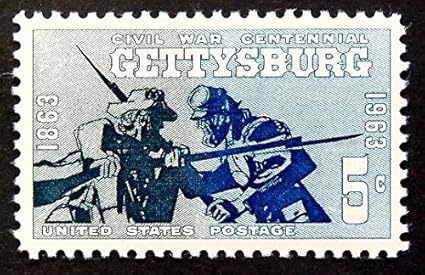
Civil War Centennial - Gettysburg
1863-1963

Jan 7, 2020

Dennis Pratt on libertarian vs. authoritarian ethics

Here is how I explained libertarianism to a group of authoritarians.
(The exercise — part of an advanced personal growth seminar — was to illustrate a strongly held belief, and libertarian ethics is probably one of my strongest values.)
I sat John down in a chair on the stage, and turned to explain to the 35 attendees:
“Let’s say that John was peacefully minding his own business
but I wanted something that John had,
or I wanted John to do something that he didn’t want to do.”
I held my index and thumb like a gun and pointed it to John’s head.
“Almost everyone agrees that
if I threaten violence against an otherwise peaceful John
… to give me something that is justly his
…… or to do something for me that he does not want to do,
that I am doing something evil and wicked.”
Everyone was smiling and nodding.
(In liberal Massachusetts, “We don’t like guns”;
they knew where this was going!)
I pulled up burly Andrew, had him point his “gun” at John’s head, and took out a $100 bill.
“And almost everyone also agrees that
if I hire a thug like Andrew
… to threaten violence against an otherwise peaceful John
that I am still doing something evil and wicked.”
Most were still nodding, but a few, more politically astute, were showing worried signs of caution.
I brought Steve onto the stage, placed him behind Andrew.
I gave Steve $200 and had him hand one of the $100 bills to Andrew who was still holding the gun to John’s head.
“But most people think that,
if I vote to hire a politician like Steve,
… who hires an “officer” like Andrew,
…… to threaten violence against an otherwise peaceful John
……… to take that which is John’s and give it to me,
then what was evil before is evil no more
… but has been magically transformed into Good.
And I drove home our point about the universality of human ethics:
“A libertarian is someone who does not believe
that human ethics change
based on the number of intermediaries,
… how I choose them,
…… or what I call them.
While this distinguishes libertarian ethics from authoritarian ethics succinctly and clearly, those who have been indoctrinated into believing that political authority provides an exception to universal human ethics — that is, that they may hire rulers to ethically do that which they know they may not ethically do themselves — will very likely still not understand the mind-blowing point you have just made. You will need to go through with them and have them explain how the same act that is unethical for you becomes ethical for a politician.
The group I illustrated this to politely clapped, but several were visibly angry. One old lady fumed for the rest of the day and waddled up to me later to threaten me bodily, should I ever do “that” again.
One can only presume that the “that” — which she insisted I must never ever do again — referred to never again condemning violence against an otherwise peaceful innocent person in order to profit myself, as long as the violence is threatened through a recognized “authority” (e.g. a politician or bureaucrat).
Which is how authoritarians protect their ethical exception — the only thing that justifies extortion, violent bullying, maiming, and killing.
But our libertarian point is that hiring someone to do your evil act does not make evil Good. Evil remains evil, and one’s complicity cannot be ignored.
~ Dennis Pratt, Quora answer, November 12, 2019

Dec 30, 2019

Rob Weir on government power vs. private power

Q: Do libertarians not agree that private power is (or at the very least, has the potential to be) equally as oppressive as government?  I don't understand this blindspot.

A: Would you acknowledge that, in theory at least, all the oxygen molecules in the room could simultaneously move into a single small portion of the corner of the room, leaving the rest of the room with just nitrogen and carbon dioxide, causing everyone in the room to immediately suffocate and die?

Talking about theoretical potential is quite a different thing than talking about reality, actual historical experience, and real-world odds.  In theory, I could drown in a bowl of soup. In reality, more people would die than would be saved if we banned soup.

In the real world, almost no one dies from the oppressive operation of private power.  In the real world, in the 20th century alone, 262 million people were killed by their own governments. 

Let’s get real here.  There is zero comparison between deaths from government versus from private powers. A company that screws up tends to go bankrupt and is essentially removed from power.  A government that screws up murders millions.

~ Rob Weir, Quora, November 11, 2019

Dec 29, 2019

George Orwell on the real political spectrum

The real division is not between conservatives and revolutionaries but between authoritarians and libertarians.

~ George Orwell


Dec 27, 2019

Kevin Duffy on libertarianism

Libertarianism is based on the non-aggression principle: no one has a right to initiate violence against another. That’s it. It does not preach values, how to live one’s life, etc. That is the realm of others: parents, religious leaders, opinion leaders, self-help gurus, Hollywood, etc.

Of course, respecting the life, liberty and property of others is a pretty good start on adopting a personal moral code.

~ Kevin Duffy

Image result for non-aggression principle

Dec 19, 2019

Rob Weir on libertarianism

Q: Is libertarianism pseudo-intellectual?

A: No. Libertarianism is really orthogonal to any stance on intellect.

Say you are dissatisfied with the level of obesity in America today. An intellectual approach might to look into its causes, via the scientific method, and find out ways that it could be reduced. An anti-intellectual approach might be to adopt some diet because it came to some guru in a dream. A pseudo-intellectual approach might be to use a bunch of fancy words to hide the fact that one does not actually know anything about obesity whatsoever.

These various stances are all orthogonal to the libertarian program. The real comparison is between statism and libertarianism:

A statist would take whatever solution the state’s experts have devised to reduce obesity, and mandate the solution, on all in the realm. Whether the solution had a sound scientific basis, whether it was anti-intellectual or whether it was pseudo-intellectual does not matter, the statist would have it mandated on all, under penalty of law. (See, for example, the Soviet Union’s promotion of the anti-Darwinian, or the Nazi promotion of “racial science.”) To a statist, these are not questions of the intellect, but political questions, answerable to political will.

A libertarian, on the other hand, would not mandate a solution to obesity. He would allow anyone to offer a solution if they wished, and anyone to consume a solution if they wished. Solutions of an intellectual, anti-intellectual and pseudo-intellectual nature would freely compete, in the market. So would experts, reviewing, rating and recommending one solution or another.

That's the key difference, I think.  Libertarianism is about liberty, not about one group thinking it has a monopoly on knowledge.  Libertarians believe that no one and no group has all the answers.

~ Rob Weir, "Is libertarianism pseudo-intellectual?," Quora, January 31, 2019