Showing posts with label interventionism. Show all posts

Mar 4, 2024

Joe Sobran on government intervention

If you want government to intervene domestically, you’re a liberal. 
If you want government to intervene overseas, you’re a conservative. 
If you want government to intervene everywhere, you’re a moderate. 
If you don’t want government to intervene anywhere, you’re an extremist.

~ Joe Sobran, 1995


Nov 2, 2023

Daniel McAdams on the failure on interventionism in foreign policy

We should be rejoicing in a way, despite all the sadness and bloodshed, because this is our time.  This is the time when we can say "Look, everything has clearly failed.  Non-interventionism is the solution to our problems and here's why."

~ Daniel McAdams, "Ron Paul Institute Director on Best and Worst Middle East Scenarios," The Tom Woods Show, 42:25 mark, November 1, 2023


Dec 30, 2021

Ralph Raico on how the French Catholic liberals opposed the radical democratic movement in Europe

Henri-Dominique Lacordaire, along with Montalembert the outstanding leader of the French Catholic liberals (see below) delivered upon his election as Tocqueville’s successor at the Académie Française, he lashed out at the radical-democratic movement in Europe for aiding and abetting state centralization: 
The European democrat, idolater of what he calls the State, takes the human being from his cradle in order to offer him as a sacrificial victim to the public Omnipotence. He holds that the child, before belonging to the family, belongs to the City [i.e., the political organization], and that the City, that is, the people represented by those that govern them, has the right to form his mind on a uniform and legal model. He holds that the commune, the province, and every other association, even the most indifferent, depends on the State, and cannot act, nor speak, nor sell, nor buy, nor, finally, exist, without the intervention of the State and in the degree determined by it, in this way making the most absolute civil servitude the entrance way and the foundation of political liberty. 
~ Ralph Raico, Classical Liberalism and the Austrian School (p. 228)

(Raico's source is Henri-Dominique Lacordaire, Notices et Panégyriques (1886) (Paris: Poussielgue), p. 345)


Dec 24, 2021

Benito Mussolini on statism

Everything within the state, nothing outside the state, nothing against the state.

~ Benito Mussolini


Dec 20, 2021

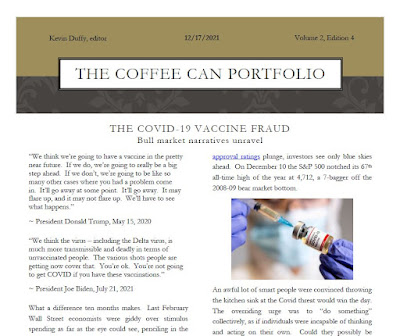
Kevin Duffy on the interventionist response to Covid

An awful lot of smart people were convinced throwing the kitchen sink at the Covid threat would win the day.  The overriding urge was to “do something” collectively, as if individuals were incapable of thinking and acting on their own.  Could they possibly be wrong?  Imagine admitting their error and reversing course…  Far more likely, the interventionists dig in their heels, refuse to admit defeat and double down.

~ Kevin Duffy, "The Covid-19 Vaccine Fraud," The Coffee Can Portfolio, December 17, 2021


Apr 4, 2021

Ludwig von Mises on the limits of interventionism

An essential point in the social philosophy of interventionism is the existence of an inexhaustible fund which can be squeezed forever.  The whole system of interventionism collapses when this fountain is drained off: The Santa Claus principle liquidates itself.

~ Ludwig von Mises, Human Action


Apr 17, 2020

Charlie Munger: Great Depression will be prevented by active government

Of course we’re having a recession. The only question is how big it’s going to be and how long it’s going to last. I think we do know that this will pass. But how much damage, and how much recession, and how long it will last, nobody knows.

I don’t think we’ll have a long-lasting Great Depression. I think government will be so active that we won’t have one like that. But we may have a different kind of a mess. All this money-printing may start bothering us.

~ Charlie Munger, "Charlie Munger: The Phone Is Not Ringing Off the Hook'," WSJ, April 17, 2020

Mar 28, 2020

Dan Ferris on government intervention

If you think more government is the solution, you are the problem.

~ Dan Ferris, editor, Extreme Value, tweet, March 27, 2020

Ed Bugos on the difference between the interventionist and laissez faire positions

One big difference between our perspective and the one you hear from mainstream is that they presume the central bank and government exist to save you from unbridled capitalism and the negative effects of freedom while we see them as bad actors/tools used to exploit and control you, and which produce all the negative effects that you blame on freedom.

~ Ed Bugos, LinkedIn post, March 27, 2020

Cartoon of the Day: A Central Banking Primer

Mar 22, 2020

Murray Rothbard on the correct policy for ending a depression

If government wishes to see a depression ended as quickly as possible, and the economy returned to normal prosperity, what course should it adopt? The first and clearest injunction is: don’t interfere with the market’s adjustment process. The more the government intervenes to delay the market’s adjustment, the longer and more grueling the depression will be, and the more difficult will be the road to complete recovery.

~ Murray Rothbard, America's Great Depression (1963)p. 19

Mar 21, 2020

Kevin Duffy on free enterprise under attack by Barron's

Your cover story, “Crisis Playbook,” reveals a deeply rooted culture at Barron’s antagonistic to free enterprise, a complex adaptive system in which failure of the parts is the key to survival of the whole.
Any healthy system needs a way to correct error and remove waste. Nature has extinction, the economy has loss, bankruptcy, liquidation. Interfering in this process lengthens feedback loops. Error and waste are allowed to accumulate, and you ultimately get a massive collapse.
Barron’s had the courage to publish those words a decade ago in a Q&A with yours truly after the interventionists had their way.  Sadly, they’ve been flushed down the memory hole and forgotten.

~ Kevin Duffy, letter-to-the-editor sent to Barron's (not published), March 18, 2020

Image result for barron's crisis playbook

Sep 24, 2019

Jim Grant: "Will central bankers continue to control events or will events start to control the central bankers?" (2019)

The question before the house is whether the central bankers can continue to control events or whether events will turn the tables and start to control the central bankers.  Our money's on events.

We reason that mighty interventions have unintended consequences.  Suppress the rate of interest, and you misdirect capital.  Cut short the corrective processes of a business-cycle downturn, and you store up trouble for the next recession.  Intervene over and over to save a bull market, and you must continue to intervene - you're in too far, you can't stop now, the downside is frightening.

Ultra-low interest rates, low volatility and stretched valuations soothe the spirit as they fatten the net worth.  Rising markers seed a belief that the world has arrived on a kind of permanently high plateau, not necessarily of price but of predictability.

~ Jim Grant, "The surprise factor," Grant's Interest Rate Observer, September 20, 2019

Image result for grant's interest rate observer

Aug 2, 2016

Jim Grant on negative interest rates

We are living in a unique time. Negative rates aren’t a naturally occurring phenomenon in finance but a creation of our ingenious central bankers. Furthermore, they seem to defy common sense. Interest rates exist because we want things now rather than later. That’s the nature of human desire. Negative interest rates turn that on its head. So they are a sign not of constructive policy making, but of trouble.

~ Jim Grant, "Jim Grant Is Bullish on Gold, Bearish on Kraft," Barron's, August 1, 2016

May 27, 2016

Tho Bishop on Joseph Stiglitz selling government intervention as a "new innovative concept"

Last year, as chief economist for the Roosevelt Institute, [Joseph] Stiglitz called for “rewriting the rules of the American economy” in a crusade against income inequality. His policy recommendations include higher taxes, more “smarter” regulation, and having the Federal Reserve focus more on unemployment than keeping inflation low — a call for an even more activist Fed than we’ve had since 2008.

It is ironic that Stiglitz has chosen to brand his policy recommendations as some new innovative concept for the country, when it is simply doubling down on the interventionist policies that the nation has suffered from for over 100 years.

~ Tho Bishop, "Clinton Adviser, Nobel Prize Winning Economist Endorsed Venezuelan Socialism," Mises,org blog, May 23, 2016

Feb 20, 2013

Seth Klarman on current market environment

Investing today may well be harder than it has been at any time in our three decades of existence. The Fed's relentless interventions and manipulations have left few purchase targets for Baupost. The underpinnings of our economy and financial system are so precarious that the un-abating risks of collapse dwarf all other factors.

~ Seth Klarman, 2012 Annual letter to partners, 2/17/2013

Feb 2, 2010

Michael Pollaro on the link between interventionism and financial crises

You may be wondering – forget the 1930’s, these policies of Bernanke, are they not the same interventionist policies pursued only recently by former Federal Reserve Chairman Greenspan, the kind of policies that preceded not only the recent Housing Bust and Credit Implosion, but the Savings and Loan Crisis, the Peso Crisis, the Asian Crisis, Long Term Capital Management and the Tech Bust too.

The answer of course is yes.

You even may have noticed a disturbing pattern; that being, each crisis begets a larger interventionist response, yet before long we find ourselves in the midst of the next, even bigger crisis. You may then be tempted to conclude that despite repeated and ever growing monetary largesse, despite repeated and growing government intervention in the economy, the crises are getting bigger and bigger and bigger.

~ Michael Pollaro, "Ben Bernanke, Worthy of Person of the Year?," True/Slant, January 4, 2010

Jan 2, 2009

Bill Bonner on government meddling in the economic downturn

The bad news is that government meddlers all over the world are making the situation much worse. They don’t have any choice. They have to react. And the only things they can do are the usual claptrap remedies. More government spending. More giveaways. More bailouts. All they are doing is trying to avoid the ‘creative destruction’ that a real economy needs... and postponing the inevitable adjustments and corrections that must be made.

~ Bill Bonner, "Well... It's Over," LewRockwell.com, January 2, 2009

Dec 5, 2008

Mark Zandi on the policy response to recession

The only way out is for the government to be extremely aggressive, from the Federal Reserve to economic stimulus to the TARP. 

~ Mark Zandi, as appeared on CNBC, December 5, 2008


Nov 16, 2008

Herbert Hoover jawboning business to keep people employed and factories running

Gentlemen, when you go back home to your factories and your offices, here's what I want you to do. I want you to keep all your workers. Don't lay any off! I want you to keep your factories going. Don't shut any down! I want you to invest more, spend more, even borrow more if you have to. Just don't do any cutting. So we can keep this economy going.

~ President Herbert Hoover, shortly after the '29 crash

(Quote sited by Martin D. Weiss, "Why Washington Cannot Prevent Depression," Money and Markets, November 10, 2008.)

Nov 8, 2008

Murray Rothbard on the source of the business cycle and how to end a depression

So now we see, at last, that the business cycle is brought about, not by any mysterious failings of the free market economy, but quite the opposite: By systematic intervention by government in the market process. Government intervention brings about bank expansion and inflation, and, when the inflation comes to an end, the subsequent depression-adjustment comes into play... what the government should do, according to the Misesian analysis of the depression, is absolutely nothing. It should, from the point of view of economic health and ending the depression as quickly as possible, maintain a strict hands off, "laissez-faire" policy. Anything it does will delay and obstruct the adjustment process of the market; the less it does, the more rapidly will the market adjustment process do its work, and sound economic recovery ensue. The Misesian prescription is thus the exact opposite of the Keynesian: It is for the government to keep absolute hands off the economy and to confine itself to stopping its own inflation and to cutting its own budget.


~ Murray Rothbard, "Economic Depressions: Their Cause and Cure," 1969