Showing posts with label people - Sachs; Jeffrey. Show all posts

Jun 16, 2025

Jeffrey Sachs on why the U.S. opposes Russia and China

What do we have against Russia?  The fact of the matter is, Russia is big.  Russia is powerful.  And for that reason and that reason alone, or sufficiently, the U.S. would oppose Russia, just like the U.S. opposes China.  Now of course, maybe people listening to this would say, "That's crazy.  We oppose China because all of the terrible things they do."  Or "We oppose Russia because all of the terrible things they do."  I would take a different view of this which is, we make up stories about why we oppose big powers, but the basic reason we oppose big powers is that they are big.  They are an afront to our desire for what the political scientists in a fancy word call "primacy," or call "hegemony," or call "full spectrum dominance."  In other words, Russia is an afront to our ability to dictate circumstances.  China certainly is an afront to the U.S. ability to dictate circumstances in Asia.  For that reason alone, for the powers that be in Washington, that's completely antithetical to the American strategic purpose, which explicitly, for many, many years has been full spectrum dominance...  In other words, our purpose, as stated by the establishment, by the military industrial complex, is "We must be the unrivaled #1."


May 3, 2025

Jeffrey Sachs on the end of American exceptionalism and rise of Asia

Most of the world population lives in Asia, about 60%.  For most of history, that means that roughly 60% of the world economy, world output, was produced in Asia, as best as one can tell when historians look back and try to recreate economic estimates.  In recent centuries, that changed decisively with the rise of Europe and of the north Atlantic because in the 19th and 20th centuries, of course, the United States rose to become the largest economy in the world.  Asia was eclipsed in this.  Not only eclipsed, of course, it was dominated by European imperial powers.

If you look around 1820 or so, Asia was still more than half of the world economy, but by 1950, after 150 years of the industrial age, dominated by Europe and the United States, the whole Asian economy had declined to around 20% of world output from what had been roughly 60%.  This meant China completely being eclipsed and of course in fact attacked and losing many wars, first to the West in the first and second Opium Wars to chaos during the so-called Taiping Rebellion in the middle of the 19th century to the extraterritorial privileges or rights or dominance of European powers in China at the end of the 19th century and then to Japanese invasion in several episodes, starting with the Sino-Japanese War in 1894-95 and then several Japanese invasions, in fact, in the 20th century and the massive invasions of the 1930s.  Civil war in China in the 1940s.  And this meant that by the time of the establishment of the Peoples' Republic of China in 1949, China had gone through about 110 years of devastating defeats of what China calls the "century of humiliation."  China's share of the world economy was estimated to be maybe 2% of world output and roughly 20% world population as of the 1950s.  In other words, China was completely eclipsed from its long historical role in the world for at least a millennium, by the way, from 500 to 1500 AD.  Before the beginning of the European ascendancy, China clearly dominated the world across many technologies: gunpowder, steam engine, paper currency, the compass, large scale ocean navigation, and one could go on and on, in fact.

So, the story that we see today, taken from a very, very long-term perspective in history is the return of China to the front ranks of power in the world and economic productivity and technology.  In a sense, China has returned to its more traditional role in the world, which one could see for much of the last 2,000 years, in fact.  The rise of China, in this sense, should be understood as a rebalancing of what was absolutely unbalanced, and that is a European-dominated world.

Of course, it's very hard for Europeans and Americans to understand that the idea of European dominance in the world had become an absolute natural standby, and that's been true for several hundred years actually where as Europe rose in power, as European empires dominated the other parts of the world, full ideologies, belief systems, rewriting of history, a lot of racism one can add, even by the leading thinkers of world history in the West, came to say, "Well, Europe's dominance is natural.  European cultural superiority, maybe racial superiority," but whatever the argument was, "European superiority is natural."

Of course, now we're at the end of that phase of history.  And one should understand, it's not only the return of China.  It's also the rapid development of India, it's the rapid development of southeast Asia, the so-called ASEAN countries, it's the rapid development of parts of west Asia in the Gulf countries, for example.  All of this is rather fundamentally ending the Euro-centric view of the world or what in the late 19th century to the early 21st century became the north Atlantic, NATO-centered vision of the world, and by the end of the 20th century became the American-centered vision of the world.

And when you have these temporary imbalances of economy and power...  The tendency is to put a bulwark under them in ideological or religious or some other philosophical sense to say, "That imbalance is natural."  In the United States, the idea of American exceptionalism is very deep.  The idea that, "Yes, of course, America rules the world" is a deep part of the belief system, not a superficial item.  

So the rise of China is viewed with alarm, it's viewed with disdain, it's viewed with fear.  It's not viewed with equanimity.  I don't know any American leaders that say, "Well, of course China's a big power that's had a long history of civilizational greatness so it's natural that China's doing well."  What you hear is, "China's the great threat to the world.  China's rise must be stopped.  We must contain China.  We must prepare for war.  China cheated and stole its way to economic recovery...  It's artificial; China will collapse."  In other words, many erroneous, superficial, biased, sometimes blatantly racist views to undergird this sense of superiority in the U.S. that built up over two centuries.

~ Jeffrey Sach, "Jeffrey Sachs: Chinese Statecraft and a New World Order," Glenn Diesen, 1:10 mark, May 2, 2025


Mar 12, 2025

Jeffrey Sachs: "the first principle of international economics is mutual gain"

Our economy depends on China, their economy depends on us, not to every dollar or yuan, but for our prosperity, this has been a tremendously beneficial two-way trade. By the way, the first principle of international economics, which I have taught for 44 years, is mutual gain.  Trade is not about one side winning and the other side losing.  That's how generals think.  But economists say, "Trade is about mutual gain.  We get something, you get something.  And the United States has overall been enriched by China's rise. 

~ Jeffrey Sachs, "Harvard Economist Shocking Prediction for US China Relations in 2025," Cyrus Janssen, 10:25 mark, November 24, 2025


Mar 11, 2025

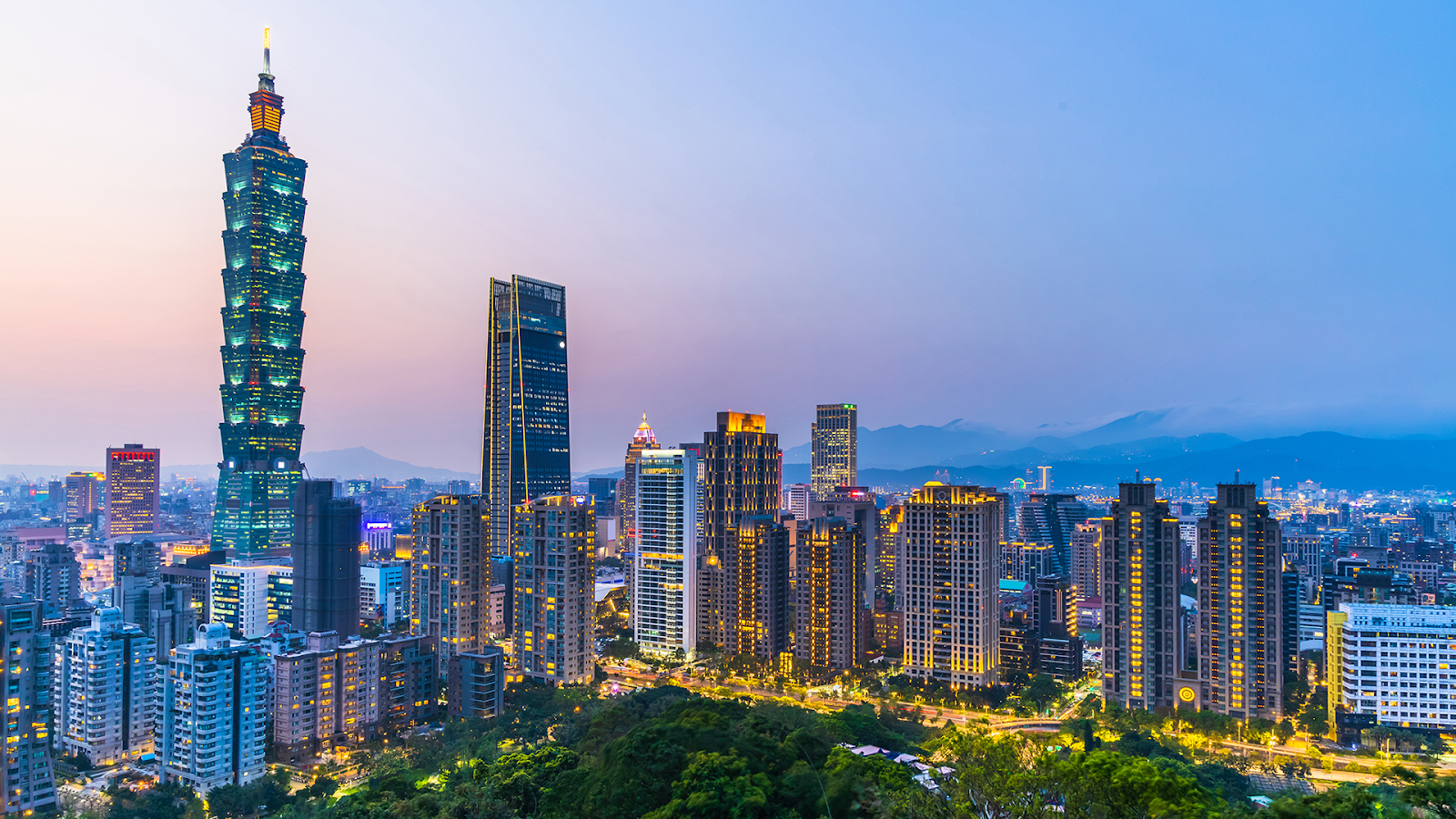
Jeffrey Sachs: "The United States is playing the Taiwan card"

The United States, of course, is playing the Taiwan card.  Taiwan is a part of China.  Interestingly, the Taiwanese say so, the Republic of Taiwan says so, the People's Republic of China says so - they disagree about who should run the place because they had a civil war going back to the 1940s.  But both of them said, "yes," this is one China.  And when we recognize China, the People's Republic of China, we adopt the One China policy.  

But what does the United States do?  It's sending billions of dollars of weapons to Taiwan now.  Can you imagine if China said, "We're going to arm the state of Tennessee?"  And the United States says, "No, please don't do that..."  "No, we're going to arm the state of Tennessee because they like us, maybe someday, who knows, they'll be an ally of ours and so forth, we have a really important company in Tennessee."  This is what we're doing.  It's crazy!  

By the way, it's crazy for Taiwan to follow into this.  My advice to Taiwan is, "Don't become the next Ukraine.  In other words, the next place of a war between superpowers that takes place on your territory."  By the way, I said to the Ukrainians, "Don't become the next Afghanistan."

I've seen this movie too often and I told the Ukrainians, "You will be destroyed.  Not by Russia, but by the United States.  They will tell you, 'Fight on, fight on, fight on!'"  And I often quote Henry Kissinger's quip when he said, "To be an enemy of the United States is dangerous, but to be a friend of the United States is fatal."  This is applying to Ukraine, but I say it to my friends in Taiwan: "Don't play games.  Don't play games.  Don't think the United States is going to be able to save you.  It's no way, but it could destroy you if a war breaks out.  And so don't take weapons from the U.S.  That's not how to get security.  That's how to end up in a war."

Jeffrey Sachs, "Harvard Economist Shocking Prediction for US China Relations in 2025," Cyrus Janssen, 5:10 mark, November 24, 2025


Dec 8, 2024

Jeffrey Sachs on China's success in electric vehicles

Q: One of the underlying themes or conclusions that I'm reading from the various media reports criticizing the health of the Chinese economy it that the China model, which worked for the past few decades, is not working anymore.  And the Chinese leadership, by sticking to that model, is stifling the Chinese economy.  What exactly are they trying to get at?  And what exactly is the Chinese model that they believe is not working anymore?

A: I think if I could interpret it, maybe the claim is that there's too much government intervention in the economy or China's stifling entrepreneurship.  Again, I think that this is Western rhetoric, not reality.  Let me take a very pertinent and quantitatively important example.  China is now the world's leader in electric vehicles.  During the past 10 years, there were around 400 electric vehicle companies in China.  They were competing like crazy.  Of course, there's now kind of a shaking-out process where a few companies are becoming dominant.  But the competition and the entrepreneurship has been absolutely intense.  And the result is that China is taking the leadership in worldwide sales of electric vehicles.  Also, China's domestic market now is remarkable in that more than 40 percent, I believe, of new car sales, are electric vehicles.  And when I recently visited Beijing, you see them everywhere with the green license plates and you see a tremendous change in a short period of time.

Since this is the direction that the entire world is moving towards because of the need for zero-emission vehicles, China's in a very strong position.  What is happening?  The U.S. is putting on tariffs.  Europe is putting on tariffs.  Is that a sign of failure of China?  No, quite the contrary, it's a sign of remarkable success.

~ Jeffrey Sachs, "Jeffrey Sachs on 'China collapse' theory," CGTN, December 8, 2024


Apr 2, 2024

Ron Unz on the ideological transformation of Jeffrey Sachs

Considering both his international stature and the very broad range of his courageous public positions, Prof. Jeffrey Sachs may easily rank as the most consequential American ideological defector of the last one hundred years, with no comparable name coming to my mind.