Showing posts with label China. Show all posts

Oct 8, 2025

Dan Ferris and Corey McLaughlin: Is Duffy the only bull on China?

Ferris: He [Kevin Duffy], if I'm not mistaken, is the only person who says China is an opportunity...  Everybody else says it's uninvestable, one guy like Kevin says buy.

 McLaughlin: It's funny because a month or two ago when we interviewed Brett Eversole... and we were talking about cheap, hated and in an uptrend, after that episode I got a message from Kevin on Twitter... "Hey, what about China?"

~ Dan Ferris and Corey McLaughlin, "China Isn't the Enemy - It's an Investing Opportunity," Stansberry Investor Hour, October 6, 2025

Chinese stocks ... 

Aug 18, 2025

Shaun Rein: "China is going to become the AI leader of the world"

Going forward, China is going to become the AI leader of the world.  And part of the reason is because they're doing open source, which is something that Global South (or the Global Majority) likes because it's going to lower their own costs in adopting AI.  And then second, the reason why DeepSeek and other Chinese artificial intelligence companies are going to win is because they are able to do the same as American firms can do at a fraction of the cost.  So when you have a combination of cheap and open source, that means it's going to be adopted throughout the entire world.

 ~ Shaun Rein, Twitter/X post, August 18, 2025


Jun 23, 2025

Shaun Rein on the real China vs. Western media lies

When I first arrived in China in 1997 to study Mandarin when I was 19 years old, I didn't know what to expect. The Chinese side of my family always taught me to pay respect to Chinese culture and history but they were apolitical - they didn't say anything good or bad about the Chinese government. They had originally moved to the US in the 19th century to work in the California gold mines 

I had watched videos of Tiananmen. I had taken a few intro to China courses in freshman year in college, taught by some old white men. I had read books by Mike Chinoy (who has since blocked me on Twitter)

And I had read a lot of WSJ & NYT articles that showed a lot of negative things about the "CCP". Corruption. Oppressive. The articles made it seem the Chinese people hated the government and wanted American style liberal democracy

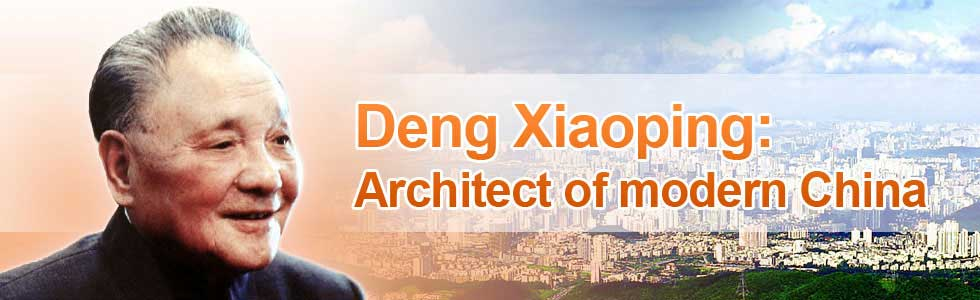
So when I arrived in Tianjin, I was shocked to find that most Chinese supported the CPC. Deng Xiaoping had just died and shopkeepers put little glass bottles in the front of their shops to pay homage 

Taxi drivers had little paintings of Mao Zedong and Zhou Enlai dangling from their backview mirrors 

People felt their lives were getting better and, more importantly, they felt the lives of their kids would be better. And literally, every interaction with a policeman or a government official was positive 

They were happy to see me as an American coming to China. They welcomed me as if I were important or a celebrity. They brought me into their homes for tea, took my out to restaurants, walked with me in parks

In other words, the China I read in the NYT, WSJ and in books written by so-called journalists like Mike Chinoy didn't exist in real life

Perhaps I was naive. I applied for jobs at NYT and in the State Department. I thought they would want someone like me, who had spent time on the ground and spoke reasonable Chinese, to bring a balanced and objective view to China coverage

Over the last 30 years, I realized I was naive. I've met a good portion of the NYT, WSJ, Economist journalists covering China Many don't speak Chinese. Many were more like activists, trying to denigrate and demean China because it didn't adopt an American style political system

Others were bigots and racists. Many frankly were just horrible horrible people 

I started writing books on China to be balanced and basically to counteract the lies by people like ex WSJ reporter Bob Davis 

I'm a businessman. It would've been better for me to shut up and be like McKinsey - be reticent and stay out of controversy

But I had to speak. We Americans are being lied to, to this day, by mainstream media about China. That's why Trump wins - we all know these journalists just lie

~ Shaun Rein, LinkedIn post, June 9, 2025


May 14, 2025

Barbara Kolm and Miguel Del Valle on China's rise from poverty

In the 70s, China was among the poorest nations in the world.  Civil war and mismanagement by central authorities had torn the country apart.  Mao Zedong’s vision of self-reliance destroyed agriculture, devastated the economy ‘and led to mass starvation as people’s communes were established and resources were forcibly shifted from farming to heavy industry.’ (Dorn 2023)  The death of Mao and subsequent rise of Deng Xiaoping enabled a series of reforms that would turn the country away from central planning and toward a market-oriented economy. 

~ Barbara Kolm and Miguel Del Valle, "Free Trade Under Siege: Analyzing Contemporary Trade Policies," Free Trade in the Twenty-First Century (p. 237)


Kevin Duffy on the benefit to American consumers from trade with China

American consumers were standout winners in the pre-Trump 2.0 U.S.-China trade relationship.  Last year, the U.S. got 78% of its imported smartphones from China, 65% of its TVs and 76% of its toys.  As the chart below shows, these categories experienced massive deflation since 2000 at the same time the Consumer Price Index rose 81%. (Unfortunately, we can’t yet import pre-fab homes from China!)  More money in consumers’ pockets translates to more consumption, more investment and more jobs.

~ Kevin Duffy, "Mercantilism in America," The Coffee Can Portfolio, May 6, 2025


May 3, 2025

Jeffrey Sachs on the end of American exceptionalism and rise of Asia

Most of the world population lives in Asia, about 60%.  For most of history, that means that roughly 60% of the world economy, world output, was produced in Asia, as best as one can tell when historians look back and try to recreate economic estimates.  In recent centuries, that changed decisively with the rise of Europe and of the north Atlantic because in the 19th and 20th centuries, of course, the United States rose to become the largest economy in the world.  Asia was eclipsed in this.  Not only eclipsed, of course, it was dominated by European imperial powers.

If you look around 1820 or so, Asia was still more than half of the world economy, but by 1950, after 150 years of the industrial age, dominated by Europe and the United States, the whole Asian economy had declined to around 20% of world output from what had been roughly 60%.  This meant China completely being eclipsed and of course in fact attacked and losing many wars, first to the West in the first and second Opium Wars to chaos during the so-called Taiping Rebellion in the middle of the 19th century to the extraterritorial privileges or rights or dominance of European powers in China at the end of the 19th century and then to Japanese invasion in several episodes, starting with the Sino-Japanese War in 1894-95 and then several Japanese invasions, in fact, in the 20th century and the massive invasions of the 1930s.  Civil war in China in the 1940s.  And this meant that by the time of the establishment of the Peoples' Republic of China in 1949, China had gone through about 110 years of devastating defeats of what China calls the "century of humiliation."  China's share of the world economy was estimated to be maybe 2% of world output and roughly 20% world population as of the 1950s.  In other words, China was completely eclipsed from its long historical role in the world for at least a millennium, by the way, from 500 to 1500 AD.  Before the beginning of the European ascendancy, China clearly dominated the world across many technologies: gunpowder, steam engine, paper currency, the compass, large scale ocean navigation, and one could go on and on, in fact.

So, the story that we see today, taken from a very, very long-term perspective in history is the return of China to the front ranks of power in the world and economic productivity and technology.  In a sense, China has returned to its more traditional role in the world, which one could see for much of the last 2,000 years, in fact.  The rise of China, in this sense, should be understood as a rebalancing of what was absolutely unbalanced, and that is a European-dominated world.

Of course, it's very hard for Europeans and Americans to understand that the idea of European dominance in the world had become an absolute natural standby, and that's been true for several hundred years actually where as Europe rose in power, as European empires dominated the other parts of the world, full ideologies, belief systems, rewriting of history, a lot of racism one can add, even by the leading thinkers of world history in the West, came to say, "Well, Europe's dominance is natural.  European cultural superiority, maybe racial superiority," but whatever the argument was, "European superiority is natural."

Of course, now we're at the end of that phase of history.  And one should understand, it's not only the return of China.  It's also the rapid development of India, it's the rapid development of southeast Asia, the so-called ASEAN countries, it's the rapid development of parts of west Asia in the Gulf countries, for example.  All of this is rather fundamentally ending the Euro-centric view of the world or what in the late 19th century to the early 21st century became the north Atlantic, NATO-centered vision of the world, and by the end of the 20th century became the American-centered vision of the world.

And when you have these temporary imbalances of economy and power...  The tendency is to put a bulwark under them in ideological or religious or some other philosophical sense to say, "That imbalance is natural."  In the United States, the idea of American exceptionalism is very deep.  The idea that, "Yes, of course, America rules the world" is a deep part of the belief system, not a superficial item.  

So the rise of China is viewed with alarm, it's viewed with disdain, it's viewed with fear.  It's not viewed with equanimity.  I don't know any American leaders that say, "Well, of course China's a big power that's had a long history of civilizational greatness so it's natural that China's doing well."  What you hear is, "China's the great threat to the world.  China's rise must be stopped.  We must contain China.  We must prepare for war.  China cheated and stole its way to economic recovery...  It's artificial; China will collapse."  In other words, many erroneous, superficial, biased, sometimes blatantly racist views to undergird this sense of superiority in the U.S. that built up over two centuries.

~ Jeffrey Sach, "Jeffrey Sachs: Chinese Statecraft and a New World Order," Glenn Diesen, 1:10 mark, May 2, 2025


Apr 27, 2025

Kenneth Pringle on President McKinley's China agenda

China was also on McKinley’s agenda. 

The Middle Kingdom had been divided into “spheres of influence” by the European powers.  American business feared missing out on this huge untapped market. 

On Sept. 6, 1899, McKinley issued the Open Door Note, demanding the Europeans allow China to become “an open market for the commerce of the world.”  This wasn’t free trade in the modern sense, simply a right for all to share in the pillaging of China’s dying Qing dynasty. 

Today, the Chinese consider this era part of its “Century of Humiliation.”  It drives leader Xi Jinping in his dealings with the West.

~ Kenneth G. Pringle, "McKinley Is a Conservative Darling. Why Trump Admires the 25th President," Barron's, February 2, 2025


Apr 21, 2025

Keyu Jin on technology transfers to and from Chinese companies

There's a great deal of irony here.  When I was writing my book, the discussion was still about technology transfers that Chinese companies demand of international companies, and now the tape has completely turned around.  What's China's response?  Well, first of all, the Chinese government's response is first, "let the companies decide."  If it's a mutual beneficial thing, they will go ahead with it.  That's up to them.  It shouldn't be imposed from the government top down.

This is economics, right?  This is capitalism.  You're trading one thing for another, which is trading technology for market access.  I think the Chinese companies understand that very well and they're not the first to say "no" to that, because if you look at the EV sector or the batteries, Chinese companies are heavily investing in Europe, they're setting up factories, joint ventures, shifting some of the production or research centers into Europe.  Not into the U.S., by the way, but in Europe, and that is good for both the Chinese companies and for Europe.

Keyu Jin, "Keyu Jin: China Doesn't Want a Trade War with the US," 6:25 mark, Rise of Asia, April 9, 2025


Mar 30, 2025

Kishore Mahbubani on how China learned from the collapse of the Soviet Union

I think out of necessity they [the Chinese] have to have a strategy.  And they do have one.  So for example, they ask themselves the obvious question: "Why did the United States successfully defeat the Soviet Union?  Why?"  And I must say, the one country that has studied the collapse of the Soviet Union more carefully than any country in the world is China because China knows that the dream of the United States is to make China the second Soviet Union that collapses.

So how does China prevent a collapse?  First point, the Soviet Union didn't collapse because of external pressures; it collapsed because of internal weaknesses.  And so China realizes, "To make sure I survive, I must have a very strong dynamic economy and strong dynamic society."  [...]

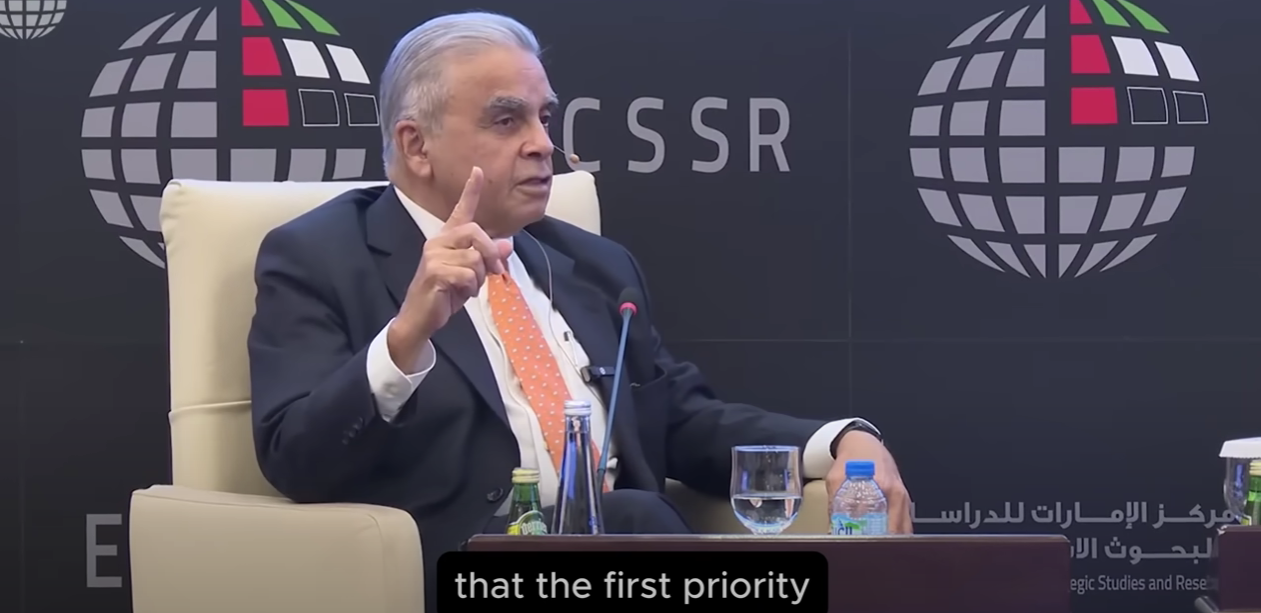
So the Chinese know that the first priority is to make sure your economy is strong and your society is strong, which is why they're massively educating their people and growing their economy, so that they don't become a second Soviet Union.  

The second thing that the Chinese learned from the collapse of the Soviet Union was that the United States succeeded because it managed to get a lot of the neighbors of the Soviet Union to join the containment policy everywhere: Western Europe, Japan, South Korea, both ends of the Soviet Union.  So what did the Chinese do?  The Chinese launched a preemptive strike against a containment policy by making sure that its neighbors depended on the Chinese economy.

I'll give you a simple example.  Singapore is part of Southeast Asia and we are part of an organization called ASEAN and ASEAN started as a pro-American organization.  In fact, when ASEAN was created on August 8th, 1967, both the Soviet Union and China denounced the creation of ASEAN as a pro-American organization.  It's true, ASEAN was pro-American, pro-Western.  And what was stunning was that even though ASEAN was pro-American, pro-Western and we had longer dialogues with the United States, European Union, Australia, Japan, everybody, none of our Western friends proposed a free trade agreement to ASEAN.  The first country to propose a free trade agreement to ASEAN was China in 2001.

And the impact of that China-ASEAN agreement was phenomenal.  Because in the year 2000..., ASEAN's trade with the United States was $135 billion and our trade with China was only $40 billion.  So U.S. trade was more than 3 1/2 times what China's trade with ASEAN was.  But as a result of the free trade agreement, by 2022, even though ASEAN's trade with the United States has gone from $135 billion to $450-500 billion, an increase of over three times, China's trade with ASEAN went from $40 billion to $975 billion dollars, almost $1 trillion dollars, the world's largest trading relationship in 2022!  So there's no way ASEAN can join a containment policy against its largest trading partner, right?  It's crazy.

~ Professor Kishore Mahbubani, "Kishore Mahbubani REVEALS China's Strategy to Counter USA," Rise of China, 6:35 mark, March 25, 2025

(The Association of Southeast Asian Nations was established in 1967 by Singapore, Thailand, Malaysia, Indonesia and the Philippines.  It has since been joined by Brunei, Vietnam, Laos, Myanmar and Cambodia.)


Mar 8, 2025

Will Durant on the future of China (1935)

This nation, after three thousand years of grandeur and decay, of repeated deaths and resurrections, exhibits today all the physical and mental vitality that we find in its most creative periods; there is no people so adaptable to circumstance, so resistant to disease, so resilient after disaster and suffering, so trained by history to calm endurance and patient recovery.  Imagination cannot describe the possibilities of a civilization mingling the physical, labor and mental resources of such a people with the technological equipment of modern industry.  Very probably such wealth will be produced in China as even America has never known, and once again, as so often in the past, China will lead the world in luxury and the art of life.

No victory of arms, or tyranny of alien finance, can long suppress a nation so rich in resources and vitality.  The invader will lose funds or patience before the loins of China will lose virility; within a century China will have absorbed and civilized her conquerors, and will have learned all the technique of what transiently bears the name of modern industry; roads and communications will give her unity, economy and thrift will give her funds, and a strong government will give her order and peace.  Every chaos is a transition.  In the end disorder cures and balances itself with dictatorship; old obstacles are roughly cleared away, and fresh growth is free.  Revolution, like death and style, is the removal of rubbish, the surgery of the superfluous; it comes only when there are many things ready to die.  China has died many times before; and many times she has been reborn.

~ Will Durant, The Story of Civilization: Our Oriental Heritage, "Revolution and Renewal," pp. 822-823 (1935)


Feb 12, 2025

Shaun Rein: Chinese consumers are buying local brands

Chinese consumers are cutting back.  They are buying local brands right now not because they're being told to by the government, but because they're patriotic, just like the Canadians are buying Canadian to offset the Trump tariffs and also because Chinese products are cheaper and just better right now.  So I use a Xiaomi phone because it's about 30% cheaper than Apple.  I think it's almost as good.  Maybe it's as good as an Apple.

So investors need to be buying brands that are Chinese to ride the patriotism trend and also because they're just good value.  Think Luckin Coffee rather than Starbucks.  Think ANTA Sports rather than Nike.


Jan 21, 2025

Jeremy Sargent on the Chinese government

In terms of what a lot of people in the West don't understand about China, although China is sort of top down in its administrative system, it's very layered: you've got your leader, your second, your third, your fourth, going right down to the street level.  That being said, and no, it's not a democracy: you don't vote these people in and out, but they are highly accountable and it's become very accountable based on performance.  So if you're a medium level government official in Guangzhou here, or even a street official looking after this street here, if you don't deliver what you've pledged, you might lose your job.  If you screw up, you go down for it.  And the Chinese government is constantly seeking feedback, gauging opinion, understanding how communities, how people feel about what's going on.  And if people are feeling a certain way about something, they will take action.

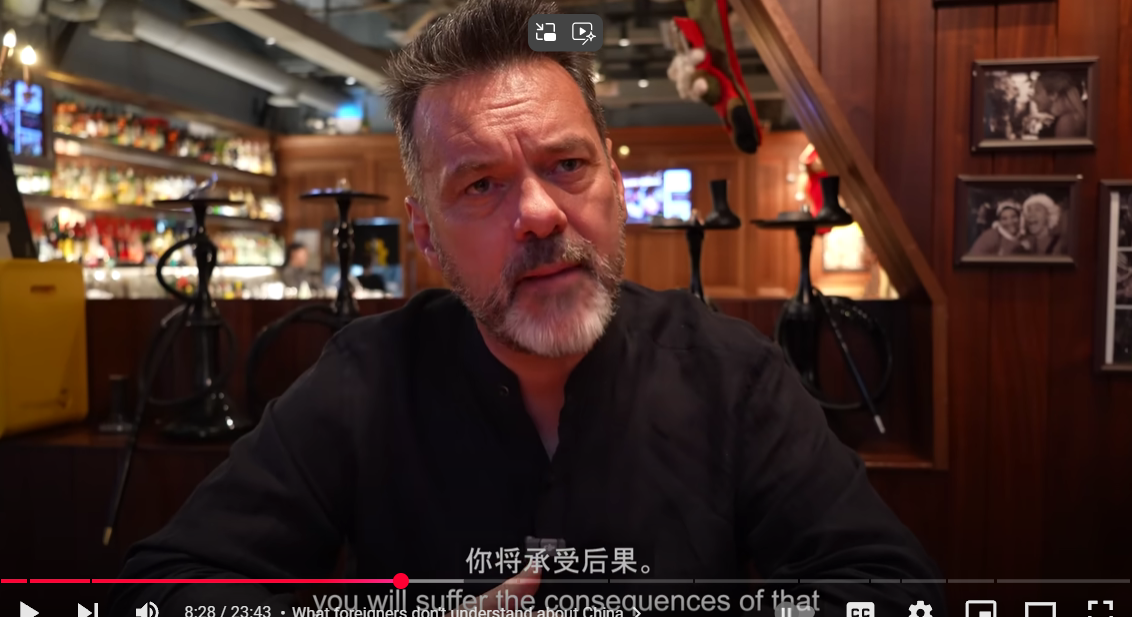
So in that sense, there is direct accountability.  If you're the Guangzhou Environmental Protection Department and you pledge to clean up the air or plant ten trees down the street, if you don't do it, you've screwed up and you will suffer the consequences of that.  So there is that accountability, sort of executive-led accountability.

What I feel, sometimes talking to friends back in UK and other countries, that side of China doesn't make headlines in the media.  People don't realize and they think that China's very much a top-down, "do what you're told" and that's the end of it.  But it's not that simple.  It really isn't.

[...]

And I think that's one reason China's modernization has gone pretty well in most senses.  It's because of that accountability.  There's almost an unwritten contract between the government and the people.  "We're going to make things better and if we don't we're screwing up.  We've got no legitimacy left any longer."  That works quite well.

~ Jeremy Sargent, Brit who has lived in China for 25 years, "This walk with Brit in Guangzhou changed my view of China," Max Chernov, 7:15 mark, January 20, 2025


Dec 30, 2024

Kevin Duffy makes the bull case for Chinese equities

The bull case for China is simple: it’s cheap, hated and on course to become the dominant economy on the planet.  Even the bears will concede the first two points.  But China’s economic future, contrary to a cacophony of negative narratives, makes the 2021-24 equity bear market the mother of all fat pitches, a generational buying opportunity.

~ Kevin Duffy, "Bull in the China Shop," The Coffee Can Portfolio, December 20, 2024


Dec 18, 2024

The Economist on China's success in emerging markets

Since the end of the cold war the rich world’s corporate giants have been the dominant force in global commerce.  Today consumers and workers in almost every country are touched in some way by the world-spanning operations of multinational firms from America, Europe and, to a lesser extent, Japan.  These leviathans are now under threat, as Chinese firms in industries from cars to clothing expand abroad with startling speed.  A new commercial contest has begun.  Its battleground is neither China nor the rich world, but the fast-growing economies of the global south.

The Economist, "Chinese companies are winning the global south," August 3, 2024

August 3, 2024


Dec 12, 2024

Cyrus Janssen on the real China vs. conception of most Americans

This summer we went back to China, we traveled two months throughout China.  We were sharing videos on Instagram with our friends back in America and no one could believe.
This is China?  This is what China looks like?  The roads are this clean?  The cities this good?  The malls are this well?  The meals are this great?  The food is this fresh?  The people are this friendly?
This is the sad thing.  I think for most Americans their conception of China is still stuck in 1970.  It's still Chairman Mao suits, bicycles, poor country, underdeveloped, communism, no freedom, totalitarian society.  This is what the stereotypes about China are.  I lived in China for 10 years.  There's not really many freedoms that I didn't have.  There's not really a huge difference between the United States and China.

~ Cyrus Janssen, "Shocking Truth About China Told by an American," Max Chernov, 1:05 mark, October 14, 2024


Dec 8, 2024

Jeffrey Sachs on China's success in electric vehicles

Q: One of the underlying themes or conclusions that I'm reading from the various media reports criticizing the health of the Chinese economy it that the China model, which worked for the past few decades, is not working anymore.  And the Chinese leadership, by sticking to that model, is stifling the Chinese economy.  What exactly are they trying to get at?  And what exactly is the Chinese model that they believe is not working anymore?

A: I think if I could interpret it, maybe the claim is that there's too much government intervention in the economy or China's stifling entrepreneurship.  Again, I think that this is Western rhetoric, not reality.  Let me take a very pertinent and quantitatively important example.  China is now the world's leader in electric vehicles.  During the past 10 years, there were around 400 electric vehicle companies in China.  They were competing like crazy.  Of course, there's now kind of a shaking-out process where a few companies are becoming dominant.  But the competition and the entrepreneurship has been absolutely intense.  And the result is that China is taking the leadership in worldwide sales of electric vehicles.  Also, China's domestic market now is remarkable in that more than 40 percent, I believe, of new car sales, are electric vehicles.  And when I recently visited Beijing, you see them everywhere with the green license plates and you see a tremendous change in a short period of time.

Since this is the direction that the entire world is moving towards because of the need for zero-emission vehicles, China's in a very strong position.  What is happening?  The U.S. is putting on tariffs.  Europe is putting on tariffs.  Is that a sign of failure of China?  No, quite the contrary, it's a sign of remarkable success.

~ Jeffrey Sachs, "Jeffrey Sachs on 'China collapse' theory," CGTN, December 8, 2024


Nov 18, 2024

Marc Faber on China's rise as a manufacturing superpower (2002)

I'll start with emerging markets, where valuations are attractive and expectations are very low.  Since 1990 the markets in the developed countries of Western Europe and the U.S. are up, say, five times.  In emerging economies most markets are down 80% in dollar terms, and earnings are bottoming out.  Money has been flowing out of emerging-market funds for 2-3 years. 

One concern is that Chinese competition will continue to erode the market share of other Asian exporters to Western Europe and the U.S.  In the long run, very few emerging economies will be able to compete with China.  I wouldn't rule out, in 5-10 years' time, the possibility that China becomes the workshop of the world, the way Lancashire [England] did in 1830s.  But China will also become the customer of other emerging economies.  China has a population of 1.2 billion people.  Today less than 1% of the population is outbound, but 5%-10% could be traveling over the next 10-15 years.  That would mean a meaningful influx of tourists into the surrounding countries of Asia, and Australia, New Zealand, the United States and Western Europe.  Food and plantation companies will benefit from Chinese demand.  Companies that cater to domestic consumer demand -- cigarette companies, pharmaceutical companies, software companies -- will also be helped.

~ Marc Faber, "Past and Presents Four pros speak their minds on history, science and compelling stocks," interview by Laura Rublin, Barron's, January 21, 2002

(Emphasis mine.)


Nov 17, 2024

Richard Lawrence on the macro situation in China

Q: How would you describe the current macro situation in China?

A: Let's start off with the stuff that really matters, which is things like balance sheets.  They've got $3 trillion of Forex reserves.  The household bank deposits are double the size of market capitalization of the stock markets and it nearly tripled the size of annual retail sales.  So the individual Chinese consumer has a lot of firepower in the bank deposit...  Loan-to-deposit ratios are conservative, the capital adequacy ratio at the banks is okay.  So those balance sheet items are all in very good order.  Current account surplus, small government deficit.  So that's not the problem.  The problem is really a lack of confidence.

~ Richard Lawrence, "Betting Big on China & Lessons from Bear Markets," We Study Billionaires, 54:30 mark, September 19, 2024


Nov 9, 2024

YouTube comment on anti-China western media headlines since 1990

Here's what western magazines have been saying about China since 1990: 

1990. The Economist: China's economy has come to a halt. 
1996. The Economist: China's economy will face a hard landing. 
1998. The Economist: China's economy entering a dangerous period of sluggish growth. 
1999. Bank of Canada: Likelihood of a hard landing for the Chinese economy. 
2000. Chicago Tribune: China currency move nails hard landing risk coffin. 
2001. Wilbanks, Smith & Thomas: A hard landing in China. 
2002. Westchester University: China Anxiously Seeks a Soft Economic Landing. 
2003. New York Times: Banking crisis imperils China. 
2004. The Economist: The great fall of China? 
2005. Nouriel Roubini: The Risk of a Hard Landing in China. 
2006. International Economy: Can China Achieve a Soft Landing? 
2007. TIME: Is China's Economy Overheating? Can China avoid a hard landing? 
2008. Forbes: Hard Landing In China? 
2009. Fortune: China's hard landing. China must find a way to recover. 
2010: Nouriel Roubini: Hard landing coming in China. 
2011: Business Insider: A Chinese Hard Landing May Be Closer Than You Think. 
2012: American Interest: Dismal Economic News from China: A Hard Landing. 
2013: Zero Hedge: A Hard Landing In China. 
2014. CNBC: A hard landing in China. 
2015. Forbes: Congratulations, You Got Yourself A Chinese Hard Landing. 
2016. The Economist: Hard landing looms for China. 
2017. National Interest: Is China's Economy Going To Crash. 
2018. The Daily Reckoning: China's Coming Financial Meltdown. 
2019. BBC: China's Economic Slowdown: How worried should we be? 
2020. New York Times: Coronavirus Could End China's Decades-Long Economic Growth Streak. 
2021. Bloomberg: Chinese economy risks deeper slowdown than markets realize. 
2022. Bloomberg: China Surprise Data Could Spell RECESSION. 
2023. Bloomberg: No word should be off-limits to describe China's faltering economy. ... 

Yet it's already 2024 and China's economy is still going strong.

~ @Shenzhou, "Harvard Economist Reveals Shocking SECRET About China in 2025," YouTube, November 8, 2024


Oct 25, 2024

Kevin Duffy on investing in China

Long-term, China is hated for all the right reasons: economically successful, minds its own business, refuses to kowtow to the U.S. and is too big to attack.  In addition, China boasts a smart, hard-working, entrepreneurial culture that values education and has avoided some of the toxic ideologies of the West, like wokeness.  China represents a key control group and geopolitical diversifier.  And it’s on sale.

~ Kevin Duffy, "Portfolio Review," The Coffee Can Portfolio, p. 19, October 22, 2024