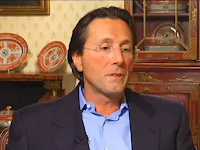
~ Seth Klarman
Showing posts with label people - Klarman; Seth. Show all posts
Apr 9, 2024
Jul 23, 2023
Seth Klarman on investing
Investing is the intersection of economics and psychology.
~ Seth Klarman, interview with Charlie Rose, The Great Investors, 4:30 mark, July 9, 2023
Oct 19, 2021
Bruce Berkowitz on Sath Klarman
If he isn't Elvis, he's pretty close.
~ Bruce Berkowitz, founder of Fairholme Capital Management and Morningstar's domestic stock manager of the decade, "The Financial Life: Seth Klarman," Bloomberg Businessweek, June 21, 2010
May 26, 2021
Seth Klarman on Benjamin Graham
As the father of value investing, Benjamin Graham, advised in 1934, smart investors look to the market not as a guide for what to do, but as a creator of opportunity.
~ Seth Klarman
May 12, 2021
Seth Klarman on his investment firm's competitive advantage
To outperform over time, managers must find edges that enable them to earn excess returns. We believe that we have real edges as a firm, such as our truly long-term focus and flexible investment mandate (including holding significant cash balances). In today's frenetic marketplace, these edges seem more enduring than ever. Most of our competitors feel intense pressure from their clients to generate short-term performance and have trouble maintaining a truly long-term perspective, whether in bad markets or good. They also operate with partnership structures and a client base that restrict their investment mandate.
Our ability to stay the course and move in a decisive and concentrated way into the most attractive areas of opportunity was enormously important during the 2008-2009 crisis, as many of our competitors pulled back from making new investments after sustaining significant losses. We, by contrast, were able to consistently add to positions that were becoming increasingly attractive. We exepect that this same value discipline and long-term focus will help us avoid getting caught up in market bubbles that most competitors simply cannot resist, while serving us well in future pockets of turbulence.
~ Seth Klarman
Apr 2, 2019
Feb 20, 2013
Seth Klarman on current market environment
Investing today may well be harder than it has been at any time in our three decades of existence. The Fed's relentless interventions and manipulations have left few purchase targets for Baupost. The underpinnings of our economy and financial system are so precarious that the un-abating risks of collapse dwarf all other factors.
~ Seth Klarman, 2012 Annual letter to partners, 2/17/2013
Aug 29, 2011
Seth Klarman on lessons learned from the 2008 crisis
Most of us learned about the Great Depression from our parents or grandparents who developed a “Depressionmentality,” by which for decades people shunned leverage, embraced thrift, and thought twice before quitting their secure jobs to join risky ventures. By bailing out the economy rather than allowing the pain of the economic and market collapses to be felt, the government has endowed our generation with a “really-bad-couple-of-weeks-mentality”: no lasting lessons are learned; the government endlessly intervenes in the economy, and, ironically, the first thing to strongly rebound from the 2008 collapse isn’t jobs or economic activity but speculation.
Benjamin Graham’s margin-of-safety concept – to invest at a sufficient discount so that even bad luck or the vicissitudes of the business cycle won’t derail an investment – is applicable to the economy as a whole. Bridges intended for ten-ton trucks are overbuilt by engineers to hold vehicles of 30 tons. Responsible investors assume their best judgments will sometimes go awry and insist on bargain purchases that allow room for error. Likewise, an economy built with no margin of safety will eventually implode. Governments that run huge deficits, promise entitlements that will be next-to impossible to deliver, and depend on the beneficence of foreigners to stay afloat inevitably must collapse – perhaps not imminently but eventually, as Greece and Ireland have recently discovered.
It is clear, both in the financial markets and in government policy, that no long-term lessons have been drawn from the events of 2008. A friend recently posited that adversity is valuable not for what it teaches but for what it reveals. The current episode of financial adversity reveals some unpleasant truths about the character and will of our country and its leaders, and offers an unpleasant picture of the future that awaits, unless we quickly find a way to change course.
~ Seth Klarman, founder, Baupost Group, investor letter, 2010
Benjamin Graham’s margin-of-safety concept – to invest at a sufficient discount so that even bad luck or the vicissitudes of the business cycle won’t derail an investment – is applicable to the economy as a whole. Bridges intended for ten-ton trucks are overbuilt by engineers to hold vehicles of 30 tons. Responsible investors assume their best judgments will sometimes go awry and insist on bargain purchases that allow room for error. Likewise, an economy built with no margin of safety will eventually implode. Governments that run huge deficits, promise entitlements that will be next-to impossible to deliver, and depend on the beneficence of foreigners to stay afloat inevitably must collapse – perhaps not imminently but eventually, as Greece and Ireland have recently discovered.
It is clear, both in the financial markets and in government policy, that no long-term lessons have been drawn from the events of 2008. A friend recently posited that adversity is valuable not for what it teaches but for what it reveals. The current episode of financial adversity reveals some unpleasant truths about the character and will of our country and its leaders, and offers an unpleasant picture of the future that awaits, unless we quickly find a way to change course.
~ Seth Klarman, founder, Baupost Group, investor letter, 2010
May 26, 2008
Seth Klarman on leverage
We are in an era of leverage.
~ Seth Klarman, speech given at the MIT Sloan Investment Management Conference, October 27, 2007
Labels:
credit bubble,
leverage,
people - Klarman; Seth
Subscribe to:
Posts (Atom)