Showing posts with label communism. Show all posts

Oct 20, 2025

Lee Kuan Yew on communism

In 1978, we had a discourse. I said to him, Communism will only work if you believe that all men will sacrifice themselves for their fellow men and not [first] for themselves and their families. I work on the basis that all men and women first work for themselves and their families, and only then will they share a portion of it with the less fortunate. That's the basis on which I work. 

~ Lee Kuan Yew to Deng Xiaoping when he traveled to Singapore in November, 1978

Singapore-China relations

Sep 30, 2020

Hans-Hermann Hoppe on democracy

Democracy has nothing to do with freedom.  Democracy is a soft variant of communism, and rarely in the history of ideas has it been taken for anything else.

~ Hans-Hermann Hoppe, "The Paradox of Imperialism," June 4, 2013


Jun 7, 2020

Alejandro Regueiro on lessons from growing up in communist Cuba

The faux “white privilege guilt,” virtue signaling, and self-flagellation I see from a handful of real and social media white friends is nauseating. As a Hispanic, my “privilege” is to watch both sides [left and right] make utter fools of themselves, and laugh at their idiocy. As someone born in a communist country [Cuba], and educated well in communist tactics by my father, I’ve been warning friends of the build up to this for 30 years.

The most important thing that my dad taught me about dealing with communists (real ones), was to never give one inch. No compromise. As an example, he always refused to participate when invited to join in on “community work” detail, like cutting sugar cane on the weekend. He was the only person employed in the entire educational system of Cuba that refused to join the union. He was very outspoken, and a college director with great influence, yet while he could name 42 friends and acquaintances that were made paredóns (put against a wall and shot), they respected (or feared) him and wouldn’t touch him. And he had rabid communist militares coming to his classes in full uniform and carrying sidearms.

My parents regularly bought meat (and other foodstuffs) on the black market (direct from farmers and ranchers). Under communism, the prison sentence for buying beef from them was greater than that for infanticide. This in a country that just a few years prior was something around 98% Roman Catholic. The local AK-47 toting neighborhood CDR [Committees for the Defense of the Revolution] commissar could demand to search your bags, car or house at any time. People became fearful of their neighbors snitching on them. My mom would grind coffee at 3 or 4 AM so that neighbors wouldn't smell it.

The mass exodus of talent between '59-'61 was so high, that at 25 or 26 years old, with only a BSME from Rensselaer [Polytechnic Institute], my dad was hired by the Central University to become the founding director of the mechanical engineering school, as a result of a student uprising (they were very unhappy with the quality of the program that had been started a year earlier). When he arrived, a male secretary (unheard of in 1960's Latin America) had been assigned to him. That secretary was a military intelligence officer. My dad was also called twice to meetings with Che Guevara (that's a whole other set of stories about the incompetence of central planning), as Che was the "Minister of Industry" at the time. In early 1966, there was a purge, and all Cubans who were not party members were expelled from their jobs; this included my dad and many of his friends and employees at the university. The President of the university was replaced by a partly loyalist with a 6th grade education.

Native born Americans have a very hard time understanding when I tell them some of these stories, as witnessed by their extremely confused looks and naive questions. I think what's happened over the last 3 months (on top of the 3 years), has them reconsidering some of what they've been hearing from me for 30 years. Communism is hell on earth.

~ Alejandro Regueiro, Facebook post, June 7, 2020

Cover of the Cuban Revolution 'album book', circa 1960 ...

Mar 2, 2020

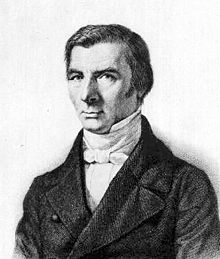
Frédéric Bastiat on the three economic "isms"

Protectionism, socialism, and communism are basically the same plant in three different stages of its growth.

~ Frédéric Bastiat

Image result for frederic bastiat

Jan 28, 2020

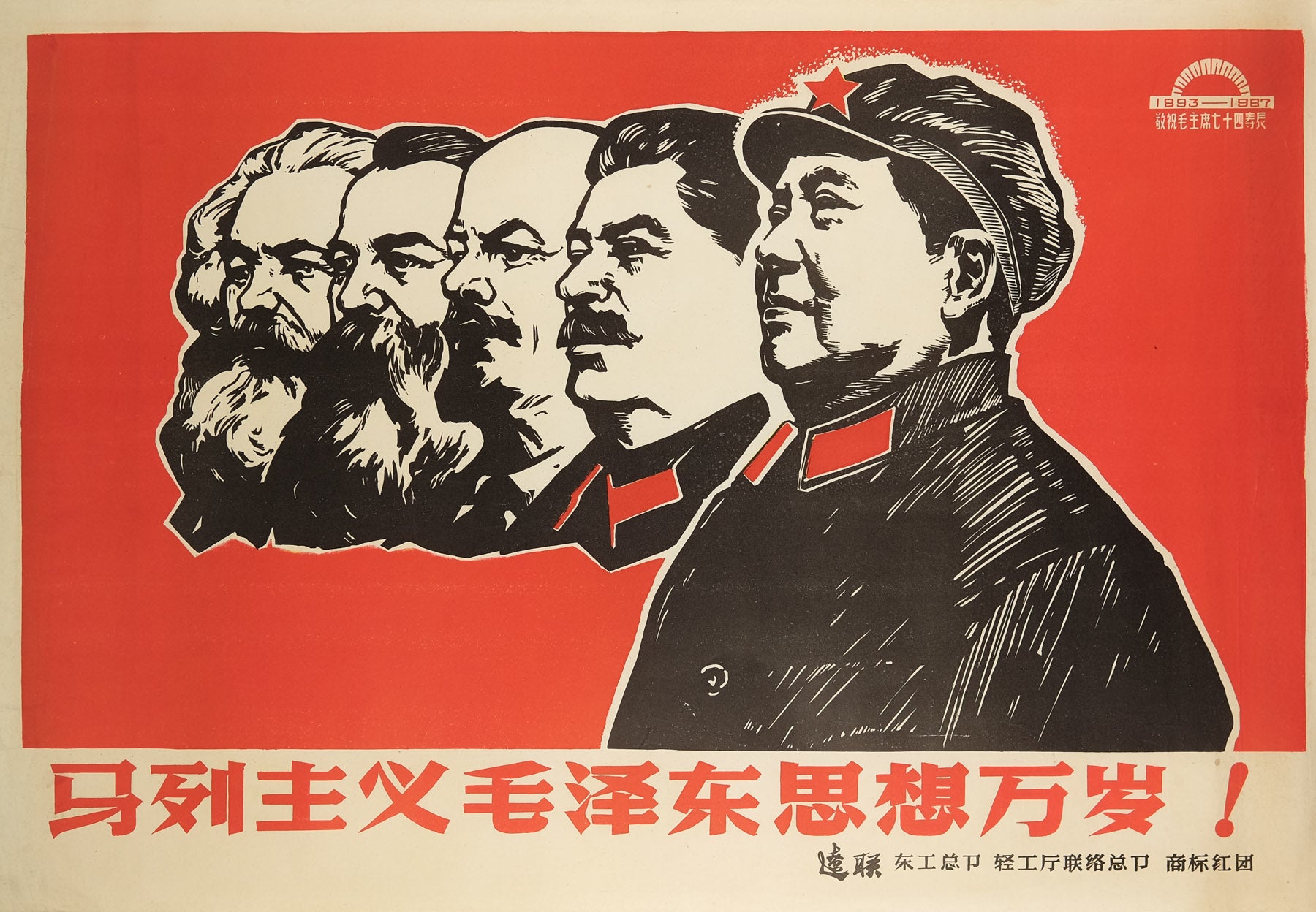
Mao Zedong on the violence behind socialism

Every Communist must grasp the truth, "Political power grows out of the barrel of a gun."

~ Mao Zedong, 1938 speech

Image result for mao zedong propaganda poster

Nov 15, 2014

John T. Flynn on Eisenhower's phoney war on communism

No one accuses [President Eisenhower] of being a Red or even a socialist.  On the contrary, the one great remaining dream of his life seems to be to lead a host against the Red legions all over the world - as if Communism, which is a social disease, could be whipped by armies.  The President does not seem to realize that militarism is a social disease and that it was the effort of the old Germany and France and Italy to bolster their economic systems by militarism supported by government debt that brought all these countries to the brink of bankruptcy in 1914, and then into war to escape the insoluble problems they had created by their folly.  He does not seem to know that militarism bankrupted Germany, France, and Italy twice in fifty years.

~ John T. Flynn, "Our Phoney War on Communism," The American Mercury, February 1954

Jan 30, 2009

Nikita Khrushchev, moving from socialism to communism

We cannot expect the Americans to jump from capitalism to Communism, but we can assist their elected leaders in giving Americans small doses of socialism until they suddenly awake to find they have Communism.

~ Soviet Leader Nikita Khrushchev, 1959

Feb 26, 2008

Lew Rockwell on how the anti-communist movement undermined the limited government plank of the Republican Party

Murray Rothbard used to tell the story of speaking to conservative and Republican audiences in the late 1950s and early 1960s. There would be large groups gathered for various talks on economics and politics. He would give a lecture on the problem of price controls, or protectionism, or high taxes. People really liked what he had to say. They would clap, and learn from his lecture.

Then he would sit down. At some point in the course of the conference, the appointed anti-communist speaker would rise to the podium. He would decry the evil of Russia and its atheistic system of government. He would call for beefing up nuclear weapons and hint darkly of the necessity of war. He would end with an apocalyptic statement about the need for everyone to completely dedicate themselves to eradicating the communists by any means necessary. No talk of limiting or cutting government; quite the opposite.

So how would these people, who clapped for Murray, respond to the warmonger? Insanely, wildly, uncontrollably. They would stand and scream and yell and cheer, getting up on their chairs and putting their hands together high in the air. The applause would go on for five minutes and more, and the speaker would be later mauled for autographs. His books would sell wildly.

Meanwhile, poor Murray would stand there in alarm. How could these same people cheer both a call for liberty and a call for empire, and, most notably, give their hearts over to the maniacal nationalist while being merely polite to a call for the same liberty that had led this party to oppose FDR's domestic and foreign-policy? It was experiences like these that led him to write the most important dissection of the Republican party ever to appear: The Betrayal of the American Right. It is here that Murray engages in a deep, soul-searching look at his own role in red-baiting in the 1950s. He had hoped to use the anti-communist movement to educate people about the need for freedom.

"It is clear that libertarians and Old Rightists, including myself, had made a great mistake in endorsing domestic red-baiting, a red-baiting that proved to be the major entering wedge for the complete transformation of the original right wing," writes Murray. Instead of supporting freedom, the anti-communist movement ended up acculturating Republicans to the imperial mindset. The moral priority of crushing a foreign government trumped every other issue.

At the same time, the libertarianism of the GOP's domestic agenda was supplanted by a belief that "big government and domestic statism were perfectly acceptable, provided that they were steeped in some sort of Burkean tradition and enjoyed a Christian framework." Fiery individualism and radicalism were replaced by a longing for a static, controlling elite of the European sort. Liberty was washed away.

~ Lew Rockwell, "Triumph of the Red-State Fascists," LewRockwell.com, February 26, 2008

Image result for betrayal of the american right

Feb 23, 2008

Justin Raimondo on Murray Rothbard's concerns about "conservative" foreign policy

Rothbard realized that, irrespective of the rhetoric about the "free market" and "individual liberty" that came out of the mouths of conservatives, objectively the result of their policies – specifically, their foreign policy of relentless aggression and confrontation with the Soviet Union – would lead to the exact opposite of their stated intentions. He saw that, as long as we were leading a global crusade, and pouring billions down the "anti-Communist" rat-hole, building up a huge military apparatus and national security bureaucracy – complete with an arsenal of nuclear weapons that could destroy the world several times over – our liberties, indeed our very lives, would be threatened with extinction.

~ Justin Raimondo, "The Year of the Insurgents," Anti-war.com, February 22, 2008

Dec 17, 2007

Howard Buffett on anti-Communist cover for government spending

In the pattern developed through the war years [World War II] of deficit spending, this administration combination would dress up every spending scheme as vital in their anti-Communist program. Attempts at economy would again be smeared as reactionary efforts to save dollars at the cost of the lives of American boys. Patriots who try to bring about economy would be branded as Stalin lovers. The misery of the people, from continued militarism and inflation, would soon become unbearable. As their anguished protests became vocal, the shackles of regimentation and coercion, so lately thrown off, could be refastened in the name of stopping communism at home.

~ Congressman Howard Buffett, March 18, 1947

Dec 6, 2007

Ronald Reagan: "Mr. Gorbachev, tear down this wall" (1987)

In the Communist world, we see failure, technological backwardness, declining standards. . . . Even today, the Soviet Union cannot feed itself... Freedom is the victor... General Secretary Gorbachev . . . come here to this gate. Mr. Gorbachev, open this gate. Mr. Gorbachev, tear down this wall.

~ President Ronald Reagan, speech at the Brandenburg Gate in West Berlin, 1987

Ronald Reagan on the "last pages"of communism (1981)

The West won't contain Communism. It will transcend Communism. We will dismiss it as some bizarre chapter in human history whose last pages are even now being written.

~ President Ronald Reagan, 1981

Dec 1, 2007

Will Rogers on communism

Communism to me is one-third practice and two-thirds explanation.

~ Will Rogers

Image result for communism

Nov 28, 2007

Paul Samuelson on socialism in Eastern Europe (1976)

It's a vulgar mistake to think that most people in Eastern Europe are miserable.

~ Paul Samuelson, Economics, 1976 edition

10th Edition, 1976


Nov 11, 2007

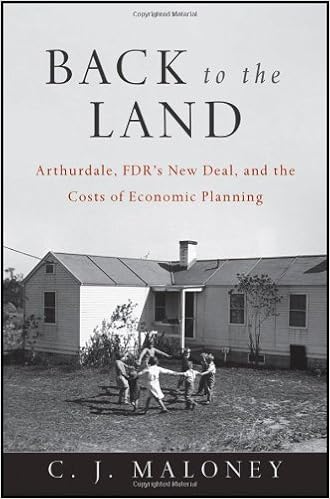
Cyd Malone on the Back to the Land movement of the 1930s

During the 1930s, the wish of the world's politicians to "plan" other men's lives was strong and, by unhappy coincidence, so was their power to do so. The urge to "educate and uplift" their fellow (if lesser) man into a state more agreeable to their theories beat brightly in every progressive heart from Moscow and Berlin to London and Washington D.C.

The Communist Manifesto had vastly more influence on the intellectual mind than it does today, and its exhortation for "combination(s) of agriculture with manufacturing industries; gradual abolition of the distinction between town and country, by a more equitable distribution of the population over the country" was taken seriously as a workable idea and, more important, as a morally correct idea. Writings such as the Manifesto undoubtedly contributed to the birth of the Back to the Land movement, an intellectual fad that swept through the brains of many 1930s Western politicians.

As a result, the city of Magadan in Russia's Siberia was built from nothing, by and for Stalin's slave army. It still exists today. In Germany, the town of Ramersdorf was built from scratch on the magnanimous whim of Adolph Hitler; it too still exists today. And America's very own example of the fad was the West Virginia town of Arthurdale, constructed during 1933 on the magnanimous whim of Eleanor Roosevelt.

~ , "The Peculiar History of Arthurdale," Mises.org, August 8, 2007

Image result for arthurdale failed social experiments


Nov 9, 2007

Walter Duranty on Stalinism

It is hard and horrible, for twentieth century America to hear this, but facts are facts. Stalinism not only aims but boasts of aiming at the complete smashing of class boundaries, at the death of all distinctions save talent and State service between man and man. Rank may replace class in the Bolshevik cosmogony to satisfy human needs, but rank based on merit, not on wealth or birth.

But what, you may ask, becomes of “the Former People” or the kulaks or engineers thus doomed apparently to perish? Must all of them and their families be physically abolished? Of course not—they must be “liquidated” or melted in the hot fire of exile and labor into the proletarian mass.

To illustrate—they take a kulak or other type of “former” individualism—a private business man or self-seeking engineer—and send him to the northern woods or Siberian construction camps. Sometimes his family goes, too. More generally it remains to be absorbed by poverty into the lower proletarian surroundings.

No Compromise Permitted.

Then they tell him: “You outcast! You man that was, and now is not! You can get back your civic rights; can be reborn a proletarian; can be come a free member of our ant heap by working for and with us for our communal purpose. If you don’t, we won t actually kill you, but you wont eat much, won’t be happy, will remain forever an outsider, as an enemy, as we consider it, even if ultimately you return from exile and rejoin your family. Because in this sub-Communist ant heap those who are not with us are against us, and the final fate of such enemies is death.”

That, reduced to its harsh essentials is Stalinism today. It is not lovely, nor, in the outside world, of good repute, and your correspondent has no brief for or against it, nor any purpose save to try to tell the truth. But truth it is—ant-heap system, ant-heap morality—each for all and all for each, not each for self and the devil take the hindmost.

~ Walter Duranty, "Stalism Smashes Foes in Marx's Name," June 24, 1931

Nov 5, 2007

Joe Kennedy on post-war foreign policy

Half of this world will never submit to dictation by the other half. The two can only agree to live next to each other because for one to absorb the other becomes too costly.

An attitude of realism such as this is, I submit, in accord with our historic traditions. We have never wanted a part of other peoples’ scrapes. Today we have them and just why, nobody quite seems to know. What business is it of ours to support French colonial policy in Indo-China or to achieve Mr. Syngman Rhee’s concepts of democracy in Korea? Shall we now send the Marines into the mountains of Tibet to keep the Dalai Lama on his throne? We can do well to mind our business and interfere only where somebody threatens our business and our homes.

The policy I suggest, moreover, gives us a chance economically to keep our heads above water. For years, I have argued the necessity for not burdening ourselves with unnecessary debts. There is no surer way to destroy the basis of American enterprise than to destroy the initiative of the men who make it. . . . Those who recall 1932 know too easily the dangers that can arise from within when our own economic system fails to function. If we weaken it with lavish spending either on foreign nations or in foreign wars, we run the danger of precipitating another 1932 and of destroying the very system which we are trying to save.

An Atlas, whose back is bowed and whose hands are busy holding up the world, has no arms to lift to deal with his own defense. Increase his burdens and you will crush him. . . . This is our present posture. . . . The suggestions I make . . . would . . . conserve American lives for American ends, not waste them in the freezing hills of Korea or on the battle-scarred plains of Western Germany.

~ Ambassador Joseph P. Kennedy, "Present Policy is Politically and Morally Bankrupt," Vital Speeches 17, no. 6 (January 1, 1951): 170–73.

(This quote was found in "The Postwar Renaissance II: Politics and Foreign Policy," Chapter 8 of The Betrayal of the American Right by Murray Rothbard.)