Showing posts with label forecasting. Show all posts

Feb 21, 2023

John Kenneth Galbraith on economic forecasting

The function of economic forecasting is to make astrology look respectable.

~ John Kenneth Galbraith


Sep 28, 2022

Benjamin on stock market forecasts

If I have noticed anything over these past 60 years on Wall Street, it is that people do not succeed in forecasting what's going to happen in the stock market.

~ Benjamin Graham


Sep 19, 2022

Kevin Duffy on macro forecasting

We should be grateful the Buffett faithful reject macro forecasting.  This is just one of many tools in our toolbox.  Like all tools in the investing game, it works best when others fail to see its worth.

~ Kevin Duffy, "In Defense of Macro Forecasting," The Coffee Can Portfolio, September 18, 2022

Sep 7, 2022

Jim Grant on about imagining the future and thinking apart from the crowd

Just as markets are about the future, if you can't know the future you must contribute something to the difficult but necessary job of imagining it.  You can dogmatize about it.  You can conceive a view of it based upon the alignment of forces in the present, about the way people themselves are expecting the future to unfold.  If everyone thinks one thought, you have an edge, because you can investigate the alternative, because often as not the idea that's most popular is the least remunerative - not always, but often.

~ Jim Grant, interview with William Green, 29:20 mark, August 20, 2022


Aug 12, 2022

Warren Buffett on forecasting

Forecasts may tell you a great deal about the forecaster; they tell you nothing about the future.

~ Warren Buffett


Jun 6, 2022

Tren Griffin on Charlie Munger's multi-model approach

In Munger's view, it is better to be worldly wise than to spend time working with a single model that is precisely wrong.   A multiple-model approach that is only approximately right will produce a far better outcome in anything that involves people or a social system.

~ Tren Griffin, senior director of strategy at Microsoft


Apr 29, 2022

Warren Buffett on stock forecasters

We've long felt that the only value of stock forecasters is to make fortune tellers look good.  Even now, Charlie and I continue to believe that short-term market forecasts are poison and should be kept locked up in a safe place, away from children and also from grown-ups who behave in the market like children.

~ Warren Buffett, 1992 Berkshire Hathaway Chairman's Letter


Aug 28, 2021

Philip Tetlock and Dan Gardner on forecasting

There is plenty of room to stake out reasonable positions between the debunkers and the defenders of experts and their forecasts.  On the one hand, the debunkers have a point.  There are shady peddlers of questionable insights in the forecasting marketplace.  There are also limits to foresight that may just not be surmountable.  Our desire to reach into the future will always exceed our grasp.  But debunkers go too far when they dismiss all forecasting as a fool's errand.  I believe it is possible to see into the future, at least in some situations and to some extent, and that any intelligent, open-minded, and hardworking person can cultivate the requisite skills.

Call me an "optimistic skeptic."

~ Philip Tetlock and Dan Gardner, Superforecasting, p. 6


May 6, 2021

Charles de Vaulx on the future

Only God knows the future and he ain't telling us.

~ Charles de Vaulx, R.I.P.

Charles de Vaulx
1962-2021


Dec 14, 2020

Jim Grant compares medical authorities to economic authorities

The medical authorities remind me of the economic authorities.  Both pretend to draw a bead on the future. Let’s compare them both to the meteorological authorities.  The National Weather Service spends over a billion dollars a year and takes tens of millions, if not billions, of discrete observations of wind, weather, tide, temperature, what have you.  But notice the 5 and 10 day forecasts on your trusty iPhone are ever changing.  This is the weather.  Temperature gradients don’t have feelings, they don’t get jealous of the millionaire next door, they don’t watch CNBC, yet our forecasting ability goes out maximum 10 days. Even so, the economists think nothing of calling next year’s GDP.

~ Jim Grant, "Living Economic History: Q&A with Jim Grant, The Coffee Can Portfolio, December 10, 2020


Nov 1, 2020

Ronald Stöferle et al. on Nassim Taleb and why economists are prone to making poor forecasts

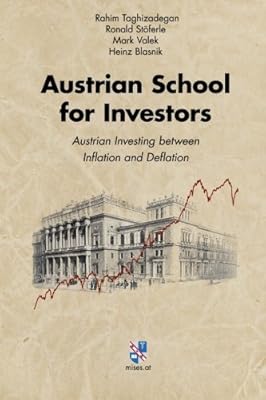
In [Nassim] Taleb's opinion, economists are susceptible to erroneous assessments, as soon as they ascribe excessive precision to statistical methods.  He provides inter alia two major reasons for this.  First of all, they often fall prey to the fallacious assumption that extensive amounts of historical observations permit conclusions about the future, and secondly, that future events are subject to a bell-shaped probability distribution.  In other words: they do not assume that past correlations may be subject to randomness as well.

~ Rahim Taghnizadegan, Ronald Stöferle, Mark Valek and Heinz Blasnik, Austrian School for Investors (2015), p. 74


Aug 2, 2020

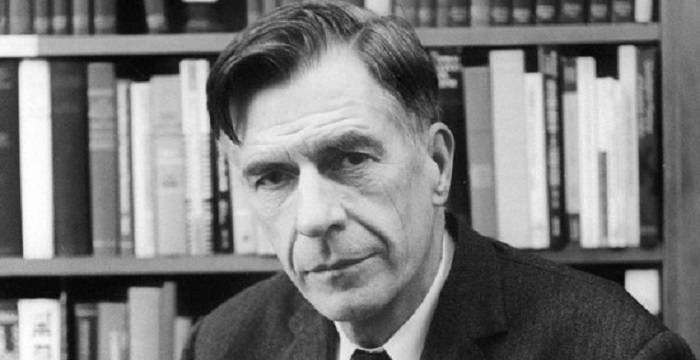
John Kenneth Galbraith on forecasting

We have 2 classes of forecasters: Those who don't know...and those who don't know they don't know.

~ John Kenneth Galbraith

John Kenneth Galbraith Biography - Childhood, Life Achievements ...

Mar 31, 2020

Jim Grant on dealing with a complex, uncertain future

The scale of government response is something new. So these things are unprecedented and so one must be very careful about drawing lessons from the past....

But for me, the lesson I have learned, or reinforced, is that … I’m going to quote a screenwriter from Hollywood... William Goldman, who I think wrote Butch Cassidy and Sundance Kid, apropos of the predictability of box-office receipts, William Goldman, from his lips fell one of the great quotations pertaining to all attempts at forecasting and prognostication.

“Nobody knows anything.”

We can know tendencies. We can observe patterns of behavior. We can project. So what the events of the past, the violent events of the past two weeks, have reinforced to me is the necessary humility to stay relatively diversified, relatively liquid and to choke down any thought that begins to resemble certitude. We can’t be immobilized by our ignorance of the future.

We can understand how complex the future is and how predictably, indeed predictably, it can surprise you.

~ Jim Grant, "Nobody Knows Anything," interview with Albert Lu of Sprott Media, March 24, 2020

Image

Jul 17, 2019

Jim Grant on the value of Austrian theory when peering into the future

What we do is look for extremes in markets: very undervalued or very overvalued.  Austrian theory has certainly given us an edge.  When you have a theory to work from, you avoid the problem that comes with stumbling around in the dark over chairs and night stands.  At least you can begin to visualize in the dark, which is where we all work.  The future is always unlit.  But with a body of theory, you can anticipate where the structures might lie.  It allows you to step out of the way every once in a while.

~ Jim Grant, "The Trouble with Prosperity: An Interview with James Grant," Austrian Economics Newsletter, Winter 1996

(Cited by Austrian School for Investors, p. 75.)

Image result for austrian school for investors

Feb 6, 2017

Bill Bonner: "investment markets reward virtue and punish sin"

We are, frankly, in far too much awe of the world, and too deeply entertained by it, to think that we can understand it today or foretell tomorrow.  Life's most attractive components - love and money - are far too complex for reliable soothsaying.  Still, we can't resist taking a guess.

We may not know how the world works, but we are immodest enough to think we can know how it does not work.  The stock market is not, for example, a simple mechanism like an ATM machine, where you merely tap in the right numbers to get cash out when you need it.  Instead, the investment markets - like life itself - are always complicated, often perverse, and occasionally absurd.  But that does not mean that they are completely random; though unexpected, life's surprises may not always be undeserved.  Delusions have consequences.  And, sooner or later, the reckoning day comes and the bills must be paid.

In this sense, the investment markets are not mechanistic at all, but judgmental.  As we will see, they reward virtue and punish sin.

~ Bill Bonner, Financial Reckoning Day (2006), p. 2

Image result for bill bonner financial reckoning day

May 19, 2011

Tim Geithner on our proximity to another big financial crisis

It will come again. There will be another storm. But it's not going to come for a while.

It's not going to be possible for people to capture risk with perfect foresight and knowledge.

~Tim Geithner, US Treasury Secretary, in a speech given at the Time Warner Center screening of the new film, "Too Big To Fail", May 18, 2011

May 9, 2011

Yaron Brook on the forecasting abilities of most economists

Most economists didn't see this recession coming. Most economists thought that housing prices were going to continue to go up. Most economists are wrong most of the time. That's why, after all, we call it the dismal profession.

~Yaron Brook, president, Ayn Rand Institute, Yahoo! Finance's Daily Ticker, May 9, 2011

Mar 25, 2011

Jeremy Siegel on the potential for Fed tightening

There's so many steps to go before we hit [a point where the Fed feels compelled to tighten] and Bernanke is going to give a speech that is going to say, you know, 'Our strength is now showing, we're going to remove some of the accomodation'. It'll first come probably with moving just the discount rate and then finally some moves on the Federal Funds, it's not going to come all of a sudden. 'Cause, despite how bad the inflation numbers were on the PPI and the CPI this week, the Core were almost exactly on target. That is what the Fed is looking at so there is no reason for a precipitous move right now. They just have to keep their eyes open for problems.

~Jeremy Siegel, professor of finance, Wharton School of Business, Bloomberg News interview, March 24, 2011

Barton Biggs shares his optimistic investment philosophy, and some concerns

Look, you can't live your life investing on the probability of black swans and so, yes, I think the economic news is very encouraging. We're moving from a snapback and a recovery into a self-sustaining recovery. The data's been a little soft the last couple of weeks but still I think the economic news is good enough both in the US, Europe, Asia and maybe even in Japan to move markets another 10 or 15% from here.

But, if something awful happens in Bahrain and in Saudi Arabia, all bets are off. And if the Europeans continue to muck up this whole sovereign debt situation, that could be a very disconcerting factor. And look, there's always things to worry about and I'm worried about US house prices and again, the data that came out today shows that US house prices on existing homes are still declining and in fact have declined to a new low and that home sales, in other words of these existing homes, have weakened very significantly in the last month and a half or so.

And that's bad, there's no question about it.

~Barton Biggs, managing partner, Traxis Partners, Bloomberg News interview, March 24, 2011

Mar 10, 2011

CNBC's Sue Herrera weighs in on the 2011 bull market

Do I think it's the end of the bull market? No, I don't, but I do think there's probably more volatility certainly and I think there's a lot more downside to go in terms of percent. Maybe another 5% to go in terms of the downside. Whether that happens in a matter of days of stretches out over a couple of weeks, I think you need to continue to watch Europe. They're not out of the woods and they've got some big issues to resolve before that.

~Sue Herrera, co-anchor, CNBC's "Power Lunch", CNBC interview, March 10, 2011