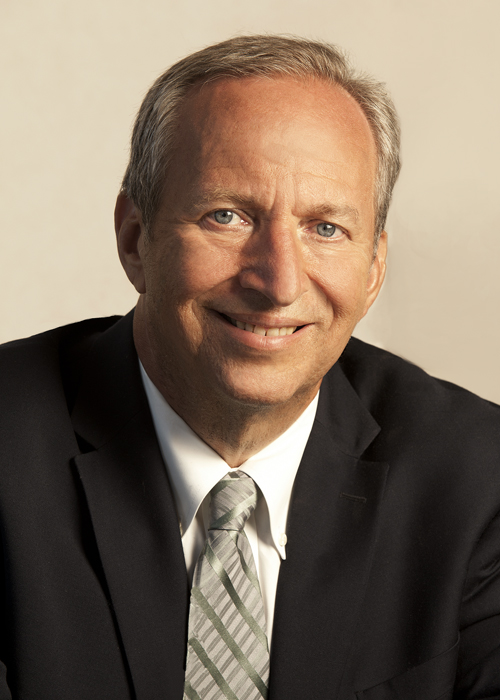
The most popular and influential economics textbook in the post-war period was written by Nobel Laureate Paul Samuelson. We saw in Chapter 4 how Samuelson predicted that ending World War II would cause the biggest recession in world history, only for one of the biggest booms in U.S. history to ensue. But it gets even better. Samuelson wrote the most popular economics textbook of the postwar era,
Economics: An Introductory Analysis, which has sold millions of copies over six decades. Levy and Peart studied the different versions of Samuelson's to find him repeatedly presenting the Soviet economic model as being more conducive to economic growth, predicting in the fourth edition in 1961 that the Soviet Union's economy would overtake that of the United States sometime between 1984 and 1997. These forecasts for Soviets overtaking the United States continued to be made with increasing confidence through seven editions of the textbook, until the eleventh edition in 1980, with varying estimates for when the overtaking would occur. In the thirteenth edition, published in 1989, which hit the desks of university students as the Soviet Union was beginning to unravel, Samuelson and this then-co-author William Nordhaus wrote, "The Soviet economy is proof that, contrary to what many skeptics had earlier believed, a socialist command economy can function and even thrive." Nor was this confined to one textbook, as Levy and Peart show that such insights were common in the many editions of what is probably the second most popular economics textbook, McConnell's
Economics: Principles, Policies and Problems, as well as several other textbooks. Any student who learned economics in the postwar period in a university following an American curriculum (the majority of the world's students) learned that the Soviet model is a more efficient way of organizing economic activity. Even after the collapse and utter failure of the Soviet Union, the same textbooks continued to be taught in the same universities, with the newer editions removing the grandiose proclamations about Soviet success, without questioning the rest of their economic worldview and methodological tools. How is it that such patently failed textbooks continue to be taught, and how is the Keynesian worldview, so brutally assaulted beyond repair by reality over the past seven decades - from the boom after World War II, to the stagflation of the seventies, to the collapse of the Soviet Union - still taught in universities? The dean of today's Keynesian economists, Paul Krugman, has even written of how an alien invasion would be great for the economy as it would force government to spend and mobilize resources.
In a free market economic system, no self-respecting university would want to teach its students things that are so patently wrong and absurd, as it strives to arm its students with the most useful knowledge. But in an academic system completely corrupted by government money, the curriculum is not determined through its accordance with reality, but through its accordance with the political agenda of the governments funding it. And governments, universally, love Keynesian economics today for the same reason they loved it in the 1930s: it offers them the sophistry and justification for acquiring ever more power and money.
~ Saifedean Ammous, The Bitcoin Standard, pp. 158-160
 |
| First Edition, 1948 |