Showing posts with label books - America's Counter-Revolution. Show all posts

Aug 29, 2022

Sheldon Richman on the early days of American imperialism

Unfortunately, even many critics of the American empire think it is relatively new.  Some do understand that its origins preceded the 20th century and that the empire did not begin with the Cold War or U.S. entry into the world wars.  They would likely see the Spanish-American War in 1898 as the beginning, when America acquired territory as far away as the Philippines.  But I would look even further back than that.  How far back?  The second half of the 18th century.  The earliest days of American empire-building shed light on how America's earliest rulers perceived their constitutional powers and hence on the Constitution itself...

Even the government's schools teach, or at least taught during my 12-year sentence, that America's founders had - let us say - an expansive vision for the country they were establishing.  The historian William Appleman Williams's extended essay, Empire as a Way of Life (1980), provides many details.  Clearly, these men had empire on their minds.

Before he became an evangelical for independence from Great Britain, Benjamin Franklin proposed a partnership between Great Britain and the American colonists to help spread enlightened empire throughout the Americas.  His proposal was rejected as impractical, so he embraced independence from Britain - without giving up the dream of empire in the New World.  George Washington would have shared the vision; he spoke of the "rising American empire" and described himself as living in an "infant empire."

Thomas Jefferson - "the most expansion-minded president in American history," (writes Gordon S. Wood in Empire of Liberty: A History of the Early Republic: 1789-1815 - set out a vision of an "Empire of Liberty," later revised as an "Empire for Libery," and left the presidency believing that "no constitution was ever before as well calculated as ours for extensive empire and self-government."  Before leaving office, of course, he acquired the gigantic Louisiana territory from France (828,000 square miles) without constitutional authority, a violation he was fully aware of.

[...]

Indeed, in the eyes of the founders, the American Revolution was largely a war between a mature, exhausted empire and a nascent one.  Many - but assuredly not all - Americans of the time would have cheerfully agreed...

The Indian Wars were among the first steps in empire building.  The unspeakable brutality and duplicity - the acts of ethnic cleansing and genocide, as we say today - were crimes, not merely against individuals, but also against whole societies and nations.  "Imperialism" was not yet a word in use, but that's what this was, as were the designs and moves on Canada (one of the objects of James Madison's War of 1812), Mexico, Cuba, Florida, the Mississippi and New Orleans, Louisiana, the Northwest, and the Pacific coast (the gateway to Asia).  The wishes of the inhabitants - who were "as yet incapable of self-government as children," as Jefferson said of Louisiana's residents - didn't count.  (Lincoln's war is thus understood as an exercise in empire preservation.)

~ Sheldon Richman, America's Counter-Revolution, "Empire on Their Minds," pp. 101-102


Aug 23, 2022

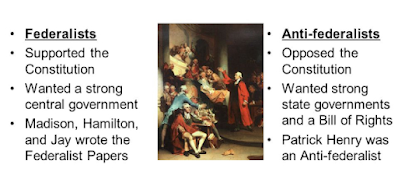
Sheldon Richman on the fight between anti-federalists and federalists over forming a new government in America

The Anti-Federalists could not discuss power without expressing their distaste for aristocracy...  The Revolution... was as much an internal struggle against a conservative elite as an external struggle against the British.  Aristocracy in the new nation was no imaginary nemisis.  The Federalists complained that with the breakdown in social distinctions achieved through the Revolution (apparel no longer indicated who was well-born and who was not), the wrong sort of people were populating the state legislatures, people who actually worked for a living.  The remedy was a national government, which for various reasons would favor prominent wealthier men...

In retrospect, the Anti-Federalists seemed destined to lose because they conceded too much.  (They were also handicapped, as [Pauline] Maier and [Gordon S.] Wood documented, by newspaper bias toward the Federalists, who were concentrated in the cities and towns).  Anti-Federalists objected to power, but only up to a point.  They were willing to accept a stronger national government, and they accepted taxation, regulation, and other government activism at the state and local level.  This reduced the force of their case against the Federalists.  They were arguing not about power per se, but about which level of government should have the upper hand.  That made the difference a matter of degree not kind, which gave the advantage to the nationalists.  "In any conflict between two men (or two groups) who hold the same basic principles," Ayn Rand wrote in "The Anatomy of Compromise," "it is the more consistent one who wins."  Unfortunately, the Federaliss were the more consistent.

~ Sheldon Richman, America's Counter-Revolution, pp. 10-11


Jun 13, 2020

Ayn Rand on consistency

In any conflict between two men (or two groups), it is the more consistent one who wins.

~ Ayn Rand, The Anatomy of Compromise

(as quoted by Sheldon Richman, America's Counter-Revolution, p. 10)