Showing posts with label hyperinflation. Show all posts

Mar 20, 2024

Saifedean Ammous on hyperinflation

Hyperinflation is a form of economic disaster unique to government money.  There was never an example of hyperinflation with economies that operated a gold or silver standard, and even when artifact money like seashells and beads lost its monetary role over time, it usually lost it slowly, with replacements taking over more and more of the purchasing power of the outgoing money.  But with government money, whose cost of production tends to zero, it has become quite possible for an entire society to witness all of its savings in the form of money disappear in the space of a few months or even weeks.

Hyperinflation is a far more pernicious phenomenon than just the loss of a lot of economic value by a lot of people; it constitutes a complete breakdown of the structure of economic production of a society built up over centuries and millennia.  With the collapse of money, it becomes impossible to trade, produce, or engage in anything other than scraping for the bare essentials of life.  As the structures of production and trade that societies have developed over centuries break down due to the inability of consumers, producers, and workers to pay one another, the goods which humans take for granted begin to disappear.  Capital is destroyed and sold off to finance consumption.  First go the luxury goods, but soon follow the basic essentials of survival, until humans are brought back to a barbaric state wherein they need to fend for themselves and struggle to secure the most basic needs of survival.  As the individual's quality of life degenerates markedly, despair begins to turn to anger, scapegoats are sought, and the most demagogic and opportunistic politicians take advantage of the situation, stoking people's anger to gain power.  The most vivid example of this is the destruction of the Weimar Republic in the 1920s, which not only led to the destruction and breakdown of one of the world's most advanced and prosperous economies, but also fueled the rise of Adolph Hitler to power.

Even if the textbooks were correct about the benefits of government management of the money supply, the damage from one episode of hyperinflation anywhere in the world far outweighs them.  And the century of government money had far more than one of these calamitous episodes.

As these lines are written, it is Venezuela's turn to go through this travesty and witness the ravages of the destruction of money, but this is a process that has occurred 56 times since the end of World War I, according to research by Steve Hanke and Charles Bushnell, who define hyperinflation as a 50% increase in the price level over a period of a month.  Hanke and Bushnell have been able to verify 57 episodes of hyperinflation in history, only one of which occurred before the era of monetary nationalism, and that was the inflation in France in 1795, in the wake of the Mississippi Bubble, which was also produced through government money and engineered by the honorary father of modern government money, John Law.

~ Saifedean Ammous, The Bitcoin Standard, pp. 66-67


Dec 4, 2023

Dylan Grice on money, trust and social cohesion

At its most fundamental level, economic activity is no more than an exchange between strangers.  It depends, therefore, on a degree of trust between strangers.  Since money is the agent of exchange, it is the agent of trust.  Debasing money therefore debases trust.  History is replete with Great Disorders in which social cohesion has been undermined by currency debasements.  The multi-decade credit inflation can now be seen to have had similarly corrosive effects.  Yet central banks continue down the same route.  The writing is on the wall.  Further debasement of money will cause further debasement of society.  I fear a Great Disorder. 

I am more worried than I have ever been about the clouds gathering today.  I hope they pass without breaking, but I fear the defining feature of coming decades will be a Great Disorder of the sort which has defined past epochs and scarred whole generations. 

"Next to language, money is the most important medium through which modern societies communicate,” writes Bernd Widdig in his masterful analysis of Germany’s inflation crisis, Culture and Inflation in Weimar Germany (2001).  His may be an abstract observation, but it has the commendable merit of being true.. all economic activity requires the cooperation of strangers and therefore, a degree of trust between cooperating strangers.  Since money is the agent of such mutual trust, debasing money implies debasing the trust upon which social cohesion rests. 

So I keep wondering to myself, do our money-printing central banks and their cheerleaders understand the full consequences of the monetary debasement they continue to engineer?  Inflation of the CPI might be a consequence both seen and meas-urable.  A broad inflation of asset prices might be a consequence seen, though not measurable.  But what about the consequences that are unseen but unmeasurable—and are all the more destructive for it?  I feel queasy about the enthusiasm with which our wise economists play games with something about which we have such a poor understanding.

~ Dylan Grice

(As quoted by Tim Price in "Flying Blind," December 4, 2023.)


May 2, 2021

Charles de Vaulx on the risk of inflation and hyperinflation

Even though I understand why we have all these deflationary forces going on, either due to industry disruptions or some of the monetary policies that are followed,... if I were a wealthy client I want to believe that the ultimate nightmare is inflation, as opposed to deflation or disinflation.  Now don't get me wrong, deflation is not something that's amusing...  Deflation's not easy; companies default.  People always associate gold with inflation, but they forget that gold does very well in deflationary times because gold is not an IOU...  So if you're wealthy and you fear deflation, if you are exceedingly careful about counterparty risk, I think you can do ok.  Conversely, if inflation or hyperinflation comes, it's a lot harder to maintain your wealth in real terms...  I do worry that the next step will be inflation. 

~ Charles de Vaulx, "Charles de Vaulx: Why Value Investing Has Slumped but Will Rebound," 43:00 mark, Morningstar interview, November 20, 2019


Aug 30, 2020

Kevin Duffy on hyperinflation, gold, stocks and optionality

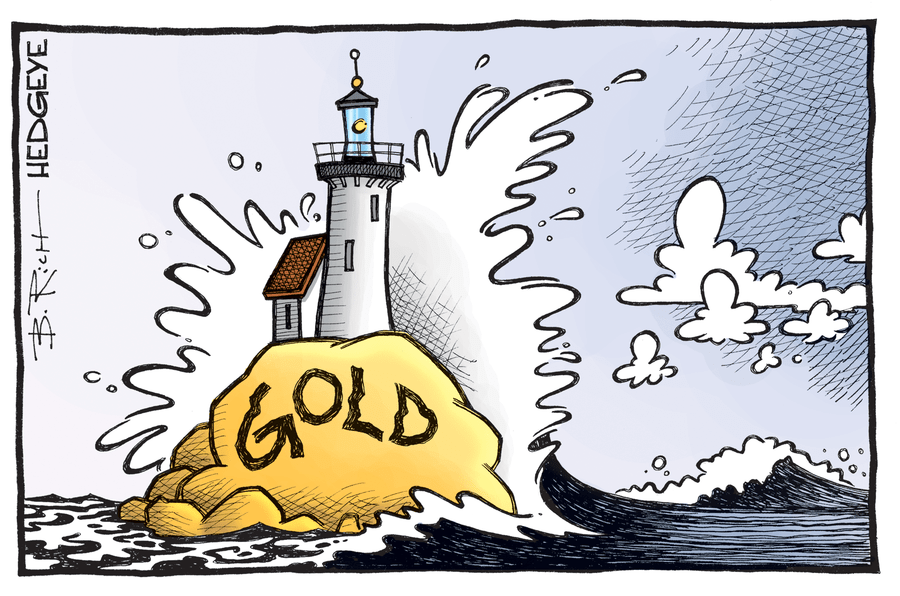
Gold has option value or “optionality.”  It has extreme value under the rare sample path. It just so happens that this path could devastate our savings which are irreplaceable.

The same option value math applies to shares of businesses that will survive a hyperinflation. The challenge is that many won’t. There is the rub.

Robust businesses deserve an inflation premium, whereas there is little value in “short duration assets” unable to withstand a severe economic shock.

~ Kevin Duffy, The Coffee Can Portfolio, August 11, 2020

Hedgeye

Aug 8, 2020

Kevin Duffy on dollar debasement

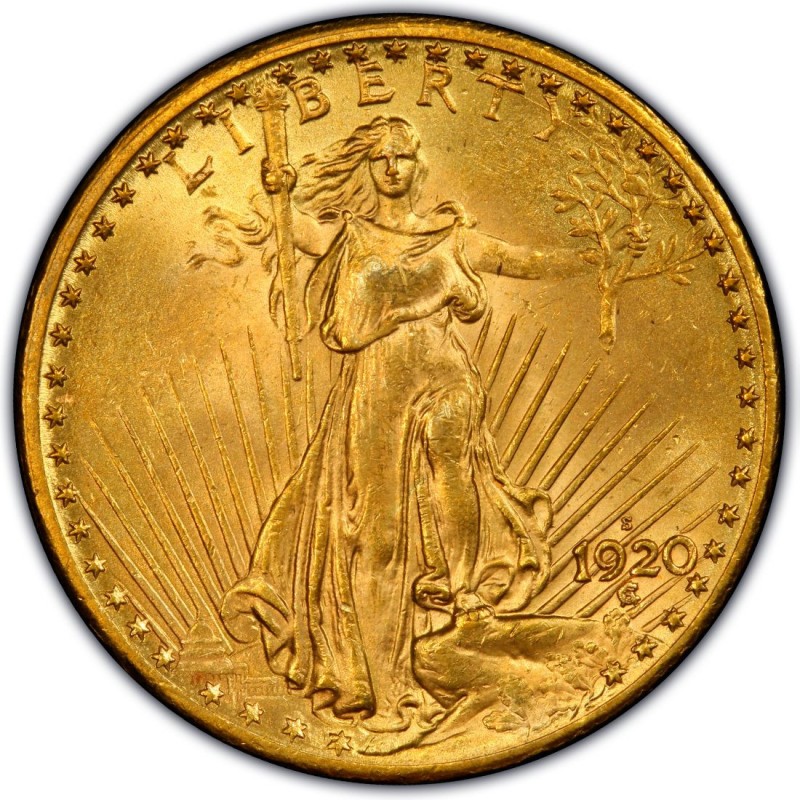
It took USD 100 years to go from 1/20 oz of gold to 1/2000.  How long will it take to go to 1/200,000?  I'm guessing less than 10.

~ Kevin Duffy, tweet, August 8, 2020

1920 Saint-Gaudens Double Eagle Values and Prices - Past Sales ...

Apr 7, 2011

Bill Miller on the Fed's ability to avoid hyperinflation II

Well you never know [if you're headed for a big, surprise shock], the markets, everything is uncertain. But, you have history to go on, you have theory to go on, you have enormous slack in the economy, what you've got, you know, is the unemployment rate is still 8.8%, you're a long way away from wages, which are 70% of corporate costs. You'd certainly need to be closer to capacity utilization in the 80s instead of in the 70s [percent] where we are right now, you'd need unemployment down probably 5-6 [percent] before you're going to have any type of a cost-push in things.

~Bill Miller, chairman and CIO, Legg Mason Capital Management, CNBC's Squawk Box, April 6, 2011

Apr 1, 2011

Argentine central bank chief denies monetary connection to price increases

The price problem doesn’t have monetary roots. The conditions that could cause inflation to accelerate don’t exist in Argentina.

~Mercedes Marco del Pont, president, Central Bank of Argentina, Bloomberg Markets Magazine, "No One Cries for Argentina", March 28, 2011

Jun 18, 2010

Felix Zulauf on the coming currency reform due to repeated financial crises

We are in the final, in the end game, of this system.

It means that we will enter a deflationary period that is accelerating, and the policymakers are trying to counter-act and fight this by using highly inflationary policies. It's sort of a dance on a high-rope, a high-risk dance, and we don't know for certain which way the dancer will eventually fall down to-- some argue it's going to be a deflationary collapse and others argue that it will be hyperinflation.

I think the deflationary pressure on our system will increase and intensify over the next few years and we will come to the point where we will have Lehman, AIG, Citi, in one day happening. At that point in time, there is no way the banking system can handle it.

Therefore, next time, the governments can not come in again because many of those governments are already perceived as bust, too. At that point in time I think the central banks will come in big time and you will see that the balance sheets of the central banks will not expand by a factor of 2 or 3, but of 50, or 100, or something like that.

And once that happens, you will have virtually, in a few weeks, a situation where basically you make our currencies as we knew them, invaluable-- you destroy them.

~ Felix Zulauf, King World News, May 28th, 2010