Showing posts with label voluntary exchange. Show all posts

Nov 16, 2023

Murray Rothbard on voluntary exchange

If anyone wishes to grasp how much we owe to the processes of exchange, let him consider what would happen in the modern world if every man were suddenly prohibited from exchanging anything with anyone else.  Eash person would be forced to produce all of his own goods and services himself.  The utter chaos, the total starvation of the great bulk of the human race, and the reversion to primitive subsistence by the remaining handful of people, can readily be imagined.

~ Murray Rothbard, The Ethics of Liberty, p. 35


Feb 22, 2022

John Stossel on the win-win nature of voluntary exchange

We see this every time we buy something.  The seller's there for his own self-interest and so am I.  So why do we both say, "thank you."  Because he wanted the dollar more than he wanted the pretzel.  I wanted the pretzel more than the dollar.  The transaction doesn't happen unless both of us think we win.  And that way, voluntary transactions create wealth.

~ John Stossel, "In Defense of Capitalism," Stossel TV, 4:00 mark, June 18, 2019


Sep 17, 2021

Simon Hallett on wealth creation today vs. the past

Modern capitalism differs from wealth creation in the old days.  In the olden days, if you wanted to get rich you had to knock somebody on the head and steal their stuff.  Today if you want to get rich you have to provide goods and services at prices that people want to pay.

~ Simon Hallett, interview, 19:40 mark, Stansberry Investor Hour, September 16, 2021


Aug 9, 2021

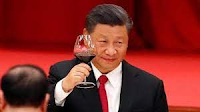
Xi Jinping on the relationship betweent the U.S. and China

As economic globalization gathers momentum, China and the United States have become highly interdependent economically.  Such economic relations would not enjoy sustained, rapid growth if they were not based on mutual benefit or if they failed to deliver great benefits to the United States. 

~ Xi Jinping


Nov 21, 2019

Ludwig von Mises: "The market economy involves peaceful cooperation"

The market economy involves peaceful cooperation. It bursts asunder when the citizens turn into warriors and, instead of exchanging commodities and services, fight one another.

~ Ludwig von Mises, Human Action (1949)

Image result for trade vs. war

Mar 9, 2017

~ Joseph Sobran on the two economies

As I see it now, there are really two economies — two distinct systems of producing and exchanging wealth.  Or rather, two systems that purport to do these things, though only one of them really produces anything, and the other is organized by a peculiar form of exchange.

The first is what is called the trade economy — the one summed up in the phrase "the free market."  The other might be called "the tax economy."

The trade economy is so familiar there is no need to say much about it, beyond pointing out that its operative principle is consent.  Its mechanism is the price system.

The tax economy is something fairly new—to America anyway.  A few generations ago the amount of wealth taken in taxes was only a sliver of the country's aggregate wealth.  But the government's share has increased to such an extent that it has become a whole separate economy.

~ Joseph Sobran, "The Two Economies," The Free Market, January 1991


Nov 5, 2007

Milton Friedman on voluntary exchange

Adam Smith's key insight was that both parties to an exchange can benefit and that, so long as cooperation is strictly voluntary, no exchange can take place unless both parties do benefit.

~ Milton Friedman, economist

Nov 3, 2007

Rothbard on political capitalism vs. free-market capitalism

Free-market capitalism is a network of free and voluntary exchanges in which producers work, produce, and exchange their products for the products of others through prices voluntarily arrived at. State capitalism consists of one or more groups making use of the coercive apparatus of the government… for themselves by expropriating the production of others by force and violence.

~ Murray N. Rothbard, The Logic of Action (1997)


Oct 26, 2007

Sheldon Richman on wealth creation

Let’s dispose of an economic point; the government cannot “redistribute” wealth. The word in quotations marks implies that wealth is initially distributed. It is not. In the market there is no common pot from which someone ladles wealth. The incomes we observe result from a long series of voluntary exchanges. In each transaction, two parties decide that what they will get is more valuable than what they will give up. If each did not believe that, no transaction would occur. (The exception, of course, is income derived from government sources.)

Since there is no distribution, it cannot be judged fair or unfair. No one decided how much each person would get. Rather, everyone had opportunities to enter or not enter into transactions, depending on their values and what contribution they could make to the productive process. It makes no sense to call the “distribution” of income unfair if each step in the series of exchanges that brought that outcome was fair, that is, voluntary.

~ Sheldon L. Richman, "Egalitarianism," The Free Market, July 1990


Oct 21, 2007

Mises on accumulating wealth

The desire for an increase of wealth can be satisfied through exchange, which is the only method possible in a capitalist economy, or by violence and petition as in a militarist society, where the strong acquire by force, the weak by petitioning.

~ Ludwig von Mises, Socialism, p. 335