Showing posts with label order vs. chaos. Show all posts

Jul 17, 2025

Kevin Duffy on the predominant ideology in America

The ideology that the overwhelming majority of Americans share is the notion that the world is a dangerous, chaotic place, and that without a powerful government protecting them from the big, bad wolf, mayhem would ensue.  Generally speaking, the left sees the wolf as wealthy businessmen with regulators and tax collectors as the protectors, while the right sees foreigners (especially those who don't look like us) as a constant threat and rallies around the military, tariffs and ICE.  Mixed in is a bit of doublethink: the left is not quite as pro-war and the right is not quite as anti-market. 

Of course, those running the protection racket are totally drinking the Kool-Aid which means they are able to justify lying to the sheep.  To the masters, this is for their own own good: In most cases, the less they know the better.  Cue Colonel Jessup in A Few Good Men: "You want the truth? You can't handle the truth!"

~ Kevin Duffy

Jack Nicholson | Positively Arsenal 

Jul 9, 2023

Murray Rothbard on order vs. chaos

Another critical dispute between traditionalists and libertarians is over the role and the nature of order.  To the traditionalist, order is the overriding consideration, and order can only be achieved by a massive imposition of state coercion.  To the traditionalist, liberty is arrant chaos and disorder, and the libertarian is someone who wishes to sacrifice order on the altar of liberty.  The libertarian, on the contrary, has a diametrically opposed view.  To him, the only genuine order among men proceeds out of free and voluntary interaction: a lasting order that emerges out of liberty rather than by suppressing it.  With Proudhon [considered by many to be the "father of anarchism"], the libertarian hails Liberty as the "Mother, not the Daughter of Order."  In this way, the libertarian sees the harmonious interaction of free people as akin to the harmonious interaction of natural entities that is summed up as "natural law."

State coercion, on the other hand, is viewed by the libertarian as a pseudo-order which actually results in disorder and chaos.  State-imposed order is "artificial" and destructive of the harmony provided by following the natural order.  Economic science has long shown that individuals, pursuing their own interests in the marketplace, will benefit everyone.  The free market has been shown to be the only genuine economic order, while state coercion hampering that market only subverts genuine order and causes dislocation, general impoverishment and, eventually, economic chaos.  Moreover, one of our most distinguished free-market economists, F.A. Hayek, has extended the concept of what he has trenchantly termed "spontaneous order" to include many other activities than the economic sphere.  Hayek has pointed out that the evolution of human language itself was not imposed by coercion from above but emerged from the free and voluntary interaction of individual persons.  To use a phrase of Hayek's language, the origin of money, and the market itself were products or byproducts of human action, not human design.

~ Murray Rothbard, "Frank S. Meyer: The Fusionist as Libertarian," originally published in Modern Age, Fall 1981, pp. 16-17

Pierre-Joseph Proudhon


Jun 1, 2022

Leonardo da Vinci on art and science

To develop a complete mind: Study the science of art; Study the art of science.  Learn how to see.  Realize that everything connects to everything else.

~ Leonardo da Vinci


Jan 2, 2022

Kevin Duffy on two worldviews: order vs. chaos

How do you view the world, chaos or order?  The former sees confusion as the natural state.  Civilization comes from taming disorder from the top-down, i.e. central planning, providing the perfect rationalization for state intervention.  The latter worldview sees a natural order, recognizing complex adaptive systems, not least of which is the economy.  Decision making is bottom-up, i.e. individuals acting to remove discomfort.  Through the order lens, attempts to impose centralized decision-making lead to less than optimal outcomes at best and societal breakdown if the puppeteers really apply themselves. 

In a planned system, rewards accrue to an army of “experts,” as long as they conform to the chaos worldview and assure the state’s survival.  In a market system, rewards accrue to entrepreneurs, regardless of whether they understand the workings of the free market or their own critical role (not to mention the role of profit!). 

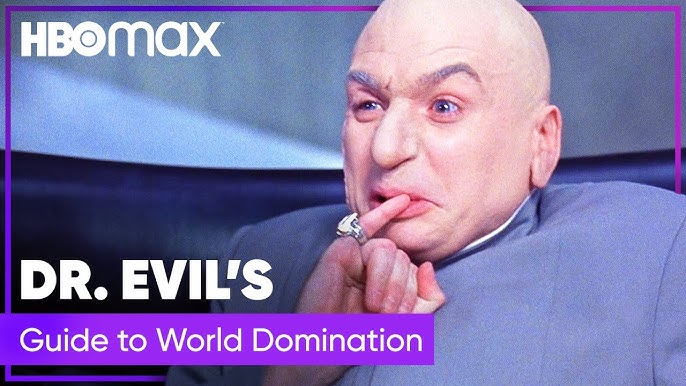
Most people hold both worldviews simultaneously (Orwell’s “doublethink”), though one typically crowds out the other.  The dominant ideology today is that the world is a chaotic place and authorities are required to protect us from the big bad wolf: viruses, recessions, stock market downturns, terrorists, foreign competitors, discrimination, and even ourselves.  As Tom Woods says, “The model of society that we learn in school is that somebody with a bullhorn has to be barking out orders and then everybody obeys.”  This explains why the central state holds a central role in society: culture over conspiracy.  The image of Dr. Evil scheming in his cave to run our lives is less plausible than 95% of the population thinking a certain way and agreeing at least in principle.

~ Kevin Duffy, "The Covid-19 Vaccine Fraud," The Coffee Can Portfolio, December 17, 2021


Dec 20, 2021

Kevin Duffy on ideology

The dominant ideology today is that the world is a chaotic place and authorities are required to protect us from the big bad wolf: viruses, recessions, stock market downturns, terrorists, foreign competitors, discrimination, and even ourselves.  As Tom Woods says, “The model of society that we learn in school is that somebody with a bullhorn has to be barking out orders and then everybody obeys.”  This explains why the central state holds a central role in society: culture over conspiracy.  The image of Dr. Evil scheming in his cave to run our lives is less plausible than 95% of the population thinking a certain way and agreeing at least in principle.

~ Kevin Duffy, "The Covid-19 Vaccine Fraud," The Coffee Can Portfolio, December 17, 2021


Dec 14, 2021

Anthony Esolen on the Hobbesian view of mankind

The philosopher Thomas Hobbs, for one, claimed that the only way men live under an uneasy truce would be for them to concede their natural "rights" to all goods.  We all, he argued, have an equal claim to the plums from that tree, the iron in that hill, John's wife, or Mary's gold.  Such equality breeds war.  So we yield our claims up to a sovereign state - the so-called "Leviathan."

Hobbes did not argue that the Leviathan had to be ruled by a divinely anointed king.  There was no divine anointing.  There need not even be a king; a council might serve as well.  The point is that Leviathan's will is absolute.  The unitary state is a divinity by comparison with the individual.  It alone has rights.  It can determine what or how much you will own.  It can determine whom and how you will worship.  It directs them, since men are, individually, random atoms of willfulness, colliding against one another in a meaningless existence.  There is, as the nominalists said, no such thing as "mankind" except as a convenient term, and no such thing as human nature; only individual human beings seeking pleasure and fleeing pain.  Nature cannot guide us here.  For the life of natural man, said Hobbes in his most famous sentence, in that ugly non-Eden before the rise of the Leviathan, is embroiled in the war of all against all.  It is "solitary, poor, nasty, brutish, and short."

~ Anthony Esolen, The Politically Incorrect Guide to Western Civilization


Oct 14, 2021

Tom Woods: "Is society itself not in some way self-ordering?"

I'm suggesting that libertarians have a fresh new way to look at the world because we actually ask, "Do we need institution X, do we need institution Y, and if we do need these things, do they have to be provided the way they're tradionally provided?"  Could we not learn to interact with each other on a purely voluntary basis?  Is society itself not in some way self-ordering?  Incidentally, that's why I've taken a great interest in economics.  And I feel like just the field of economics, when you understand it right, shows you something important about how society is self-ordering.  It shows you something about how social cooperation occurs spontaneously.  That's not what we're taught.  The model of society that we learn in school is that somebody with a bullhorn has to be barking out orders and then everybody obeys.  I think they're may be a more attractive way for arranging society.

~ Tom Woods, "Tom Woods: The Making of an Anti-War Libertarian," Reason TV, 2:40 mark, October 10, 2018


Apr 6, 2021

Tom Woods on the government-as-problem-solver narrative

Incidentally, even if this [Covid-19] were all to go away tomorrow, it would still be crucial to talk about these numbers.  We have to do whatever we can to make sure people don't think, "That sure was a tough year, but thanks to those of us who followed the mitigation measures, we got out of it." 

As it is, despite our best efforts -- and my 2009 book Meltdown, which spent 10 happy weeks on the New York Times bestseller list -- people still think "deregulation" caused the financial crisis of 2008, even though when you ask them which repealed regulation would have prevented the crisis, they can't name one. 

They still think laissez-faire capitalism caused the Great Depression.  Those of us who have read Murray Rothbard's America's Great Depression, or know something about Austrian business cycle theory, know the truth. But that's a tiny sliver of the public. 

You'll note what all of this has in common: 

Freedom causes crises, and the alleged experts fix them. 

You need us, citizen.  We keep you safe.  We clean up the messes caused by allowing you too much freedom.  We are smart.  You are dumb.  Trust us. 

Um, how about you go jump in a lake, and we'll live our lives?

~ Tom Woods, April 6, 2021


Jan 16, 2021

Tom Woods on the beauty of economics

[Economics] really is something beautiful.  It reveals to you an order that can be hidden or obscured by your own eyes.  I think Mises or Rothbard put it this way in theory and history...  If you were just to look at Grand Central Terminal in New York and not think it through, all you would see is just a bunch of people running hither and yon, and that would be the end of it.  But when you think through what's actually going on, you realize that each one of those people has a goal and is pursuing that goal, and that that's not chaos, but it's actually order that you're observing.  Well likewise for the entire economy, to a Marxist it looks like "There's duplication of production," "It's not the way I would run it if I had a bullhorn."  But the more you understand it, the more you perceive the hidden order beneath it all.  And once you perceive that, you do want other people to understand it.  In my case not just because they'll derive intellectual pleasure from understanding it, but because they'll stop wrecking it 24 hours a day!

~ Tom Woods, "Ep. 1806 From Left to Libertarian: How He Did It," The Tom Woods Show, January 5, 2021


Oct 27, 2020

Paul Gottried on the use of riots for political gain

Riots by what Tucker Carlson aptly characterized as the “Biden voters” did not happen by chance. The Democratic Party and the overwhelmingly Democratic media condoned and even incited these “peaceful protests,” and former Vice President Biden’s staff labored mightily to bail out apprehended perpetrators of violence in order to put them back onto the streets. This is standard operating procedure for political movements trying to seize power. After World War II, the Soviets arranged for mob violence in Hungary, Poland, and other countries they occupied as preparation for the imposition of a Communist dictatorship. This violence, authorities claimed, proved the need for a new order. 

The Nazi Brown Shirts wrought havoc in Weimar Germany that Hitler then insisted only his rule would end. While Brown Shirts battled with real Communists on the streets of German cities, our media have less credible street enemies. The best they can come up with is the mostly powerless, racially integrated Proud Boys, policemen who killed or wounded several black men with long criminal records, and President Trump’s indelicate phraseology. Apparently, these troublemakers, not the Democratic-friendly BLM and Antifa, were behind the mayhem and looting during the “Summer of Violence.”

~ Paul Gottried, "What an American One-Party System Would Really Look Like," American Greatness, October 25, 2020


Oct 13, 2020

George F. Smith on order vs. chaos, statism and the free market

In most circles the fact of government’s necessity is never mentioned but always assumed. Thus, the push for reforms, to get better people in positions of authority, to pass needed legislation on top of the mountains that already exist. Always — work within the system. Don’t rock the boat. Our foundations are still solid. Rarely does anyone call into question the need for government-as-we-know-it — the State.

Does the State’s virus management give you confidence it’s acting in your best interest? For me, it’s like something out of Orwell or Nazi Germany. 

Without the State there would be chaos, we’re told. What do we have today, if not chaos? I haven’t even mentioned the riots going on, where people defending themselves are charged with serious crimes. The rioters hate the police, and seeing the police stand down, peaceful people now fear for their lives and load up on guns. 

And now we’re being hit with black lives matter and only black lives matter. It is no longer a fringe movement. It exists virtually unchallenged. No one, no matter their race, can live long under that slogan.

We already have a government we can live with. It’s called the free market but it’s been sabotaged by the State. It’s locked down, meaning not allowed to operate. We need to set it free.

~ George F. Smith, "The One Lockdown That's Killing Us," LewRockwell.com, October 9, 2020


Oct 11, 2020

William Anderson on the Progressive mind

Even when Progressives give lip service to markets, they always add the caveat that without government control, markets would run amok and that immediately scores of people would be thrown into poverty at the expense of a few people becoming wealthy. Because markets are self-sabotaging, according to Progressive thinking, massive transfer payments are necessary to keep an economy on its feet. 

One must absolutely comprehend this last point in order to understand Progressive thinking: transfer payments are not an economic burden; they are the key to prosperity and without them, the economy would sink into permanent depression. Therefore, to criticize transfers not only is to be "against the poor," but also to demonstrate economic ignorance. (Keep in mind that most Progressives view the economy as a big circle that is internally unstable, and government action keeps the circle moving.)

~ William Anderson, "Understanding the Progressive Mind," LewRockwell.com, December 27, 2012


Sep 18, 2020

Kevin Duffy on why fear mongering over the coronavirus persists

I don’t believe this is about deliberate impoverishment which starts to sound like some Dr. Evil conspiracy for world domination. After all, the political establishment doesn’t want to kill the golden goose that feeds it. The election has something to do with it, no doubt. I also think these people see the world through the lens of chaos, with smart people in control (like them) to prevent the planet from spinning apart. The coronavirus is just too perfect: to them the solution is to control it and the people. Allowing the bug to run its course and giving people the freedom to act as individuals never crossed their mind. 

This also has to do with crisis and leviathan. Fear is a powerful motivator to give up freedom for security; the promoters of big government see this as a once-in-a-lifetime opportunity to push the agenda. They’re like a pit bull with a rag doll, not about to let it go easily just because of a few benign statistics… least not when the masses are dutifully cowering in fear and masking.

~ Kevin Duffy, September 18, 2020


Jul 6, 2020

Kevin Duffy on ideology

The dominant ideology is that the world is chaos and authorities will protect us from the big bad wolf: virus, recession, stock market downturn, terrorists, discrimination, ourselves.

~ Kevin Duffy, Twitter reply, July 6, 2020

Nanny State

May 28, 2020

Kevin Duffy on the two predominant ideologies

There are essentially two views of the world: order and chaos.  Some see a natural order: the food chain, pecking orders, innate behaviors, complex adaptive systems, natural selection.  Others see chaos requiring direction by a group of experts.

At least when it comes to economic activity, the overwhelming majority adopt the chaos view.  They fail to grasp Adam Smith’s “invisible hand” of mutually beneficial trade, Friedrich Hayek’s “pretense of knowledge” with regard to central planners, or Frederic Bastiat’s “seen and unseen costs” concerning the unintended consequences of economic policies.

~ Kevin Duffy, "The Expert Model," LewRockwell.com, May 27, 2020

(Excerpt from the May 27 issue of The Coffee Can Portfolio, p. 2)

Order vs Chaos - Living an Orderly Life - YouTube

Apr 18, 2020

Friedrich Hayek on how knowledge is dispersed

To the naive mind that can conceive of order only as the product of deliberate arrangement, may seem absurd that in complex conditions order, and adaptation to the unknown, can be achieved more effectively by decentralising decisions, and that a division of authority will actually extend the possibility of overall order.  Yet that decentralisation actually leads to more information being taken into account.  This is the main reason for rejecting the requirements of constructivist rationalism [socialism].  For the same reason, only the alterable division of the power of disposal over particular resources among many individuals actually able to decide on their use - a division attained through individual freedom and several property - makes the fullest exploitation of dispersed knowledge possible.

~ Friedrich Hayek, The Fatal Conceit, p. 76

Jeffrey Tucker on the natural order and liberty

People who can't imagine order over imposition always end up preferring power over liberty.

~ Jeffrey Tucker

Mar 28, 2020

Ed Bugos on the difference between the interventionist and laissez faire positions

One big difference between our perspective and the one you hear from mainstream is that they presume the central bank and government exist to save you from unbridled capitalism and the negative effects of freedom while we see them as bad actors/tools used to exploit and control you, and which produce all the negative effects that you blame on freedom.

~ Ed Bugos, LinkedIn post, March 27, 2020

Cartoon of the Day: A Central Banking Primer

Mar 25, 2020

William Anderson on experts and the coronavirus panic

There are a number of pictures that come to mind in the current situation. One is the picture that people such as Donald Trump and Anthony Fauci would like us to see, which is of experts in charge who are monitoring changes on the ground as they occur and giving orders to fix problems. However, there is another picture out there, one that will not be as well publicized: a herd of politicians careening from one crisis to another, giving conflicting orders and creating chaos and economic ruin.

~ William L. Anderson, "The Costs Are Mounting in the Government-Imposed Economic Collapse," Mises.org, March 24, 2020

anderson_0.jpg

Mar 9, 2020

Robert Higgs on how government uses fear to maintain control

Government, it is claimed, protects the populace from external attackers and from internal disorder, both of which are portrayed as ever-present threats.

~ Robert Higgs, "Fear: The Foundation of Every Government's Power," Independent Institute, May 17, 2005

Image result for robert higgs