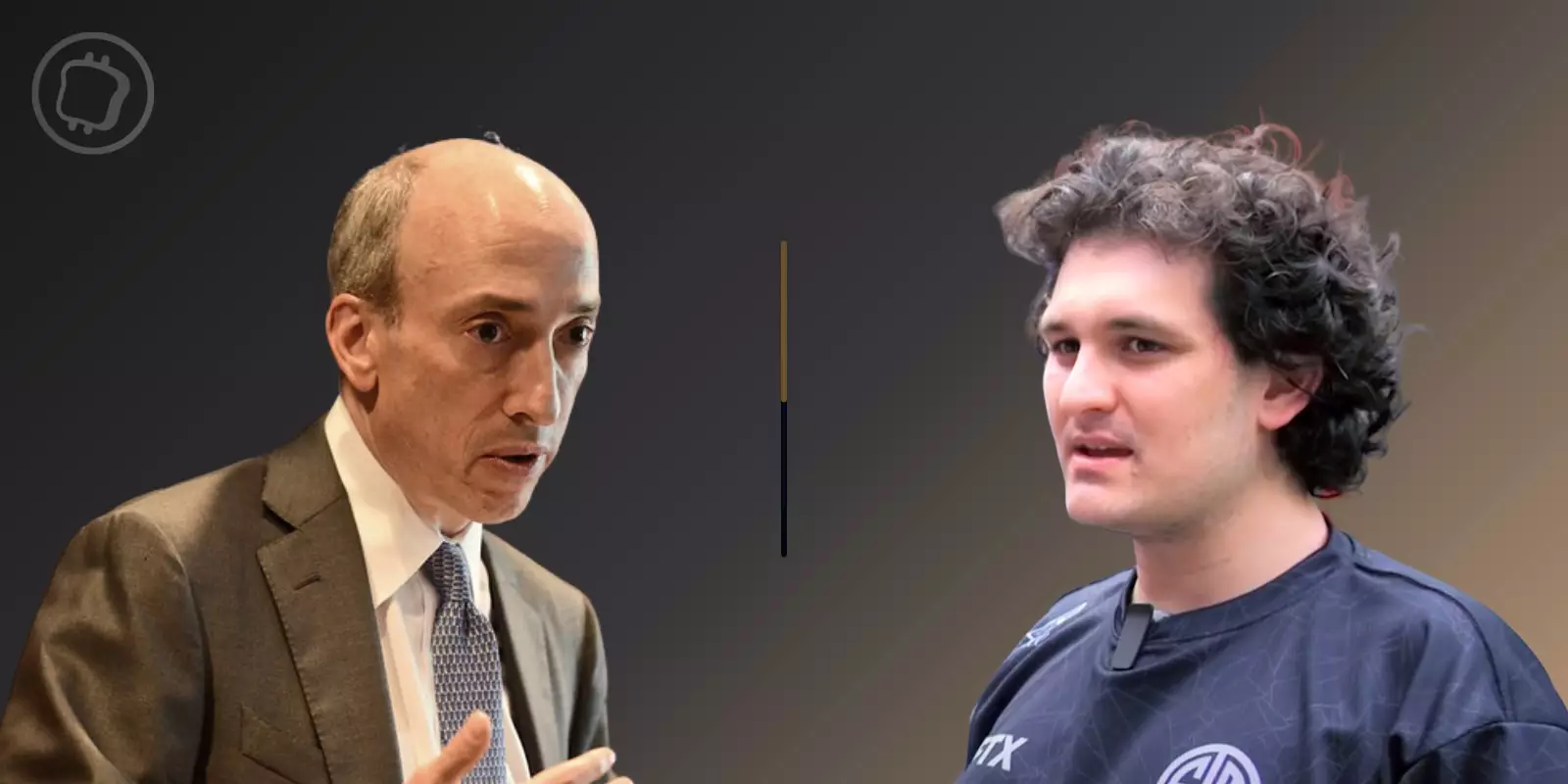
~ WSJ editorial board, "J.D. Vance, Lina Khan and the GOP’s Economic Contradictions," The Wall Street Journal, July 18, 2024
Showing posts with label regulation. Show all posts
Dec 17, 2024
Wall Street Journal: "Do Republicans want to rein in the regulatory state or unleash it?"
Do Republicans want to rein in the regulatory state or unleash it? It’s hard to tell these days, and the contradiction comes into sharp focus in J.D. Vance’s embrace of Lina Khan, Elizabeth Warren’s favorite regulator who runs the Federal Trade Commission. At a Bloomberg technology forum in February, Mr. Vance called Ms. Khan “one of the few people in the Biden administration that I think is doing a pretty good job.”
Dec 19, 2022
Michael Hsu on the resilience of the banking system during the crypto crash
The resilience of the traditional banking system to the recent events in crypto is not an accident. Rather, it is due, at least in part, to federal bank regulators’ continued and intentional emphasis on safety and soundness and consumer protection.
~ Michael J. Hsu, Acting Comptroller of the Currency, "Crypto: A Call to Reset and Recalibrate," remarks at the DC Blockchain Summit 2022, December 7, 2022
Labels:
banking,
crypto regulation,
cryptocurrencies,
regulation
Nov 20, 2022
Jeffrey Tucker on the FTX scam to "play nice with regulators"
This has really introduced a complication in the culture of crypto because up to now it's been assumed that if you don't want to play ball with regulators you might be up to no good. Now, we have every reason to think that the more willing you are to play ball with regulators, the more you might be trying to cover up what you're up to that's actually unsustainable or up to no good.
~ Jeffrey Tucker, "FTX cryptocurrency scandal is just the beginning," Will Cain Podcast, 18:15 mark, November 15, 2022
Labels:
crypto regulation,
cryptocurrencies,
FTX,
regulation
Jul 21, 2021
Robert L. Bradley on green regulations
Greenhouse gas control practices that are uneconomic penalize either consumers or stockholders while politicizing the issue of corporate responsibility. Few will be satisfied, and the ineffectual measures will eventually have to be abandoned.
~ Robert L. Bradley, Jr.
Robert L. Bradley on regulation
Complex regulation in place of simple-rules capitalism disrupts market processes and corrupts business incentives.
~ Robert L. Bradley, Jr.
May 14, 2021
Rick Rule on financial regulation
It seems to me that the apparatus of regulation is designed to protect the public from a few bad apples who pay no attention to regulation whatsoever. It seems that most of the impact of regulation is to constrain the flow of information from honest people to honest people around the vainglorious hope that you can protect investors from their own worst instincts, and from some of the worst elements of humanity, something that I believe is futile. I actually believe that investors would be better served if they understood that neither FINRA nor the SEC can protect them and they had to do the work to protect themselves.
~ Rick Rule, "Where to Find Big Gains in Resource Stocks," Stansberry Investor Hour, 16:00 mark, May 13, 2021
Mar 19, 2021
Jason Hsu on securities regulation
In the short run maybe it's very efficient to have a tiger mom or tiger dad to come in and dictate how things ought to work, but really, in the long run, there is something to be said about the market mechanism and really having the participants learn and sort it out instead of the regulators playing judge and jury all the time.
~ Jason Hsu, "Quantamental Investing Lessons with Jason Hsu," 25:20 mark, Stansberry Investor Hour, March 18, 2021
Apr 11, 2017
The Economist magazine on regulation
The collateral and permanent effects on legislation... are so very complicated, and very often much more important than the direct and temporary effects, that to make good laws seems a work fit rather for God than man.
~ The Economist, 1846
Dec 18, 2016
Lloyd Blankfein on how regulation creates a barrier to entry
There are some parts of our business where it's very hard for outside entrants to come in, disrupt our business, simply because we're so regulated. In some cases, the burdensome regulation acts as a bit of a moat around our business.
~ Lloyd Blankfein, Goldman Sachs CEO, 2015 podcast
Labels:
Goldman Sachs,
people - Blankfein; Lloyd,
regulation
Feb 10, 2011
Former Sun Microsystems CEO Scott McNealy says the future of Silicon Valley is bleak
I see a migration from the early days of the Valley. We aren't doing manufacturing; we aren't doing design; we aren't doing computers. It's all moving to Asia and other places where there are lots of technical engineers who are willing to work at a more reasonable salary because they don't have to spend $3.5 million on a home and pay half of it to taxes.
I think every new transition has created less job opportunity as technology has become very leveraged. I don't think our education system, our regulations, our government policies have kept pace with the changes that technology is driving.
Maybe I'm sounding like an old guy, but [Silicon Valley] ain't what it used to be. I, for one, don't think this is the best place in the world to start a company.
I'm having the time of my life, but I'm an old guy. I'm not young with my whole future in front of me. My kids are the ones who are going to have to learn Mandarin. I've suggested that to all four of them.
~Scott McNealy, former CEO, Sun Microsystems, The Wall Street Journal, "Former Sun CEO Worries About Region's Prospects", February 10, 2011
I think every new transition has created less job opportunity as technology has become very leveraged. I don't think our education system, our regulations, our government policies have kept pace with the changes that technology is driving.
Maybe I'm sounding like an old guy, but [Silicon Valley] ain't what it used to be. I, for one, don't think this is the best place in the world to start a company.
I'm having the time of my life, but I'm an old guy. I'm not young with my whole future in front of me. My kids are the ones who are going to have to learn Mandarin. I've suggested that to all four of them.
~Scott McNealy, former CEO, Sun Microsystems, The Wall Street Journal, "Former Sun CEO Worries About Region's Prospects", February 10, 2011
Sep 4, 2009
Herbert Spencer on paternalism and moral hazard
The ultimate result of shielding men from the effects of folly is to fill the world with fools.
~ Herbert Spencer, Essays (1891)
Dec 2, 2008
Ron Paul on capitalism
Capitalism is not a system, but rather the result of free individuals taking economic actions without interference by government. A true capitalist economy is neither planned by bureaucrats nor steered by regulators.
~ Ron Paul
~ Ron Paul
Labels:
bureaucracy,
capitalism,
people - Paul; Ron,
regulation
Nov 20, 2008
Charles Gasparino on the securities industry
This is the most regulated industry in the world and it's leading our country to ruin.
~ Charles Gasparino, CNBC, November 20, 2008
Labels:
financial regulation,
investment banks,
regulation
Oct 29, 2008
Friedrich Hayek on class exploitation
There has never been a worse and more cruel exploitation of one class by another than that of the weaker or less fortunate members of a group of producers by the well-established which has been made possible by the "regulation" of competition.
~ Friedrich A. Hayek, The Road to Serfdom, page 129
Jan 11, 2008
Clarence B. Carson on regulation
Government regulation restricts, confines, diverts, focuses, makes inflexible, and alters the course of men's actions in hundreds of ways.
~ Clarence B. Carson
Dec 28, 2007
Paul Krugman blaming the credit crunch on lax regulation and adherence to free market ideology
So where were the regulators as one of the greatest financial disasters since the Great Depression unfolded? They were blinded by ideology.
“Fed shrugged as subprime crisis spread,” was the headline on a New York Times report on the failure of regulators to regulate. This may have been a discreet dig at Mr. Greenspan’s history as a disciple of Ayn Rand, the high priestess of unfettered capitalism known for her novel “Atlas Shrugged.”
In a 1963 essay for Ms. Rand’s newsletter, Mr. Greenspan dismissed as a “collectivist” myth the idea that businessmen, left to their own devices, “would attempt to sell unsafe food and drugs, fraudulent securities, and shoddy buildings.” On the contrary, he declared, “it is in the self-interest of every businessman to have a reputation for honest dealings and a quality product.”
It’s no wonder, then, that he brushed off warnings about deceptive lending practices, including those of Edward M. Gramlich, a member of the Federal Reserve board. In Mr. Greenspan’s world, predatory lending — like attempts to sell consumers poison toys and tainted seafood — just doesn’t happen.
~ Paul Krugman, "Blindly Into the Bubble," The New York Times, December 21, 2007
“Fed shrugged as subprime crisis spread,” was the headline on a New York Times report on the failure of regulators to regulate. This may have been a discreet dig at Mr. Greenspan’s history as a disciple of Ayn Rand, the high priestess of unfettered capitalism known for her novel “Atlas Shrugged.”
In a 1963 essay for Ms. Rand’s newsletter, Mr. Greenspan dismissed as a “collectivist” myth the idea that businessmen, left to their own devices, “would attempt to sell unsafe food and drugs, fraudulent securities, and shoddy buildings.” On the contrary, he declared, “it is in the self-interest of every businessman to have a reputation for honest dealings and a quality product.”
It’s no wonder, then, that he brushed off warnings about deceptive lending practices, including those of Edward M. Gramlich, a member of the Federal Reserve board. In Mr. Greenspan’s world, predatory lending — like attempts to sell consumers poison toys and tainted seafood — just doesn’t happen.
~ Paul Krugman, "Blindly Into the Bubble," The New York Times, December 21, 2007
Thomas DiLorenzo on Paul Krugman blaming the mortgage mess on the free market
In [Paul] Krugman's article blaming the "subprime" mortgage mess on the free market, he claims that the Comptroller of the Currency should have been regulating the lending business more stringently. If so, this all might have been avoided, he says. As usual, he hasn't the foggiest idea of what he's talking about.
The fact is, the Comptroller of the Currency and the Fed itself have been busy enforcing the "Community Reinvestment Act" of 1977 for the past 30 years, which pressures banks to make uneconomical loans to uncreditworthy borrowers, euphemistically called "sub-prime" borrowers. They're not financial deadbeats, or people who never pay their bills on time. They're just a tiny, tiny bit below "prime" borrowers, in Governmentspeak.
Once again, Krugman gets everything ass backwards: Government regulation of the credit markets is a major CAUSE of the "subprime" mortgage debacle, not the solution. (Of course, the Greenspan Fed itself is the cause of the now-burst housing bubble).
~ Thomas DiLorenzo, "Crazed Keynesianism (and stupid, too)," LewRockwell.com blog post, December 21, 2007
The fact is, the Comptroller of the Currency and the Fed itself have been busy enforcing the "Community Reinvestment Act" of 1977 for the past 30 years, which pressures banks to make uneconomical loans to uncreditworthy borrowers, euphemistically called "sub-prime" borrowers. They're not financial deadbeats, or people who never pay their bills on time. They're just a tiny, tiny bit below "prime" borrowers, in Governmentspeak.
Once again, Krugman gets everything ass backwards: Government regulation of the credit markets is a major CAUSE of the "subprime" mortgage debacle, not the solution. (Of course, the Greenspan Fed itself is the cause of the now-burst housing bubble).
~ Thomas DiLorenzo, "Crazed Keynesianism (and stupid, too)," LewRockwell.com blog post, December 21, 2007
Dec 16, 2007
Ron Paul on the Enron bankruptcy
It is a mistake for Congress view to the Enron collapse as a justification for more government regulation. Publicly held corporations already comply with massive amounts of SEC regulations, including the filing of quarterly reports that disclose minute details of assets and liabilities. If these disclosure rules failed to protect Enron investors, will more red tape really solve anything? The more we look to the government to protect us from investment mistakes, the less competition there is for truly independent evaluations of investment risk.
~ Congressman Ron Paul, "Enron, Bankruptcy, and Easy Credit," December 17, 2002
Labels:
Enron,
moral hazard,
people - Paul; Ron,
regulation,
SEC
Nov 27, 2007
Paul Krugman blames credit crunch on greed and lack of regulation
Around 25 years ago, American business - and the American political system - bought into the idea that greed is good. Executives are lavishly rewarded if the companies they run seem successful: Last year the chief executives of Merrill and Citigroup were paid $48 million and $25.6 million, respectively.
But if the success turns out to have been an illusion - well, they still get to keep the money. Heads they win, tails we lose.
Not only is this grossly unfair, it encourages bad risk-taking and sometimes fraud. If an executive can create the appearance of success, even for a couple of years, he will walk away immensely wealthy. Meanwhile, the subsequent revelation that appearances were deceiving is someone else's problem.
If all this sounds familiar, it should. The huge rewards executives receive if they can fake success are what led to the great corporate scandals of a few years back. There's no indication that any laws were broken this time - but the public's trust was nonetheless betrayed, once again.
The point is that the subprime crisis and the credit crunch are, in an important sense, the result of our failure to effectively reform corporate governance after the last set of scandals.
~ Paul Krugman, "Krugman: Banks Gone Wild," International Herald Tribune, November 23, 2007
But if the success turns out to have been an illusion - well, they still get to keep the money. Heads they win, tails we lose.
Not only is this grossly unfair, it encourages bad risk-taking and sometimes fraud. If an executive can create the appearance of success, even for a couple of years, he will walk away immensely wealthy. Meanwhile, the subsequent revelation that appearances were deceiving is someone else's problem.
If all this sounds familiar, it should. The huge rewards executives receive if they can fake success are what led to the great corporate scandals of a few years back. There's no indication that any laws were broken this time - but the public's trust was nonetheless betrayed, once again.
The point is that the subprime crisis and the credit crunch are, in an important sense, the result of our failure to effectively reform corporate governance after the last set of scandals.
~ Paul Krugman, "Krugman: Banks Gone Wild," International Herald Tribune, November 23, 2007
Labels:
credit crunch,
greed,
people - Krugman; Paul,
regulation
Nov 11, 2007
Anthony Sabino: We need Sarbanes-Oxley "to prevent the Enrons of the future"
Now we have a greater appreciation of the role of watchdogs. Sarbanes-Oxley was a good idea, is a good idea. Leave it alone. We need it to prevent the Enrons of the future.
~ Anthony M. Sabino, law professor, St. John's University, "White Collar Crime's New Milestone," Washington Post, May 26, 2006
Labels:
Enron,
Enron trial,
regulation,
Sarbanes-Oxley
Subscribe to:
Posts (Atom)