Showing posts with label individualism. Show all posts

Sep 9, 2021

David Bergland on the reification fallacy

"Reification" is a fancy word for treating a concept or a label as something that actually exists.  The fallacy is in forgetting that the concept or label doesn't really exist, only people do.  "Government," for instance, does not exist as a thing separate from the people who make it up.  Certainly it is necessary to have a term like "government," just as we have terms like church, school, army, union, corporation, family and so on.  But, none of these labels (groups) has an existence apart from and greater than the individuals in it.

Whenever you hear someone discussing what the government, or the bureaucrats, or the big corporations, or the unions did, always ask, "Which individuals did what things?"  Only individuals can act and they should, of course, be responsible for their actions.

One purpose for engaging in this fallacy is to depersonalize people you want to mistreat.  It is much easier to call for heavy taxation of "the big corporations" than to call for reducing the dividends of the pensioners, widows, and orphans who depend on pension funds which own shares in many big corporations.  Another purpose is to argue that you, an individual, are less important than labels such as "society," so you should sacrifice your interests.

~ David Bergland, Libertarianism in One Lesson, pp. 9-10


Jan 30, 2021

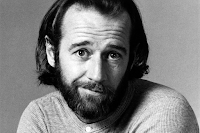
George Carlin on the common good

People are wonderful. I love individuals. I hate groups of people. I hate a group of people with a 'common purpose'. 'Cause pretty soon they have little hats. And armbands. And fight songs. And a list of people they're going to visit at 3am. So, I dislike and despise groups of people but I love individuals. Every person you look at; you can see the universe in their eyes, if you're really looking.

~ George Carlin


Sep 9, 2020

Murray Rothbard on human uniqueness and human progress

One of the most important facts about human nature is the great diversity among individuals... Each person is unique in his tastes, interests, abilities, and chosen activities. Animal activities, routine and guided by instinct, tend to be uniform and alike. But human individuals, despite similarities in ends and values, despite mutual influences, tend to express the unique imprint of the individual’s own personality. The development of individual variety tends to be both the cause and the effect of the progress of civilization. As civilization progresses, there is more opportunity for the development of a person’s reasoning and tastes in a growing variety of fields. And from such opportunities come the advancement of knowledge and progress which in turn add to the society’s civilization. Furthermore, it is the variety of individual interests and talents that permits the growth of specialization and division of labor, on which civilized economies depend.

~ Murray Rothbard, "Human Diversity and Individual Instruction," Education, Free and Compulsory

Education, Free and Compulsory: Rothbard, Murray Newton: Amazon.com: Books

Apr 23, 2020

Friedrich Hayek on how trade requires diversity

Exchange is productive; it does increase the satisfaction of human needs from available resources.  Civilisation is so complex - and trade so productive - because the subjective worlds of the individuals living in the civilised world differ so much.  Apparently paradoxically, diversity of individual purposes leads to a greater power to satisfy needs generally than does homogeneity, unanimity and control - and, also paradoxically, this is so because diversity enables men to master and dispose of more information.  Only a clear analysis of the market process can resolve these apparent paradoxes.

~ Friedrich Hayek, The Fatal Conceit, Chapter 6: "The Mysterious World of Trade and Money"

Feb 11, 2020

Jordan Peterson on individual rights

I've been trying to identify 100 percent truths, let's say, that sit at the bottom of our societies.  And one of the things that I believe to be true is that the individual is properly sovereign.  I believe is as true as any idea that human beings have ever come up with.

~ Jordan Peterson, "The HIDDEN TRUTH About Politics," 9:00 mark, YouTube, February 10, 2020

Image result for jordan peterson

Aug 30, 2019

Ludwig von Mises on how private property and the free market allows non-conformists to exist

In the political sphere, there is no means for an individual or a small group of individuals to disobey the will of the majority. But in the intellectual field private property makes rebellion possible. The rebel has to pay a price for his independence; there are in this universe no prizes that can be won without sacrifices. But if a man is willing to pay the price, he is free to deviate from the ruling orthodoxy or neo-orthodoxy.

What would conditions have been in the socialist commonwealth for heretics like Kierkegaard, Schopenauer, Veblen, or Freud? For Monet, Courbet, Walt Whitman, Rilke, or Kafka? In all ages, pioneers of new ways of thinking and acting could work only because private property made contempt of the majority's ways possible. Only a few of these separatists were themselves economically independent enough to defy the government into the opinions of the majority. But they found in the climate of the free economy among the public people prepared to aid and support them. What would Marx have done without his patron, the manufacturer Friedrich Engels?

~ Ludwig von Mises, "The Rise of Capitalism," Liberty & Property

Image result for mises liberty and property

Aug 4, 2019

Murray Rothbard on our own uniqueness and the case for a free society

If men were like ants, there would be no interest in human freedom.  If individual men, like ants, were uniform, interchangeable, devoid of specific personality traits of their own, then who would care whether they were free or not?  Who, indeed, would care if they lived or died?  The glory of the human race is the uniqueness of each individual, the fact that every person, though similar in many ways to others, possesses a completely individuated personality of his own.  It is the fact of each person's uniqueness — the fact that no two people can be wholly interchangeable — that makes each and every man irreplaceable and that makes us care whether he lives or dies, whether he is happy or oppressed.  And, finally, it is the fact that these unique personalities need freedom for their full development that constitutes one of the major arguments for a free society.

~ Murray Rothbard, "Freedom, Inequality, Primitivism, and the Division of Labor," August 1970

Murray N. Rothbard

Jul 28, 2019

Murray Rothbard on scientism

The key to scientism is its denial of the existence of individual consciousness and will.  This takes two main forms: applying mechanical analogies from the physical sciences to individual men, and applying organismic analogies to such fictional collective wholes as “society.”  The latter course attributes consciousness and will, not to individuals, but to some collective organic whole of which the individual is merely a determined cell.  Both methods are aspects of the rejection of individual consciousness.

~ Murray Rothbard, "What is the Proper Way to Study Man?," Mises.org, December 28, 2016

[Originally appeared as a chapter in Scientism and Values, Helmut Schoeck and James W. Wiggins, eds. (Princeton, N.J.: D. Van Nostrand, 1960). Excerpted from Economic Controversies.]

Image result for scientism

Aug 30, 2017

Benito Mussolini on the difference between classical liberalism and fascism

The fascist conception of life stresses the importance of the State and accepts the individual only in so far as his interests coincide with the State . . . . It is opposed to classical liberalism . . . [which] denied the State in the name of the individual. If the XIXth century was the century of the individual (liberalism implies individualism), we are free to believe that this is the ‘collective’ century, and therefore the century of the State.  If classical liberalism spells individualism, Fascism spells government.

~ Benito Mussolini, Fascism: Doctrine and Institutions 

(As quoted by Tom DiLorenzo in "An Open Letter to This Year's College Freshmen Class on the Subject of Fascism," August 28, 2017

May 28, 2017

Rose Wilder Lane: Can individualism survive in the U.S.?

There is nothing new in planned and controlled economy. Human beings have lived under various forms of that social security for six thousand years. The new thing is the anarchy of individualism, which has been operating freely only in this country for a century and a half.

When I first wrote this book ten years ago, I asked myself whether individualism has enough social vitality to survive in a world turning back to the essentially medieval, static forms. Can individualism, which by its very nature has no organization and no leader, stand against the determined attack of a small group, organized, controlled, and fanatically sure that a strong man in power can give a people better lives than they can create for themselves?

The spirit of individualism is still here. There are some 130,000,000 human beings in these United States, and not one of us has escaped anxiety, and very few of us have not been forced to reduce our standard of living during these past few years. The number of us who have been out of work and facing actual hunger is not known; the largest estimate has been twelve million. Of this number, barely a third appeared on the reported relief rolls. Somewhere those millions in need of help, who were not helped, are still fighting through this depression on their own.

Millions of farmers are still lords on their own land; they are not receiving checks from the public funds to which they contribute their increasing taxes.

Millions of men and women have quietly been paying debts from which they asked no release; millions have cut expenses to the barest necessities, spending every dime in fear that soon they will have nothing, and somehow being cheerful in the daytime and finding God knows what strength or weakness in themselves during the black nights.

Americans are still paying the price of individual liberty, which is individual responsibility and insecurity.

~ Rose Wilder Lane, "Give Me Liberty," 1944 (first published in 1936)

Feb 11, 2008

Gandhi on the difference between the individual and the state

The individual has a soul, but as the state is a soulless machine, it can never be weaned from violence to which it owes its very existence.

~ Mahatma Gandhi