Showing posts with label people - Mayer; Christopher. Show all posts

Sep 21, 2023

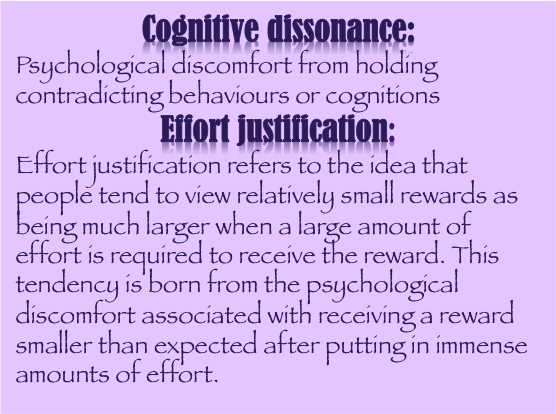
Chris Mayer on avoiding effort justification

Q: How do you avoid doing too much work on an idea & losing objectivity? Is there a tradeoff between going wide & going deep? 

A: I’ve spent lots of time researching ideas that I never bought.  I’ve flown to foreign countries, met with CEOs and not bought the stock.  It’s just the way investing works.  You have to enjoy looking at businesses, just for the sake of learning.  It’s part of the adventure.  It’s fun.  And go into it with the idea that whatever knowledge you gain may not pay off for years - maybe never! 

But what about an idea I already own?  Can I lose objectivity?  Probably!  I think you have to keep testing it against your thesis.  It’s a tricky problem.  And yes, I think there is a tradeoff between going wide and going deep.  I’m a one-man band.  There are only so many hours in a day.  So, I have to pick and choose my projects.  I am more on the deep side of things than wide.  But it works for me, because I only need 10-12 names.  And I’m not turning over my portfolio much. (So far this year, turnover is zero).

~ Chris Mayer, "Q&A," Woodlock House Family Capital Blog, September 12, 2023


Chris Mayer on competitive advantage

Q: How do you know you have a business with a long term competitive advantage? 

A: You never know for sure.  Clues would include stubbornly high returns on capital over a number of years, which indicate the business has something that resists competition.  Market share gains are another clue.  I’d say these are two big ones.

~ Chris Mayer, "Q&A," Woodlock House Family Capital Blog, September 12, 2023


Chris Mayer on his perfect work day

Q: What is your perfect work day?

A: A perfect work day one where I have plenty of time to read and think, get outdoors, learn something new, eat a good meal, talk with a friend and laugh.  That's pretty much a perfect day, work or not.

~ Chris Mayer, "Q&A," Woodlock House Family Capital Blog, September 12, 2023


Dec 7, 2022

Chris Mayer on analyzing businesses and being patient

With every business there are a few key things to know.  Call it the essence of the business, call it the beating heart, call it the core engine… something!  Find out what those key things are and focus on them. 

Then, de-emphasize individual quarters, recent stock performance, earnings estimates, macro forecasts, and the like.  As much as possible, try to think like a private owner of a business.  Think of the stock you own as you would think of real estate; it’s something you plan to own for a long time and sell reluctantly.

~ Chris Mayer, "100-Bagger," December 7, 2022


May 9, 2022

Chris Mayer on the patience required of long-term investors

Holding on requires a belief in some future that is not here yet.  Pessimism focuses on known problems and what’s right in front of us.

~ Chris Mayer, "Hold Fast: Tips for 100 Baggers," May 9, 2022


Sep 7, 2021

Jonathan Goldsmith on success late in life

If I’m being honest, I wish this all hadn’t taken so long.  But, then again, maybe if success had come earlier it wouldn’t have meant as much as it does now…  The harder knocks, disappointments, and travails one has, the more opportunity one has to gain awareness of who the devil we really are.  I’m still trying.

~ Jonathan Goldsmith

(As quoted by Chris Mayer, "The First Rule of Compounding," Woodlock House Family Capital blog, September 7, 2021.)


Charlie Munger on compounding

The first rule of compounding: Never interrupt it unnecessarily.

~ Charlie Munger

(As quoted by Chris Mayer, "The First Rule of Compunding," Woodlock House Family Capital blog, September 7, 2021.)


May 16, 2021

Chris Mayer on social media and investing

How has social media, for example, changed investing? 

It seems impossible that the whole GameStop episode happens in a world without social media… which allowed users to organize in a way and at a speed that would’ve been impossible in the days before the internet.  Certainly, stock prices have diverged from “reality” before.  But to this extent? 

What kind of effect does Twitter have on people?  Investing is a long game.  It requires patience and discipline and being able to put up with droughts of performance.  It is hard.  How much harder is it today just because of our media? 

Or does it make it, in some ways, easier?  I know I have made many valuable contacts (and friends) through Twitter.  I have been able to tap expertise I would not have been able to find otherwise, or at least, it would’ve been much harder.  We share ideas and research.  These interactions have been enormously beneficial for me.

~ Chris Mayer, "The Medium is the Message," Woodlock House Family Capital blog, March 26, 2021


Nov 12, 2020

Chris Mayer on the importance of qualitative factors to investing

As I get older and I hope wiser as an investor, I find myself giving much greater weight to fuzzier concepts such as culture and governance and competitive positioning.  The numbers ultimately have to make sense, but these qualitative factors underpin my investment decisions in a way they didn't when I was younger.  Experience - that is being burned when these factors were absent - have taught me to pay attention.

~ Chris Mayer, quote of the week from Dan Ferris on the Stansberry Investor Hour, 12:00 mark, November 12, 2020


Aug 16, 2020

Chris Mayer on extinction in biology and business

I’ve been thinking about how the sudden shift in the business environment is, in some ways, akin to extinction events in biology.

Economies also suffer major extinction events. If you were invested in a public company listed in China’s stock market in 1949, you got wiped out when the communists took over. Ditto Russia in 1917. There have been other markets that have gone to zero, or near zero, due to some major economic or political quake. Lots of businesses die all at once (or over a short period of time), just as in a biological extinction event. Of course, there are minor extinction events, too.

Bubbles that pop and leave a trail of bankruptcies. Or when governments change the rules of the game in a severe and sudden way so that companies have to scramble to adjust or just go out of business.

~ Chris Mayer, "Extinction & Survival," Woodlock House Family Capital blog, August 14, 2020

10 Companies That Failed To Innovate, Resulting In Business Failure

Jun 15, 2020

Chris Mayer on navigating the Covid-19 stock market shock

Going through periods like this makes you a better investor.  The experience is unpleasant, but you learn a lot - about risk, about people and about yourself.

~ Chris Mayer, "Black Swans and Silver Linings: Q&A with Chris Mayer," The Coffee Can Portfolio, June 15, 2020

GoPro: Kayaking Over 70ft Outlet Falls - YouTube

Chris Mayer on investing and risk management

In building a portfolio, you want to be thoughtful about risks.  You don't want one bullet to kill you.

~ Chris Mayer, "Black Swans and Silver Linings: Q&A with Chris Mayer," The Coffee Can Portfolio, June 15, 2020

Golden Earring – Twilight Zone Lyrics | Genius Lyrics

Feb 1, 2020

Chris Mayer: "investors are better off focusing on knowable things"

[As investors,] I believe we’re better off focusing on “knowable things.” About 25 years ago, I read a thin book titled The Craft of Investing by John Train. There is a passage he wrote that I still remember. The pages of my copy are yellowing around the edges with age, but I found the passage that sticks in my mind and I want to share it with you here:
Investment, as distinct from speculation, is the craft of the specific. It is extraordinary how much time the public spends on the unknowable. Is the market going up or down? Is the economy recovering? What is the government going to do?
You should forget about the short term and not worry about the economy or the direction of the market. Instead, buy a share of a company the way you would buy a house: because you know all about it and want to own it for a long time at that price.
Train uses an analogy from military history. He says amateurs talk about grand strategy, but generals talk about supply lines and communication. In investing, the parallel is clear: wise investors focus on specifics – people, control, assets, how businesses are financed, priced, etc. Knowable things.

~ Chris Mayer, "Woodlock House Q4 Letter," January 7, 2020

Jul 13, 2019

Christopher Mayer on the need to filter noise when investing

Rule #8: You Need a Really Good Filter

There is a world of noise out there.  The financial media is particularly bad.  Every day, something happens, or so they would have you believe.  They narrate every twist in the market.  They cover every Fed meeting.  They document the endless stream of economic data and reports.  They give a platform for an unending parade of pundits.  Everybody wants to try to call the market, or predict where interest rates will go or the price of oil or whatever.

My own study of 100-baggers shows what a pathetic waste of time this all is.  It's a great distraction in your hunt for 100-baggers.

~ Christopher Mayer, 100 Baggers, p. 183


Mar 15, 2019

Christopher Mayer on seeing differences and similarities

When you see only differences or similarities, you get into trouble...

Professor [Irving J.] Lee taught: It is the mark of a mature mind to see both.  Aim to see similarities among things that are different and see differences where the unsophisticated see similarities.

~ Christopher Mayer, How Do You Know? (2018)


Jul 22, 2008

Christopher Mayer on the GSE ticking time bomb (2002)

An explosive concoction has been created with the GSEs. The GSEs have increasingly dangerous levels of debt, coupled with an implicit government guarantee that seems to encourage even more debt. In the case of Fannie and Freddie, they are publicly traded companies accountable to shareholders for delivering earnings growth that is going to be increasingly difficult to deliver as they grow to the limits of their market. Thus, they are faced with the prospect of lower earnings growth or of finding a way to expand into other (riskier) areas of consumer finance—and further spreading the threat of nationalization beyond just the mortgage market.

The only way to correct this problem is the same way all socialistic practices are corrected—the government’s involvement must be severed completely. Just because the GSEs have led a charmed life so far is no reason to infer that their future will always be so bright. Socialism is not dead; it is alive in institutions like the GSEs, which are for all practical purposes government agencies.

It has often been said that there are no free lunches. Surely, Americans cannot continue to subsidize (indirectly) mortgage finance without cost. What most Americans cannot see is that such subsidization of the mortgage industry has led to the assumption of a great deal of risk on the part of the taxpayer. The longer the GSEs are able to expand as they have, the more certain it becomes that someday taxpayers will have to bear the cost of such excess. Like Russian roulette, the longer you play, the more certain it becomes that you will bear the risk for playing.

~ Christopher Mayer, “Mortgage Market Socialism,” The Free Market, March 2002

Jan 15, 2008

Christopher Mayer: All the ingredients of a bubble exist (2000)

Looking back, future financial historians will likely relate the Glassman-Hassett thesis to Irving Fisher's famous proclamation in 1929 that "stock prices have reached a permanent and high plateau." James Grant likes to say that there are three common features of a bubble: one part fundamental (i.e., a technological revolution), one part financial (i.e., a surge in money and credit), and one part psychological (i.e., a suspension of belief in traditional value measures.) All the ingredients would appear to exist in the current bull market.

As is often said, only time will tell. Unfortunately, no theory of cycles or bubbles can tell us precisely when it will end. Maybe twenty years from now, we will be able to definitively state whether these prices were reasonable or whether the boom time of the 1990s ended in a bust. From where I sit, heeding the teachings of the Austrians, I'll place my bet on the latter.

~ Christopher Mayer, 2000

Related image