Showing posts with label terrorism. Show all posts

Oct 12, 2026

President George W. Bush on motivation for 9/11 attacks: "They hate our freedoms"

Americans are asking, why do they hate us?  They hate what they see right here in this chamber—a democratically elected government.  Their leaders are self-appointed.  They hate our freedoms—our freedom of religion, our freedom of speech, our freedom to vote and assemble and disagree with each other.

~ President George W. Bush, address to a joint session of Congress, September 20, 2001

2001 George W. Bush speech to a joint session of Congress - Wikipedia 

Jun 16, 2025

Promised Land on the first Irgun attacks

In Righteous Victims: A history of the Zionist-Arab Conflict, 1881-2001, Benny Morris writes that the Irgun Bombs of 1937 and 1938 “sowed terror in the Arab population and substantially increased its casualties. The bombs do not appear in any way to have curtailed Arab terrorism, but they do appear to have helped persuade moderate Arabs of the need to resist Zionism and to support the rebellion.”

The first Irgun attack occurred on November 11, 1937. Morris writes that the attacks were responsible for “killing two Arabs at a bus depot near Jaffa Street in Jerusalem, and wounding five. Three days later, on November 14, a number of Arabs were killed in simultaneous attacks around the country—a day that the Irgun thereafter commemorated as the ’Day of the Breaking of the Havlaga (restrain).’”

Morris also describes the events on July 6, 1938, when “an Irgun operative dressed as an Arab placed two large milk cans filled with TNT and shrapnel in the Arab market in downtown Haifa. The subsequent explosions killed twenty-one and wounded fifty-two. On July 15 another bomb killed ten Arabs and wounded more than thirty in David Street in Jerusalem’s Old City. A second bomb in the Haifa market—this time disguised as a large can of sour cucumbers—on July 25, 1938 killed at least thirty-nine Arabs and injured at least seventy. On August 26, a bomb in Jaffa’s vegetable market killed twenty-four Arabs and wounded thirty-nine.”

~ "The Beginning of the Israel-Palestine Conflict," Promised Land: The Jewish Museum of the Palestinian Experience

Wanted by the British government: Menachem Begin


Dec 30, 2023

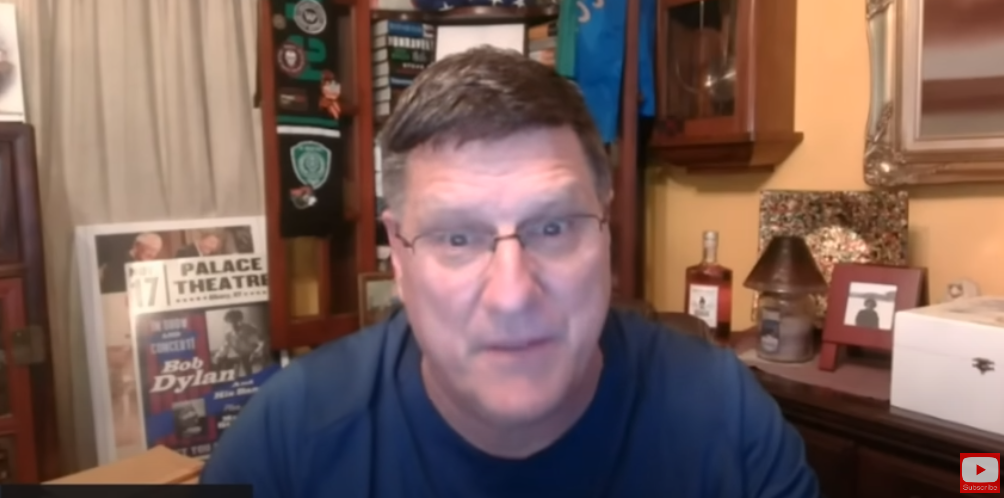
Scott Ritter on how Israel supported Hamas in order to sabotage a Palestinian state

The Israelis have been fostering Hamas from the very beginning.  Hamas was conceived by the Palestinians as its own thing, but it was the Israeli government that said, "This we can use."  You see, Israel didn't want the Palestinian Liberation Army, or PLO, to become this powerful entity because the last thing Israel wants is a viable Palestinian state.  I'll say that one more time just so people understand what I'm saying: Israel does not want a Palestinian state.  Never has.  Won't tolerate it.  They talk about it, but they knew they were never going to allow it to happen.  And one of the ways they prevented it from happening was to create a division within the Palestinian population.  So they promoted Hamas, they funneled money into Hamas, they openly collaborated with Hamas - even though I don't think Hamas understood they were being collaborated with - and they empowered Hamas.

All of the terrorist acts that took place in the 1990s took place because Israel wanted them to take place.  I'm not saying they planned them.  What I am saying is that Isreal viewed that as a very effective way of not only dividing the Palestinian population, but then demonizing them in the eyes of the world so that there wouldn't be a Palestinian state.  You see, if Hamas is going around blowing up buses and bridges, no one's going to support a Palestinian state because everybody's bought into the notion that Israeli security must come first.  

Israel was facilitating the acts of terror that took place against them by creating the organization that produced the terrorists.  That doesn't mean that Israel wasn't hunting them down and killing them.  Of course they were.  I'm just saying that Israel's not an innocent party here.  Netanyahu's not an innocent party.

[...]

The only solution to this problem - the only solution - is the creation of a Palestinian state.  If you want to defeat Hamas - and the only way you're going to defeat Hamas - you have to create a Palestinian state that diffuses Hamas's reason to exist.  Hamas exists to resist Israel, but if there's a Palestinian state, there's really nothing left to resist.  So Hamas will go away.

~ Scott Ritter, "US Marine Corps Officer Scott Ritter Reveals Truth About Israel War," Cyrus Janssen, 13:10 mark, November 1, 2023


Dec 11, 2023

Major James Larry Fields on the Stern Gang and Irgun from 1940-1948

When the Irgun first formed from Haganah B, one of its secondary leaders was Avraham Stern.  Stern did not subscribe to wartime limitations against attacking the British. During World War II, after much debate within the organization, Stern and some three hundred followers formed the LOCHAMEI HERUT ISRAEL, "LEHI" (Freedom Fighters of Israel), which became known as the "Stern Gang."  In very short time the Stern Gang was regarded as a group of murderers by virtually all other groups-- the Jewish Agency, Haganah and the World Zionist Organization.  The Stern Gang's terrorist activities (bombings, etc.) caused the British to react against all Jewish groups, particularly the Irgun.

Ideologically the Stern Gang and the Irgun were in the same camp in believing in the establishment of a Jewish state, using force if necessary.  However, the methods they chose to enforce their common beliefs were quite different throughout most of the 1940-1948 period in which they existed.  The Sternist's methods of individual terrorist assassinations of British officials and security men contrasted with Irgun resort to confiscation raids on British government and military installations for symbolic purposes.  The Stern Gang killed people at every opportunity as opposed to the Irgun's use of controlled killings.  On the other hand, the Haganah, and to some degree the Palmach (Plugot Machaz-Strike Companies) which had been formed in 1941 to help the British fight the Germans in Palestine, were similar to the Irgun in their aim to defend and support the Jewish community.  But as the military arms of the Jewish Agency, the Haganah and the Palmach were reduced to ineffectiveness.  On several occasions, despite the disparity in ideology as well as methodology, the Jewish Agency, the Haganah, and the Palmach collaborated with the British against the Irgun.  Most characteristic of this collaboration was "The Season," the period so called in 1944 in which Ben-Gurion (Jewish Agency executive) joined with the British to crush the Irgun because he felt its terrorist activities would bring world opinion against the general idea of Zionism. 

[...]

In spite of the repression of the Irgun in the 1944 "season" mentioned earlier, the Irgun and Haganah joined together in 1945 for a united resistance to the British.  For the next three years the bond between the two organizations, especially the bond between Begin and Ben-Gurion, was fragile at best. Throughout the "season," Begin had forbidden any type of retribution against the Jewish Agency or Haganah to avoid a civil war among the Jewish factions.  But later, in 1946, when the Haganah again turned on the Irgun, Begin unleashed the forces of the Irgun on the Haganah officers and men responsible for armed actions against Irgun members. 

As the British government became more determined to withdraw totally from Palestine, the Arabs became increasingly violent and dedicated to preventing the establishment of a recognized Jewish Homeland.  The destruction of the King David Hotel in Jerusalem in July 1946 by the Irgun, causing more than two hundred casualties (wounded or dead), again led to the Jewish Agency's collaboration with the British against the Irgun and later to the imposition of martial law on March 1, 1947.  Throughout 1946 and 1947 the Irgun and the Haganah resolved their differences over the means of securing a Jewish state in recognition of the Arab threat.  However, the consistent terror campaign waged by the Irgun, its need for arms, and a defiant sense of independence from central authority led to the "Altalena" incident in June 1948. 

The Altalena, a ship used to transport men and arms, was sunk by the Haganah on June 20, 1948 at Tel Aviv.  Sixteen members of the Irgun were killed and forty wounded during the incident, as were two Haganah soldiers killed and several wounded.  Civil war between the Jewish elements was again narrowly averted by (1) Begin's opposition to a civil war, (2) an impending resumption of the war with the Arabs, and (3) the foresight that cohesion would be necessary for the security and survival of a Jewish state.  In September, 1948, the Irgun disbanded and joined with Haganah and Palmach forces forming ZAHAL--the Israeli National Defense Forces. 

Begin's belief in creating tension, provocation and destruction was the basis for the particular tactics used by Irgun throughout its existence.  Much of the Irgun effort was directed against the British for the purpose of achieving an independent Jewish State.  The rest of it was directed against the Arabs in retribution for attacks they had made earlier.  After the British had begun withdrawal from Palestine in 1948, the position of the Irgun with regard to the Arabs changed substantially.  The Irgun and the Stern Gang were accused on a number of occasions of instigating the Arab-Palestinian exodus.  For example, on April 1, 1948 an Irgun unit totally destroyed the Arab village of DIR YASSEN killing two-hundred and fifty people.  This act contributed heavily to the state of fear against Jewish attacks among the Palestinian Arabs. 

Although there is some debate whether the unit involved in the attack was of Irgun origin, the fact remains that terrorist acts such as those perpetrated at DIR YASSEN are partly responsible for the present Palestinian refugee situation.  Terrorist acts of such nature drive people to leave their homes to seek safe refuge wherever it may be found.  With the state of Israel secured, and the inclusion of the Irgun into the ZAHAL, there was no longer a need for the tactics of terrorism which had served the Irgun, and seemingly the Jewish people, so well.  However, the ideology of the men involved in the leadership of Irgun was perpetuated by the establishment of a political party, the HERUT which was based on the same zeal and ideals upon which the Irgun had thrived.  The new State of Israel would respect those ideals through incorporation of Irgun leadership in the new legitimate state.

~ Major James Larry Fields, USA, "Irgun Zvai Leumi: The Jewish Terrorist Element of the Arab-Israeli Conflict," Air Command and Staff College student report, April 1985

Deir Yassin, April 1948


Major James Larry Fields on how the Irgun influenced the PLO

The Irgun traces its roots to groups of individuals intent upon achieving Israeli statehood by whatever means available.  The Irgun's leaders, especially Menachem Begin, have represented a continuous force in Israel's political history.  Upon the dissolution of the Irgun organization, Begin and his cohorts entered the legitimate Israeli political system and rose to power within the Knesset.  Even though Begin formally withdrew from politics in 1983 he remains today an influential force within the major opposition party in Israel--the Likud.  Finally, this study illustrated the impact of the Irgun upon current Arab-Israeli relations. Ironically, the arch enemy of Israel, the PLO, has copied many of the tactics employed by the Irgun in their struggle for independence. 

Many authorities on the subject of terrorism and Israeli history have demonstrated that the activities of the Irgun Zvai Leumi served as a model for other subsequent terrorist movements with similar purposes.  One noted author, Albert Parry, shows how a seemingly diverse array of contemporary terrorist movements trace their roots to the Irgun model.  Ironically, the chief adversary of Israel, the Paletine Liberation Organization, could be included among those terrorist organizations that were heavily influenced by the Irgun model.  Today, a form of "Arab Zionism" has emerged within the ranks of the PLO stimulated in part by the loss of Palestinian land to Israel.

The Palestinians, especially the PLO, have in fact adopted the Irgun's symbol, methodology and tactics. These tactics and methods were proven effective during the Zionist's quest for statehood.  It is intriguing that the Palestinians, driven by fervent nationalism, have reversed roles with the Israelis.  Specifically, the PLO is to present day Palestinians what the Irgun was to the pre-independent Zionists.

~ Major James Larry Fields, USA, "Irgun Zvai Leumi: The Jewish Terrorist Element of the Arab-Israeli Conflict," Air Command and Staff College student report, April 1985

1976


Major James Larry Fields on the Irgun

Historical observers of the Irgun are unable to arrive at a consensus that Irgun members were all either heroes or criminals.  To [Menachem] Begin, the members were heroes and martyrs.  Most Israelis view Irgunists as complicating the struggle to establish Israel and tarnishing its moral posture.  From the Arab perspective, they were terrorists, brutal and ruthless, representing the real essence of Zionism.

Begin, even today, is regarded by British and Arabs as a terrorist not deserving the respect due a statesman.  Begin remains an influence on the Likud Party and a person to be reckoned with from both inside and outside the Knesset. 

The foundation and security of the State of Israel were guaranteed in part by the unavoidable terror of the underground. It is unlikely that either the British or Arabs would have voluntarily surrendered their control over what today is called Israel.  History has shown that nations are created and sustained through armed action.  The bold and aggressive actions of the Irgun serve as an effective historical example for organizations that aspire to achieve independence.  The Irgun has served as the role model for the Irish Republican Army (IRA) and the Palestine Liberation Organization headed by Yassir Arafat.

~ Major James Larry Fields, USA, "Irgun Zvai Leumi: The Jewish Terrorist Element of the Arab-Israeli Conflict," Air Command and Staff College student report, April 1985


Dec 5, 2023

Henry Kissinger on terrorists

What we in America call terrorists are really groups of people that reject the international system.

~ Henry A. Kissinger

Israeli hostage crisis, 1972 Munich Olympics


Dec 1, 2023

David D'Amato on the war on terror and growth of the surveillance state

In the United States, particularly in the hysterical environment of the post-9/11 War on Terror, terrorism has been the convenient, go-to pretext for violating the civil and human rights of political dissidents and activists.  In the years following 9/11, the national security state carefully cultivated an environment of fear and paranoia, a social atmosphere in which Americans would be billing to abandon high-minded ideals of civil liberties and due process in favor of safety.  If we were to be safe, those suspected of terrorism couldn’t have rights, not the same rights anyway.  A new, exceptional kind of war required new, exceptional powers—and, besides, those pesky constitutional safeguards were for real Americans, not suspected terrorists.  It is at this juncture that the racial and religious dimensions of terrorism as a concept played their critical role, buttressed by “a pervasive media and political discourse that insisted the disciplinary techniques available to the state were insufficient for dealing with the threat that terrorism posed.”  The terrorist or suspected terrorist becomes an “exceptional figure,” dehumanized and subject to different rules, to “excess levels of state power” and disciplinary actions that would not be permissible absent this context of race.  The War on Terror became the primary means through which an imperial ruling class could consolidate its real and psychological power by punishing the other.  Policing at home could become ever more militarized and oppressive, surveillance more pervasive—justified by an omnipresent threat that has already infiltrated the homeland.

~ David S. D'Amato, "Power and Punishment in the Construct of Terrorism," CounterPunch, November 24, 2023


Nov 11, 2023

Elon Musk on the response to the October 7 Hamas attack most conducive to long-term peace

This is strictly my opinion: the goal of Hamas was to provoke an overreaction from Israel.  They obviously do not expect to have a military victory, but they really wanted to commit the worst attrocities that they could in order to provoke the most aggressive response possible from Israel, and then leverage that aggressive response to rally Muslims worldwide for the cause of Gaza and Palestine, which they have succeeded in doing.  So the counterintuitive thing here, I think the thing that should be done, even though it is very difficult, is that I recommend that Israel engage in the most conspicuous acts of kindness possible...  That is the actual thing that would thwart the goal of Hamas.

[...]

If you're not going to just outright commit genocide against an entire people, which obviously shouldn't be acceptable to anyone, then you're going to leave a lot of people alive who subsequently hate Israel.  So the question is "for every Hamas member that you kill, how many did you create?"  And if you create more than you kill, you've not succeeded...  And it's safe to say that if you kill somebody's child in Gaza, you've made at least a few Hamas members who will die just to kill an Israeli...  If the goal ultimately is some sort of long-term peace, one has to look at this from the standpoint of over time are there more or fewer terrorists being created?

~ Elon Musk, "Elon Musk on Israel-Hamas War," Lex Clips, 0:40 mark, November 9, 2023


Oct 27, 2023

Doug Casey on terrorism

The fact is, believe it or not, there are over 100 distinct definitions of terrorism out there, mostly put out by various US government agencies. Perhaps they can’t agree on a definition because it’s useful to leave the concept as a floating abstraction to be used when convenient. 

I would define terrorism as a tactic of warfare intended to have mainly psychological effects on a civilian population. 

But, remember, terrorism is a tactic of warfare—like artillery barrages, cavalry charges, frontal assaults, and a hundred other tactics.  They’re all nasty.  But properly applied, terrorism can often achieve an objective with vastly fewer casualties than the alternatives. 

Napoleon said, quite correctly, that in warfare, the psychological is to the physical as three is to one.  That’s why there’s an emphasis on winning—or at least changing—the hearts and minds of both the enemy’s troops and his people. Terror is one way to do that.  And it’s typically the lowest-cost alternative.  The US, currently still a rich country, rails against “terror” because it’s mainly a poor man’s tactic.  But we use it when it suits us. 

In the last century or so, the US has fought a lot of guerrilla conflicts.  But it typically forgets that when you’re an outside third party fighting a guerrilla war in someone else’s homeland, you’re almost certainly on the wrong side because guerrilla wars are people’s wars.  And it’s a thin line between a guerrilla war and terrorism.  I’m a freedom fighter; you’re a rebel; he’s a terrorist. 

Governments have always used terror.  The Assyrians—proto–Middle Easterners, if you will—liked to scare enemies by skinning alive those who resisted.  Genghis Khan and Tamerlane purposefully used terror by piling up skulls into pyramids.  The Romans purposefully committed genocide as a method of warfare on occasion and reserved crucifixion as a terror punishment. 

Let’s not be too sanctimonious about terrorism.  Bombing cities, which are by definition full of civilians, is just state terrorism, tarted up, justified, and rationalized with legalities and rhetoric.  The real enemy here isn’t terrorism, writ small or large, it’s politics.  The real enemies are the institutions of politics and governments themselves.

~ Doug Casey, "Middle East Conflict and What Comes Next," International Man, October 26, 2023


Oct 10, 2022

Tom Woods on sanctions on Iraq and inevitable reprisals "in the form of terrorist attacks" (2001)

In general, a policy of sanctions hurts only the civilian population, leaving the government more or less untouched.

If anything, sanctions may even tend to strengthen popular support for the government inasmuch as the leader can now portray himself and his nation as the besieged victims of a vindictive U.S.

Especially disconcerting about the Clinton-Albright policy [of sanctions on Iraq] was its blithe disregard of any long-term consequences for the U.S. essentially starving a helpless country to death.

Set aside the morality of the question for a moment, as Clinton and Albright did, and think only of U.S. interests.  The Gulf War has been over for 10 years, and American students still can't distinguish Baghdad from Wagga Wagga on a map.  But do you suppose the Iraqi people have forgotten, or ever will?

If the U.S. continues on its present course, it is next to impossible to imagine that we can forever avoid the terrible reprisals, in the form of terrorist attacks - nuclear, chemical or otherwise - that our policy makes almost inevitable.

~ Thomas E. Woods, Jr., "Lift U.S. Sanctions: They Choke The Tyrannized More Than The Tyrants," Investor's Business Daily, March 19, 2001


Feb 14, 2010

Gary D. Barnett on terrorism

The point I’m attempting to make is that terrorism is terrorism regardless of the players involved. I think this fact is overlooked by the masses who simply bury their heads in the sand in order to escape the hard truth. When the general populations, in this case much of the population in America, accept barbarous torture, rendition, suspension or elimination of common rights, military tribunals, rape and murder, then they have become part of the problem, not the solution. Support of any government that participates in this kind of behavior is indicative of a blind society, and one that has lost its soul. This kind of hypocrisy is the epitome of immorality, and if continued can only lead straight to hell!

~ Gary D. Barnett, "Terrorism Is Terrorism: An American Contradiction in Terms," LewRockwell.com, February 13, 2010