Showing posts with label mercantilism. Show all posts

Apr 27, 2025

Kenneth Pringle on President Biden's mercantilism

In slapping tariffs of 100% on Chinese electric vehicles, and 25% to 50% on products from semiconductors to surgical masks, Biden expands a trade war started by predecessor and self-proclaimed "Tariff Man" Donald Trump.  The U.S. wants Europe to join, and China is threatening retaliation.

Biden is actually following a much older trading strategy, one favored by George Washington, Abraham Lincoln, Herbert Hoover - and Queen Elizabeth.

From the 16th to 19th centuries, trade was a national competition to protect industry, improve world standing, and pursue politics by other means.  A zero-sum game, with winners and losers.

War, colonialism, great wealth, and poverty were the consequences.  Adam Smith dubbed it the mercantile system, or mercantilism.

Now Biden, who once championed China's entry into the World Trade Organization, is using punitive tariffs against China to "make sure American workers and American business and corporations can compete and win in the industries of the future."

Welcome to Mercantilism 2.0.

~ Kenneth G. Pringle, "Biden's Tariffs Are Nothing New for U.S.," Barron's, June 17, 2024


Apr 21, 2025

Andy Kessler on U.S. trade with Asia: "we think, they sweat"

Mr. Trump’s America-first policy, as hallucinated by trade adviser Peter Navarro, is this: Make in America.  Invest in America.  Everything done by Americans.  A self-sufficient, stand-alone country.

It’s more of a political agenda than an economic one—more about protectionism and isolationism.  Trade?  Globalization?  Increased living standards?  How quaint.

Look, I’m all for America on top, but America first isn’t how you get there.  America first is a vertical model: Do everything.  But vertical always fails.  Vertical IBM made chips, wrote software, assembled computers and wrapped plastic around them.  Vertical AT&T provided phones, wires and both local and long-distance calls.

Fortunately, vertical gave way to horizontal: industries organized into layers of expertise, sorted by value added.  Intel and Microsoft owned layers in a horizontal stack that made up personal computers, leveling IBM mainframes.  The internet became a horizontal stack of routers, servers and applications, upending AT&T’s network.  Even the artificial-intelligence revolution is horizontal—Silicon Valley’s OpenAI uses Nvidia chips made by Taiwan’s TSMC using Dutch ASML’s equipment...

Globalism and trade also became a horizontal model, with the U.S. sitting on top of what I call a horizontal empire, sorted by value added.  Apple designs iPhones in California but assembles them lower down the stack in China—now shifting toward Vietnam and India—where living standards also increased.

Sadly, this horizontal model causes freak-outs over U.S. trade deficits.  But who cares?  Forget actual trade numbers.  Focus on the margin of the products flowing cross-border.  Apple has 34% operating margins.  Foxconn, which assembles trade-deficit-boosting iPhones, has operating margins of 3%.  Which would you prefer?

TVs, cars, clothes, toys and lumber that we import are all low-margin and usually labor-intensive businesses.  We export high-margin software, financial services, drugs and AI applications, all intelligence-intensive businesses.  I like to say, “we think, they sweat.”  Meanwhile, Commerce Secretary Howard Lutnick says, “Human beings screwing in little screws to make iPhones, that kind of thing is going to come to America.”  You first, Howard.

[...]

So why would you ever want to go back to a vertical, isolationist model for the U.S., leading to higher-rate mortgages and expensive cars?  A margin surplus means we let low-margin jobs move overseas and become a high-margin nation.  Living standards rose across the globe.  Smartphones and autos everywhere.  Why go back?


Mar 25, 2025

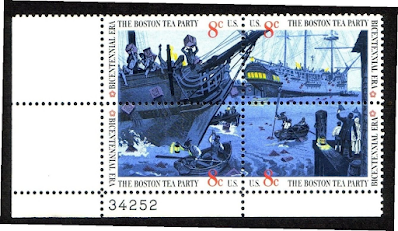
Ryan McMaken on the Boston Tea Party, mercantilism and the American Revolution

On the night of the Boston Tea Party in 1773, American insurrectionists donned disguises and destroyed a shipment of tea imported by the East India Company.  The protestors boarded privately owned ships in the harbor and threw the tea overboard.  Later that night, the activists discovered another tea shipment that had been unloaded at a warehouse.  Not content with having destroyed most of the company's import, they broke into the warehouse and destroyed that tea, too.  The total damages amounted to more than $1.5 million in today's dollars.

This was the work of the Sons of Liberty, a group which would become known for acts of resistance, arson, and violence against tax collectors and other agents of the crown.

But why destroy the tea of a private company if the group's target was the British state?  The answer, of course, is that the East India Company was essentially an adjunct of the regime and private in name only.  This was the era of mercantilism, when colonial governments used protectionism and monopoly powers to enrich the state and its supporters through supposedly private companies.  The Sons of Liberty understood the system well and targeted the "private" East India Company.

The success of the American Revolution struck a heavy blow against the mercantilist system.  But unfortunately, the wound was not mortal.  Many old mercantilist policies persisted under new labels and were promoted with new claims of helping "the people."  The regime of the new republic, too, used the tools of cartelization, monopoly, regulation, and taxation to support certain corporate friends at the expense of the ordinary people.

~ Ryan McMaken, "From the Editor," The Misesian, p. 5, January-February 2025

1973


Mar 17, 2025

JD Vance: "If you want to be rewarded, build in America"

We started a great American comeback.  [We will] make it easier and more affordable to make things in the United States...  This is not always easy and it doesn't happen overnight...  I have to be honest with you.  The road ahead is long, but we are ready - in just seven weeks - starting to see early indications of the president's vision becoming our shared American reality.

[...]

If you want to be rewarded, build in America.  If you want to be penalized, build outside of America. [prompting chants of "USA! USA!"]  It's as simple as that.

[...]

If we do not protect our nation's manufacturers, we lose a fundamental part of who we are as a people.  Making things, building things, working with our hands is America's heritage.  When we lose the ability to make our own stuff, we abandon a way of life.

~ Vice President JD Vance, speech given to plastics manufacturing facility in Michigan, March 14, 2025

(Source: "Vance says U.S. manufacturing can rebound despite tariff jitters, falling markets," The Philadelphia Enquirer, March 15, 2025)


Dec 28, 2023

Ludwig von Mises on how nationalists and classical liberals view free trade

The nationalists stress the point that there is an irreconcilable conflict between the interests of various nations, but that, on the other hand, the rightly understood interests of all the citizens within the nation are harmonious.  A nation can prosper only at the expense of other nations; the individual citizen can fare well only if his nation flourishes.  The liberals have a different opinion.  They believe that the interests of various nations harmonize no less than those of the various groups, classes, and strata of individuals within a nation.  They believe that peaceful international cooperation is a more appropriate means than conflict for the attainment of the end which they and the nationalists are both aiming at: their own nation's welfare.  They do not, as the nationalists charge, advocate peace and free trade in order to betray their own nation's interests to those of foreigners.  On the contrary, they consider peace and free trade the best means to make their own nation wealthy.  What separates the free traders from the nationalists are not ends, but the means recommended fo attainment of the ends common to both.

~ Ludwig von Mises, Human Action, p. 183

1949


Jun 27, 2021

Philip Duffy on centralization

If you commit yourself to centralization, you doom yourself to conflict.

~ Philip Duffy, June 27, 2021

Phil Duffy with daughter Erin
Linderhof Palace in Ettal Germany
May, 2009


Jan 5, 2020

Tom DiLorenzo on how the American System differed from true capitalism

The American System... was the framework for a giant political patronage system.  Politicians who could control such a system could use it to maintain and enhance their own power and wealth almost indefinitely, as the Republican Party eventually did.  It was not an example of "capitalism," as James McPherson incorrectly stated in Abraham Lincoln and the Second American Revolution, but quite the opposite: It was mercantilism, the very system that Adam Smith railed against in his epic defense of capitalism, The Wealth of Nations.

~ Tom DiLorenzo, The Real Lincoln, pp. 59-60

Murray Rothbard on mercantilism

Mercantilism, which reached its height in the Europe of the seventeenth and eighteenth centuries, was a system of statism which employed economic fallacy to build up a structure of imperial state power, as well as special subsidy and monopolistic privilege to individuals or groups favored by the state. Thus, mercantilism held exports should be encouraged by the government and imports discouraged.

~ Murray Rothbard

Image result for the logic of action ii

Abraham Lincoln on his political agenda

I presume you all know who I am.  I am humble Abraham Lincoln.  I have been solicited by many friends to become a candidate for the legislature.  My politics are short and sweet, like the old woman's dance.  I am in favor of a national bank... in favor of the internal improvements system and a high protective tariff.

~ Abraham Lincoln, upon first running for public office, 1832

(as quoted by Tom DiLorenzo in The Real Lincoln, p. 54)

Image result for lincoln 1832

Jan 3, 2020

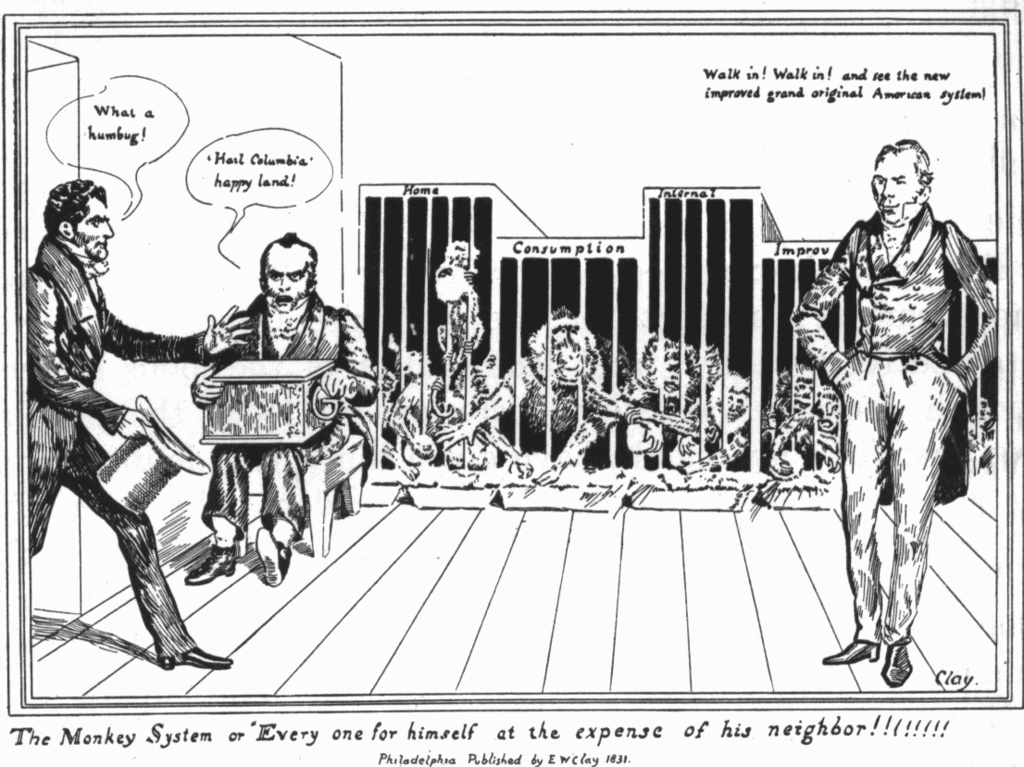
Edgar Lee Masters on the crony capitalism of Henry Clay

[Henry] Clay was the champion of that political system which doles favors to the strong in order to win and to keep their adherence to the government.  His system offered shelter to devious schemes and corrupt enterprises...  He was the beloved son of Alexander Hamilton with his corrupt funding schemes, his superstitions concerning the advantage of a public debt, and a people taxed to make profits for enterprise that cannot stand alone...  The Whigs adopted the tricks of the pickpocket who dresses himself like a farmer in order to move through a rural crowd unidentified while he gathers purses and watches.

~ Edgar Lee Masters, Lincoln the Man (1997), p. 27

(as quoted by Tom DiLorenzo in Hamilton's Curse, pp. 120-121 and The Real Lincoln, pp. 58-59)

Henry Clay
1873

Dec 31, 2019

Tom DiLorenzo on Henry Clay: "corrupt statist"

[Henry] Clay was a corrupt statist who spent his political career promoting mercantilism, protectionism, inflationary finance through central banking, and military adventurism in the quest for empire. Upon entering Congress in 1811 he helped persuade the government to attempt to conquer Canada, which it tried to do three times. He waged a thirty-year battle with James Madison, John C. Calhoun, Andrew Jackson, and other defenders of the Constitution over federally funded corporate welfare.

~ Tom DiLorenzo, "Henry Clay: National Socialist," The Free Market, March 1998

Related image
Henry Clay
1902-1903

Oct 17, 2010

Sheldon Richman on the charade of left-right politics

The political establishment, helped by the mass media and intelligentsia, has long played a game in this country. It consists in depicting the competition for power as between two blocs: one hostile to business in the name of social justice, the other friendly to business in the name of “the free market.” Each bloc’s talking points and pet projects are calculated in superficial ways to reinforce its signature theme. Whenever the blocs need to rally their respective bases, they accentuate their surface differences. The “anti-business” bloc accuses its opponents of being, say, Wall Street lackeys, while the “pro-free-enterprise” bloc accuses its opponents of being, say, socialists.

It’s all a sham that serves both side’s interests. The rivals actually want two variations of the same thing: the corporate state, a system of economic privilege that transfers wealth via government from market entrepreneurs, workers, and consumers to well-connected business interests.

~ Sheldon Richman, "The Charade," The Freeman, October 15, 2010

May 7, 2010

BofA's David Bianco on the hope of mercantilism in Europe

[European Central Bank chief] Trichet's nonchalance certainly shocked investors, but something to realize is that much of the European economy, particularly Germany, has a very strong manufacturing-recovery and export economy occurring right now. So, what I'd point out is that the key businesses to the S&P, in core Northern Europe, that are manufacturing and technology-oriented, they're doing well.

Now, if the contagion spreads, that could not be the case but a weaker Euro should actually stimulate those parts of the European economy. So, I can certainly see why certain Europeans are taking the attitude of, "This is not our problem." But that's dangerous.

~David Bianco, Head of US Equity Strategy, BofA Merrill Lynch Global Research, "Market Update: Is Volatility Back?", May 7, 2010

Oct 29, 2009

Andrew Jackson on equality under the law and his veto of the recharter of the Bank of the United States

It is to be regretted that the rich and powerful too often bend the acts of government to their selfish purposes. Distinctions in society will always exist under every just government. Equality of talents, of education, or of wealth cannot be produced by human institutions [but]... every man is equally entitled to protection by law; but when the laws undertake to add to these natural and just advantages artificial distinctions, to grant titles, gratuities, and exclusive privileges, to make the rich richer and the potent more powerful, the humble members of society... who have neither the time nor the means of securing like favors to themselves, confine itself to equal protection... it would be an unqualified blessing. In the act before me [to recharter the Bank of the United States] there seems to be a wide and unnecessary departure from these just principles.

~ Andrew Jackson, statement on his veto of the Bank of the United States

(Quoted by Robert Remini, Andrew Jackson and the Bank War, p. 83.)

Fr 2402 Twenty Dollar Gold Certificate 1928 Choice VF

Oct 25, 2009

Ron Paul on Wall Street, bailouts, and who pulls the strings in DC

You know, it is said that the Congress didn't have enough strings attached to the money that they were giving away, but I think the strings go in the other direction. I think Wall Street has the strings on Washington. And they pull and do what they want and that's where the corruption is. They control the monetary system.

~ Congressman Ron Paul, "Ron Paul on the recession: 'None of this is behind us'," The Hill's Blog Briefing Room, October 20, 2009, by Michael O'Brien

Sep 19, 2008

Jim Chanos on Wall Street's twisted version of capitalism

We seem to have capitalism on the upside and socialism on the downside. That's a pretty heady brew for a country that holds itself out as a free market paragon.

~ Jim Chanos, "Short Sellers Under Fire in U.S., U.K. After Lehman, AIG Fall," Bloomberg, September 19, 2008, by Michael Tsang

Image result for jim chanos 2008

Jul 8, 2008

Ambrose Bierce on politics

Politics, n.  A strife of interests masquerading as a contest of principles. The conduct of public affairs for private advantage.

~ Ambrose Bierce, The Devil's Dictionary (1906)

Image result for ambrose bierce the devil's dictionary

Apr 18, 2008

Ron Paul on the post-Enron assault on capitalism

Corruption and fraud in the accounting practices of many companies are coming to light. There are those who would have us believe this is an integral part of free-market capitalism. If we did have free-market capitalism, there would be no guarantees that some fraud wouldn't occur. When it did, it would then be dealt with by local law-enforcement authority and not by the politicians in Congress, who had their chance to "prevent" such problems but chose instead to politicize the issue, while using the opportunity to promote more Keynesian useless regulations.

Capitalism should not be condemned, since we haven't had capitalism. A system of capitalism presumes sound money, not fiat money manipulated by a central bank. Capitalism cherishes voluntary contracts and interest rates that are determined by savings, not credit creation by a central bank. It's not capitalism when the system is plagued with incomprehensible rules regarding mergers, acquisitions, and stock sales, along with wage controls, price controls, protectionism, corporate subsidies, international management of trade, complex and punishing corporate taxes, privileged government contracts to the military-industrial complex, and a foreign policy controlled by corporate interests and overseas investments. Add to this centralized federal mismanagement of farming, education, medicine, insurance, banking and welfare. This is not capitalism!

To condemn free-market capitalism because of anything going on today makes no sense. There is no evidence that capitalism exists today. We are deeply involved in an interventionist-planned economy that allows major benefits to accrue to the politically connected of both political spectrums. One may condemn the fraud and the current system, but it must be called by its proper names – Keynesian inflationism, interventionism, and corporatism.

~ Congressman Ron Paul, "Has Capitalism Failed?," speech before the U.S. House of Representatives, July 9, 2002

Image result for ron paul speech 2002

Feb 15, 2008

Andrew Jackson on mercantilism

It is to be regretted that the rich and powerful too often bend the acts of government to their selfish purposes.

~ Andrew Jackson

Related image
Andrew Jackson (1829-1837)
1938

Nov 23, 2007

Martin van Buren on government bailing out business losses

Those who look to the action of this government for specific aid to the citizen to relieve embarrassments arising from losses by revulsions in commerce and credit, lose sight of the ends for which it was created, and the powers with which it is clothed. It was established to give security to us all. … It was not intended to confer special favors on individuals. The less government interferes with private pursuits, the better for the general prosperity.

~ Martin Van Buren, 8th President of the United States, 1837

Image result for martin van buren stamp
Martin Van Buren (1837-1841)
1938