Showing posts with label Germany. Show all posts

Mar 20, 2025

Marko Papic on NATO and Germany defense

Ultimately, the architects of NATO – almost exclusively American – were not stupid.  They created a geopolitical architecture that – in the words of NATO’s first General Secretary Lord Ismay – was meant to “keep Americans in, Russians out, and Germans down.”  This has been an extraordinarily beneficial arrangement for the US, giving Washington an important geographical anchor on the Eurasian continent while forcing Europe to be largely subservient to US national interests.  Europe was effectively left in a permanent state of geopolitical adolescence.  The war in Ukraine ultimately illustrates that reality.  By waking up Germans to this reality, President Trump has ensured that Berlin – and Europe by extension – is no longer satisfied with staying down.

~ Marko Papic, "Europe’s Crisopportunity: Trump, Putin, And The Geopolitical Gambit," BCA Research, March 2025



Feb 27, 2025

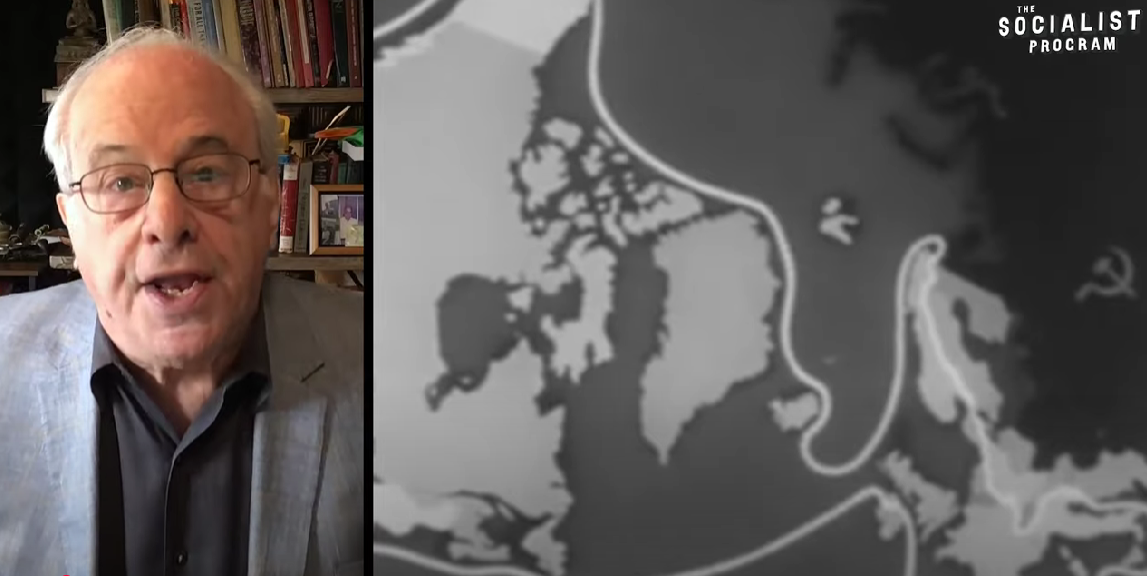
Richard Wolff on the American defense umbrella: "Germany bet on the wrong horse"

Germany is the biggest and most powerful core of what we call Western Europe, and it has been for a long time.  Germany was the only serious competitor with the United States to replace the British empire.  Had Germany not fought and lost both world wars, we would be much more aware of what was going on in that country than we are.  But those wars removed Germany from the competition.  World War II removed Japan from the competition and gave us, the United States, the kind of free ride of the last 75 years of being the dominant economic powerhouse in the world.  And we are now going through the decline, the precipitous decline of the American empire...  And that is changing everything because after Germany was defeated twice in two world wars and its enemy was the United States in both world wars, it took a very subordinate position, as did the other loser in World War II, Japan.  Subordinate to the winner, which is often what happens in big wars.  

And so, what we are seeing is a moment, cataclysmically important for global politics - although you wouldn't notice that from American media treatment - we are seeing Germany leading Europe to recognize now that they bet on the wrong horse after World War II.  Because the United States, which would and did, protect them from their fantasy of being at risk of a Russian invasion, it protected them for 70 years, it can no longer afford to do it because its own empire is declining, and so with the Trump administration the United States is withdrawing from being the protector of Europe and now wants to rip it off to benefit the United States - that's what the America First really means - when the United States in its decline has to turn on its former friends and allies, above all Europe, but equally Canada and Mexico, because it is trying to hold on to as much of its declining empire as it can.  And it will sacrifice its friends before it turns in on itself.  But please notice the word "before."

~  Richard Wolff, "German Election Shockwaves: Rapid Decline of US Influence in Europe w/ Prof. Richard Wolff," BreakThrough News, February 25, 2025


Nov 22, 2023

Phil Duffy on how embargoes have turned out in history

Wikipedia initially blames the Continental System on Napoleon’s Berlin Edict of November 1806 for barring trade with the British Empire. Only later in the first paragraph do we learn that the Berlin Decree was in response to,
… the naval blockade of the French coasts enacted by the British government on 16 May 1806.
Napoleon and his troops ate fairly well, as did the leaders and troops of the British. Both got the external enemy they needed to acquire more power. The British and French people did not fare so well.

The runup to World War I included interference of free trade according to Historic UK:
Britain declared war on Germany on August 4th 1914, but rivalry between the two countries had been growing for years. Germany resented Britain’s control of the world’s oceans and markets, while Britain increasingly viewed a Europe dominated by a powerful and aggressive Germany as a threat which must be contained.
The Mises Institute has a good summary of the situation that led to World War I:
After creating a powerful and industrializing German federation which threatened Europe's "balance of power," Bismarck worked to prevent war. He reconciled Austria, maintained friendly relations with Russia, and got along as well as possible with France. He worked against Germany's "encirclement" by France and an ally-to prevent a two-front war. After Bismarck's dismissal in 1890 by the impulsive young Kaiser Wilhelm II (a crowned TR), German policy drifted into the encirclement Bismarck feared.
Much of the analysis of the runup to World War I focuses blame on Wilhelm II’s clumsy efforts at diplomacy. It seems the theme of Barbara Tuchman’s first chapter in The Guns of August, The Funeral [of Edward VII of Britain]. But a timeline sheds a different light on the matter, with the Entente Cordiale of April 1904 being the leading event. The Gov.UK site states this about the Anglo-Russian Entente of 1907:
On 31 August 1907, Britain and Russia signed an agreement in St Petersburg which put in place the final piece of the alliance system which has widely been considered to have been a major contributing factor regarding the outbreak of the First World War.
There was some real concern in Germany about “encirclement.” It is too easy to become distracted by “Who started World War I?,” and lose sight of the lesson that comes out of that period. Europe had flourished with the defeat of Napoleon at Waterloo and the Congress of Vienna in 1815, which led to Europe’s most peaceful time until the outbreak of World War I in 1914 (Crimean War the exception on the continent). That corresponded with a move away from mercantilism/militarism toward classical liberalism and free trade. Peace and economic flourishing were shattered when mercantilism made its comeback, and the fault may be laid on the leadership of all of the nations involved in that war. The people surely were not seeking war. It was the political elites that wished it and expected to benefit from it. The armistice and Treaty of Versailles did nothing to resolve the underlying problem of economic warfare. After the devastation of Germany and surrounding countries, European leaders finally came to their senses with the Treaty of Rome in March of 1957 which led to the creation of the European Economic Community.

~ Phil Duffy, November 21, 2023

Oct 10, 2022

Tom Woods on the World War I blockade against Germany

Think back to World War I, when the Allies continued their starvation blockade of Germany for four months after that country surrendered.  Estimates of the consequences of that policy range from 750,000 to 1 million German civilians dead from hunger.

Within a generation, as you will recall, a rather distasteful political party emerged there, whose members, generally young, remembered having nearly been starved to death as children.  Resentment over past injustices has been a powerful and destructive force in recent history.

~ Thomas E. Woods, Jr., "Lift U.S. Sanctions: They Choke The Tyrannized More Than The Tyrants," Investor's Business Daily, March 19, 2001


Feb 20, 2022

Charlie Munger on the rise of Hitler

What brought in Hitler was the combination of the Weimar inflation where they utterly destroyed the savings of the middle class in Germany followed by the Great Depression.  It was a one-two punch.  And Hitler came in - crazy demagogue - with 40% of the votes and pretty soon we had a dictator hell-bent for world war.  So the history [of inflation] is not pleasant.  And Germany was a very advanced and civilized nation, the Germany that Hitler took over.  Now I always say that the interesting thing about that was little Albert Einstein, a little Jewish boy, got his entire primary education with the insistence of the Catholic Church in Germany.  Now that is a very civilized nation.  So if you let your nation deteriorate too much, what you get is a Hitler.

~ Charlie Munger, Yahoo Finance interview with Andy Serwer, 5:00 mark, February 16, 2022


Oct 17, 2020

Ron Pestritto on the German roots of progressivism

It helps us to see how the progressive movement became the means by which a lot of principles that had grown up in Europe took root in the United States, and in particular principles that were part of the German understanding of politics, and the German state, and the German understanding of history. And the influence of German thought, in German education, is evident not only from looking at the ideas of the progressives, but also just looking at the historical connections, at the pedigree of a lot of the most important progressive thinkers. Almost all of them were either educated in Germany or had as teachers those who had been educated in Germany, and this requires us to realize the real sea change that had taken place in higher education in the United States between say 1860 and 1900. This is at a time where most Americans who wanted a higher education, a graduate level education, went to Europe to get it and often went to Germany to get it. And thus by 1900, the faculties of American colleges and universities were populated with people who had been educated in Europe by and large in the German tradition. 

One example would be, take a place like Johns Hopkins University. This was actually founded in 1876 with the explicit purpose of bringing the German educational model to the United States. And Hopkins was a place, not coincidentally, where some of the most important American progressives educated: people like Woodrow Wilson, people like John Dewey, and Frederick Jackson Turner, just to name a few.

~ Ronald J. Pestritto, "The Progressive Rejection of the Founding," 25:55 mark, Hillsdale College


May 28, 2017

Rose Wilder Lane on the Progressive Movement and influence of European national socialism

Meanwhile, during half a century, reactionary influences from Europe have been shifting American thinking onto a basis of socialistic assumptions. In cities and states, both parties began to socialize America with imitations of the Kaiser’s Germany: social welfare laws, labor laws, wage-and-hour laws, citizens’ pension laws, and so-called public ownership.

Eleven years ago this creeping socialism sprang up armed with Federal power, and Americans—suddenly, it seemed—confronted for the first time in their lives a real political question: the choice between American individualism and European national socialism.

Will an American defend the Constitutional law that divides, restricts, limits and weakens political-police power, and thus protects every citizen’s personal freedom, his human rights, his exercise of those rights in a free, productive, capitalist economy and a free society?

Or will he permit the political structure of these United States to be replaced by a socialist state, with its centralized, unrestricted police power regimenting individuals into classes, suppressing individual liberty, sacrificing human rights to an imagined “common good,” and substituting for civil laws the edicts, or “directives,” once accurately called tyranny and now called administrative law?

This is the choice that every American must make. There is no escape from this choice; the present situation puts it before us and requires a decision.

~ Rose Wilder Lane, "Give Me Liberty," 1944 (first published in 1936)