~ Benjamin Franklin
Showing posts with label trade. Show all posts
Jul 1, 2025
May 14, 2025
Wayne Winegarden and Rowena Itchon on creative destruction
International trade, like all productive contributions to economic growth, is a creatively destructive process that improves our lives by disrupting the old way of doing things. While necessary to generate broad-based prosperity, these disruptions are not without a cost. The growth in internet retailers, for instance, has brought a wider array of more affordable goods and services directly to people’s doorsteps around the world. Between 2007 and 2017, it also created nearly a half million new jobs in fulfillment centers and e-commerce companies in the U.S. alone that paid nearly a third more than brick-and-mortar retail jobs on average. While the job gains in the new economy also caused job losses and business closings for brick-and-mortar retailers, on net, e-commerce has vastly improved our quality of life.
~ Wayne Winegarden and Rowena Itchon, “Free Trade Myths and Realities” Free Trade in the Twenty-First Century, pp. 643-644
Kevin Duffy on the benefit to American consumers from trade with China
American consumers were standout winners in the pre-Trump 2.0 U.S.-China trade relationship. Last year, the U.S. got 78% of its imported smartphones from China, 65% of its TVs and 76% of its toys. As the chart below shows, these categories experienced massive deflation since 2000 at the same time the Consumer Price Index rose 81%. (Unfortunately, we can’t yet import pre-fab homes from China!) More money in consumers’ pockets translates to more consumption, more investment and more jobs.
~ Kevin Duffy, "Mercantilism in America," The Coffee Can Portfolio, May 6, 2025
Labels:
China,
consumer,
deflation,
people - Duffy; Kevin,
The Coffee Can Portfolio,
trade
Apr 22, 2025
Patrick Barron on U.S. competitiveness and need to return to the gold standard
As long as America can print fiat money to pay for imports it will print fiat money. But under the discipline of the gold standard, Americans will have to produce good quality products at world market prices in order to earn the foreign exchange (gold) needed to settle international trade. It’s the only way. Erecting tariffs, as desired by President Trump, solves nothing and merely exacerbates the situation. America must learn to compete in the world on equal terms; i.e., it cannot simply print fiat dollars. It must produce goods that foreigners wish to buy at prices that foreigners are willing to pay. Becoming an autarkic nation, a la North Korea, will condemn Americans to poverty. America needs to become an honest, commercially oriented nation. If not, the world will pass it by just as has happened to other great nations in the past.
~ Patrick Barron, "David Hume’s Insight Explains America’s Economic Decline," Going Postal, April 16, 2025
Apr 7, 2025
Scott Bessent: "Our trading partners have taken advantage of us"
This has been years in the making, this unsustainable system. Our trading partners have taken advantage of us. We can see this through the large [trade] surpluses. We can see this through the large budget deficit.
[...]
After 20, 30, 40, 50 years of bad behavior, you can't just wipe the slate clean.
~ Scott Bessent, Treasury Secretary, "Treasury Sec. Bessent says ‘there doesn’t have to be a recession’: Full interview," NBC News "Meet the Press," 2:50 mark and 9:30 mark, April 6, 2025
Apr 2, 2025
Max Rangeley and Daniel Hannan on the post-WWII trade order
In closing, we know what happened when the world moved away from Cobdenite [free trade] principles. It happened at the beginning of the 20th century with cataclysmic consequences. Indeed it was precisely as a reaction to the horrors of the two wars, the Holocaust and the Holodomor that delegations from the free nations met in Bretton Woods in 1944 and agreed to a progressive reduction in trade barriers, a policy which led to the creation of what is now the World Trade Organization and to seven decades of unprecedented democracy as well as unprecedented prosperity.
That process is now going in reverse. Trade is falling as a proportion of global GDP and we are seeing a revival of the doom loop between political instability and autarkic tendencies. "The owl of Minerva," wrote Hegel, "spreads its wings only with the gathering of the dusk." If ever there was a time to remind ourselves how fortunate we have been in the economic order we have enjoyed, that time is upon us.
~ Max Rangeley and Daniel Hannan, Free Trade in the Twenty-First Century," Preface
Mar 17, 2025
Shaun Rein on trade with China: "I'm hopeful that Trump is going to realize the pragmatism"
I also think that Trump is pragmatic and he's going to see U.S.-China trade eventually is good for the American population. If you look at it, inflation is a major problem in the United States right now. Partially it's because what I consider to be an irresponsibly loose monetary policy by the Fed in the last five years during the Covid era where we've added - almost doubled - almost $18 trillion to the American deficit. Part of it is because of high energy prices from Russia because of the Russia-Ukraine war. But a large part of it is tariffs. It's no surprise that there's major inflation in the United States when there's tariffs on $350 billion of Chinese-made goods.
I'm hopeful that Trump is going to realize the pragmatism. If you look at it, in the United States the average SUV costs $43,000. The average sedan costs $38,000. BYD, a Chinese NEV maker, just announced that their $9,000 model. It's going to have full autonomous driving as good, if not better than Tesla. Wouldn't it be great for the everyday American is they could buy a $9,000 car from BYD and that would help solve the massive inflation problem that's hitting the United States.
[...]
I'm hopeful that under Trump that an accommodation can be made, that a trade deal can be made. I'm not sure it's going to happen in year one, I'm not sure it's going to happen in year two or even in year three, but Trump has a pathological need to say that he got a trade deal and he beat the Chinese. And I think he's going to say that to the American population even if it's not really a defeat of China, but it's more of a win-win deal.
~ Shaun Rein, "Why China Brushes Off Trump's Tariffs," Thinkers Forum, 10:30 mark, March 1, 2025
Nov 22, 2023
Phil Duffy on how embargoes have turned out in history
Wikipedia initially blames the Continental System on Napoleon’s Berlin Edict of November 1806 for barring trade with the British Empire. Only later in the first paragraph do we learn that the Berlin Decree was in response to,
Napoleon and his troops ate fairly well, as did the leaders and troops of the British. Both got the external enemy they needed to acquire more power. The British and French people did not fare so well.
The runup to World War I included interference of free trade according to Historic UK:
Britain declared war on Germany on August 4th 1914, but rivalry between the two countries had been growing for years. Germany resented Britain’s control of the world’s oceans and markets, while Britain increasingly viewed a Europe dominated by a powerful and aggressive Germany as a threat which must be contained.
The Mises Institute has a good summary of the situation that led to World War I:
After creating a powerful and industrializing German federation which threatened Europe's "balance of power," Bismarck worked to prevent war. He reconciled Austria, maintained friendly relations with Russia, and got along as well as possible with France. He worked against Germany's "encirclement" by France and an ally-to prevent a two-front war. After Bismarck's dismissal in 1890 by the impulsive young Kaiser Wilhelm II (a crowned TR), German policy drifted into the encirclement Bismarck feared.
Much of the analysis of the runup to World War I focuses blame on Wilhelm II’s clumsy efforts at diplomacy. It seems the theme of Barbara Tuchman’s first chapter in The Guns of August, The Funeral [of Edward VII of Britain]. But a timeline sheds a different light on the matter, with the Entente Cordiale of April 1904 being the leading event. The Gov.UK site states this about the Anglo-Russian Entente of 1907:
On 31 August 1907, Britain and Russia signed an agreement in St Petersburg which put in place the final piece of the alliance system which has widely been considered to have been a major contributing factor regarding the outbreak of the First World War.
There was some real concern in Germany about “encirclement.” It is too easy to become distracted by “Who started World War I?,” and lose sight of the lesson that comes out of that period. Europe had flourished with the defeat of Napoleon at Waterloo and the Congress of Vienna in 1815, which led to Europe’s most peaceful time until the outbreak of World War I in 1914 (Crimean War the exception on the continent). That corresponded with a move away from mercantilism/militarism toward classical liberalism and free trade. Peace and economic flourishing were shattered when mercantilism made its comeback, and the fault may be laid on the leadership of all of the nations involved in that war. The people surely were not seeking war. It was the political elites that wished it and expected to benefit from it. The armistice and Treaty of Versailles did nothing to resolve the underlying problem of economic warfare. After the devastation of Germany and surrounding countries, European leaders finally came to their senses with the Treaty of Rome in March of 1957 which led to the creation of the European Economic Community.
~ Phil Duffy, November 21, 2023
Nov 16, 2023
Murray Rothbard on voluntary exchange
If anyone wishes to grasp how much we owe to the processes of exchange, let him consider what would happen in the modern world if every man were suddenly prohibited from exchanging anything with anyone else. Eash person would be forced to produce all of his own goods and services himself. The utter chaos, the total starvation of the great bulk of the human race, and the reversion to primitive subsistence by the remaining handful of people, can readily be imagined.
~ Murray Rothbard, The Ethics of Liberty, p. 35
Jan 18, 2023
Craig Mellow on the Japan-China trade relationship
Beijing is Tokyo's largest trading partner, with bilateral trade clocking in at $164 billion last year...
"Japan can't survive economically without China's business, even if it's becoming more difficult to continue business as usual," says Shigeto Nagai, head of Japan economics for Oxford Economics.
Japan Inc. has tried to diversify... But investment has shifted only marginally to lower-cost Asian nations like Thailand and Vietnam.
[...]
Mutual advantage leads to profit. Japanese foreign direct investments in China returned 15% annually from 2015-20, compared with 6% in North America, Oxford Economics found. The yen's 20%-plus plunge against the dollar over the past year will squeeze those American returns further. Japanese executives, not surprisingly, name China as their top pick for future FDI.
[...]
Tokyo took a decoupling step of its own in April, pass the Act for the Promotion of Ensuring National Security Through Integrated Implemenation of Economic Measures.
[...]
Japan Inc. isn't so quietly pushing back. "The accumulation of business activities over many years serves as a key foundation that supports bilateral trade," Masakazu Tokura, chairman of the famed Keidanren business lobby, told Chinese Premier (since deposed) Li Keqiang in an online meeting last month.
"In the U.S., a hard line in China has been a political unifier," notes Shihoko Goto, director for Indo-Pacific enterprise at the Wilson Center. "In Japan, it has become a divisive issue."
~ Craig Mellow, "For Japan, Breaking Up With China Is Hard to Do," Barron's, October 29, 2022
Feb 22, 2022
YouTube comment on China's history of trade and foreign invasion
I’m from Malaysia. China has traded with Malaysia for 2000 years. In those years, they had been the world’s biggest powers many times. Never once they sent troops to take our land. Admiral Zhenghe came to Malacca five times, in gigantic fleets, and a flagship eight times the size of Christopher Columbus’ flagship, Santa Maria. He could have seized Malacca easily, but he did not. In 1511, the Portuguese came. In 1642, the Dutch came. In the 18th century the British came. We were colonised by each, one after another.
When China wanted spices from India, they traded with the Indians. When they wanted gems, they traded with the Persian. They didn’t take lands. The only time China expanded beyond their current borders was in Yuan Dynasty, when Genghis and his descendants Ogedei Khan, Guyuk Khan & Kublai Khan concurred China, Mid Asia and Eastern Europe. But Yuan Dynasty, although being based in China, was a part of the Mongolian Empire.
Then came the Century of Humiliation. Britain smuggled opium into China to dope the population, a strategy to turn the trade deficit around, after the British could not find enough silver to pay the Qing Dynasty in their tea and porcelain trades. After the opium warehouses were burned down and ports were closed by the Chinese in ordered to curb opium, the British started the Opium War I, which China lost. Hong Kong was forced to be surrendered to the British in a peace talk (Nanjing Treaty). The British owned 90% of the opium market in China, during that time, Queen Victoria was the world’s biggest drug baron. The remaining 10% was owned by American merchants from Boston. Many of Boston’s institutions were built with profit from opium.
~ YouTube comment, alias "C L," "The Truth About Michael Pompeo and China," Cyrus Janssen, August 8, 2020
Feb 21, 2022
Cyrus Janssen how the U.S. benefits from trade with China
It is true, when Richard Nixon went to China almost 50 years ago and began this relationship between the United States and China, and the 1980s, when China started to embrace these capitalistic measures, there certainly was some elements from Western culture that helped revitalized the Chinese economy. However, I would actually say it's America that is really biting the hand that has really helped it. You see, America has benefitted tremendously and we can't pretent that only China has gotten rich. America has gotten tremendously rich from their relationship with China as well. It's a two-way street. And America benefitted in two ways: The first way is they were able to manufacture their goods for a fraction of the price because of the cheap labor in China. In addition to that, as the Chinese economy grew, American companies then were able to take their products and send them back into China and then also have a very viable market. And that is why some of these major companies, like a Disney, like Starbucks, like Apple, like Tesla, why they've really been able to grow phenomenally over the last 10 years specifically and that is directly because of the Chinese consumers. So with that being said, who's biting who's hand now?
~ Cyrus Janssen, "The Truth About Michael Pompeo and China," YouTube, 9:00 mark, August 8, 2020
Labels:
China,
people - Janssen; Cyrus,
trade,
U.S. vs. China
Sep 12, 2020
Sheldon Richman on competition and cooperation being two sides of the free trade coin
Competition is merely part of my being free to decide with whom I wish to cooperate. It really is that simple. The alternative would be some sort of compulsory cooperation, but that doesn't sound so warm and fuzzy anymore, does it?
~ Sheldon Richman, "Libertarianism: A Necessary Review of the Foundations," The Tom Woods Show, September 8, 2020

Apr 23, 2020
Friedrich Hayek on how trade requires diversity
Exchange is productive; it does increase the satisfaction of human needs from available resources. Civilisation is so complex - and trade so productive - because the subjective worlds of the individuals living in the civilised world differ so much. Apparently paradoxically, diversity of individual purposes leads to a greater power to satisfy needs generally than does homogeneity, unanimity and control - and, also paradoxically, this is so because diversity enables men to master and dispose of more information. Only a clear analysis of the market process can resolve these apparent paradoxes.
~ Friedrich Hayek, The Fatal Conceit, Chapter 6: "The Mysterious World of Trade and Money"
Feb 9, 2020
Kevin Duffy on exploitation
Quora: How do libertarians address the issue of exploitation?
Duffy: Libertarians differ from most when addressing the issue of exploitation in two fundamental ways. First, they view exchange at the individual level vs. the abstract level. E.g., the “U.S.” doesn’t trade with “China.” Apple engages in various exchanges with Chinese employees, suppliers, consumers and shareholders. Second, they focus on the nature of the exchange. Is it coerced or voluntary? If coerced, exploitation exists; one party benefits at the expense of the other. If voluntary, both parties enter into the exchange because they expect to benefit. The operative word, of course, is “expect.” There are no guarantees and people often look back at decisions with regret. All part of the learning process. The future is uncertain and always will be.
Through the libertarian lens, what are some examples of exploitation? At the individual level, the answer is clear: rape, murder, robbery, fraud.
Greedy capitalists
What about at the abstract level? Do "greedy capitalists" exploit "helpless workers?" As long as no one is putting a gun to anyone’s head, no. If an employer and employee agree to an exchange, both parties expect to benefit. The employer prefers the labor services of the employee over the wage he’s willing to pay. The employee prefers the money he receives above the time spent doing the work. Win-win. If either party feels they are no longer benefiting, they are free to walk away (unless there is a contract that commits both to a certain amount of time).
Trade deficit with China
Is China exploiting the U.S. because they run a large trade surplus? Again, no. Since the exchanges involved are all voluntary, they must be mutually beneficial. Apple sells iPhones to Chinese consumers. Apple receives money (they have a money surplus and goods deficit) while the buyer receives an iPhone (they have a money deficit and goods surplus). Walmart buys products from Chinese suppliers. Even though they run a money deficit, they do so willingly… because they benefit. Walmart's Chinese suppliers run money deficits with their employees. Again, both parties benefit. Trade surpluses and deficits are an accounting fiction. Do you worry about running a chronic trade deficit with your local grocery store?
Sweatshops
Does a multinational firm setting up a factory in a poor country exploit its workers? If entered into freely and peacefully, the exchange only takes place if both parties benefit. E.g., if Nike builds a sneaker factory in Bangladesh, they must make the wages and work environment enticing enough to attract workers from their current jobs. They have to give them a better deal. They have to improve their lives. Some call this “unfair.” Libertarians call it heroic.
Taxation
How does a libertarian judge taxation? Is this a voluntary, mutually beneficial exchange or is it coercive and exploitative? The question answers itself.
~ Kevin Duffy, Quora answer, February 9, 2020
Labels:
exploitation,
libertarianism,
people - Duffy; Kevin,
Quora,
trade,
trade deficit
Sep 20, 2019
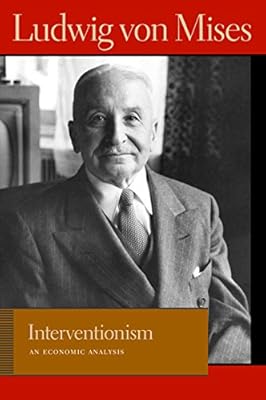
Ludwig von Mises on war and trade
The market economy means peaceful cooperation and peaceful exchange of goods and services. It cannot persist when wholesale killing is the order of the day.
~ Ludwig von Mises, Interventionism: An Economic Analysis [1940]

~ Ludwig von Mises, Interventionism: An Economic Analysis [1940]

May 9, 2019
Donald Trump: the Japanese "want to own Manhattan" (1990)
The Japanese can buy our buildings, our Wall Street firms, and there's virtually nothing to stop them. In fact, bidding on a building in New York is an act of futility, because the Japanese will pay more
than it's worth just to screw us. They want to own Manhattan.
~ Donald Trump, Playboy interview, March 1990
Mar 7, 2018
Wilbur Ross on the recent steel and aluminum tariffs
This is not going to be a big trade war.
~ Wilbur Ross, Commerce Secretary, as appeared on CNBC with U.S. Steel CEO, March 7, 2018
Labels:
import tariffs,
people - Ross; Wilbur,
protectionism,
steel,
trade
Feb 2, 2015
Will Durant on the importance of trade
The crossroads of trade are the meeting place of ideas, the attrition ground of rival customs and beliefs; diversities beget conflict,
comparison, thought; superstitions cancel one another, and reason begins.
~ Will Durant, The Life of Greece, Volume II of The Story of Civilization (1939)
Dec 1, 2007
Will Rogers on "dumping"
If the other fellow sells cheaper than you, it is called dumping. 'Course, if you sell cheaper than him, that's mass production.
~ Will Rogers
~ Will Rogers
Subscribe to:
Posts (Atom)