Showing posts with label cognitive errors. Show all posts

Sep 20, 2020

Carl Sagan on arguments from authority

Arguments from authority carry little weight — “authorities” have made mistakes in the past. They will do so again in the future. Perhaps a better way to say it is that in science there are no authorities; at most, there are experts.

~ Carl Sagan, The Demon-Haunted World, "The Fine Art of Baloney Detection" chapter (1995)


Aug 23, 2020

Chris Pavese on the Dunning-Kruger effect (circle of competence)

The more we learn, the more questions we have. But the reverse is also true. The fewer questions we ask, the less we know. This is why poor students often feel more successful than the brightest in the bunch. They lack insight into their own limitations. In other words, without an appreciation for the vast body of knowledge out there, it’s impossible to know how little they know. The first principle is that you must not fool yourself – and you are the easiest person to fool.

In the field of psychology, this cognitive bias is known as The Dunning–Kruger Effect. It comes from the inability of people to recognize their lack of ability. Without self-awareness, it can be challenging to evaluate competence or the lack thereof. Said differently, the more incompetent you are, the less you’re aware of your own incompetence.

~ Christopher Pavese, CIO of Broyhill Asset Management, The Broyhill Letter, August 2020

Chris Pavese

Dec 8, 2019

Rolf Dobelli on the value of avoiding cognitive errors

If we could learn to recognize and evade the biggest errors in thinking - in our private lives, or in government - we might experience a leap in prosperity.  We need no extra cuddling, no new ideas, no unnecessary gadgets, no frantic hyperactivity - all we need is less irrationality.

~ Rolf Dobelli, The Art of Thinking Clearly, p. xviii

Jul 19, 2019

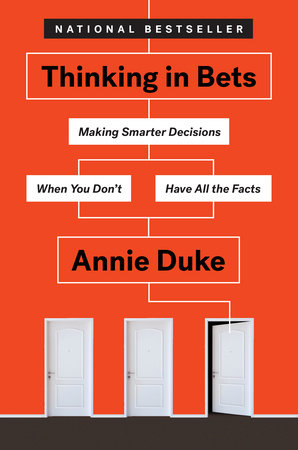
Annie Duke: don't judge an idea based on the messenger

Acceptance or rejection of an idea must not ‘depend on the personal or social attributes of their protagonist’ … [D]on’t disparage or ignore an idea just because you don’t like who or where it came from.  When we have a negative opinion about the person delivering the message, we close our minds to what they are saying and miss a lot of learning opportunities because of it.  Likewise, when we have a positive opinion of the messenger, we tend to accept the message without much vetting.  Both are bad.

~ Annie Duke, Thinking in Bets, pp. 160-161

Image result for thinking in bets