Showing posts with label America's decline. Show all posts

Feb 12, 2025

Ron Unz on the decline of America

The truth is, when you look at the audience here, all of you, regardless of whether you're young or old have lived your entire lives when America was the most powerful, most successful country in the world and in many cases, the most prosperous country in the world.  But the problem is prosperity, power and success breed arrogance.  It breeds an unwillingness to look at reality and the result of that many times is the nemesis of a country and I think we're seeing that right now in the United States, and we've been seeing that for at least the last couple of decades.

~ Ron Unz, "The Decline of America," "Mises in Reno" event, 0.25 mark, May 23, 2023


Jan 16, 2025

Tony Deden on high time preference in the Western world

We're no longer a culture of production.  We're a culture of consumption and thinking about today.  We've eaten the seed for tomorrow, completely.  Look, there have been difficult times in the past, many many and even worse, but we've never had this universal, more or less global - well, I should exclude parts of Asia, I suppose and parts of the world - but at least in the Western world, we've never had such a disintegration in every respect as we face today.  I'm not sure what impact that has long-term on many of the things we take for granted.

~ Tony Deden, "Tony Deden - Master Value Investor," State of the Markets, 40:50 mark, January 10, 2025


Nov 13, 2024

The Economist on growing anxiety in America

Ordinary Americans are anxious.  Gallup, a polling firm, regularly asks Americans if they are satisfied with how things are going.  From 1980 until the early 2000s, a little more than 40%, on average, said they were.  Over the past two decades that has dropped to 25%.


Dec 8, 2023

Joseph Solis-Mullen on China's attitude towards the U.S.: "American declinism is a very common theme"

While Xi Jinping, in particular, is very very concerned with reuniting Taiwan with the mainland, he does not want to accomplish that by military means, because he understands that the costs and risks associated with that would be many.  In Chinese strategic literature and in commentary - they have their own commentariat just like we do - American declinism is a very common theme.  They basically believe that "In 10-15 years the Americans probably won't even be around here.  They're going to be bankrupt and entrenched, at war with itself.  So we don't need to do anything right now."

So the only real thing that I think would prompt in the immediate future, 2025-2026, is if Taiwan were to declare independence - which they could feel more secure doing now that Joe Biden has said "don't worry, whatever happens, if China attacks you we'll step in."  The whole idea of strategic ambiguity was to leave Beijing guessing...

~ Joseph Solis-Mullen, "Ep. 2415 The Fake China Threat," The Tom Woods Show, November 8, 2023

2023


Jul 20, 2022

Kevin Duffy on bubbles and anti-bubbles

Q: And what is the conclusion of fifty years marked by excesses and manias? 

A: The most important lesson is that bubbles spawn anti-bubbles.  These are places to hide and plant seeds for the next bull market.  Let’s take the Japan bubble in the late 1980s.  It was fueled by the idea of the visionary bureaucrat: a partnership between business and government.  This was called "industrial policy" and perceived as an improvement over the free market system.  The anti-bubble was the more laissez faire American model, essentially Silicon Valley.  The conventional wisdom was that America lacked competitiveness and its technology sector could not compete without government help.  At that time, we actually invested in Dell, then named Dell Computer, trading for 10-12 times earnings.  Michael Dell started the company in his dorm room and dropped out of college as business took off.  It was one of our largest holdings and turned out quite well. 

Q: So Dell was an investment in the anti-bubble? 

A: Exactly.  If you can identify this pattern, you will constantly be avoiding risk (the bubble) and chasing opportunity (the anti-bubble).  You may not experience all the excitement of the speculative blow-offs, but you’ll certainly achieve above-average returns over time.

~ Kevin Duffy, interview with Christoph Gisiger: "We're Dealing With a Very Different Animal," The Market NZZ, July 18, 2022


Oct 12, 2021

Doug Casey on the old America

America used to be totally unique, but now the US is just another nation-state like all the others.  Of course, change is a constant in all areas of life.  But I’ll miss the America of the before times because it was a refuge for things like free thought, free speech, free markets, and entrepreneurialism.  Oh well, nothing lasts forever, and America had a pretty good run.


Time Magazine Cover
March 14, 2011


Jan 19, 2021

James Anderson sees a "low-level civil war in America in the next five years"

I am deeply pessimistic - I think it is a race in America between all the technological changes that have taken place and, to be blunt, societal collapse. A low-level civil war in America in the next five years is the most likely answer.

~ James Anderson, partner and head of Global Equities, Baillie Gifford, " 2021 Barron's Roundtable, January 11, 2021


Dec 2, 2019

Dwight D. Eisenhower on the Great Man theory in America

Never let yourself be persuaded that any one Great Man, any one leader, is necessary to the salvation of America.  When America consists of one leader and 158 million followers, it will no longer be America.

~ Dwight D. Eisenhower

Image result for dwight d eisenhower

Dec 8, 2010

50 Cent and Robert Greene on the decline of America

America was once a country of great realists and pragmatists. This came from the harshness of the environment, the many dangers of frontier life. We had to become keen observers of everything going on around us to survive. In the nineteenth century, such a way of looking at the world led to innumerable inventions, the accumulation of wealth, and the emergence of our country as a great power. But with this growing power, the environment no longer pressed upon us so violently, and our character began to change.

Reality came to be seen as something to avoid. Secretly and slowly we developed a taste for escape - from our problems, from work, from the harshness of life. Our culture began to manufacture endless fantasies for us to consume. And fed on such illusions, we became easier to deceive, since we no longer had a mental barometer for distinguishing fact from fiction.

This is a dynamic that has repeated itself throughout history. Ancient Rome began as a small city state. Its citizens were tough and stoic. They were famous for their pragmatism. But as they moved from being a republic to an empire and their power expanded, everything reversed itself. Their citizens' minds hungered for newer and newer forms of escape. They lost all sense of proportion - petty political battles consumed their attention more than much larger dangers on the outskirts of the empire. The empire fell well before the invasion of the barbarians. It collapsed from the collective softness of its citizens' minds and the turning of their back on reality.

50 Cent and Robert Greene, The 50th Law

Apr 14, 2010

Jan 6, 2008

Congresswoman Helen Bentley on America's decline (1990)

The United States is rapidly becoming a colony of Japan. 

~ Congresswoman Helen Bentley, quoted in a 1990 Fortune article


Jan 3, 2008

Magazine covers on Japan's rise (1988-1990)

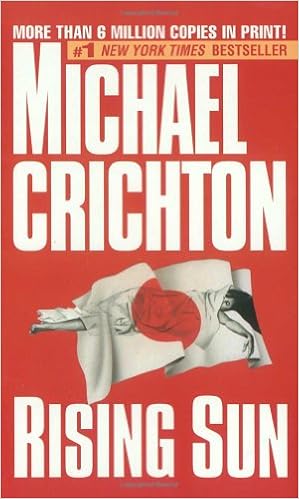
Indeed, from the mid-1980s until its slide into stagnation in the early 1990s, Japan was considered by many the measure of U.S. economic success or failure. "The United States," Congresswomen Helen Bentley was quoted as saying in a 1990 Fortune article, "is rapidly becoming a colony of Japan." A cursory glance back at the cover stories of major periodicals during that period is instructive: "Japan's Clout in the U.S." (Business Week, 1988); "Where Will Japan Strike Next" (Fortune, 1989); "Japan Invades Hollywood" (Newsweek, 1989); "Containing Japan" (Atlantic, 1989); "Yen For Power" (The New Republic, 1990). One could retrieve from the television network archives a wealth of stories about the ominous nouveau riche Japanese gobbling up real estate or whole industries that similarly captured the mood. Then there was the stream of books, some thoughtful and some simplistic "revisionist" analyses of Japan, along with a spate of hysterical agitation-propaganda: The Coming War With Japan, by neophyte academics and Michael Crichton's Rising Sun, the pulp novel and movie, already appear to be period pieces.

~ Michael J. Green and Mike M. Mochizuki, "The U.S.-Japan Security Alliance in the 21st Century (A Study Group Report)," Council on Foreign Relations Press, February 1998

Image result for rising sun michael crichton

Dec 6, 2007

Laura D'Andrea Tyson on Japan's rise and America's decline (1989)

A generation from now, Japan will almost certainly have created its own mechanism for advancing technological frontiers in a range of domains. Now the continuing pace of productivity increase suggests that Japan may indeed be on a growth trajectory different from that of the United States. As Japan ascends, America frets about its decline.

~ Laura D'Andrea Tyson, 1989

Nov 23, 2007

Kevin Duffy on hubris in Japan (1989)

Much has been said about the complacency of American business, but little is mentioned today about Japan’s rising self-confidence which borders on arrogance. It is not uncommon for Japanese hosts to lecture American visitors on what is wrong with the United States. Magazine articles berate American high-tech products as garbage. Japan increasingly sees itself propping up the U.S., which has become a spendthrift society. A new book, titled The Japan That Can Say ‘No’, has broken new ground in Japanese style America-bashing. Co-written by Sony chairman Akio Morita and Diet member Shintaro Ishihara, the book proclaims that Japanese technology already dominates the world and should be used to influence international relations. The United States and Japan have a history of underestimating each other. Today, it is the Japanese who underrate their American competitors. 

~ Kevin Duffy, "America's Decline vs. Japan's Rise," October 1989


Nov 22, 2007

Kevin Duffy on the information age

The world is still in the early stages of a third economic wave - the transition from an industrial to an information-based economy. Innovators tend to lead, whereas imitators tend to lag such waves. As the world's best imitators, the Japanese capitalized on the ending of the industrial age. As the world's best innovators, Americans should be the main beneficiaries of the beginning of the information age.

By the end of this century, the question may not be "Will the U.S. be No. 1?" but "Will Japan still be No. 2?"

~ Kevin Duffy, "Will Japan Outpace U.S. Innovators?," The Wall Street Journal (letter to the editor), December 13, 1988