Showing posts with label people - Zeihan; Peter. Show all posts

Nov 12, 2023

Peter Zeihan on the Saudi-Israel peace process after the October 7 Hamas attack

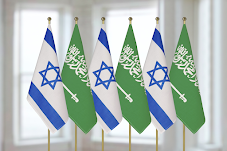
The government of Saudi Arabia over the last year has been edging closer and closer and closer, at their own pace, at their own decision-making process, towards a formal peace treaty with Israel.  That is not us [the U.S.].  That is not Israel.  That is Saudi Arabia who is trying to make this happen.  And so Iran, it appears, has been nudging Hamas to throw some spanners into the works, and there’s nothing like an invasion of an open air prison with 2.3 million people in it [Gaza] to generate spanners.  So the Iranian hope here is that it scraps the peace process.  And they may get what they want; it’s too soon to know.  So the Saudis are having a generational fight over how important the Palestinians are to them mentally and culturally.  The older generation is very pro-Palestinian; younger generation couldn’t care less.  And sooner or later the King (older generation) is going to die.  Arguably, he’s already a vegetable.  And that leaves Mohammed bin Salman, the crown prince, who – if he’s not assassinated – is probably going to be king for the next 40 or 50 years… 

Even if the older generation intends to dominate today, I don’t think we’re going to have an economic war like we did with OPEC because the generation that’s making all the actual operational decisions doesn’t want it.  So odds are, from an economic point of view, this is very tightly contained, and limited. 

~ Peter Zeihan, "It's the End of Globalization as We Know It," interview with Dan Ferris, Stansberry Investor Hour, 30:25 mark, October 23, 2023


Peter Zeihan on the Israeli invasion of Gaza

Dan Ferris: Where does this end up?

Peter Zeihan: What’s happening right now is the Israelis are on the verge of a massive invasion of the Gaza strip.  Now the Gaza strip is only [141 square miles].  It’s small, really small.  It’s like twice the size of the District of Columbia, but it’s got 2.3 million people.  So you’ve got people living in an inner city style compression when no enter lands, no power generation, no food production.  Everything comes from the outside.  And the Israelis, as they’ve proven that their intelligence gathering is not as good as we thought it was, want to go in and liquidate, at a minimum, the faction that carried out the attacks.  The problem is, if they knew where that faction was, the attacks would’ve never happened.  So they’re just going to go in and destroy all of Hamas.  And I don’t mean to suggest that these are nice people.  They are not.  But they are going to have to go house to house for 2.3 million people to destroy both the de facto government and any factions associated with it.  The human cost of that is going to be gargantuan.  I can see why some people are already starting to yell at the Israelis, but on the flipside, as per casualties per population, this is like 10 times what we went through with 9/11.  And I can tell you as an American who remembers this very very well, we didn’t give a flying f--- what anyone else in the world thought and we felt we needed to go down and hunt down those people [in Afghanistan]. 

So what this does to the political system in Israel, that’s actually the small story. What this does to the culture of Israel is something that is going to reverberate for decades. 

~ Peter Zeihan, "It's the End of Globalization as We Know It," interview with Dan Ferris, Stansberry Investor Hour, 37:20 mark, October 23, 2023


Peter Zeihan on the Israeli intelligence failure regarding the October 7 Hamas attack

Peter Zeihan: There’s a political class [Haredim] in Israel that’s basically a bunch of religious Orthodox – ultra-Orthodox folks – who are not employed in the traditional sense.  They’re a combination of religious scholars in keeping the faith alive.  And their taxes are very low, their subsidies are very high.  It turns out, because of that, they’re net beneficiaries of the state and they have lots and lots and lots and lots of kids.  So they don’t contribute much, they’re not part of that tech story we discussed and they’re multiplying like rabbits.  And you play that forward for fifty years and they are now, based on who’s drawing the line, somewhere between 10% and 30% of the population.  So from an economic point of view, absolute dead weight. 

So the efficiency of the Israeli workforce is not going up, it’s going down.  And it doesn’t matter if you’re economically dead weight or not, you can vote.  So we’re getting ever more disconnected, unprofessional, non-technical governments in Israel and you can easily make the argument today that the current government, where these folks are a huge chunk of it, are part of the reason why the Israelis missed everything [October 7 Hamas attacks].  Because you now have people in all the ministries who have no idea what they’re doing. 

Dan Ferris: Missed everything, you mean the big sort of intelligence… 

Zeihan: Israel supposedly is the platinum standard for intelligence gathering.  Gaza is supposed to be the thing they watched the most.  And they missed all of it. 

Ferris: And there are, of course, batty theories coming out of the woodwork as to why that is. 

Zeihan: Well, and they’ve got batty ministries, so some of them might actually be right!  When you’ve got a system when the population is becoming less competent and the government is becoming less competent for structural reasons, but nothing to do with politics directly, that’s a problem if you’re a value-added economy. 

[…]

Zeihan: You may have seen this debate over judicial reforms?  That’s basically what’s going on here.  So you’ve got this rising part of the population that is more and more a burden on the state and then you’ve got the judicial system that is still kind of a remnant of the old professional system, and the two are coming to clash.  With every day that passes, that rising population is getting more and more power.  So the question is, “Can the judicial process rein them in or is it the other way around?”  And that’s the core of the debate. 

~ Peter Zeihan, "It's the End of Globalization as We Know It," interview with Dan Ferris, Stansberry Investor Hour, 32:10 mark, October 23, 2023


Jan 12, 2023

Peter Zeihan on China: "they are going away"

There's no version of this where China comes through looking good.  And the challenge for the rest of us is to figure out figure out "how do we, in as smooth and quick as a process as possible, figure out how we can get along without them?"  Because they are going away.  And they're going away this decade, for certain.

~ Peter Zeihan, interview with Joe Rogan, The Joe Rogan Experience, January 7, 2023


My comment: 

The big reveal with Peter Zeihan is that he has an agenda: decouple with China.  If you press him on this, I'm pretty sure he welcomes US government policy to expedite the process.  There are several problems with this line of reasoning: 

1) If Zeihan is correct, the decoupling will happen naturally. 
2) Trade is mutually beneficial, i.e. cutting off the second largest economy in the world will inflict massive pain on the US economy, not just China's. 
3) Interfering in trade leads to conflict. 

I'm not suggesting China doesn't have its flaws (as do we), but if Zeihan actually cared about the Chinese people, he would encourage diplomacy and trade, not vilification and ostracism.


Dec 13, 2022

Peter Zeihan on incoming President Trump and the end of globalization

Everything about the American position in the international system is based upon the Americans holding together what we currently call the international order.  Americans have been doing this since 1944.  At that point the Americans re-forged the global system, shifting it from a series of warring imperial networks into a global system they personally managed.  The Americans imposed global order — the first global order — and created free trade as a means of purchasing the loyalty of the Western and Asian allies, the defeated Axis powers, and in time Communist China.  It was all about paying for alliance networks to contain and defeat the Soviet Union.  When the Cold War ended the Americans neglected to shift their policies.  The Americans continued to provide global security and empower global trade, but did so without the requisite security quid pro quo. 

People noticed.  The Brazil/Russia/China/India boom could only happen in such a strategic moment in time.  The euro could only exist when economics were protected and security was free.  But it wasn’t just in the wider world that people noticed.  Free trade isn’t really free.  Free trade requires someone providing the physical security and global ballast and market access to indirectly subsidize the rest of the system.  The Americans have provided that for seven decades, and for the last three decades they have done so without asking for anything in return.  With the Trump rise, this whole thing is now in its final years.  Perhaps in its final months.

~ Peter Zeihan, "Scared New World," Zeihan on Geopolitics, November 9, 2016