Showing posts with label social experiments. Show all posts

Jul 10, 2020

Judith Acosta on the 1607 socialist experiment at Jamestown

Under the banner of King James, over a hundred men and boys came from England and built their fort in a fertile valley, overflowing with enough wildlife, fruits, and berries for the picking, fresh water, and tillable land to sustain a city. Yet within three years most of those able-bodied men were dead. According to George Percy, governor of the colony, most of them died from starvation. Why?

Their economy failed. They had a common store, no private property, and an attitude of indolence. Many of the colonists were indentured servants. As such, they were expected to contribute all the fruits of their labor to the common store, from which they could also take what they needed. But as any student of human nature knows, people who do not benefit personally from their hard work tend not to work all that hard. The upshot was that more was taken than given. Imagine that.

Enter John Smith, whose colonial version of tough love was the motto, “Work or Starve.” He instituted a work program in which every able-bodied settler performed a minimum of four hours of farming a day. And for a while, things got better until Smith suffered an injury and had to return to England in 1608. That misfortune for Smith turned out to be a disaster for the colonists who returned to their habitual indolence and entered what is called the Starving Time. One colonist ate his own wife.

To me, the danger of socialism is plain. Now, how do we convince the millennials before the starving times begin again?

~ Judith Acosta, "Economic Cannibalism: What Millennials Don't Know Will Hurt Everyone," American Thinker, July 9, 2020

Prices of US Stamps Scott #328: 1907 1c Jameston Exposition
Founding of Jamestown
1607-1907

Jun 30, 2008

Erasmus on social engineering

Let rulers reflect that in his own eyes every man's cause seems good while hope bends on him a flattering smile; especially when his object is none of the best, his concern for it makes him think it flawless and so leads him astray.

~ Desiderius Erasmus, The Complaint of Peace (1517)

Nov 23, 2007

Governor William Bradford on how common ownership of property failed at Plymouth Plantation

At last after much debate of things, the governor gave way that they should set corn everyman for his own particular... That had very good success for it made all hands very industrious, so much [more] corn was planted than otherwise would have been ... The experience that has had in this common course and condition, tried sundrie years, and that amongst Godly and sober men, may well evince the Vanities of the conceit of Plato's and other ancients, applauded by some of later times; that the taking away of propertie, and bringing into commone wealth, would make them happy and flourishing, as if they were wiser than God.

~ Governor William Bradford, Of Plimouth Plantation: 1620-1647 (1650)

Image result for pilgrim stamps
Pilgrim Tercentenary
Signing of the Compact
1620-1920

Nov 11, 2007

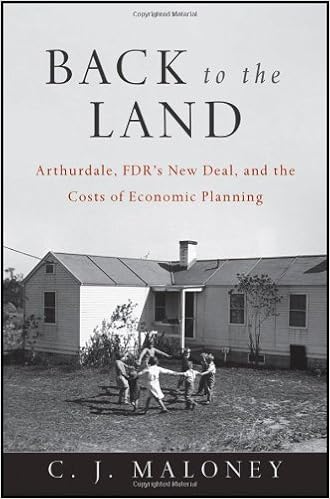
Cyd Malone on Arthurdale, Eleanor Roosevelt's failed social experiment

Arthurdale is a story with no hero. The American voting masses — that vanguard of the socialist revolution — wanted a strong man, exactly as that genius Marx had predicted. And, again exactly as Marx predicted, history produced that man.

His likeable wife Eleanor helped spread the gospel that underpinned the New Deal: that living off the toil of others is perfectly acceptable and moral. Most Americans, not even a century removed from fighting a Civil War supposedly to end such an inhuman practice, agreed.

Did Arthurdale help the families chosen to enjoy that money? Absolutely. Did the families enjoy an ocean of material abundance, even if many of them eventually learned that, in terms of "normal American life," they weren't in Kansas anymore? Absolutely.

Yet the good fortune of the residents does not negate the fact that they were living off the sweat of others' labor. Arthurdale was not "charity"; nobody was asked to contribute those millions any more than Thomas Jefferson simply asked his slaves to bring in the harvest.

Eleanor Roosevelt and her friends didn't use the money to "help the poor." Arthurdale was not in their minds charity; they used it to perform an experiment on the people they placed into Arthurdale. Eleanor called it a "program of long term rehabilitation." It had been decided that the people placed into Arthurdale needed to be more like Eleanor Roosevelt and her parlor friends.

Everything I've come across on Arthurdale maintains (in a manner of haughty approval) that it was a social experiment. The entire project was designed by a small clique of the powerful to see if they could improve their fellow man. In this case, admittedly just one of many such examples history provides, Eleanor was the potter and a group of dirt-poor Americans were the clay.

Where Our Creator had fallen short of perfection, where they had spotted a flaw in His work, Eleanor and her friends went riding into the breach, over the carcasses of all the other great plans intended to improve on our Creator's design.

Dr. Paul Conkin's Tomorrow A New World states that Arthurdale and the others sure to follow would be "demonstrations of a new way of life" (Conkin 1959, p. 115) and the New York Times praised it (of course) as "a national laboratory of which may come a new American way of life".

If Arthurdale was a laboratory, what did that make the Americans placed into it?

From the view of cold, hard, economic science, Mrs. Roosevelt, closely linked to Arthurdale for the rest of her days, defended her project by saying "the new hope and life given to the residents … were not to be measured in dollars and cents," showing she was as poor an economist as she was a homebuilder.

You must consider that which is unseen as well as what's right before your eyes — else you're only using half your brain. Mrs. Roosevelt, eyes set high on the progressive horizon, never looked down to notice those others she helped reduce to poverty, the jobs she helped destroy, the hope and life she snuffed out by the removal from their lives of the millions squandered on her "pet project" Arthurdale, all at the flick of her mighty ego.

By 1948, the Arthurdale project had come to a quiet end. All the holdings were sold off to the homesteaders, some for as low as $750 (Conkin 1959, p. 115). Once on the lips of every newspaper editor from sea to shining sea, the town has slid into obscurity; no longer do strangers come peeking in at the window or walk in to ask foolish questions.

Though Arthurdale was, from both a moral and financial point of view, a cataclysmic failure, I am happy to see the town live despite my misgivings about its vicious birth. I wish for the town to stand for years to come but not, like the friendly people who staff its museum believe, as a monument to noble charity. Her creation did not spring from any charitable impulse. I wish her to stand as a monument to the squandering of others' wealth, the residents' loss of freedom, and most important, the loss to all Americans of the principle that no man shall be forced to support another's crackbrained scheme.

In the end, Eleanor Roosevelt's dream of covering America with Arthurdales came true — from sea to shining sea, federally funded housing projects are not hard to find. For better or for worse, in them we have Arthurdale's legacy.

~ , "The Peculiar History of Arthurdale," Mises.org, August 8, 2007

Image result for arthurdale failed social experiments

Cyd Malone on the Back to the Land movement of the 1930s

During the 1930s, the wish of the world's politicians to "plan" other men's lives was strong and, by unhappy coincidence, so was their power to do so. The urge to "educate and uplift" their fellow (if lesser) man into a state more agreeable to their theories beat brightly in every progressive heart from Moscow and Berlin to London and Washington D.C.

The Communist Manifesto had vastly more influence on the intellectual mind than it does today, and its exhortation for "combination(s) of agriculture with manufacturing industries; gradual abolition of the distinction between town and country, by a more equitable distribution of the population over the country" was taken seriously as a workable idea and, more important, as a morally correct idea. Writings such as the Manifesto undoubtedly contributed to the birth of the Back to the Land movement, an intellectual fad that swept through the brains of many 1930s Western politicians.

As a result, the city of Magadan in Russia's Siberia was built from nothing, by and for Stalin's slave army. It still exists today. In Germany, the town of Ramersdorf was built from scratch on the magnanimous whim of Adolph Hitler; it too still exists today. And America's very own example of the fad was the West Virginia town of Arthurdale, constructed during 1933 on the magnanimous whim of Eleanor Roosevelt.

~ , "The Peculiar History of Arthurdale," Mises.org, August 8, 2007

Image result for arthurdale failed social experiments