Showing posts with label financial bailouts. Show all posts

Mar 17, 2023

Dick Bove on $30 billion bank rescue of First Republic Bank: "I think that the near-term banking crisis is definitely over"

I think that the near-term banking crisis is definitely over.  I think that if you go back in history, you know that time before the Federal Reserve was formed, that's what was done to preserve stability in the banking industry.  The banks would come together and basically share funds and bail out the problem company. 

The big event in 1907, which ultimately gave rise to the Federal Reserve, is when JP Morgan supposedly got all the bankers in his house, locked the doors, and said you can't leave until you solve this banking crisis.  And they solved it.  And then in more recent times, the mutual fund that went down [in 2008], the same thing happened.  Everybody got together, put money in, except for Bear Stearns, which refused to do so.  And so we're seeing it happen again.  And it works.  It's exactly the right thing to do.  The federal government should not have to bail out the banking industry.  The banks should have to bail out the banking industry and that's what they're doing.

~ Dick Bove, Odeon Capital Group, "Here's why the banking crisis is over, says long-term sector analyst," Yahoo Finance, March 17, 2023


Aug 29, 2022

Vanity Fair on Warren Buffett's praise of George W. Bush for the 2008 Wall Street bailout

The lifelong Democrat, who recently announced that he was donating the majority of his wealth to the Gates Foundation, came under fire for a New York Times op-ed piece he wrote in November thanking the Bush administration for the Wall Street bailout.  "I felt that they deserved thanks," he tells [Bethany] McLean.  "People should see that the government can do things right."  He adds, "I may not have convinced anyone, but it should mean something when I say George Bush was right!"  Bush’s September 2008 declaration "If money isn’t loosened up, this sucker could go down!" Buffett calls "the 10 most immortal words in the history of economics."

~ Vanity Fair, Bethany McLean interview, January 5, 2011

Buffett with Treasury Secretary Hank Paulson


Sep 6, 2020

Dick Fuld on the Fed's support of the investment banking industry

[The Fed's creation of a liquidity facility for primary dealers] from my perspective, takes the liquidity issue for the entire industry off the table.

~ Dick Fuld, Chairman, Lehman Brothers, e-mailed statement, March 17, 2008

(Reuters, March 28, 2008: Since Bear was forced to announce plans to sell itself to JPMorgan Chase & Co on March 16, the Federal Reserve has allowed investment banks to borrow directly from the central bank, in a move designed to shore up the financial system.)

Mar 16, 2020

Kevin Duffy on the financial press begging for bailouts

The financial press is back begging for bailouts, just as they did when the first cracks in the credit bubble appeared in 2007, well over a year before the 2008 meltdown.  The weekend issue of Barron’s shamelessly promotes a massive government response to fight the coronavirus and its spillover effects:
This isn’t 2008, when deep problems were rooted in the financial system.  Covid-19 is a health crisis, an economic crisis, and a financial crisis rolled into one – and policy makers will need to get creative to keep panic at bay…  [P]oliticians from both sides of the aisle must find a way to work together – or risk something worse than the financial crisis. 
Investors are like spoiled children who go crying to daddy every time they get into trouble.  After decades of moral hazard conditioned a whole host of economic actors to believe any downturn would be painless and brief, they’ve become devoid of critical thinking and prone to emotional reactions.

~ Kevin Duffy, "March Madness," LewRockwell.com, March 16, 2020

Image result for hedgeye

Oct 27, 2018

Kevin Duffy on why Henry Paulson failed to fix the financial system in 2008

To the Editor,

In his recent interview (“’I had to deal with raw fear’,” September 17, 2018), former Treasury Secretary Henry Paulson claimed, “The timing, cause, and severity of the next financial crisis are impossible to predict.  Of course someone will get it right and will be credited with doing so, but he or she won’t spot the next one.”  Having warned about the late ‘80s Japan bubble, late ’90s tech bubble and mid ‘00s credit bubble (“For Whom Do the Bells Toll?,” June 18, 2007), I’ll take that as a challenge.  The root cause is always artificially low rates set by central banks.  Since this period of low rates was longer (7 years vs. 2 ½ from 2002-04), deeper and more global, the next crisis will be more widespread and prolonged.  As for timing, it’s anyone’s guess but with rising rates, narrowing leadership (just 5 of 35 country stock markets up on the year), investor euphoria (record low cash levels at Schwab), and wild speculation (first cryptocurrencies, now cannabis stocks), the lights are flashing red.

There are plenty of areas of fragility.  Within the U.S., since the end of 2008 student loan debt is up 127%, auto loan debt 57%, corporate debt 76%, public debt 98%.  Margin debt has more than tripled.  Outside the U.S., Canada and Australia are experiencing housing bubbles while emerging market debt has gone from 110% of GDP to 194% according to the Bank for International Settlements.  Other potential landmines: Chinese corporate debt has increased by 64% of GDP, Italian government debt by 40% of GDP, and Japanese government debt by 61% of GDP.

Unlike the tech and credit bubbles, which were sector-specific, the bubble today is in “everything.”  This is the true legacy of Paulson, Geithner, Bernanke, Frank & Co.

~ Kevin Duffy, letter-to-the-editor sent to Barron's, but never published, September 21, 2018
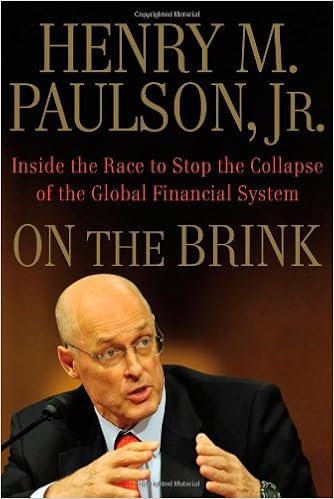
Image result for paulson geithner bernanke barney frank

Oct 4, 2018

Kevin Duffy on the legacy of the 2008 financial bailouts


In his recent interview in Barron's (“Hank Paulson Says the Financial Crisis Could Have Been 'Much Worse’,” September 17, 2018), former Treasury Secretary Henry Paulson claimed, “The timing, cause, and severity of the next financial crisis are impossible to predict.  Of course someone will get it right and will be credited with doing so, but he or she won’t spot the next one.”  Having warned about the late ‘80s Japan bubble, late ’90s tech bubble and mid ‘00s credit bubble (“For Whom Do the Bells Toll?,” June 18, 2007), I’ll take that as a challenge.  The root cause is always artificially low rates set by central banks.  Since this period of low rates was longer (7 years vs. 2 ½ from 2002-04), deeper and more global, the next crisis will be more widespread and prolonged.  As for timing, it’s anyone’s guess but with rising rates, narrowing leadership (just 5 of 35 country stock markets up on the year), investor euphoria (record low cash levels at Schwab), and wild speculation (first cryptocurrencies, now cannabis stocks), the lights are flashing red.

There are plenty of areas of fragility.  Within the U.S., since the end of 2008 student loan debt is up 127%, auto loan debt 57%, corporate debt 76%, public debt 98%.  Margin debt has more than tripled.  Outside the U.S., Canada and Australia are experiencing housing bubbles while emerging market debt has gone from 110% of GDP to 194% according to the Bank for International Settlements.  Other potential landmines: Chinese corporate debt has increased by 64% of GDP, Italian government debt by 40% of GDP, and Japanese government debt by 61% of GDP.

Unlike the tech and credit bubbles, which were sector-specific, the bubble today is in “everything.”  This is the true legacy of Paulson, Geithner, Bernanke, Frank & Co.

~ Kevin Duffy, September 21, 2018

Nov 9, 2016

Emanuel Derman on the consequences of the 2008 bailouts

To all who argued the financial world would've collapsed without the bailouts: the political world is collapsing now because of the bailouts.

 ~ Emanuel Derman

Oct 5, 2016

Kyle Bass: Goldman Sachs and Morgan Stanley would've failed without Fed bailouts

I think they made a really significant error during the crisis.  I don't think that there was enough of a flush of bad activity and bad investing back then, and the point is when the banks and investment banks came to the Fed and wanted the Fed to bail them out, the taxpayers ended up bailing out the bankers.  Goldman Sachs exists today because they were made a bank holding company and so does Morgan Stanley.  Back then, I don't think they would've made it if not for the Fed stepping in.

~ Kyle Bass, Wall Street Week interview, 6:29 mark, posted January 3, 2016

Jan 5, 2011

George Bush provides a rationale for bailing out the financial markets in 2008

If money isn’t loosened up, this sucker could go down!

~George Bush, 43rd president of the United States of America, comment made on the financial markets and economy in September, 2008

Warren Buffett defends George Bush's bailout

People should see that the government can do things right. I may not have convinced anyone, but it should mean something when I say George Bush was right!

~Warren Buffett, investor, as quoted in the New York Times' DealBook, January 5th, 2011

Oct 17, 2010

Janet Tavakoli on how Bill Gross's Pimco Total Return Fund benefitted from Fed intervention in 2008

On July 15, 2008, ex - Goldman Sachs banker and then Treasury Secretary Henry ( “ Hank ” ) Paulson asked Congress for the authority to buy stakes in Fannie Mae and Freddie Mac. Paulson asserted: “ If you have a bazooka in your pocket, and people know you have a bazooka, you may never have to take it out. ” In my experience, boasting about a big bazooka just tempts the curious to see how you measure up in exciting circumstances, and the person to do that might be named Mr. Gross. Bill Gross manages the Pimco Total Return Fund, the world’s largest bond fund with large exposures to Fannie Mae and Freddie Mac (and AIG along with a number of investment banks as of September 2008). Gross is a fan of Fed intervention, and his investments reflected it. His fund reportedly gained $1.7 billion after the U.S. government took over Fannie Mae and Freddie Mac on Sept 7, 2008.

[...]

Bill Gross’s Pimco Total Return Fund had sold $760 million of default guarantees (as credit default swaps) on AIG, and it would have cost him if AIG went under. 22 Mr. Gross might have thought he had a good idea of how the Fed would behave. Pimco had hired Alan Greenspan as a consultant. I was not surprised when Bill Gross said the Fed intervention was a “ necessary step. ”

[...]

Pimco ’ s Bill Gross found there is a limit to the Fed’s largesse, and his Lehman investment lost money. In March, Bear Stearns, the fifth largest investment bank, was deemed too big to fail, but the Fed refused to help Lehman, the fourth largest investment bank. As Jim Rogers predicted, larger investment banks than Bear Stearns had problems, and the Fed had other problems besides investment banks — Fannie, Freddie, and AIG. Pimco’s investments were only partially protected by the Fed. The Total Return Fund’s return slumped, and it will be interesting to see if Gross ends up a net winner or a net loser as the market struggles for balance.

~ Janet M. Tavakoli, Dear Mr. Buffett: What An Investor Learns 1,269 Miles From Wall Street, Chapter 10