Showing posts with label presidents. Show all posts

May 18, 2020

H.L. Mencken on democracy reaching perfection

As democracy is perfected, the office of president represents, more and more closely, the inner soul of the people.  On some great and glorious day the plain folks of the land will reach their heart’s desire at last and the White House will be adorned by a downright moron.

~ H.L. Mencken

H. L. Mencken's 'Days Trilogy: Expanded Edition' - The New York Times

Feb 8, 2020

Tom DiLorenzo on president John Tyler's place in history

In his book Recarving Rushmore: Ranking the Presidents on Peace, Prosperity, and Liberty, Ivan Eland ranked John Tyler as the best American president of all time.  (The Marxist Left that dominates the American academic history profession usually ranks him near the bottom).  Eland’s ranking is so at odds with the hard-Left history profession because their criteria give higher scores to presidents who spend and tax the most, consolidate the most power in Washington, D.C., oppress civil liberties the most, centrally plan the economy the most, and are the most belligerent in foreign wars.  Hence, Lincoln, FDR, and Wilson have long been at the top of their ratings (although Wilson is recently out of favor after the historians finally acknowledged that he re-segregated the U.S. military).

~ Tom DiLorenzo, "The President Who Was Expelled from His Own Party," LewRockwell.com, February 8, 2020

Feb 1, 2020

Robert Higgs on the measure of a great president

My idea of a great president is one who acts in accordance with his oath of office to "preserve, protect, and defend the Constitution of the United States."  Not since the presidency of Grover Cleveland has any president achieved greatness by this standard.  Worse, the most admired have been those who failed most miserably.  Evidently my standard differs from that employed by others who judge presidential greatness.

~ Robert Higgs, "No More Great Presidents," The Free Market, March 1997

Image result for grover cleveland stamp"
Grover Cleveland
1931

Robert Higgs on American presidents and war

When American presidents prepare for foreign wars, they lie.

~ Robert Higgs

Image result for pinocchio

Jan 6, 2020

Kevin Duffy on America's history

American history has passed through three phases: liberty, national greatness and now fairness.  Liberty has been lost in the process yet most Americans feel they are "free."

~ Kevin Duffy


Jan 4, 2020

James K. Polk on manifest destiny

We must ever mandate the principle that the people of this continent alone have the right to decide their own destiny.

~ James K. Polk, 11th president

Image result for polk stamp
James K. Polk
1845-1849

Jan 1, 2020

1938 Presidential Series

Scott #803-834

1/2 cent - Benjamin Franklin

1 cent - George Washington

1 1/2 cents - Martha Washington

2 cents - John Adams

Related image


3 cents - Thomas Jefferson

Related image


4 cents - James Madison

4 1/2 cents - White House

5 cents - James Monroe

6 cents - John Q. Adams (1825-1829)

Image result for john quincy adams stamp


7 cents - Andrew Jackson (1829-1837)

Related image


8 cents - Martin Van Buren (1837-1841)

Image result for martin van buren stamp


9 cents - William H. Harrison (1841)


10 cents - John Tyler (1841-1845)

Image result for john tyler stamps


11 cents - James K. Polk (1845-1849)

Image result for polk stamp


12 cents - Zachary Taylor

13 cents - Millard Fillmore

14 cents - Franklin Pierce

15 cents - James Buchanan

16 cents - Abraham Lincoln (1861-1865)

Related image


17 cents - Andrew Johnson (1865-1869)

Related image


18 cents - Ulysses S. Grant (1869-1877)

Related image


19 cents - Rutherford B. Hayes (1877-1881)

Related image


20 cents - James A. Garfield (1881)

Image result for scott 825 stamp


21 cents - Chester A. Arthur (1881-1885)


22 cents - Grover Cleveland (1885-1889, 1893-1897)

Related image


24 cents - Benjamin Harrison (1889-1893)

Related image


25 cents - William McKinley (1897-1901)

Image result for scott #829 stamp


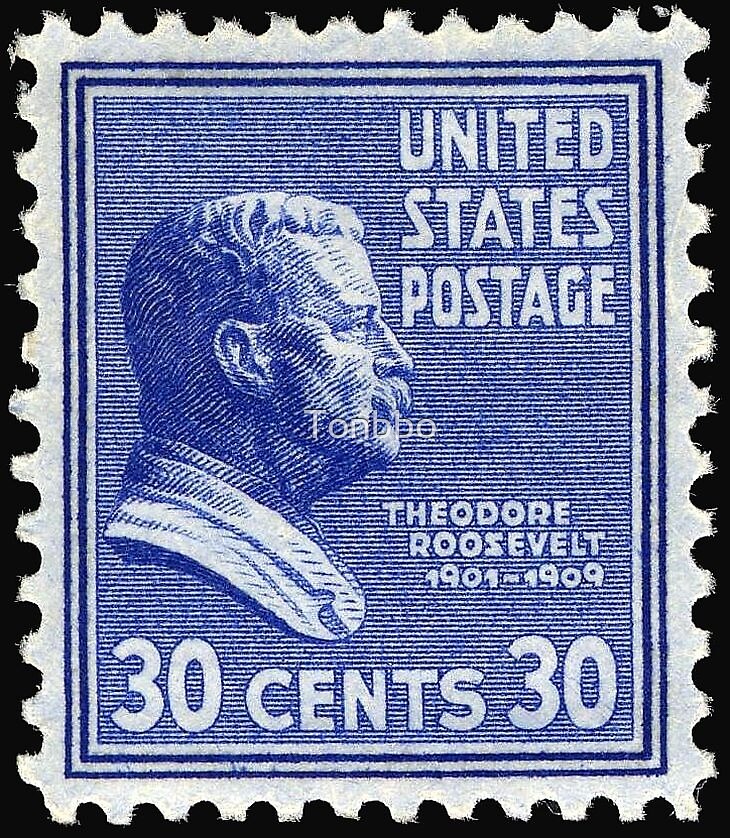
30 cents - Theodore Roosevelt (1901-1909)

Image result for teddy roosevelt stamp


50 cents - William H. Taft (1909-1913)

Related image


$1 - Woodrow Wilson (1913-1921)

Related image


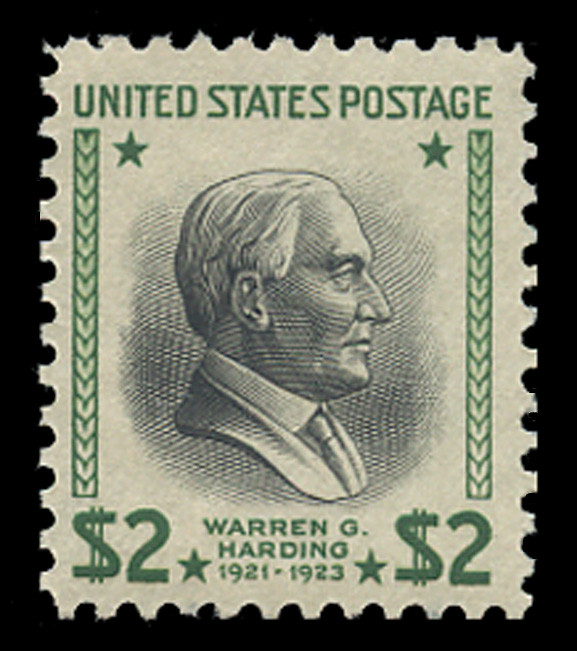
$2 - Warren G. Harding (1921-1923)

Image result for scott #833 stamp


$5 - Calvin Coolidge (1923-1929)

Dec 30, 2019

John Quincy Adams: Go not abroad "in search of monsters to destroy"

Wherever the standard of freedom and Independence has been or shall be unfurled, there will her [America’s] heart, her benedictions and her prayers be.  But she goes not abroad, in search of monsters to destroy.  She is the well-wisher to the freedom and independence of all.  She is the champion and vindicator only of her own.  She will commend the general cause by the countenance of her voice, and the benignant sympathy of her example.  She well knows that by once enlisting under other banners than her own, were they even the banners of foreign independence, she would involve herself beyond the power of extrication, in all the wars of interest and intrigue, of individual avarice, envy, and ambition, which assume the colors and usurp the standard of freedom.  The fundamental maxims of her policy would insensibly change from liberty to force...  She might become the dictatress of the world. She would be no longer the ruler of her own spirit...

~ John Quincy Adams, then Secretary of State, speech honoring the 45th anniversary of the Declaration of Independence, 1821

Image result for john quincy adams stamp
John Quincy Adams
1825-1829

Mar 8, 2018

Francis Biddle on the Constitution and war

The Constitution has never greatly bothered any wartime president.

~ Francis Biddle, Franklin Roosevelt's Attorney General, writing in 1962

Sep 9, 2012

Woodrow Wilson on neutrality

Neutrality is a negative word. It does not express what America ought to feel. We are not trying to keep out of trouble; we are trying to preserve the foundations on which peace may be rebuilt.

~ Woodrow Wilson

Related image
Woodrow Wilson (1913-1921)
1938

Oct 26, 2008

Presidents

  1. Washington, George (1789-1797)
  2. Adams, John (1797-1801)
  3. Jefferson, Thomas (1801-1809)
  4. Madison, James (1809-1817)
  5. Monroe, James (1817-1825)
  6. Adams, John Quincy (1825-1829)
  7. Jackson, Andrew (1829-1837)
  8. Van Buren, Martin (1837-1841)
  9. Harrison, William Henry (1841-1841)
  10. Tyler, John (1841-1845)
  11. Polk, James K. (1845-1849)
  12. Taylor, Zachory (1849-1859)
  13. Fillmore, Millard (1850-1853)
  14. Pierce, Franklin (1853-1857)
  15. Buchanan, James (1857-1861)
  16. Lincoln, Abraham (1861-1865)
  17. Johnson, Andrew (1865-1869)
  18. Grant, Ulysses S. (1869-1877)
  19. Hayes, Rutherford B. (1877-1881)
  20. Garfield, James A. (1881-1881)
  21. Arthur, Chester A. (1881-1885)
  22. Cleveland, Grover (1885-1889)
  23. Harrison, Benjamin (1889-1893)
  24. Cleveland, Grover (1893-1897)
  25. McKinley, William (1897-1901)
  26. Roosevelt, Theodore (1901-1909)
  27. Taft, William Howard (1909-1913)
  28. Wilson, Woodrow (1913-1921)
  29. Harding, Warren G. (1921-1923)
  30. Coolidge, Calvin (1923-1929)
  31. Hoover, Herbert (1929-1933)
  32. Roosevelt, Franklin D. (1933-1945)
  33. Truman, Harry S. (1945-1953)
  34. Eisenhower, Dwight D. (1953-1961)
  35. Kennedy, John F. (1961-1963)
  36. Johnson, Lyndon B. (1963-1969)
  37. Nixon, Richard (1969-1974)
  38. Ford, Gerald (1974-1977)
  39. Carter, Jimmy (1977-1981)
  40. Reagan, Ronald (1981-1989)
  41. Bush, George H.W. (1989-1993)
  42. Clinton, Bill (1993-2001)
  43. Bush, George W. (2001-2009)
  44. Obama, Barack (2009-17)
  45. Trump, Donald (2017-

Nov 23, 2007

Martin van Buren on government bailing out business losses

Those who look to the action of this government for specific aid to the citizen to relieve embarrassments arising from losses by revulsions in commerce and credit, lose sight of the ends for which it was created, and the powers with which it is clothed. It was established to give security to us all. … It was not intended to confer special favors on individuals. The less government interferes with private pursuits, the better for the general prosperity.

~ Martin Van Buren, 8th President of the United States, 1837

Image result for martin van buren stamp
Martin Van Buren (1837-1841)
1938

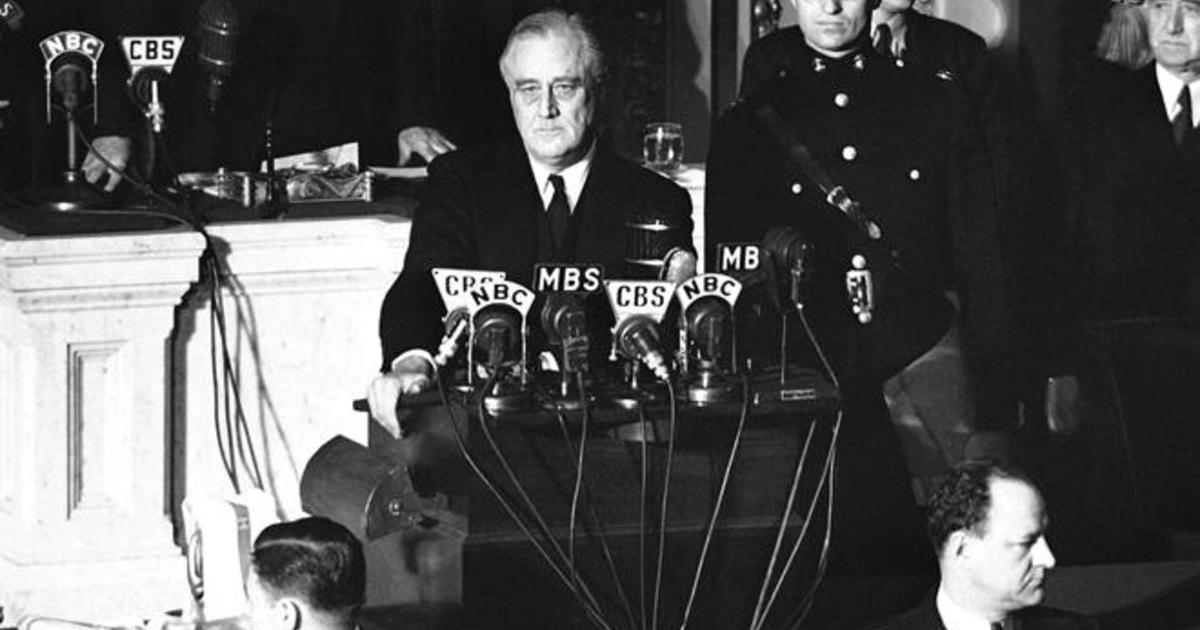
FDR on sacrifice

It is not a sacrifice for any man, old or young, to be in the Army or Navy of the United States. Rather it is a privilege. It is not a sacrifice for the industrialist or the wage-earner, the farmer or the shopkeeper, the trainman or the doctor, to pay more taxes, to buy more bonds, to forego extra profits, to work longer or harder at the task for which he is best fitted. Rather it is a privilege. It is not a sacrifice to do without many things to which we are accustomed if the national defense calls for doing without.

~ Franklin Delano Roosevelt, December 9, 1941

(From FDR's radio address two days after the Japanese attacked Pearl Harbor.)

Image result for fdr pearl harbor speech

Nov 13, 2007

Thomas Jefferson on conquest (1790)

Conquest is not in our principles. It is inconsistent with our government.

~ Thomas Jefferson, instructions to William Carmichael

Thomas Jefferson
1873


Jefferson on principle

In matters of style, swim with the current; in matters of principle, stand like a rock.

~ Thomas Jefferson

Nov 11, 2007

Robert Higgs on Grover Cleveland

Grover Cleveland, though far from perfect, may have been the best [president]. He kept the country at peace. He respected the Constitution, acknowledging that the national government has only a limited mission to perform and shaping his policies accordingly. He fought to lower tariffs; preserved the gold standard in its time of crisis; and restored order forcibly when hoodlums disturbed the peace on a wide front during the great railroad strike of 1894.

~ Robert Higgs, Research Director for the Independent Institute and editor of The Independent Review, "No More Great Presidents," Mises.org, February 19, 2007
Robert Higgs on presidential greatness

In the New York Times Magazine for December 15, 1996, Arthur M. Schlesinger, Jr., presented the results of a poll of historians asked to rank the presidents (excepting only William Henry Harrison and Zachary Taylor, who held office very briefly). Thirty historians plus politicos Mario M. Cuomo and Paul Simon were asked to rank the nations chief executives as Great, Near Great, Average, Below Average, or Failure. The ranking applies to performance in the White House, not to lifetime accomplishments, and the historians used their own judgment as to what constitutes greatness or failure.

The results of the poll correspond well with the results of a number of earlier polls, especially in the set of presidents regarded as Great or Near Great. The three Great ones are Washington, Lincoln, and Franklin D. Roosevelt. The Near Great comprise Jefferson, Jackson, Polk, Theodore Roosevelt, Wilson, and Truman. The Failures are Pierce, Buchanan, Andrew Johnson, Grant, Harding, Hoover, and Nixon, the last ranking at the very bottom of the heap.

What are we to make of this ranking? Well, it helps to know that the historians (and two politicians) doing the ranking are nearly all left-liberals. In this regard they faithfully represent the historical profession in the United States today. In making their judgments, such historians bring to bear left-liberal beliefs and values. Thus, one respondent, James MacGregor Burns, asks: "How can one evaluate such an idiosyncratic President [as Nixon], so brilliant and so morally lacking?"--as if Nixon were, in this crowd, uniquely immoral.

One need not ponder the rankings long, however, to discover a remarkable correlation: all but one of the presidents ranked as Great or Near Great had an intimate association with war, either in office or by reputation before taking office. Of the top-ranking "nine immortals," five (Lincoln, FDR, Polk, Wilson, and Truman) were commander in chief when the nation went to war, and three (Washington, Jackson, and Teddy Roosevelt) were best known prior to becoming president for their martial exploits. The one exception, Jefferson, confined his presidential bellicosity to authorizing, with Congressional consent, the naval engagements against the Barbary pirates. (Of course, he had been a revolutionary official during the War of Independence.)

In contrast, of the eleven presidents ranked as Below Average or Failure, all but one (Nixon) managed to keep the nation at peace during their terms in office, and even Nixon ultimately extracted the United States from the quagmire of the war in Vietnam, though not until many more lives had been squandered.

The lesson seems obvious. Any president who craves a high place in the annals of history should hasten to thrust the American people into an orgy of death and destruction. It does not matter how ill-conceived the war may be. Lincoln achieved his presidential immortality by quite unnecessarily plunging America into its greatest bloodbath--ostensibly to maintain the boundaries of an existing federal union, as if those boundaries possessed some sacred status. Wilson, on his own initiative and against the preference of a clear majority of the American people, propelled the country into a grotesquely senseless, shockingly barbarous clash of European dynasties in which the United States had no substantial national interest. On such savage and foolish foundations is presidential greatness constructed.

I have a theory: left-liberal historians worship political power, and idolize those who wield it most lavishly in the service of left-liberal causes. How else can one account for the beatification of Lincoln, Wilson, and Franklin Roosevelt? Truman, now so elevated in the estimation of the historians, left office in unpopularity bordering on disgrace because of his Korean War disaster, but the historians forgive him, admiring his use of nuclear weapons and attempts to preserve and extend the New Deal. Theodore Roosevelt, a bloodthirsty proto-fascist, evokes admiration because of his public flogging of big business, a perennial left-liberal whipping boy.

~ Robert Higgs, Research Director for the Independent Institute and editor of The Independent Review, "No More Great Presidents," Mises.org, February 19, 2007

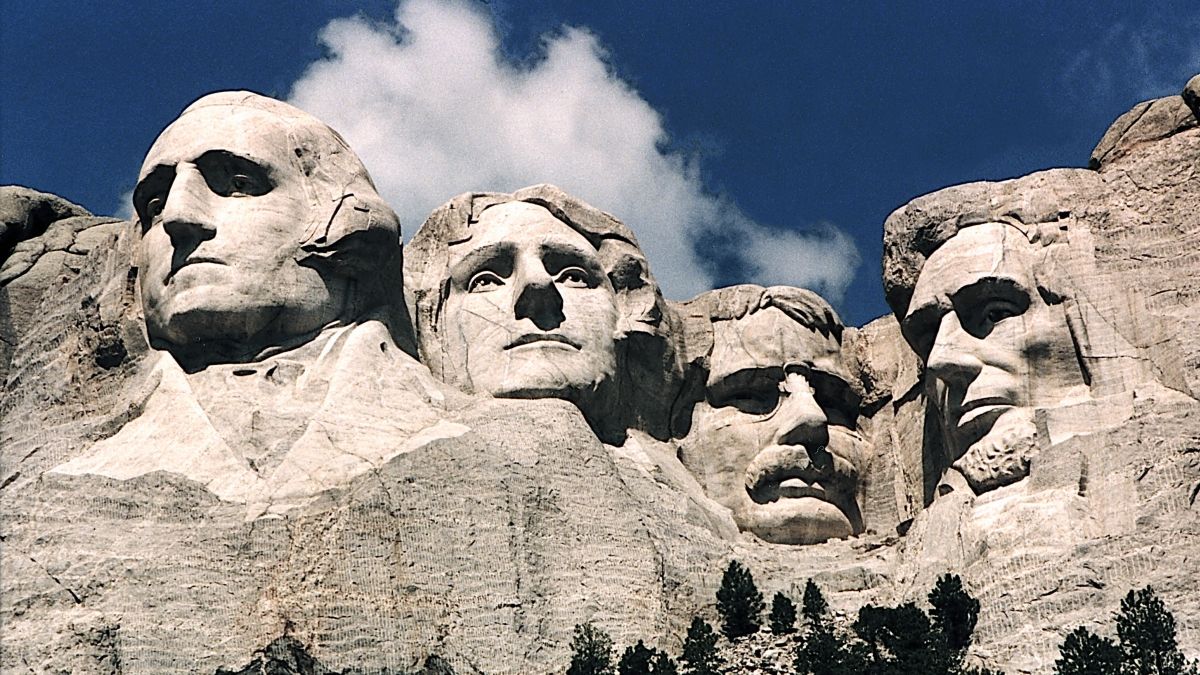
Image result for mount rushmore

Robert Higgs on what the Constitution intended for the presidency

The people who ratified the original Constitution never intended the presidency to be a powerful office spawning "great men." Article II, Sections 2-4, which enumerate the powers of the president, comprise but four paragraphs, most of which deal with appointments and minor duties.

The president is to act as commander in chief of the army and navy, but Congress alone can commit the nation to war, that is, "declare war." The president is to "take care that the laws be faithfully executed," but only Congress can enact laws, and then only within the scope of its limited, enumerated powers. The presidency was intended to be a largely ceremonial position whose occupant would confine himself to enforcing federal laws.

But over time, abruptly during Lincoln's presidency and progressively during the twentieth century, presidents seized more and more power.

American liberty will never be reestablished so long as elites and masses alike look to the president to perform supernatural feats and therefore tolerate his virtually unlimited exercise of power. Until we can restore limited, constitutional government in this country, God save us from great presidents.

~ Robert Higgs, Research Director for the Independent Institute and editor of The Independent Review, "No More Great Presidents," Mises.org, February 19, 2007

Grover Cleveland on a sound and stable currency

Manifestly nothing is more vital to our supremacy as a nation and to the beneficent purposes of our Government than a sound and stable currency. Its exposure to degradation should at once arouse to activity the most enlightened statesmanship, and the danger of depreciation in the purchasing power of the wages paid to toil should furnish the strongest incentive to prompt and conservative precaution.

Grover Cleveland in his second inaugural address, March 4, 1893

Related image
Grover Cleveland (1885-1889, 1893-1897)
1938

Jefferson on the proper role of government

Still one more thing, fellow citizens - a wise and frugal government, which shall restrain men from injuring one another, which shall leave them otherwise free to regulate their own pursuits of industry and improvement, and shall not take from the mouth of labor the bread it has earned. This is the sum of good government, and this is necessary to close the circle of our felicities.

~ Thomas Jefferson, from The Essential Thomas Jefferson, p. 200, edited by John Gabriel Hunt