Showing posts with label technology. Show all posts

Jan 22, 2026

Louis-Vincent Gave on the AI malinvestment in the U.S.

I think that [AI] in the U.S. is a huge misallocation of resources.  In the U.S. the business model essentially is, “Oh, we’re going to get 500 million customers that pay us $20 each a month.”…  I’m very skeptical that anybody will do it when China is giving it for free…  In China, the development of AI has a lot more to do with, “How do we use this for our factories… essentially getting rid of industrial workers?”…  If you think there are three goals: One is to make factories more efficient.  I can see how that’s going to happen.  In fact… it’s already happening.  If the goal is, “We’re going to get rid of low-end service workers – the paralegals, banking analysts, etc.,” that might very well happen.  I think it is starting to happen.  You see it in the rise of youth unemployment here, etc., but that also comes with big social consequences.  And if the end goal is AGI [artificial general intelligence], I’m actually super dubious on that…  [T]he whole AGI thing is being sold to us as investors: “Do this, give us billions and we’re going to deliver AGI on the other side.  I think it’s a stock promote,… literally the Vancouver guy trying to sell you a gold mine standing next to a hole.

~ Louis-Vincent Gave, "China Just Ended 100 Years of American Dominance," RiskReversal Podcast, 45.35 mark, December 15, 2026


Aug 18, 2025

Shaun Rein: "China is going to become the AI leader of the world"

Going forward, China is going to become the AI leader of the world.  And part of the reason is because they're doing open source, which is something that Global South (or the Global Majority) likes because it's going to lower their own costs in adopting AI.  And then second, the reason why DeepSeek and other Chinese artificial intelligence companies are going to win is because they are able to do the same as American firms can do at a fraction of the cost.  So when you have a combination of cheap and open source, that means it's going to be adopted throughout the entire world.

 ~ Shaun Rein, Twitter/X post, August 18, 2025


Mar 20, 2025

Tesla Universe on how U.S. sanctions on Huawei unleashed a wave of innovation

The resilience of companies previously seen as vulnerable to sanctions has surprised many.  Huawei, once thought to be in decline after restrictions cut off its access to key technology made a dramatic comeback in 2023 by unveiling the Mate 60 Pro.  This smartphone, powered by an advanced, domestically produced 7 nanometer processor, caught industry experts off guard.  Many believe that China's ability to innovate had been stifled by sanctions, yet Huawei's success told a different story.  The company has also built next-generation networking equipment using entirely local components, reinforcing its ability to navigate external pressures.  Rather than acting as barriers, trade restrictions have fueled advancements by forcing Chinese firms to develop alternative technologies.

[...]

Texas Instruments, a major supplier of analog semiconductors reported a revenue shortfall of $2.3 billion due to reduced demand from Chinese buyers.

[...]

For years, these [U.S. semiconductor] firms generated up to 30% of their revenue from China.  With demand shrinking, new concerns have emerged over whether these policies [tariffs and sanctions] are backfiring.  China's share of global semiconductor production has surged.  In 2020, it accounted for around 15% of the world's total output.  By 2023, that figure climbed to nearly 30%.

[...]

China's influence extends beyond chip manufacturing.  Domestically-produced processors are now powering critical infrastructure, including data centers, telecommunications networks and artificial intelligence platforms.  Major companies are replacing imported components with locally-developed alternatives, reshaping the supply chain.  By 2023, over 60% of China's cloud computing industry was running on homegrown technology, demonstrating the shift away from foreign providers.


Huawei Mate 60 Pro


Feb 26, 2025

Ruchir Sharma on competitiveness in China vs. the U.S.

The difference in China is that in some way the market is more competitive than the U.S., that if you look at the various industries there, the concentration is a lot less, the competition is a lot more intense where the U.S. big companies tend to dominate across sectors, particularly tech.  So that is the irony there, which is not that great maybe for some investors who are looking for moats.

~ Ruchir Sharma, founder, Breakout Capital, "DeepSeek has shifted the perception on China's tech prowess," CNBC, February 26, 2025


Jan 29, 2025

Sam Altman on OpenAI's lead in generative AI (2023)

Look, the way this works is we're going to tell you, "It's totally hopeless to compete with us on training foundation models, you shouldn't try and it's your job to, like, try anyway."  And I believe both of those things.   It think it is pretty hopeless, but...

~ Sam Altman, CEO of OpenAI, June 8, 2023

Mar 27, 2024

The Economist: "technological breakthroughs take ages to pay off"

Previous technological breakthroughs have revolutionized what people do in offices. (example: typewriter in lates 1800s, rise of computer a century later; more recently the rise of work at home)...  Could generative AI prompt similarly profound changes?  A lesson of previous technological breakthroughs is that, economywide, they take ages to pay off.  The average worker at the average firm needs time to get used to new ways of working.  The productivity gains from the personal computer did not come until at least a decade after it became widely available.  So far there is no evidence of an AI-induced productivity surge in the economy at large.

~ "Meet your copilot: The inside view of how companies are using generative AI," The Economist, March 2, 2024


Jun 5, 2023

Fred Hickey on why Apple's stock is vulnerable

Apple's stock has rallied all year long (almost back to a record high) and certainly does not reflect the deterioration in the economy, the squeeze on consumers from tightened lending, declining consumer sentiment (remember - Apple sells to consumers - not corporations), the slide in the smartphone market - leading to an inventory overbuild and digestion period, falling revenues and earnings and a rising P/E ratio (twice as high as it normally runs at).  It also doesn't account for its heavy exposure to China (relations between the U.S. and that country continue to worsen), a difficult (and likely costly) transition from producing nearly all its products in China to places such as India, the likelihood that the Chinese government will kick Apple in the pants on the way out (I don't think China will forget how the U.S. government destroyed Huawei's smartphone business), the poor position of its product cycle and lack of innovation.

Of all today's Big Seven, Apple (and likely Tesla) appear to me to be in the most trouble (short-term and long-term) and once Apple's stock momentum inevitably turns downward again, investors may experience a Wile E. Coyote moment - over the cliff and with a long way to fall in the bear market.

~ Fred Hickey, "2000 Déjà vu," The High-Tech Strategist, June 1, 2023


May 2, 2023

Jessica Kriegel on how tech layoffs affect innovation

You cannot have innovation in the same environment that has fear.  There's a massive lack of psychological safety for employees with all of these layoffs happening and that's making them less innovative, which you're noticing with these companies.  Amazon and Meta - they're historically known as being innovative companies, but what have they done lately that's very innovative?  I think the culture of fear is taking over and they're suffering as a result.

~ Jessica Kriegel, Culture Partners, interview with Joe Kernen, CNBC, 2:45 mark, May 1, 2023


Mar 28, 2023

Steven Sosnick on investors piling into Apple and Microsoft

The one thing that does worry me is the concentration in everybody's favorite stocks, so to speak.  You've got now Apple and Microsoft combining to be 25% of the Nasdaq 100.  Stop and let that sink in: two stocks being 25% of a major index.  They're 13% of the S&P 500, give or take, combined.

~ Steven Sosnick, "A bank crisis brings back an old favorite back for traders," Yahoo Finance, 5:30 mark, March 28, 2023


Nov 18, 2022

Brian Chesky on cryptocurrencies post FTX collapse

Now as far as crypto, I think that generally the analogy I'd make is like we're all in a nightclub and the lights just came on.  So suddenly I feel that we have to take a really cold hard look, have a reality check.  The technology's really interesting.  I think we have to be very careful, though, about this frenetic get-in-on-any-technology trend before it's over.  I think we ought to be very very careful about that because that's when discipline goes down.  I think people will regret decisions they make when they have this mentality that "someone else is making money, I'm not."  You really gotta always focus on fundamentals.  You always have to focus on building things for other people of value.  And if the more you learn about somthing, the less you understand it, you just gotta slow down and make sure you really know what you're doing.

~ Brian Chesky, CEO of Airbnb, interview, Bloomberg TV, November 18, 2022


May 28, 2022

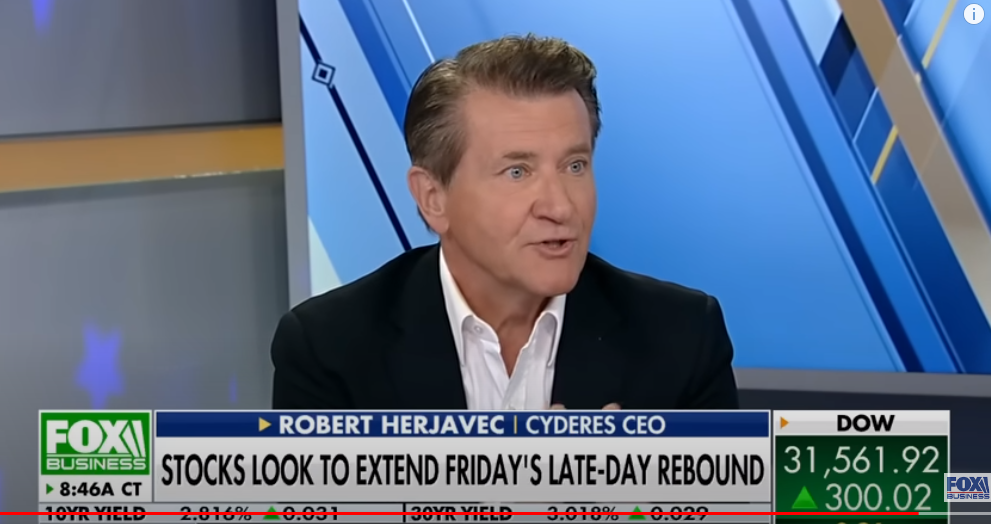
Robert Herjavec on how Covid accelerated digital transformation

Covid was the greatest accelerator of business cycles in history.  Everything that's happening now - cloud, e-commerce, digital infrastructure - we all knew that was going to happen, we didn't know it was going to happen in two years.

~ Robert Herjavec, interview with Stuart Varney, Fox Business News, 4:00 mark, May 23, 2022


Sep 13, 2021

The Economist on China's tech giants and the government crackdown

Of all china’s achievements in the past two decades, one of the most impressive is the rise of its technology industry.  Alibaba hosts twice as much e-commerce activity as Amazon does.  Tencent runs the world’s most popular super-app, with 1.2bn users.  China’s tech revolution has also helped transform its long-run economic prospects at home, by allowing it to leap beyond manufacturing into new fields such as digital health care and artificial intelligence (ai).  As well as propelling China’s prosperity, a dazzling tech industry could also be the foundation for a challenge to American supremacy. 

That is why President Xi Jinping’s assault on his country’s $4trn tech industry is so startling.  There have been over 50 regulatory actions against scores of firms for a dizzying array of alleged offences, from antitrust abuses to data violations.  The threat of government bans and fines has weighed on share prices, costing investors around $1trn.


Jul 29, 2021

Doug Casey on technology and freedom

Let’s get back to technology for a moment.  Here’s the good news.  Although throughout history technology has always been first in the hands of the State, in the hands of the rulers, it always devolves to the common man, where it’s a genuine liberator. 

For instance, the bad guys got gunpowder first and used it to cement themselves in power starting in the 14th century.  But after a while, the technology drifted down to the peasants.  Gunpowder then allowed the common man to take out an armored mounted knight.  Although gunpowder helped the rulers to start with, it overturned them in the end. 

The same is true of computers. At first, only governments and large corporations could afford computers; they used them to keep track of the plebs.  But now everybody has a computer.  It’s more or less a level playing field, a two-way street.  So don’t worry about technology, because it’s always on the side of the average guy in the long run.  When the Singularity arrives in a generation or so, if Ray Kurzweil is right, the whole nature of life itself—forget about politics—will be utterly changed.

~ Doug Casey, "Doug Casey's Next 5 Shocking Predictions...," International Man, July 22, 2021


Jun 19, 2021

Tom Slater on growth investing and prediction

Many people are focused on trying to predict economic variables.  They are inherently extremely difficult, if not impossible, to predict.  At the same time, there are a lot of predictable trends—in communications, computation, machine learning, energy generation and storage, gene sequencing, and synthetic biology.  We focus on predictable trends and the opportunities they create.


Apr 14, 2021

Jensen Huang on the significance of NVIDIA

Q4 was another record quarter, capping a breakout year for NVIDIA’s computing platforms.  Our pioneering work in accelerated computing has led to gaming becoming the world’s most popular entertainment, to supercomputing being democratized for all researchers, and to AI emerging as the most important force in technology.

~ Jensen Huang, founder and CEO of NVIDIA, February 24, 2021


Apr 10, 2021

Murray Rothbard on the history of human progress

Technologically, history is indeed a record of progress; but morally, it is an up-and-down and eternal struggle between morality and immorality, between liberty and coercion.

~ Murray Rothbard, "What Changes and What Does Not," The Freeman, 1962


Mar 14, 2021

Andy Price on remote work: "Covid unleased the beast, and we're not going back"

Not one of my clients requires an HQ-based executive anymore.  If they do, I won't take the project, because that means the company is too stupid to see the handwriting on the wall.  Covid unleased the beast, and we're not going back. 

~ Andy Price, founder of tech recruiter Artisanal Talent Group, "Tech's Latest Perk: Never See the Office," Bloomberg Businessweek, March 8, 2021


Feb 16, 2021

Cathie Wood: "We've never seen this amount of change at the same time in history"

What's fascinating about this period is that now we're seeing a flood of IPOs, a flood of secondaries, we've seen SPACs, which really are liquidity events earlier than otherwise might have taken place, because I think there's a collective understanding that the future is here.  And if we don't invest now, we're going to lose out...  So we've got five platforms, 14 different technologies.  We've never seen this amount of change at the same time in history.

~ Cathie Wood, "A typical day for Ark Invest's star stock picker Cathie Wood," Yahoo!Finance, 3:10 mark, February 6, 2021


Aug 20, 2020

Doug Casey on two reasons for optimism

There are reasons for optimism, of course, and at least two of them make sense.

The first is that every individual wants to improve his economic status. Many (but by no means all) of them will intuit that the surest way to do so is to produce more than they consume and save the difference. That creates capital, which can be invested in or loaned to productive enterprises. But what if outside forces make that impossible, or at least much harder than it should be?

The second reason for optimism is the development of technology – which is the ability to manipulate the material world to suit our desires. Scientists and engineers develop technology, and that also adds to the supply of capital. The more complex technology becomes, the more outside capital is required. But what if sufficient capital isn’t generated by individuals and businesses to fund further technological advances?

~ Doug Casey, "How Fascism Comes to America," LewRockwell.com, August 20, 2020

Doug Casey on the Recent Corruptions of the English Language, Part ...

Aug 17, 2020

Dan Ferris on the mania for Big Tech

No one can imagine that Amazon isn't the greatest thing in the world.  No one can imagine that Facebook and Google and Apple... at a $2 trillion market cap.  People simply can't imagine that these aren't the greatest businesses now and forever.  I promise you, they will be disappointed.

~ Dan Ferris, "Kodak Crashes 85% from Recent Peak," Stansberry Investor Hour, 67:00 mark, August 13, 2020

Early Look (9/19/18): Why We Reiterate Our Short U.S. Growth Stocks Ca