Showing posts with label stamps. Show all posts

Jul 13, 2025

John Foster Dulles on neutrality

The principle of neutrality... has increasingly become an obsolete conception, and, except under very special circumstances, it is an immoral and shortsighted conception. 

~ John Foster Dulles

1172 4c John Foster Dulles - Fleetwood FDC | eBay

Mar 25, 2025

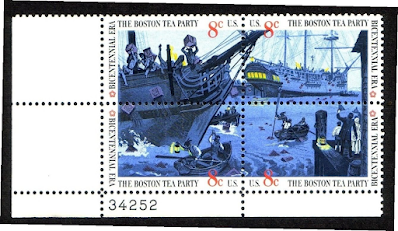
Ryan McMaken on the Boston Tea Party, mercantilism and the American Revolution

On the night of the Boston Tea Party in 1773, American insurrectionists donned disguises and destroyed a shipment of tea imported by the East India Company.  The protestors boarded privately owned ships in the harbor and threw the tea overboard.  Later that night, the activists discovered another tea shipment that had been unloaded at a warehouse.  Not content with having destroyed most of the company's import, they broke into the warehouse and destroyed that tea, too.  The total damages amounted to more than $1.5 million in today's dollars.

This was the work of the Sons of Liberty, a group which would become known for acts of resistance, arson, and violence against tax collectors and other agents of the crown.

But why destroy the tea of a private company if the group's target was the British state?  The answer, of course, is that the East India Company was essentially an adjunct of the regime and private in name only.  This was the era of mercantilism, when colonial governments used protectionism and monopoly powers to enrich the state and its supporters through supposedly private companies.  The Sons of Liberty understood the system well and targeted the "private" East India Company.

The success of the American Revolution struck a heavy blow against the mercantilist system.  But unfortunately, the wound was not mortal.  Many old mercantilist policies persisted under new labels and were promoted with new claims of helping "the people."  The regime of the new republic, too, used the tools of cartelization, monopoly, regulation, and taxation to support certain corporate friends at the expense of the ordinary people.

~ Ryan McMaken, "From the Editor," The Misesian, p. 5, January-February 2025

1973


Oct 10, 2022

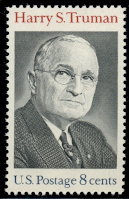
Harry Truman on history

There is nothing new in the world except the history you do not know.

~ Harry Truman


Aug 29, 2022

William McKinley's benevolent assimilation proclamation

Finally it should be the earnest wish and paramount aim of the military administration to win the confidence, respect, and affection of the inhabitants of the Philippines by assuring them in every possible way that full measure of individual rights and liberties which is the heritage of free peoples, and by proving to them that the mission of the United States is one of benevolent assimilation substituting the mild sway of justice and right for arbitrary rule.

~ President William McKinley, December 21, 1898

William McKinley
1904


Sheldon Richman on the early days of American imperialism

Unfortunately, even many critics of the American empire think it is relatively new.  Some do understand that its origins preceded the 20th century and that the empire did not begin with the Cold War or U.S. entry into the world wars.  They would likely see the Spanish-American War in 1898 as the beginning, when America acquired territory as far away as the Philippines.  But I would look even further back than that.  How far back?  The second half of the 18th century.  The earliest days of American empire-building shed light on how America's earliest rulers perceived their constitutional powers and hence on the Constitution itself...

Even the government's schools teach, or at least taught during my 12-year sentence, that America's founders had - let us say - an expansive vision for the country they were establishing.  The historian William Appleman Williams's extended essay, Empire as a Way of Life (1980), provides many details.  Clearly, these men had empire on their minds.

Before he became an evangelical for independence from Great Britain, Benjamin Franklin proposed a partnership between Great Britain and the American colonists to help spread enlightened empire throughout the Americas.  His proposal was rejected as impractical, so he embraced independence from Britain - without giving up the dream of empire in the New World.  George Washington would have shared the vision; he spoke of the "rising American empire" and described himself as living in an "infant empire."

Thomas Jefferson - "the most expansion-minded president in American history," (writes Gordon S. Wood in Empire of Liberty: A History of the Early Republic: 1789-1815 - set out a vision of an "Empire of Liberty," later revised as an "Empire for Libery," and left the presidency believing that "no constitution was ever before as well calculated as ours for extensive empire and self-government."  Before leaving office, of course, he acquired the gigantic Louisiana territory from France (828,000 square miles) without constitutional authority, a violation he was fully aware of.

[...]

Indeed, in the eyes of the founders, the American Revolution was largely a war between a mature, exhausted empire and a nascent one.  Many - but assuredly not all - Americans of the time would have cheerfully agreed...

The Indian Wars were among the first steps in empire building.  The unspeakable brutality and duplicity - the acts of ethnic cleansing and genocide, as we say today - were crimes, not merely against individuals, but also against whole societies and nations.  "Imperialism" was not yet a word in use, but that's what this was, as were the designs and moves on Canada (one of the objects of James Madison's War of 1812), Mexico, Cuba, Florida, the Mississippi and New Orleans, Louisiana, the Northwest, and the Pacific coast (the gateway to Asia).  The wishes of the inhabitants - who were "as yet incapable of self-government as children," as Jefferson said of Louisiana's residents - didn't count.  (Lincoln's war is thus understood as an exercise in empire preservation.)

~ Sheldon Richman, America's Counter-Revolution, "Empire on Their Minds," pp. 101-102


Aug 8, 2021

Henry David Thoreau on disobedience

Disobedience is the true foundation of liberty.  The obedient must be slaves. 

~ Henry David Thoreau, “Thoreau and the Art of Life: Precepts and Principles,” p.23, Heron Dance Press, 2006

Henry David Thoreau
1967


Jul 22, 2021

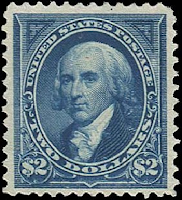
James Madison on tools of oppressors

Oppressors can tyrannize only when they achieve a standing army, an enslaved press, and a disarmed populace.

~ James Madison

James Madison
1894


Jul 10, 2021

Albert Einstein on imagination and knowledge

Imagination is more important than knowledge.  For knowledge is limited to all we know and understand, while imagination embraces the entire world and all there will ever be to know and understand.

~ Albert Einstein


Jun 20, 2021

Thomas Jefferson on gun control

The laws that forbid the carrying of arms are laws of such a nature. They disarm only those who are neither inclined nor determined to commit crimes…. Such laws make things worse for the assaulted and better for the assailants; they serve rather to encourage than to prevent homicides, for an unarmed man may be attacked with greater confidence than an armed man.

~ Thomas Jefferson, Commonplace Book (quoting 18th century criminologist Cesare Beccaria), 1774-1776 

(Dan Ferris' quote of the week on the Stansberry Investor Hour podcast, 9:30 mark, June 17, 2021)

Thomas Jefferson
1993


May 27, 2021

Thomas Sowell on environmentalism

I wish that some way could be found to add up all the staggering costs imposed on millions of ordinary people, just so a relative handful of self-righteous environmental cultists can go around feeling puffed up with themselves. 

~ Thomas Sowell

Save Our Cities, Soil, Air, Water
1970


May 6, 2021

Thomas Paine on critical thought and freedom

When men yield up the privilege of thinking, the last shadow of liberty quits the horizon. 

~ Thomas Paine, Reflections on Titles (1775)

Thomas Paine
1965-1968


May 2, 2021

Benjamin Franklin on change

When you are finished changing, you are finished.

~ Benjamin Franklin

Benjamin Franklin
1912-1914


Apr 8, 2021

Ernest Hemingway on writing

My working habits are simple: long periods of thinking, short periods of writing.

~ Ernest Hemingway


Mar 20, 2021

Daniel Webster on fiat money

Of all the contrivances for cheating the laboring classes of mankind, none has been more effective than that which deludes them with paper money.

~ Daniel Webster, as quoted by Andrew Dickson White, first president of Cornell University, in Fiat Money Inflation in France, p. 69

Daniel Webster,
1902-1903


Dec 26, 2020

Albert Einstein on authority

Blind belief in authority is the greatest enemy of truth.

~ Albert Einstein

Albert Einstein
1979


Dec 18, 2020

Dwight D. Eisenhower shows his admiration for General Robert E. Lee

General Robert E. Lee was… one of the supremely gifted men produced by our Nation.  He believed unswervingly in the Constitutional validity of his cause which until 1865 was still an arguable question in America; he was a poised and inspiring leader, true to the high trust reposed in him by millions of his fellow citizens; he was thoughtful yet demanding of his officers and men, forbearing with captured enemies but ingenious, unrelenting and personally courageous in battle, and never disheartened by a reverse or obstacle.  Through all his many trials, he remained selfless almost to a fault and unfailing in his faith in God.  Taken altogether, he was noble as a leader and as a man, and unsullied as I read the pages of our history. 

From deep conviction, I simply say this: a nation of men of Lee’s calibre would be unconquerable in spirit and soul.  Indeed, to the degree that present-day American youth will strive to emulate his rare qualities, including his devotion to this land as revealed in his painstaking efforts to help heal the Nation’s wounds once the bitter struggle was over, we, in our own time of danger in a divided world, will be strengthened and our love of freedom sustained. 

Such are the reasons that I proudly display the picture of this great American on my office wall.

~ Dwight D. Eisenhower, 1960

(As quoted by Pat Buchanan, "After Lee, It's Lincoln's Turn," December 18, 2020.)

Confederate Generals Lee and Jackson
1936-1937


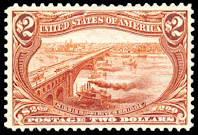
Mark Twain on the Mississippi River's influence on his writing

The face of the water, in time, became a wonderful book- a book that was a dead language to the uneducated passenger, but which told its mind to me without reserve, delivering its most cherished secrets as clearly as if it uttered them with a voice. And it was not a book to be read once and thrown aside, for it had a new story to tell every day.

~ Mark Twain

Mississippi River Bridge
1898


Pat Buchanan on Lincoln's crimes against native Americans

A renaming committee of the San Francisco school district wants the Great Emancipator’s name removed from Lincoln High School for crimes against Native Americans. 

Our 16th president ordered the Navajo tribe off their Arizona lands into New Mexico, resulting in a forced march of 450 miles. He approved the hanging of 38 Dakota Indians who had fought in the Dakota War in Minnesota in 1862, the largest mass execution in U.S. history. 

Lincoln’s Homestead and Pacific Railway acts led to the loss of large swaths of tribal lands.

~ Patrick Buchanan, "After Lee, It's Lincoln's Turn," LewRockwell.com, December 18, 2020

Indian Hunting Buffalo
1898


Nov 18, 2020

Thomas Jefferson on the dangers of fiat money

That paper money has some advantages, is admitted. But that its abuses also are inevitable, and, by breaking up the measure of value, makes a lottery of all private property, cannot be denied.  Shall we ever be able to put a constitutional veto on it?

~ Thomas Jefferson

Thomas Jefferson
1879


Nov 13, 2020

Jared Miller on Alexander Hamilton and the First Bank of the United States

Upon George Washington becoming President of the United States, he appointed Alexander Hamilton as the first Treasury Secretary. As the Secretary of Treasury, his first order of business was to establish a central monetary system and currency. 

The underwriter of what would become the First Bank of the United States was the Bank of New York which Alexander Hamilton conveniently co-owned. The underwriters of the Bank of New York were members of the Bank of England which operated under the auspices of the Crown. Once established in this position, he also supported the creation of a national debt: “A national debt, if it is not excessive, will be to us a national blessing.” 

His reasoning, briefly summarized, is that in order for an emerging nation to foster trade with its neighbors and European powers, a line of credit would have to be established. A line of credit would not be possible without a national debt and a consistent history towards paying off that debt (the interest be damned). 

The same elites today (Rothchilds, Rockefellers) own and operate the private Federal Reserve Bank to which our government now owes trillions in un-backed currency, courtesy of the Federal Reserve Act of 1913 (an amount far beyond “excessive” as Hamilton originally claimed).

~ Jared Miller, "'The Masses Are Asses': Hamilton Sucks," American Watchmen, July 7, 2020

Alexander Hamilton
1879