~ Frank Herbert
Showing posts with label historical interpretation. Show all posts
Nov 9, 2021
Frank Herbert on history
The gravest error a thinking person can make is to believe that one particular version of history is absolute fact. History is recorded by a series of observers, none of whom is impartial. The facts are distorted by sheer passage of time and thousands of years of humanity's dark ages, deliberate misrepresentations by religious sects, and the inevitable corruption that comes from an accumulation of careless mistakes. The wise person, then, views history as a set of lessons to be learned, choices and ramifications to be considered and discussed, and mistakes that should never again be made.
Sep 7, 2020
Amity Shlaes on the perversion of the humanities in higher education
What has happened in the past is that we neglected the humanities. Or we added humanities into cirricula in token fashion, and gave humanities instructors too much license. Those responsible focused on the hard stuff and said - oh, humanities are subjective, let the teachers do what they like, or the textbook authors do what they like. Scientists tend to abdicate when it comes to humanities. If a teacher told us he or she was teaching US history, the scientists or other stakeholders said, That sounds fine, and did not scrutinize the actual syllabus. Had they done so, they would have been shocked in the dramatic shift of what books and what ideas are being taught. Most Americans, my guess is, have little understanding of the extent to which identity politics have come to supplant standard history in instruction, whether college or high school. That's why the Woke Revolution is proving such a rude shock.
~ Amity Shlaes, "2020: The 1960s Redux?," The Austrian, July-August 2020
Jul 6, 2020
Kevin Duffy on being called a racist
The world is truly messed up. I can't even blackball those who whitewash history without being called a racist.
~ Kevin Duffy, tweet, July 2, 2020
Jun 22, 2020
Paul Craig Roberts on the racist interpretation of America
The racist interpretation of America is designed to build anger among blacks and guilt among whites. As black hostility rises and white confidence declines, the society unravels.
~ Paul Craig Roberts, "George Floyd Was Not Killed by Police," LewRockwell.com, June 22, 2020
Jan 18, 2018
Arthur Conan Doyle on history and legacies
What you do in this world is of no consequence. The question is: what can you make people believe you have done?
~ Arthur Conan Doyle
African proverb on historians
Until lions have their historians, tales of the hunt shall always have their historians.
~ African proverb
~ African proverb
Oct 23, 2016
Kevin Duffy on revisionist vs. official history
Revisionist history is like a good murder mystery: gathering evidence, checking alibis and finding associations and motives to build a plausible narrative. Official history is a predetermined narrative where the guilty run free and the innocent get the electric chair.
~ Kevin Duffy
~ Kevin Duffy
Jan 5, 2011
Warren Buffett shares a confused interpretation of America, past and present
We had four million people here in 1790. We’re not more intelligent than people in China, which then had 290 million people, or Europe, which had 50 million. We didn’t work harder, we didn’t have a better climate, and we didn’t have better resources. But we definitely had a system that unleashes potential. This system works. Since then, we’ve been through at least 15 recessions, a civil war, a Great Depression. … All of these things happen. But this country has optimized human potential, and it’s not over yet. It’s like what’s written on the tomb of Sir Christopher Wren: If you seek his monument, look around you.
~Warren Buffett, investor, as quoted in the New York Times' DealBook, January 5th, 2011
May 24, 2008
Pat Buchanan on Winston Churchill
Churchill was the indispensable war leader who held on until Hitler committed his fatal blunders, invading Russia and declaring war on America. He was also the man most responsible for Britain's fall from mistress of the greatest empire since Rome to an island dependency of the United States.
About the character of the Bolshevik regime in 1919 and Nazi regime in 1933, Churchill had been right. About British rearmament, he had been right. But Churchill was also often disastrously wrong.
He led the West down a moral incline to its own barbarism by imposing a starvation blockade on Germany in 1914 and launching air terror against open cities in 1940. These policies brought death to hundreds of thousands of women and children.
He was behind the greatest British military blunders in two wars: the Dardanelles disaster of 1915 and the Norwegian fiasco of 1940 that brought down Chamberlain and vaulted Churchill to power.
While excoriating Chamberlain for appeasing Hitler, Churchill's own appeasement of Stalin lasted longer and was even more egregious and costly, ensuring that the causes for which Britain sacrificed the empire – the freedom of Poland and preventing a hostile power from dominating Europe – were lost.
~ Patrick J. Buchanan, "Churchill’s Colossal Blunders," LewRockwell.com, May 24, 2008
About the character of the Bolshevik regime in 1919 and Nazi regime in 1933, Churchill had been right. About British rearmament, he had been right. But Churchill was also often disastrously wrong.
He led the West down a moral incline to its own barbarism by imposing a starvation blockade on Germany in 1914 and launching air terror against open cities in 1940. These policies brought death to hundreds of thousands of women and children.
He was behind the greatest British military blunders in two wars: the Dardanelles disaster of 1915 and the Norwegian fiasco of 1940 that brought down Chamberlain and vaulted Churchill to power.
While excoriating Chamberlain for appeasing Hitler, Churchill's own appeasement of Stalin lasted longer and was even more egregious and costly, ensuring that the causes for which Britain sacrificed the empire – the freedom of Poland and preventing a hostile power from dominating Europe – were lost.
~ Patrick J. Buchanan, "Churchill’s Colossal Blunders," LewRockwell.com, May 24, 2008
Apr 30, 2008
Joseph Campbell on history
And I can see no reason why anyone should suppose that in the future the same motifs already heard will not be sounding still … put to use by reasonable men, or by madmen to nonsense and disaster.
~ Joseph Campbell in his Foreword to The Masks of God: Primitive Mythology (1969)
Mar 30, 2008
Bill Bonner on the historical shift to neoconservatism
After the war [World War II], there was no going back. America was the leading world power. "Isolationism" became a kind of insult. A few of the old conservatives – such as Frank Chodorov, Robert Taft and Warren Buffett's father, a US Congressman – kept wearing their old starched collars. But the fashion had clearly changed. They could vote against government spending programs...and they opposed further military adventures abroad... but they couldn't win national elections and they couldn't participate in the great fun of having an empire – getting to boss people around all over the world. There was no glory in being a conservative. No power. No money. No style.
Then, with the Cold War, even the old die-hards went shopping for new clothes. In their minds, it was a contest between good and evil...freedom and communism...black and white.
Indeed, the Cold War played roughly the same roll as the War on Terror would half a century later – it perverted the old conservative values.
"We are again being told to be afraid," wrote Frank Chodorov. "As it was before the two world wars so it is now; politicians talk in frightening terms, journalists invent scare-lines, and even next-door neighbors are taking up the cry: the enemy is at the city gates; we must gird for battle. In case you don't know, the enemy this time is the USSR."
Few Americans had even met a communist, but they were certain that if they didn't go toe to toe with them in places like Korea, Berlin and Vietnam, they'd soon be stealing the family silver in Dubuque. The urbane, witty, charming and cosmopolitan William F. Buckley:
The "invincible aggressiveness of the Soviet Union" imminently threatens the United States, he said. "We have to accept Big Government for the duration – for neither an offensive nor a defensive war can be waged...except through the instrument of a totalitarian bureaucracy within our shores."
And thus was the fabric laid out...cut and sewn...for America's new conservative outfits. Now, they could fight totalitarians by being totalitarians.
~ Bill Bonner, "Listening to Bill Buckley Give a Speech Was a Painful Experience," LewRockwell.com, March 27, 2008
Then, with the Cold War, even the old die-hards went shopping for new clothes. In their minds, it was a contest between good and evil...freedom and communism...black and white.
Indeed, the Cold War played roughly the same roll as the War on Terror would half a century later – it perverted the old conservative values.
"We are again being told to be afraid," wrote Frank Chodorov. "As it was before the two world wars so it is now; politicians talk in frightening terms, journalists invent scare-lines, and even next-door neighbors are taking up the cry: the enemy is at the city gates; we must gird for battle. In case you don't know, the enemy this time is the USSR."
Few Americans had even met a communist, but they were certain that if they didn't go toe to toe with them in places like Korea, Berlin and Vietnam, they'd soon be stealing the family silver in Dubuque. The urbane, witty, charming and cosmopolitan William F. Buckley:
The "invincible aggressiveness of the Soviet Union" imminently threatens the United States, he said. "We have to accept Big Government for the duration – for neither an offensive nor a defensive war can be waged...except through the instrument of a totalitarian bureaucracy within our shores."
And thus was the fabric laid out...cut and sewn...for America's new conservative outfits. Now, they could fight totalitarians by being totalitarians.
~ Bill Bonner, "Listening to Bill Buckley Give a Speech Was a Painful Experience," LewRockwell.com, March 27, 2008
Feb 26, 2008
Lew Rockwell on how the anti-communist movement undermined the limited government plank of the Republican Party
Murray Rothbard used to tell the story of speaking to conservative and Republican audiences in the late 1950s and early 1960s. There would be large groups gathered for various talks on economics and politics. He would give a lecture on the problem of price controls, or protectionism, or high taxes. People really liked what he had to say. They would clap, and learn from his lecture.
Then he would sit down. At some point in the course of the conference, the appointed anti-communist speaker would rise to the podium. He would decry the evil of Russia and its atheistic system of government. He would call for beefing up nuclear weapons and hint darkly of the necessity of war. He would end with an apocalyptic statement about the need for everyone to completely dedicate themselves to eradicating the communists by any means necessary. No talk of limiting or cutting government; quite the opposite.
So how would these people, who clapped for Murray, respond to the warmonger? Insanely, wildly, uncontrollably. They would stand and scream and yell and cheer, getting up on their chairs and putting their hands together high in the air. The applause would go on for five minutes and more, and the speaker would be later mauled for autographs. His books would sell wildly.
Meanwhile, poor Murray would stand there in alarm. How could these same people cheer both a call for liberty and a call for empire, and, most notably, give their hearts over to the maniacal nationalist while being merely polite to a call for the same liberty that had led this party to oppose FDR's domestic and foreign-policy? It was experiences like these that led him to write the most important dissection of the Republican party ever to appear: The Betrayal of the American Right. It is here that Murray engages in a deep, soul-searching look at his own role in red-baiting in the 1950s. He had hoped to use the anti-communist movement to educate people about the need for freedom.
"It is clear that libertarians and Old Rightists, including myself, had made a great mistake in endorsing domestic red-baiting, a red-baiting that proved to be the major entering wedge for the complete transformation of the original right wing," writes Murray. Instead of supporting freedom, the anti-communist movement ended up acculturating Republicans to the imperial mindset. The moral priority of crushing a foreign government trumped every other issue.
At the same time, the libertarianism of the GOP's domestic agenda was supplanted by a belief that "big government and domestic statism were perfectly acceptable, provided that they were steeped in some sort of Burkean tradition and enjoyed a Christian framework." Fiery individualism and radicalism were replaced by a longing for a static, controlling elite of the European sort. Liberty was washed away.
~ Lew Rockwell, "Triumph of the Red-State Fascists," LewRockwell.com, February 26, 2008
Then he would sit down. At some point in the course of the conference, the appointed anti-communist speaker would rise to the podium. He would decry the evil of Russia and its atheistic system of government. He would call for beefing up nuclear weapons and hint darkly of the necessity of war. He would end with an apocalyptic statement about the need for everyone to completely dedicate themselves to eradicating the communists by any means necessary. No talk of limiting or cutting government; quite the opposite.
So how would these people, who clapped for Murray, respond to the warmonger? Insanely, wildly, uncontrollably. They would stand and scream and yell and cheer, getting up on their chairs and putting their hands together high in the air. The applause would go on for five minutes and more, and the speaker would be later mauled for autographs. His books would sell wildly.
Meanwhile, poor Murray would stand there in alarm. How could these same people cheer both a call for liberty and a call for empire, and, most notably, give their hearts over to the maniacal nationalist while being merely polite to a call for the same liberty that had led this party to oppose FDR's domestic and foreign-policy? It was experiences like these that led him to write the most important dissection of the Republican party ever to appear: The Betrayal of the American Right. It is here that Murray engages in a deep, soul-searching look at his own role in red-baiting in the 1950s. He had hoped to use the anti-communist movement to educate people about the need for freedom.
"It is clear that libertarians and Old Rightists, including myself, had made a great mistake in endorsing domestic red-baiting, a red-baiting that proved to be the major entering wedge for the complete transformation of the original right wing," writes Murray. Instead of supporting freedom, the anti-communist movement ended up acculturating Republicans to the imperial mindset. The moral priority of crushing a foreign government trumped every other issue.
At the same time, the libertarianism of the GOP's domestic agenda was supplanted by a belief that "big government and domestic statism were perfectly acceptable, provided that they were steeped in some sort of Burkean tradition and enjoyed a Christian framework." Fiery individualism and radicalism were replaced by a longing for a static, controlling elite of the European sort. Liberty was washed away.
~ Lew Rockwell, "Triumph of the Red-State Fascists," LewRockwell.com, February 26, 2008
Dec 7, 2007
Phil Duffy: Did isolationism cause World War II?
One of the most comprehensive histories of the Nazi era was written by William L. Shirer, a journalist assigned to Germany during the period when the Nazis came to power. The Rise and Fall of the Third Reich covers 1,143 pages, the first 276 of which describe the multiple forces and events that led to the rise of Hitler. American isolationism is not once mentioned in that section of the book.
The next 594 pages describe the beginning of World War II up to the point at which Hitler declared war on the United States as a result of "Adolph Hitler’s reckless promise to Japan …." It was Japan’s attack of Pearl Harbor on December 7, 1941 that brought the United States into World War II. Germany and Italy declared war on the United States four days later.
Following America’s disastrous foray into World War I, there were strong feelings in the United States about remaining outside of the European conflict. The newly formed America First Committee was the most visible and vocal example of that sentiment. Shirer dedicates a single paragraph to the role of American isolationism at the beginning of Chapter 25, "The Turn of the United States." He also mentions the role of Charles Lindbergh as the leading public isolationist in a footnote on Page 827. Otherwise, there are no references to American isolationism in this extensive work about this period. So if William Shirer virtually dismissed the importance of American isolationism in causing World War II, what does he have to say about the real causes of the rise of Adolph Hitler and World War II? Shirer points out that a number of causes and events contributed, including:
On January 30, 1933 Hitler was appointed chancellor of a coalition government in Germany. The America First Committee was formed September 4, 1940. Clearly, isolationism in the United States had nothing to do with Hitler’s rise to power.
~ Phil Duffy, "Did Isolationism Cause World War II?," LewRockwell.com, December 6, 2007
The next 594 pages describe the beginning of World War II up to the point at which Hitler declared war on the United States as a result of "Adolph Hitler’s reckless promise to Japan …." It was Japan’s attack of Pearl Harbor on December 7, 1941 that brought the United States into World War II. Germany and Italy declared war on the United States four days later.
Following America’s disastrous foray into World War I, there were strong feelings in the United States about remaining outside of the European conflict. The newly formed America First Committee was the most visible and vocal example of that sentiment. Shirer dedicates a single paragraph to the role of American isolationism at the beginning of Chapter 25, "The Turn of the United States." He also mentions the role of Charles Lindbergh as the leading public isolationist in a footnote on Page 827. Otherwise, there are no references to American isolationism in this extensive work about this period. So if William Shirer virtually dismissed the importance of American isolationism in causing World War II, what does he have to say about the real causes of the rise of Adolph Hitler and World War II? Shirer points out that a number of causes and events contributed, including:
- Economic, political, social and cultural devastation following World War I (especially the Weimar hyperinflation from 1918–1923, the Wall Street-debt-financed boom of the late 1920s, and the Great Depression of the 1930s)
- A disastrous peace treaty at Versailles, including reparations to the allied powers considered unjust by the German people
- The bitter struggle between international socialism (the Communists) and national socialism (the Nazis)
- Failure of other European nations to appropriately defend themselves
- The "stab in the back" myth that anti-war Germans during World War I had given virtual aid and comfort to the enemy on the home front while the valiant solders fought to defend the Fatherland (the birth and growth of this myth is addressed extensively in Chapter 2, "Birth of the Nazi Party")
On January 30, 1933 Hitler was appointed chancellor of a coalition government in Germany. The America First Committee was formed September 4, 1940. Clearly, isolationism in the United States had nothing to do with Hitler’s rise to power.
~ Phil Duffy, "Did Isolationism Cause World War II?," LewRockwell.com, December 6, 2007
Dec 1, 2007
John McCain: Opposition to Iraq War = appeasement = Hitler's rise
If you oppose the war [in Iraq], says [John] McCain, you're – pro-Hitler. It was inevitable – the return of Hitler, that is. The third-rate painter and homicidal maniac always turns up when the War Party gets desperate. After five years of war, and nothing but a reinvigorated al Qaeda and thousands of dead and grievously wounded to show for it, there's just one way to stanch the loss of support for our Iraqi adventure, and that is the return of Hitler to the international scene. In John McCain's world, it doesn't matter that we were lied into war: it doesn't matter that there were no Iraqi links to al Qaeda; we only have to know that Saddam was a Middle Eastern Hitler, who has now been replaced by Mahmoud Ahmadinejad, and everything falls neatly into place.
It's all nonsense, to be sure. To compare the ramshackle fourth-rate Iraqi military – and bin Laden's ragged insurgents – with the military might of the German Army at the height of the Third Reich's power is worse than absurd: it involves a major misperception of what we are up against, and the very real threat posed by the worldwide Islamist insurgency whose spearhead is al Qaeda. Hitler had overrun most of Europe and a good chunk of the Russian, French, and British empires before hubris and the weight of his own evil brought him down: the rag-tag legions of Iraq's Sunni rebels and Shi'ite militias are not exactly the Wehrmacht. And yet the Iraq war has now gone on longer than World War II, and still dead-enders like McCain are telling us "victory" is right around the next corner.
The misuses of historical analogies in politics are legion, and this one in particular is extremely problematic for the War Party. To begin with, McCain has his facts wrong: Hitler came to power not due to any "appeasement" by the Western powers, but because of World War I. He was elected by the German people – isn't democracy wonderful? Isn't it really the solution to all the world's problems? – due to resentment of the Treaty of Versailles, and the heavy burden of reparations which unleashed inflation such as the world had never seen on the German economy. This created the conditions under which German national socialism flourished – and when Hitler was installed in the German Chancellory, it was long past the time when anyone in Europe's capitals or in Washington could do anything about it.
The rise of Hitler and the Nazi Party was "blowback" from the Great War – just as the wars of the future will be visited upon us and our children as a direct consequence of the Iraq war and the growing conflict in the Middle East.
~ Justin Raimondo, "McCain's Mangled Metaphor: Has the Third Reich reappeared in the Middle East?," Antiwar.com, November 30, 2007
It's all nonsense, to be sure. To compare the ramshackle fourth-rate Iraqi military – and bin Laden's ragged insurgents – with the military might of the German Army at the height of the Third Reich's power is worse than absurd: it involves a major misperception of what we are up against, and the very real threat posed by the worldwide Islamist insurgency whose spearhead is al Qaeda. Hitler had overrun most of Europe and a good chunk of the Russian, French, and British empires before hubris and the weight of his own evil brought him down: the rag-tag legions of Iraq's Sunni rebels and Shi'ite militias are not exactly the Wehrmacht. And yet the Iraq war has now gone on longer than World War II, and still dead-enders like McCain are telling us "victory" is right around the next corner.
The misuses of historical analogies in politics are legion, and this one in particular is extremely problematic for the War Party. To begin with, McCain has his facts wrong: Hitler came to power not due to any "appeasement" by the Western powers, but because of World War I. He was elected by the German people – isn't democracy wonderful? Isn't it really the solution to all the world's problems? – due to resentment of the Treaty of Versailles, and the heavy burden of reparations which unleashed inflation such as the world had never seen on the German economy. This created the conditions under which German national socialism flourished – and when Hitler was installed in the German Chancellory, it was long past the time when anyone in Europe's capitals or in Washington could do anything about it.
The rise of Hitler and the Nazi Party was "blowback" from the Great War – just as the wars of the future will be visited upon us and our children as a direct consequence of the Iraq war and the growing conflict in the Middle East.
~ Justin Raimondo, "McCain's Mangled Metaphor: Has the Third Reich reappeared in the Middle East?," Antiwar.com, November 30, 2007
Nov 11, 2007
Robert Higgs on presidential greatness
In the New York Times Magazine for December 15, 1996, Arthur M. Schlesinger, Jr., presented the results of a poll of historians asked to rank the presidents (excepting only William Henry Harrison and Zachary Taylor, who held office very briefly). Thirty historians plus politicos Mario M. Cuomo and Paul Simon were asked to rank the nations chief executives as Great, Near Great, Average, Below Average, or Failure. The ranking applies to performance in the White House, not to lifetime accomplishments, and the historians used their own judgment as to what constitutes greatness or failure.
The results of the poll correspond well with the results of a number of earlier polls, especially in the set of presidents regarded as Great or Near Great. The three Great ones are Washington, Lincoln, and Franklin D. Roosevelt. The Near Great comprise Jefferson, Jackson, Polk, Theodore Roosevelt, Wilson, and Truman. The Failures are Pierce, Buchanan, Andrew Johnson, Grant, Harding, Hoover, and Nixon, the last ranking at the very bottom of the heap.
What are we to make of this ranking? Well, it helps to know that the historians (and two politicians) doing the ranking are nearly all left-liberals. In this regard they faithfully represent the historical profession in the United States today. In making their judgments, such historians bring to bear left-liberal beliefs and values. Thus, one respondent, James MacGregor Burns, asks: "How can one evaluate such an idiosyncratic President [as Nixon], so brilliant and so morally lacking?"--as if Nixon were, in this crowd, uniquely immoral.
One need not ponder the rankings long, however, to discover a remarkable correlation: all but one of the presidents ranked as Great or Near Great had an intimate association with war, either in office or by reputation before taking office. Of the top-ranking "nine immortals," five (Lincoln, FDR, Polk, Wilson, and Truman) were commander in chief when the nation went to war, and three (Washington, Jackson, and Teddy Roosevelt) were best known prior to becoming president for their martial exploits. The one exception, Jefferson, confined his presidential bellicosity to authorizing, with Congressional consent, the naval engagements against the Barbary pirates. (Of course, he had been a revolutionary official during the War of Independence.)
In contrast, of the eleven presidents ranked as Below Average or Failure, all but one (Nixon) managed to keep the nation at peace during their terms in office, and even Nixon ultimately extracted the United States from the quagmire of the war in Vietnam, though not until many more lives had been squandered.
The lesson seems obvious. Any president who craves a high place in the annals of history should hasten to thrust the American people into an orgy of death and destruction. It does not matter how ill-conceived the war may be. Lincoln achieved his presidential immortality by quite unnecessarily plunging America into its greatest bloodbath--ostensibly to maintain the boundaries of an existing federal union, as if those boundaries possessed some sacred status. Wilson, on his own initiative and against the preference of a clear majority of the American people, propelled the country into a grotesquely senseless, shockingly barbarous clash of European dynasties in which the United States had no substantial national interest. On such savage and foolish foundations is presidential greatness constructed.
I have a theory: left-liberal historians worship political power, and idolize those who wield it most lavishly in the service of left-liberal causes. How else can one account for the beatification of Lincoln, Wilson, and Franklin Roosevelt? Truman, now so elevated in the estimation of the historians, left office in unpopularity bordering on disgrace because of his Korean War disaster, but the historians forgive him, admiring his use of nuclear weapons and attempts to preserve and extend the New Deal. Theodore Roosevelt, a bloodthirsty proto-fascist, evokes admiration because of his public flogging of big business, a perennial left-liberal whipping boy.
~ Robert Higgs, Research Director for the Independent Institute and editor of The Independent Review, "No More Great Presidents," Mises.org, February 19, 2007
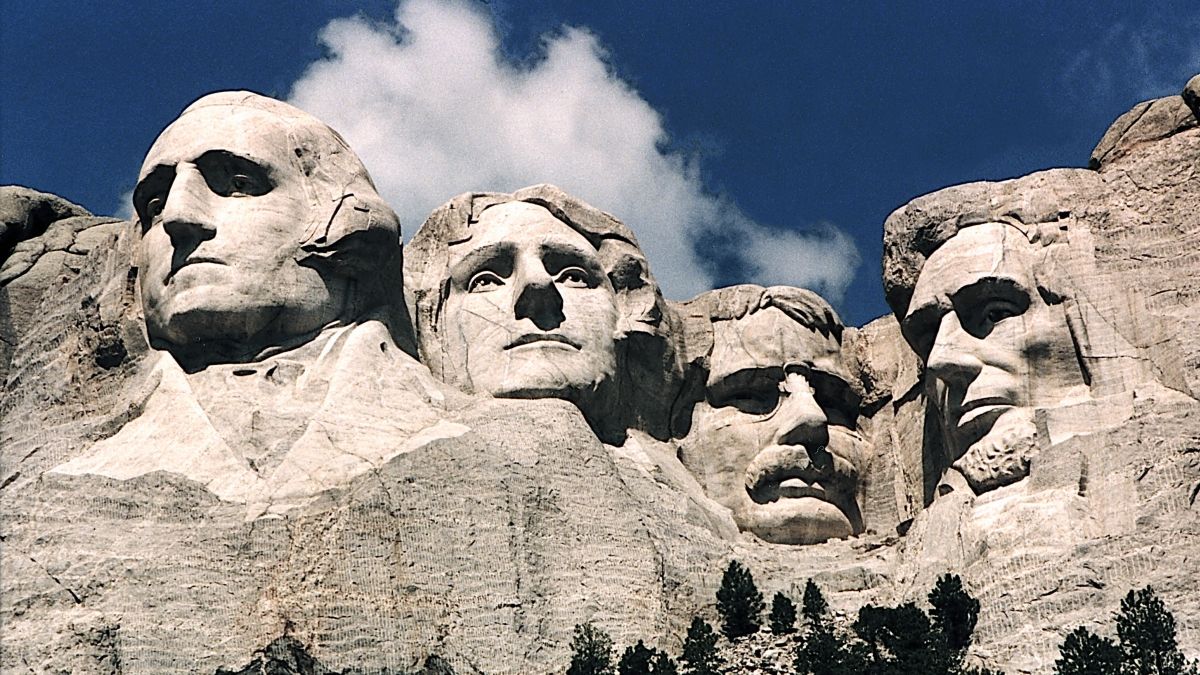
The results of the poll correspond well with the results of a number of earlier polls, especially in the set of presidents regarded as Great or Near Great. The three Great ones are Washington, Lincoln, and Franklin D. Roosevelt. The Near Great comprise Jefferson, Jackson, Polk, Theodore Roosevelt, Wilson, and Truman. The Failures are Pierce, Buchanan, Andrew Johnson, Grant, Harding, Hoover, and Nixon, the last ranking at the very bottom of the heap.
What are we to make of this ranking? Well, it helps to know that the historians (and two politicians) doing the ranking are nearly all left-liberals. In this regard they faithfully represent the historical profession in the United States today. In making their judgments, such historians bring to bear left-liberal beliefs and values. Thus, one respondent, James MacGregor Burns, asks: "How can one evaluate such an idiosyncratic President [as Nixon], so brilliant and so morally lacking?"--as if Nixon were, in this crowd, uniquely immoral.
One need not ponder the rankings long, however, to discover a remarkable correlation: all but one of the presidents ranked as Great or Near Great had an intimate association with war, either in office or by reputation before taking office. Of the top-ranking "nine immortals," five (Lincoln, FDR, Polk, Wilson, and Truman) were commander in chief when the nation went to war, and three (Washington, Jackson, and Teddy Roosevelt) were best known prior to becoming president for their martial exploits. The one exception, Jefferson, confined his presidential bellicosity to authorizing, with Congressional consent, the naval engagements against the Barbary pirates. (Of course, he had been a revolutionary official during the War of Independence.)
In contrast, of the eleven presidents ranked as Below Average or Failure, all but one (Nixon) managed to keep the nation at peace during their terms in office, and even Nixon ultimately extracted the United States from the quagmire of the war in Vietnam, though not until many more lives had been squandered.
The lesson seems obvious. Any president who craves a high place in the annals of history should hasten to thrust the American people into an orgy of death and destruction. It does not matter how ill-conceived the war may be. Lincoln achieved his presidential immortality by quite unnecessarily plunging America into its greatest bloodbath--ostensibly to maintain the boundaries of an existing federal union, as if those boundaries possessed some sacred status. Wilson, on his own initiative and against the preference of a clear majority of the American people, propelled the country into a grotesquely senseless, shockingly barbarous clash of European dynasties in which the United States had no substantial national interest. On such savage and foolish foundations is presidential greatness constructed.
I have a theory: left-liberal historians worship political power, and idolize those who wield it most lavishly in the service of left-liberal causes. How else can one account for the beatification of Lincoln, Wilson, and Franklin Roosevelt? Truman, now so elevated in the estimation of the historians, left office in unpopularity bordering on disgrace because of his Korean War disaster, but the historians forgive him, admiring his use of nuclear weapons and attempts to preserve and extend the New Deal. Theodore Roosevelt, a bloodthirsty proto-fascist, evokes admiration because of his public flogging of big business, a perennial left-liberal whipping boy.
~ Robert Higgs, Research Director for the Independent Institute and editor of The Independent Review, "No More Great Presidents," Mises.org, February 19, 2007
Nov 10, 2007
Thomas Paine on whitewashing by historians
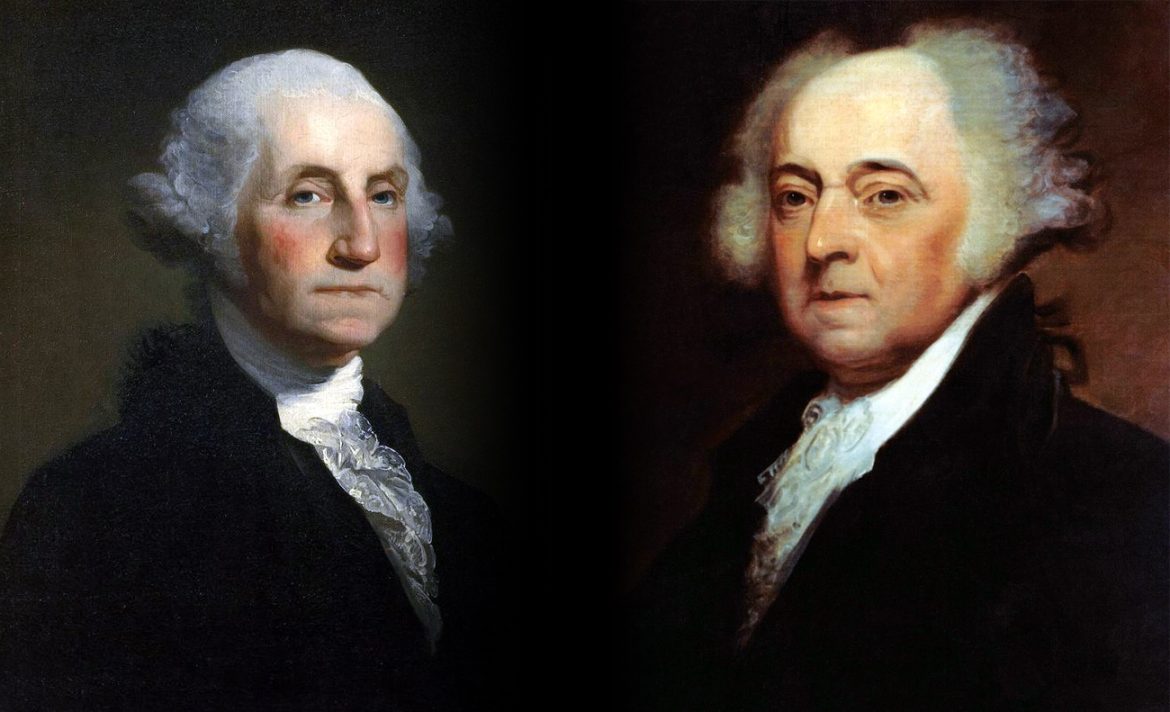
Uncritical reverence for the Founding Fathers was less ubiquitous while they actually lived.... 'The Reign of Terror that raged in America during the latter end of the Washington Administration, and the whole of that of Adams, is enveloped in mystery to me. That there were men in the Government hostile to the representative system, was once their toast, though it is now their overthrow, and therefore the fact is established against them...
~ Thomas Paine
~ Thomas Paine
![]() |
| George Washington and John Adams |
Nov 9, 2007
Ralph Raico on the cause of the Great Depression
The most complete and satisfactory interpretation we have linking booms and busts is the Austrian theory of the business cycle, originated by Ludwig von Mises and developed by F. A. Hayek, Murray Rothbard, and others. (Mises was the only major economist who actually predicted the Great Depression.) In America's Great Depression, Rothbard sets forth in detail how the Federal Reserve acted to stimulate economic growth in the 1920s. Through the artificial creation of bank credit — i.e., credit not based on real savings — the Fed distorted market signals such as interest rates. That induced businessmen to go on an investment spree that could not be indefinitely sustained. Finally and inevitably, the bubble burst. As has recently been suggested, the "Hoovervilles" of the Great Depression should more aptly be called "Federalreservevilles."
~ Ralph Raico, "FDR - The Man, the Leader, the Legacy, Part 7," June 1999
Nov 5, 2007
Kevin Duffy: "Most Americans wouldn’t know freedom if it hit them in the head"
Most Americans wouldn’t know freedom if it hit them in the head. They think if the majority votes for something they can legitimately steal it from the minority who were opposed. They think preemptively toppling dictators is consistent with our heritage. They think government has the right to subsidize our housing, regulate our health care, brainwash our children, and mandate our savings. And as long as the majority who is willing to cast a ballot goes along with this, they call it “freedom” and “democracy”.
This is a sad state of affairs.
“We are endowed, by our creator, with these inalienable rights, the rights to life, liberty, and property.” This is what freedom used to mean. This was the foundation of the American Revolution and the American experiment a bit over 200 years ago. The Founders were human and their constitution wasn’t perfect (e.g. slavery). But they were on to something. And they knew that public schooling, income taxation, and a military that went “in search of monsters to destroy” were inconsistent with freedom.
Americans today, sadly, don’t have a clue. How did we get from there to here, the omnipotent state? There were several critical episodes. The major ones began with Lincoln. His war was not motivated by abolishing slavery, but by his desire to “preserve the union” for the purpose of subjugating the minority in the South. Not even a century earlier, the Founders established the idea of states’ rights and secession as the ultimate check on federal power. Lincoln smashed this concept with brute force. Then there was Woodrow Wilson who brought us a central bank, income taxation, and our first major foray into foreign entanglements, ignoring the wisdom of the Founders. Less than 80 years later, the Fed has destroyed over 95% of the value of the dollar, government steals around 35% from its citizens (up from roughly 3-5% in 1913), and the American military is the most powerful, expansive, and dangerous on earth. Next comes FDR who lied about raising taxes and getting us into WWII. Using the Fed-induced Great Depression as an excuse, he expanded the role of the federal government on a massive scale, giving us nightmares such as the SEC and social security (both passed in 1934) that are with us today. Sure, he created plenty of make-work jobs, but income taxes had to explode in order to pay for it.
That leaves us with good ‘ole Ronny Reagan, truly an endearing figure, especially compared to the motley cast of characters who preceeded him. Government was failing during the late 1970s thanks to an overwhelming regulatory apparatus and the Fed’s printing press, no longer tethered to gold in any way (the final tie severed at Bretton Woods in 1971), which ignited a wave of inflation. Reagan was given a clear mandate to roll back the state. Yet not one federal department was shuttered. Top income tax rates were lowered, but payroll taxes were raised. Spending continued to grow, as did government’s share of our wealth through taxation. For all the hoopla, the Reagan Revolution was a dud. Despite the Great Orator’s fiery rhetoric, the momentum for greater freedom and limited government was lost.
~ Kevin Duffy, Bearing Asset Management, November 4, 2004
This is a sad state of affairs.
“We are endowed, by our creator, with these inalienable rights, the rights to life, liberty, and property.” This is what freedom used to mean. This was the foundation of the American Revolution and the American experiment a bit over 200 years ago. The Founders were human and their constitution wasn’t perfect (e.g. slavery). But they were on to something. And they knew that public schooling, income taxation, and a military that went “in search of monsters to destroy” were inconsistent with freedom.
Americans today, sadly, don’t have a clue. How did we get from there to here, the omnipotent state? There were several critical episodes. The major ones began with Lincoln. His war was not motivated by abolishing slavery, but by his desire to “preserve the union” for the purpose of subjugating the minority in the South. Not even a century earlier, the Founders established the idea of states’ rights and secession as the ultimate check on federal power. Lincoln smashed this concept with brute force. Then there was Woodrow Wilson who brought us a central bank, income taxation, and our first major foray into foreign entanglements, ignoring the wisdom of the Founders. Less than 80 years later, the Fed has destroyed over 95% of the value of the dollar, government steals around 35% from its citizens (up from roughly 3-5% in 1913), and the American military is the most powerful, expansive, and dangerous on earth. Next comes FDR who lied about raising taxes and getting us into WWII. Using the Fed-induced Great Depression as an excuse, he expanded the role of the federal government on a massive scale, giving us nightmares such as the SEC and social security (both passed in 1934) that are with us today. Sure, he created plenty of make-work jobs, but income taxes had to explode in order to pay for it.
That leaves us with good ‘ole Ronny Reagan, truly an endearing figure, especially compared to the motley cast of characters who preceeded him. Government was failing during the late 1970s thanks to an overwhelming regulatory apparatus and the Fed’s printing press, no longer tethered to gold in any way (the final tie severed at Bretton Woods in 1971), which ignited a wave of inflation. Reagan was given a clear mandate to roll back the state. Yet not one federal department was shuttered. Top income tax rates were lowered, but payroll taxes were raised. Spending continued to grow, as did government’s share of our wealth through taxation. For all the hoopla, the Reagan Revolution was a dud. Despite the Great Orator’s fiery rhetoric, the momentum for greater freedom and limited government was lost.
~ Kevin Duffy, Bearing Asset Management, November 4, 2004
Nov 3, 2007
Tom DiLorenzo on the claim that government subsidies were needed to build American industry

The lesson here is that most historians are hopelessly confused about the rise of capitalism in America. They usually fail to adequately appreciate the entrepreneurial genius of men like James J. Hill, John D. Rockefeller, and Cornelius Vanderbilt, and more often than not they lump these men (and other market entrepreneurs) in with genuine "robber barons" or political entrepreneurs.
Most historians also uncritically repeat the claim that government subsidies were necessary to building America's transcontinental railroad industry, steamship industry, steel industry, and other industries. But while clinging to this "market failure" argument, they ignore (or at least are unaware of) the fact that market entrepreneurs performed quite well without government subsidies. They also ignore the fact that the subsidies themselves were a great source of inefficiency and business failure, even though they enriched the direct recipients of the subsidies and advanced the political careers of those who dished them out.
Political entrepreneurs and their governmental patrons are the real villains of American business history and should be portrayed as such. They are the real robber barons.
At the same time, the market entrepreneurs who practiced genuine capitalism, whose genius and energy fueled extraordinary economic achievement and also brought tremendous benefits to Americans, should be recognized for their achievements rather than demonized, as they so often are. Men like James J. Hill, John D. Rockefeller, and Cornelius Vanderbilt were heroes who improved the lives of millions of consumers; employed thousands and enabled them to support their families and educate their children; created entire cities because of the success of their enterprises (for example, Scranton, Pennsylvania); pioneered efficient management techniques that are still employed today; and donated hundreds of millions of dollars to charities and nonprofit organizations of all kinds, from libraries to hospitals to symphonies, public parks, and zoos. It is absolutely perverse that historians usually look at these men as crooks or cheaters while praising and advocating "business/government partnerships," which can only lead to corruption and economic decline.
~ Thomas J. DiLorenzo, "The Truth About the 'Robber Barons'," Mises.org, September 23, 2006, excerpted from How Capitalism Saved America, chapter 7
Tom DiLorenzo on the "robber barons"
The late nineteenth and early twentieth centuries are often referred to as the time of the "robber barons."
It is a staple of history books to attach this derogatory phrase to such figures as John D. Rockefeller, Cornelius Vanderbilt, and the great nineteenth-century railroad operators — Grenville Dodge, Leland Stanford, Henry Villard, James J. Hill, and others. To most historians writing on this period, these entrepreneurs committed thinly veiled acts of larceny to enrich themselves at the expense of their customers. Once again we see the image of the greedy, exploitative capitalist, but in many cases this is a distortion of the truth.
As common as it is to speak of "robber barons," most who use that term are confused about the role of capitalism in the American economy and fail to make an important distinction — the distinction between what might be called a market entrepreneur and a political entrepreneur. A pure market entrepreneur, or capitalist, succeeds financially by selling a newer, better, or less expensive product on the free market without any government subsidies, direct or indirect. The key to his success as a capitalist is his ability to please the consumer, for in a capitalist society the consumer ultimately calls the economic shots. By contrast, a political entrepreneur succeeds primarily by influencing government to subsidize his business or industry, or to enact legislation or regulation that harms his competitors.
~ Thomas J. DiLorenzo, "The Truth About the 'Robber Barons'," Mises.org, September 23, 2006, excerpted from How Capitalism Saved America, chapter 7
It is a staple of history books to attach this derogatory phrase to such figures as John D. Rockefeller, Cornelius Vanderbilt, and the great nineteenth-century railroad operators — Grenville Dodge, Leland Stanford, Henry Villard, James J. Hill, and others. To most historians writing on this period, these entrepreneurs committed thinly veiled acts of larceny to enrich themselves at the expense of their customers. Once again we see the image of the greedy, exploitative capitalist, but in many cases this is a distortion of the truth.
As common as it is to speak of "robber barons," most who use that term are confused about the role of capitalism in the American economy and fail to make an important distinction — the distinction between what might be called a market entrepreneur and a political entrepreneur. A pure market entrepreneur, or capitalist, succeeds financially by selling a newer, better, or less expensive product on the free market without any government subsidies, direct or indirect. The key to his success as a capitalist is his ability to please the consumer, for in a capitalist society the consumer ultimately calls the economic shots. By contrast, a political entrepreneur succeeds primarily by influencing government to subsidize his business or industry, or to enact legislation or regulation that harms his competitors.
~ Thomas J. DiLorenzo, "The Truth About the 'Robber Barons'," Mises.org, September 23, 2006, excerpted from How Capitalism Saved America, chapter 7
| Troops Guarding Train 1898 |
Subscribe to:
Posts (Atom)