Showing posts with label people - Smith; Adam. Show all posts

Apr 27, 2025

Kenneth Pringle on President Biden's mercantilism

In slapping tariffs of 100% on Chinese electric vehicles, and 25% to 50% on products from semiconductors to surgical masks, Biden expands a trade war started by predecessor and self-proclaimed "Tariff Man" Donald Trump.  The U.S. wants Europe to join, and China is threatening retaliation.

Biden is actually following a much older trading strategy, one favored by George Washington, Abraham Lincoln, Herbert Hoover - and Queen Elizabeth.

From the 16th to 19th centuries, trade was a national competition to protect industry, improve world standing, and pursue politics by other means.  A zero-sum game, with winners and losers.

War, colonialism, great wealth, and poverty were the consequences.  Adam Smith dubbed it the mercantile system, or mercantilism.

Now Biden, who once championed China's entry into the World Trade Organization, is using punitive tariffs against China to "make sure American workers and American business and corporations can compete and win in the industries of the future."

Welcome to Mercantilism 2.0.

~ Kenneth G. Pringle, "Biden's Tariffs Are Nothing New for U.S.," Barron's, June 17, 2024


Apr 3, 2024

Kevin Duffy on Phil Duffy's new book 'A Tale of Four Cities'

To economic historians, the “hockey stick of human prosperity” is that irresistible bright shiny object. Up until 1800, the human population and living standards grew at a snail’s pace, but then a strange thing happened: both took off.


[...] 

In A Tale of Four Cities, Phil Duffy asks an intriguing question: “What if the real inflection point took place 100 years or so earlier?”  Have economic archeologists been unearthing evidence in all the wrong places?  Have they drawn false conclusions?

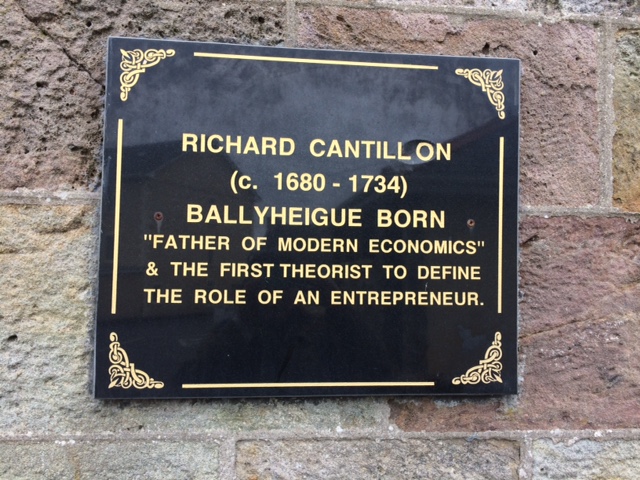
Challenging simple narratives often leads to valuable, contrarian insights.  By shifting the timeline of the starting gun on human progress back a century, Duffy unlocks a treasure trove.  First, he asserts that the actual dawning was the Agricultural Revolution, which laid the foundation for the Industrial Revolution.  Second, he discovers Richard Cantillon, the first economist to recognize the critical role of the entrepreneur in creating wealth.  Cantillon’s Essay on the Nature of Trade in General was written in 1730, long before Adam Smith’s seminal work, The Wealth of Nations.  Third, he makes a compelling case that Smith suppressed Cantillon’s work and removed the role of the entrepreneur, paving the way for misguided theories which treated entrepreneurship as vulgar and exploitative.

This would largely explain why many people in America, far from appreciating their good fortune, are openly hostile towards ultra-rich entrepreneurs like Amazon’s Jeff Bezos.  It also explains why those same billionaires give openly to anti-capitalistic charities.  It explains why so many countries have destroyed themselves by ingesting toxic theories on wealth creation, from sub-Saharan Africa, to the former Soviet Union, to Cuba and Venezuela.  It explains why governments in the West have grown to oppressive levels, threatening to strangle their productive hosts. 

If Duffy is correct, much of the world today enjoys a level of wealth unimagined by our ancestors despite worshipping false idols like Adam Smith, paper money and democracy.  Future economic progress is not a guarantee.  In fact, the human experiment appears to be at a crossroads.  Choosing the right path may just require getting the timeline right on that bright shiny object.

~ Kevin Duffy, Forward to A Tale of Four Cities, April 8, 2023


Apr 16, 2023

Gene Epstein on Adam Smith's anti-free market arguments

[Adam] Smith's book, The Wealth of Nations, includes a whole range of sustained arguments that were anti-free market and even pro-socialist.  Ignoring these arguments by Smith is not only dishonest, it's dangerous.  The more we elevate Smith to the status of the founder of free enterprise, the greater the danger that enemies of the free market will strike back by citing Smith against us.  This anti-capitalist gotcha gang that has cited Smith against us already includes the left-wing critic Noah Chomsky, theologian and progressive writer Harvey Cox, Nobel laureate economist Amartya Sen, and even an Occupy Wall Streeter who ran from a copy of The Wealth of Nations while arguing with free marketeer Peter Schiff.

~ Gene Epstein, "Is Adam Smith the Founder of Free Market Economics?," debate between Mark Skousen and Gene Epstein, The Sofo Forum, 16:30 mark, June 13, 2017


Gene Epstein on the beginning of modern economics

It did not all start with Adam [Smith].  It started with a bunch of people.  Intellectual history is not a popularity contest.  We accord it according to originality, pioneering work and merit.  We have integrity.

~ Gene Epstein, "Is Adam Smith the Founding Father of Economics?," The Soho Forum, 1:26:30 mark, June 13, 2017


Jul 22, 2022

Phil Duffy on Adam Smith vs. Richard Cantillon

[Adam] Smith’s Wealth of Nations had the advantage of a half century more of observation over Cantillon’s Essay, and yet it was the latter’s insights into the agricultural revolution and the guiding role of the entrepreneur in achieving economic progress that separated the two economists. It is high time Richard Cantillon and the British Agricultural Revolution got their due respect.

~ Phil Duffy, "The British Agricultural Revolution Gets No Respect," Mises Wire, July 22, 2022


Nov 7, 2021

John Tamny on the root cause of supply chain shortages

Look back to Adam Smith.  I think it's fairly basic here: his opening pages are about a pin factory.  A man alone in a pin factory could maybe produce one pin per day, but a man working with several coworkers where everyone was specializing in that same pin factory could produce tens of thousands.  

So you think about something unsophisticated like that and then consider airplanes and computers and toys.  Imagine the global cooperation of billions of workers entering into trillions of different contractual arrangements over the decades on the way to this global supply and then a political class that thought it needed to guide us away from a virus decided to shut down the most sophisticated the world had ever known.  Is anyone surprised that we've got shortages right now?  

The shortages are a statement of the obvious, but what's offensive is when we call it supply chain shortages or inflation.  No, this was central planning.  This was the imposition of command and control where there had been freedom before.  Let's be very clear about what happened: the political class - Republicans and Democrats and everyone in between - caused this when they went for lockdowns as a virus mitigation strategy.

~ John Tamny, "Key Takeaways from the Annual Stansberry Conference," 43:40 mark, November 4, 2021


Jul 1, 2021

Steve Forbes on the role of profit (and the contrasting views of Adam Smith and Joseph Schumpeter)

Smith, Marx and Keynes all believed in various ways in what you might call an equilibrium, that the economy is a steady state and you get disruptions from time to time, whether wars, earthquakes or new inventions.  You get some turmoil and then things settle down and you have an equilibrium, which is why even John Stuart Mill became a socialist (not because of the influence of his young wife).  He couldn’t understand the role of profit. 

Even Adam Smith did not understand the role of profit.  If you have an economy where you are striving for a perfectly competition equilibrium, there is no role for profit, other than as a bribe for entrepreneurs to do things.  Schumpeter was an infidel, in the words of Peter Drucker.  That is, he saw profit as a cost of doing business, as a moral force.  Why?  Because in his mind the economy is always dynamic.  A free market is dynamic, always changing, what he called creative destruction.  You focus on the creative side.  But it’s also destroying, which means it’s destroying capital and you have to replace that destroyed capital with new capital. 

Also, how does an economy advance?  It advances with new knowledge.  Where does knowledge come from?  Through constant experimentation by entrepreneurs in the marketplace.  Look at Silicon Valley.  Look at Peter Thiel.  He says eight out of ten ventures, even with great brains like his, will fail.  Only two out of ten, maybe one out of ten, will really be successful. 

So, profit is essential if you’re going to have a growing economy.


Apr 23, 2021

Adam Smith on spendthrift governments

Great nations are never impoverished by private, though they sometimes are by public prodigality and misconduct.  The whole, or almost the whole public revenue, is in most countries employed in maintaining unproductive hands.

~ Adam Smith, The Wealth of Nations, p. 325


Jan 5, 2020

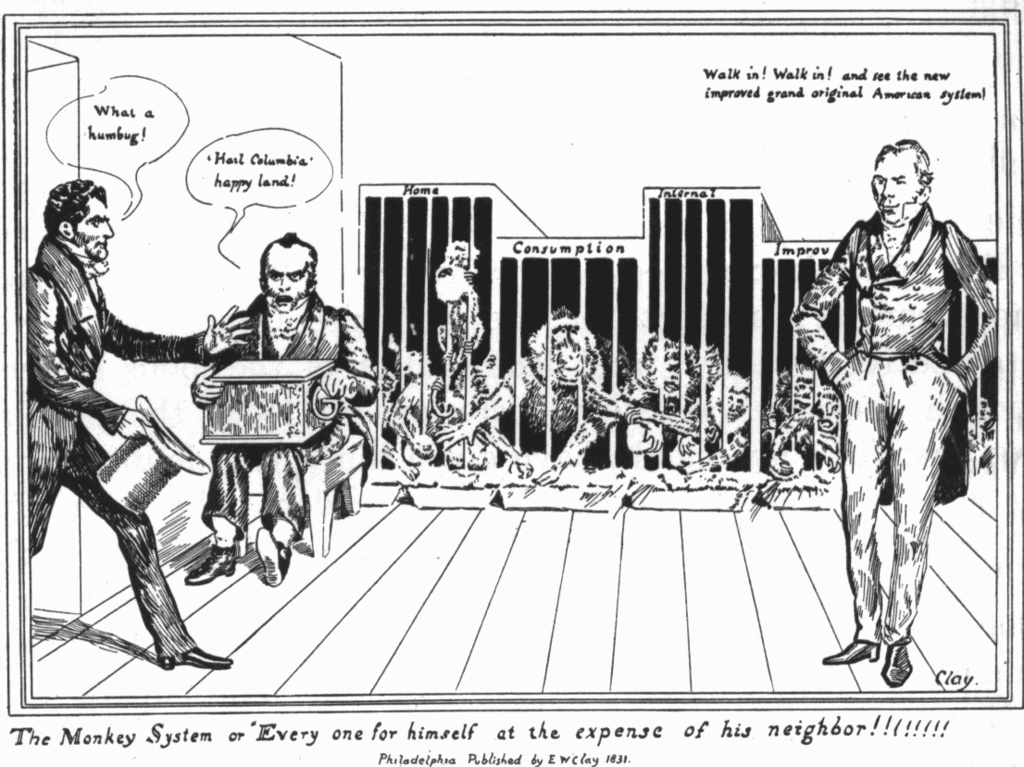
Tom DiLorenzo on how the American System differed from true capitalism

The American System... was the framework for a giant political patronage system.  Politicians who could control such a system could use it to maintain and enhance their own power and wealth almost indefinitely, as the Republican Party eventually did.  It was not an example of "capitalism," as James McPherson incorrectly stated in Abraham Lincoln and the Second American Revolution, but quite the opposite: It was mercantilism, the very system that Adam Smith railed against in his epic defense of capitalism, The Wealth of Nations.

~ Tom DiLorenzo, The Real Lincoln, pp. 59-60

Jul 28, 2019

Murray Rothbard on Adam Smith's omission of entrepreneurship

[T]he greatest of the many defects in [Adam] Smith's theory was his totally discarding Cantillon's and Turgot's brilliant analysis of the entrepreneur.  It was as if these great eighteenth century Frenchmen had never written.  Smith's analysis rested solely on the capitalist investing 'stock' and on his labour of management and inspection; the very idea of the entrepreneur as a risk-bearer and forecaster was thrown away and, again, classical economics was launched into another lengthy blind alley.  If, of course, one persists in fixing one's vision on the never-never land of long-run equilibrium, where all profits are low and equal and there are no losses, there is no point in talking about entrepreneurship at all.

The political implications of this omission were also not lost on nineteenth century socialists.  For if there is no role for entrepreneurial profits in a market economy, then any existing profits must be 'exploitative,' far more so than the low, uniform rate existing in long-run equilibrium.

~ Murray Rothbard, An Austrian Perspective on the History of Economic Thought, Vol. I, Chapter 16, "The celebrated Adam Smith," pp. 459-460, 1995

Image result for ballyheigue ireland richard cantillon plaque

Murray Rothbard explodes the Adam Smith myth

Adam Smith (1723–90) is a mystery in a puzzle wrapped in an enigma. The mystery is the enormous and unprecedented gap between Smith’s exalted reputation and the reality of his dubious contribution to economic thought.

Smith’s reputation almost blinds the sun. From shortly after his own day until very recently, he was thought to have created the science of economics virtually de novo. He was universally hailed as the Founding Father. Books on the history of economic thought, after a few well-deserved sneers at the mercantilists and a nod to the physiocrats, would invariably start with Smith as the creator of the discipline of economics. Any errors he made were understandably excused as the inevitable flaws of any great pioneer...

[B]usinessmen and free market advocates have long hailed Adam Smith as their patron saint...  On the other hand, Marxists, with somewhat more justice, hail Smith as the ultimate inspiration of their own Founding Father, Karl Marx...

As we have already seen, Smith was scarcely the founder of economic science, a science which existed since the medieval scholastics and, in its modern form, since Richard Cantillon. But what the German economists used to call, in a narrower connection, Das AdamSmithProblem, is much more severe than that. For the problem is not simply that Smith was not the founder of economics.

The problem is that he originated nothing that was true, and that whatever he originated was wrong; that, even in an age that had fewer citations or footnotes than our own, Adam Smith was a shameless plagiarist, acknowledging little or nothing and stealing large chunks, for example, from Cantillon. Far worse was Smith’s complete failure to cite or acknowledge his beloved mentor Francis Hutcheson, from whom he derived most of his ideas as well as the organization of his economic and moral philosophy lectures...

Smith not only contributed nothing of value to economic thought; his economics was a grave deterioration from his predecessors: from Cantillon, from Turgot, from his teacher Hutcheson, from the Spanish scholastics, even oddly enough from his own previous works, such as the Lectures on Jurisprudence (unpublished, 1762–63, 1766) and the Theory of Moral Sentiments (1759).

The mystery of Adam Smith, then, is the immense gap between a monstrously overinflated reputation and the dismal reality. But the problem is worse than that; for it is not just that Smith’s Wealth of Nations has had a terribly overblown reputation from his day to ours. The problem is that the Wealth of Nations was somehow able to blind all men, economists and laymen alike, to the very knowledge that other economists, let alone better ones, had existed and written before 1776. The Wealth of Nations exerted such a colossal impact on the world that all knowledge of previous economists was blotted out, hence Smith’s reputation as Founding Father.

~ Murray Rothbard, An Austrian Perspective on the History of Economic Thought, Vol. I, Chapter 16, "The celebrated Adam Smith," 1995

Image result for exploding myths dynamite

Murray Rothbard: Adam Smith was far from the Founding Father of economics

[Adam] Smith, far from being the founder of economics, was virtually the reverse.  On the contrary, Smith actually took the sound, and almost fully developed, proto-Austrian subjective value tradition, and tragically shunted economics on to a false path, a dead end from which the Austrians had to rescue economics a century later.  Instead of subjective value, entrepreneurship, and emphasis on real market pricing and market activity, Smith dropped all this and replaced it with a labour theory of value and a dominant focus on the unchanging long-run 'natural price' equilibrium, a world where entrepreneurship was assumed out of existence.  Under Ricardo, this unfortunate shift in focus was intensified and systematized.

If Smith was not the creator of economic theory, neither was he the founder of laissez-faire in political economy.  Not only were the scholastics analysts of, and believers in, the free market and critics of government intervention; but the French and Italian economists of the eighteenth century were even more laissez-faire-oriented than Smith, who introduced numerous waffles and qualifications into what had been, in the hands of Turgot and others, an almost pure championing of laissez-faire.  It turns out that, rather than someone who should be venerated as creator of modern ecnoomics or of laissez-faire, Smith was closer to the picture portrayed by Paul Douglas in the 1926 Chicago commemoration of The Wealth of Nations: a necessary precursor of Karl Marx.

~ Murray Rothbard, An Austrian Perspective on the History of Economic Thought, introduction, pp. xi-xii

Image result for an austrian perspective on the history of economic thought

Nov 6, 2018

Adam Smith on the ingredients needed for prosperity

Little else is requisite to carry a state to the highest degree of opulence from the lowest barbarism, but peace, easy taxes and a tolerable administration of justice.

~ Adam Smith

Nov 28, 2007

Adam Smith on the hubris of planning

The statesman who should attempt to direct private people in what manner they ought to employ their capitals, would not only load himself with a most unnecessary attention, but assume an authority which could safely be entrusted to no council and senate whatever, and which would nowhere be so dangerous as in the hands of a man who had folly and presumption enough to fancy himself fit to exercise it.

~ Adam Smith, The Wealth of Nations, 1776

Image result for the wealth of nations adam smith