Showing posts with label sovereign debt bubble. Show all posts

Aug 2, 2023

Fitch on downgrading long-term U.S. government debt from AAA to AA+

The rating downgrade of the United States reflects the expected fiscal deterioration over the next three years, a high and growing general government debt burden, and the erosion of governance relative to 'AA' and 'AAA' rated peers over the last two decades that has manifested in repeated debt limit standoffs and last-minute resolutions. 

Erosion of Governance: In Fitch's view, there has been a steady deterioration in standards of governance over the last 20 years, including on fiscal and debt matters, notwithstanding the June bipartisan agreement to suspend the debt limit until January 2025. The repeated debt-limit political standoffs and last-minute resolutions have eroded confidence in fiscal management. 

[...]

Tighter credit conditions, weakening business investment, and a slowdown in consumption will push the U.S. economy into a mild recession in 4Q23 and 1Q24, according to Fitch projections. The agency sees U.S. annual real GDP growth slowing to 1.2% this year from 2.1% in 2022 and overall growth of just 0.5% in 2024.


Dec 9, 2020

Apr 14, 2020

Tavi Costa on the importance of the Treasury bond market

I think the Treasury [bond] market is the most important market.  The U.S. and the whole world can not sustain these debt levels with higher interest rates...  When that happens, there's no bailout anymore.  I think that's the most important message here.

~ Tavi Costa, Interview on Real Investment Show with Lance Roberts Show, 18:45 mark

Otavio (Tavi) Costa (@TaviCosta) | ٹوئٹر

Oct 27, 2018

Kevin Duffy on why Henry Paulson failed to fix the financial system in 2008

To the Editor,

In his recent interview (“’I had to deal with raw fear’,” September 17, 2018), former Treasury Secretary Henry Paulson claimed, “The timing, cause, and severity of the next financial crisis are impossible to predict.  Of course someone will get it right and will be credited with doing so, but he or she won’t spot the next one.”  Having warned about the late ‘80s Japan bubble, late ’90s tech bubble and mid ‘00s credit bubble (“For Whom Do the Bells Toll?,” June 18, 2007), I’ll take that as a challenge.  The root cause is always artificially low rates set by central banks.  Since this period of low rates was longer (7 years vs. 2 ½ from 2002-04), deeper and more global, the next crisis will be more widespread and prolonged.  As for timing, it’s anyone’s guess but with rising rates, narrowing leadership (just 5 of 35 country stock markets up on the year), investor euphoria (record low cash levels at Schwab), and wild speculation (first cryptocurrencies, now cannabis stocks), the lights are flashing red.

There are plenty of areas of fragility.  Within the U.S., since the end of 2008 student loan debt is up 127%, auto loan debt 57%, corporate debt 76%, public debt 98%.  Margin debt has more than tripled.  Outside the U.S., Canada and Australia are experiencing housing bubbles while emerging market debt has gone from 110% of GDP to 194% according to the Bank for International Settlements.  Other potential landmines: Chinese corporate debt has increased by 64% of GDP, Italian government debt by 40% of GDP, and Japanese government debt by 61% of GDP.

Unlike the tech and credit bubbles, which were sector-specific, the bubble today is in “everything.”  This is the true legacy of Paulson, Geithner, Bernanke, Frank & Co.

~ Kevin Duffy, letter-to-the-editor sent to Barron's, but never published, September 21, 2018
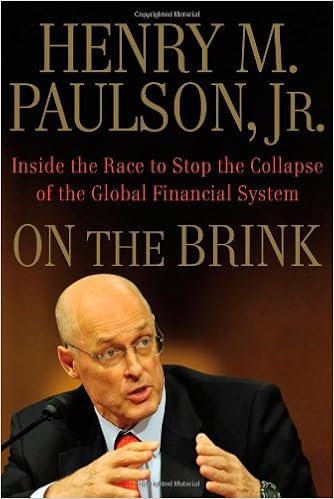
Image result for paulson geithner bernanke barney frank

Oct 4, 2018

Kevin Duffy on the legacy of the 2008 financial bailouts


In his recent interview in Barron's (“Hank Paulson Says the Financial Crisis Could Have Been 'Much Worse’,” September 17, 2018), former Treasury Secretary Henry Paulson claimed, “The timing, cause, and severity of the next financial crisis are impossible to predict.  Of course someone will get it right and will be credited with doing so, but he or she won’t spot the next one.”  Having warned about the late ‘80s Japan bubble, late ’90s tech bubble and mid ‘00s credit bubble (“For Whom Do the Bells Toll?,” June 18, 2007), I’ll take that as a challenge.  The root cause is always artificially low rates set by central banks.  Since this period of low rates was longer (7 years vs. 2 ½ from 2002-04), deeper and more global, the next crisis will be more widespread and prolonged.  As for timing, it’s anyone’s guess but with rising rates, narrowing leadership (just 5 of 35 country stock markets up on the year), investor euphoria (record low cash levels at Schwab), and wild speculation (first cryptocurrencies, now cannabis stocks), the lights are flashing red.

There are plenty of areas of fragility.  Within the U.S., since the end of 2008 student loan debt is up 127%, auto loan debt 57%, corporate debt 76%, public debt 98%.  Margin debt has more than tripled.  Outside the U.S., Canada and Australia are experiencing housing bubbles while emerging market debt has gone from 110% of GDP to 194% according to the Bank for International Settlements.  Other potential landmines: Chinese corporate debt has increased by 64% of GDP, Italian government debt by 40% of GDP, and Japanese government debt by 61% of GDP.

Unlike the tech and credit bubbles, which were sector-specific, the bubble today is in “everything.”  This is the true legacy of Paulson, Geithner, Bernanke, Frank & Co.

~ Kevin Duffy, September 21, 2018

Apr 5, 2017

Jim Grant on the sovereign debt bubble

We live in a time of actual novelty.  Negatively yield sovereign debt is one such novelty and it is a doozy.

~ James Grant, Grant's podcast, January 27, 2017

Image result for negative yielding bonds 2016

Jan 31, 2017

Jim Grant reports on the bond bubble: "$13 trillion of bonds are priced with negative yields"

Arbor Quantitative Analytics reports that the 30-year Treasury bond delivered a 10% return in the 10 days ended last week, among the best such sprints on record (it was in the 99.5th percentile).  Tuesday's Financial Times reported a drop in 10-year gilt yields to 0.71%, far below any yield recorded even when the pound was convertible into gold at a fixed price.  "Across the world," the paper said, "government bond yields continue to collapse as economists forecast low global growth and greater stimulus from central banks in spite of years of monetary easing.  Dutch benchmark 10-year rates are now negative, joining those of Japan, Germany and Switzerland."  According to Bank of America Merrill Lynch, $13 trillion of bonds are priced with negative yields, up from just about none two years ago.

~ Jim Grant, Grant's Interesting Rate Observer, "Remember the Shell Oil 2 1/2s of 1971," July 15, 2016

Grant's: "sovereign debt is the biggest bubble since the Bronze Age" (2016)

If practice makes perfect, Grant's is unrivaled in calling the top in bond prices.  We have done so repeatedly over the course of many years, even if not lately; since 2014, our line has rather been "one last gasp" for the bulls.  We now say that the last gasp has been gulped.  With all the fluency that comes with study and repetition, we say that sovereign debt is the biggest bubble since the Bronze Age, or maybe since ancient Sumer.  The notion that negative-yielding bonds, denominated in a fiat currency, are a "safe" asset is a misconception that belongs in the next edition of Extraordinary Popular Delusions and the Madness of Crowds.  We are bearish on bonds, especially the ones that, like new cars on a dealer's lot, positively guarantee the owner a loss as soon as he takes possession of his property.

~ Jim Grant, Grant's Interesting Rate Observer, "Remember the Shell Oil 2 1/2s of 1971," July 15, 2016

Jun 12, 2016

Scott Black on U.S. national debt

The U.S. has $19.2 trillion of debt, equal to 105% of GDP, not including entitlement programs. With few exceptions, no one seems to care. This is the highest debt-to-GDP ratio since the Truman administration, but President Truman inherited high debt levels after the U.S. fought two world wars. If interest rates go up by two percentage points, that is another $380 billion a year in interest payments, which the country can’t afford.

~ Scott Black, "Barron’s 2016 Midyear Roundtable: 24 Investment Ideas," Barron's, June 12, 2016

Jun 24, 2014

Wilbur Ross on the sovereign debt bubble

I've felt for some time that the ultimate bubble, when we look back a few years from now, is going to be sovereign debt, both U.S. and other, because it's way below any sort of reversion to the mean of interest rates.  If you look at where the U.S. 10-year had averaged over the 10 preceding years, it's around 4 percent. If it reverts back to that level at some point there will be terrible losses in the long-term Treasury market and those will probably be accentuated in other areas of fixed income.

~ Wilbur Ross, as appeared on CNBC, "Sovereign debt the 'ultimate bubble': Wilbur Ross," June 23, 2014

May 5, 2014

William White on the global central banking experiment

The honest truth is no one has ever seen anything like this.  Not even during the Great Depression in the Thirties has monetary policy been this loose.  And if you look at the details of what these central banks are doing, it's all very experimental.  They are making it up as they go along.  I am very worried about any kind of policies that have that nature...  Plus, the Fed has moved to a completely different motivation.  From the attempt to get the markets going again, they suddenly and explicitly started to inflate asset prices again.  The aim is to make people feel richer, make them spend more, and have it all trickle down to get the economy going again.  Frankly, I don't think it works, and I think this is extremely dangerous.

I see speculative bubbles like in 2007.  It all looks and feels like 2007.  And frankly, I think it's worse than 2007, because then, it was the problem of the developed economies.  But in the past five years, all the emerging economies have imported our ultra-low policy rates and have seen their debt levels rise.  The emerging economies have morphed from being a part of the solution to being a part of the problem.

I've met so many people who are in the markets, thinking they are absolutely brilliantly smart, thinking they can get out in the right time.  The problem is, they all think that.  And when everyone races for the exit at the same time, we will have big problems.

~ William White, former chief economist for Bank of International Settlements, speech given in Switzerland, April 2014

Mar 27, 2012

UK Chancellor Osborne on safety of sovereign debt

While other countries struggle to command confidence in their fiscal forecasts we have created an internationally admired and respected independent office for budget responsibility. These bold steps have made Britain that safe haven in the sovereign debt storm.

~George Osborne, UK Chancellor of the Exchequer, August 11, 2011

Aug 19, 2010

Gary Shilling on ignoring Treasury yields (2010)

I've been a bull on 30-year Treasuries since 1981 since I said, in print, "We're entering the bond rally of a lifetime." Yields were at 15% then, they're now down, of course, to 3.7%, my goal is 3%. If that happens, you make another 14% appreciation in the coupon bond, and 24% on the 30-year zero. I've never, never, never bought Treasury bonds for yield. I couldn't care less what the yield is as long as it's going down. I buy for the same reason the professor [Jeremy Siegel] buys stocks-- appreciation.

The yield is insignificant, as far as I am concerned, as long as it's going down.

If we suddenly saw the economy take off like a scalded dog, consumers go from a savings spree back to their spendthrift ways, if we saw a rage of inflation rather than the deflation that I am forecasting, 3% deflation, you'd have to see a complete revival of the economy and an end of the deleveraging which has now taken over after three decades of leveraging up for the consumers and four decades for the financial sector [we could see bond yields go up].

~ Gary Shilling, president, A. Gary Shilling & Co., CNBC's Fast Money, August 18th, 2010

Jun 22, 2010

David Galland on the debt crisis

[T]his [debt] crisis is not going to go quietly to its dirt nap. Instead, the end will almost certainly be akin to a Viking funeral with the political equivalent of rape followed by a raging fire on a sinking ship. Riots in the street and a serious degradation in the quality of life of the majority of the citizenry are all but inevitable, followed by a sea change in the political landscape.

~ David Galland, managing editor of Casey Research, "Why Won't You Die, Damn it!,"June 22, 2010