Showing posts with label ideology. Show all posts

Jul 17, 2025

Kevin Duffy on the predominant ideology in America

The ideology that the overwhelming majority of Americans share is the notion that the world is a dangerous, chaotic place, and that without a powerful government protecting them from the big, bad wolf, mayhem would ensue.  Generally speaking, the left sees the wolf as wealthy businessmen with regulators and tax collectors as the protectors, while the right sees foreigners (especially those who don't look like us) as a constant threat and rallies around the military, tariffs and ICE.  Mixed in is a bit of doublethink: the left is not quite as pro-war and the right is not quite as anti-market. 

Of course, those running the protection racket are totally drinking the Kool-Aid which means they are able to justify lying to the sheep.  To the masters, this is for their own own good: In most cases, the less they know the better.  Cue Colonel Jessup in A Few Good Men: "You want the truth? You can't handle the truth!"

~ Kevin Duffy

Jack Nicholson | Positively Arsenal 

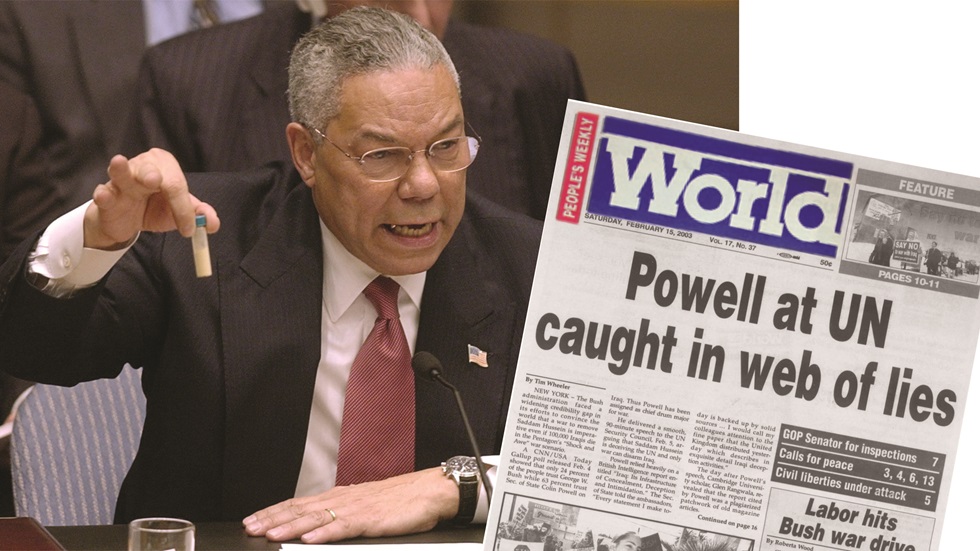
Jeremy Hammond on ideology and the post-9/11 WMD lie

When I first started on the path that led me to doing journalism, it was after 9/11, and I was speaking out against the coming Iraq war, warning people how the government was lying about WMD.  My own parents and older brother refused to listen to me and supported the war effort, even though I was providing them with all the information I had so they could see the truth that there was no evidence Iraq still had WMD.  My brother at one point at least conceded that I’d refuted all the claims and that no credible evidence was publicly available, but then his argument became: "well, I’m sure the government has classified intelligence that Iraq really is a threat and just can’t publicly release it." 

For a long time, I just couldn’t understand it.  I just assumed that facts and logic matter to people.  But the truth is that beliefs often matter more, so that reason is suspended if necessary to maintain a belief system.  The idea that the government would lie to start a war was just so incompatible with their view of the government as “the greatest on Earth”, and even though there are bad actors within it, the system itself is fundamentally benevolent, a beacon of light shining democracy and freedom on the world.  It’s a belief system, a matter of faith.  The state religion.

~ Jeremy Hammond

Iraq 'weapons of mass destruction': Remembering the lies of wars past –  People's World 

Dec 10, 2023

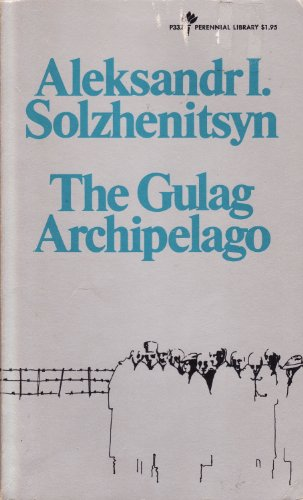
Aleksandr Solzhenitsyn on evil and ideology

To do evil a human being must first of all believe that what he's doing is good, or else that it's a well-considered act in conformity with natural law.  Fortunately, it is in the nature of the human being to seek a justification for his actions.

Macbeth's self-justifications were feeble - and his conscience devoured him.  Yes, even Iago was a little lamb too.  The imagination and the spiritual strength of Shakespeare's evildoers stopped short at a dozen corpses.  Because they had no ideology.

Ideology - that is what gives evildoing its long-sought justification and gives the evildoer the necessary steadfastness and deterimination.  That is the social theory which helps to make his acts seem good instead of bad in his own and others' eyes, so that he won't hear reproaches and curses but will receive praise and honors.  That was how the agents of the Inquisition fortified their wills: by invoking Christianity; the conquerors of foreign lands, by extolling the grandeur of their Motherland; the colonizers, by civilization; the Nazis, by race; and the Jacobins (early and late), by equality, brotherhood, and the happiness of future generations.

Thanks to ideology, the twentieth century was fated to experience evildoing on a scale calculated in the millions.

~ Aleksandr Solzhenitsyn, The Gulag Archipelago, pp. 173-174

1973


Sep 1, 2022

Kevin Duffy on the flawed ideology of the millennial trader

There are few certainties in life, among them death, taxes and the reluctance of young adults to accept advice from their parent’s generation (“OK, boomer”).  If severe losses of the past 12 months haven’t broken the resolve of the retail speculator, what will?  Why such conviction?  In a word: ideology.

Millennial traders have hardly been “milked” by Wall Street.  No one forced them to the craps table.  Instead, they were victims of an ideology that sees capitalism as exploitative, a view no doubt shared by most financial journalists...  Through their win-lose worldview, HODLers saw a chance to turn the tables on the wealthy fat cats; for a time it even worked.  Eventually the odds caught up with them and the dice came up snake eyes.  Yet when ideology was confronted by reality, many responded by going into denial.

~ Kevin Duffy, "The Hangover," The Coffee Can Portfolio, March 1, 2022


Jul 13, 2022

Rolf Dobelli on the dogma trap

In sum: think independently, don't be too faithful to the party line, and above all give dogmas a wide berth.  The quicker you understand that you don't understand the world, the better you'll understand the world. 

~ Rolf Dobelli, The Art of the Good Life, "The Dogma Trap," p. 149


Dec 20, 2021

Kevin Duffy on ideology

The dominant ideology today is that the world is a chaotic place and authorities are required to protect us from the big bad wolf: viruses, recessions, stock market downturns, terrorists, foreign competitors, discrimination, and even ourselves.  As Tom Woods says, “The model of society that we learn in school is that somebody with a bullhorn has to be barking out orders and then everybody obeys.”  This explains why the central state holds a central role in society: culture over conspiracy.  The image of Dr. Evil scheming in his cave to run our lives is less plausible than 95% of the population thinking a certain way and agreeing at least in principle.

~ Kevin Duffy, "The Covid-19 Vaccine Fraud," The Coffee Can Portfolio, December 17, 2021


Nov 26, 2021

Jeffrey Tucker on political ideology

Every political ideology has three elements: a vision of hell with an enemy that needs to be crushed, a vision of a more perfect world, and a plan for transitioning from one to the other.

~ Jeffrey Tucker, "The Totalitarian Ideology of Lockdownism," Brownstone Institute, August 9, 2021


Jul 29, 2021

Russell Lamberti on sports and egalitarianism

Sport is a radical hierarchy of excellence sorted by genetics, upbringing, resources, luck, volition and character.  Egalitarians therefore hate sport and are driven relentlessly to disfigure it with ideology.

~ Russell Lamberti, tweet, July 29, 2021


Jan 14, 2021

Murray Rothbard on the alliance between the State and intellectuals

[T]he majority must be persuaded by ideology that their government is good, wise and, at least, inevitable, and certainly better than other conceivable alternatives.  Promoting this ideology among the people is the vital social task of the "intellectuals."  For the masses of men do not create their own ideas, or indeed think through these ideas independently; they follow passively the ideas adopted and disseminated by the body of intellectuals.  The intellectuals are, therefore, the "opinion-molders" in society.  And since it is precisely a molding of opinion that the State most desperately needs, the basis for age-old alliance between the State and the intellectuals becomes clear. 

It is evident that the State needs the intellectuals; it is not so evident why intellectuals need the State.  Put simply, we may state that the intellectual's livelihood in the free market is never too secure; for the intellectual must depend on the values and choices of the masses of his fellow men, and it is precisely characteristic of the masses that they are generally uninterested in intellectual matters.  The State, on the other hand, is willing to offer the intellectuals a secure and permanent berth in the State apparatus; and thus a secure income and the panoply of prestige.  For the intellectuals will be handsomely rewarded for the important function they perform for the State rulers, of which group they now become a part.

~ Murray Rothbard, Anatomy of the State


Sep 10, 2020

Kevin Duffy on the 1960s roots of cultural Marxism

The current radical shift left has its roots in the social activism of the 1960s.  Marxism was intellectually dead after a series of failed experiments with nothing but poverty and stacks of dead bodies to show for it.  The Left needed a new marketing campaign.  Influenced by people like Antonio Gramsci and Herbert Marcuse, socialists gave up on violent overthrow of the existing order (which wouldn’t work in America anyway) to focus on changing the culture and pitting groups against each other (oppressors vs. victims).  This was to be a long, slow process, like boiling a frog.

~ Kevin Duffy, The Coffee Can Portfolio, August 11, 2020

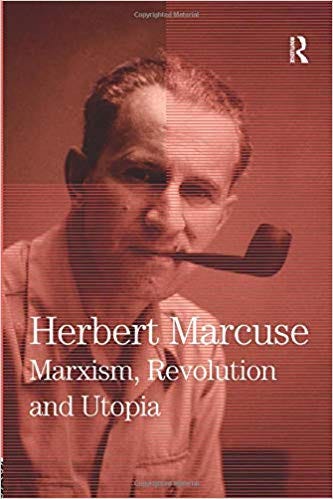
Herbert Marcuse on the Soviet Union and Marxism | by Paul Austin Murphy |  Medium

Aug 14, 2020

Robert Higgs on opinions and ideology

To embrace ideology is to join a community of like-minded people. “Opinions,” a political scientist has written, “are the invisible membership cards of society. They tell us who is like us and who may be against us. Opinions held in common are powerful bonds.”

~ Robert Higgs, Crisis and Leviathan

For elites, politics is driven by ideology. For voters, it's not ...

Aug 12, 2020

Kevin Duffy on the left-right political spectrum

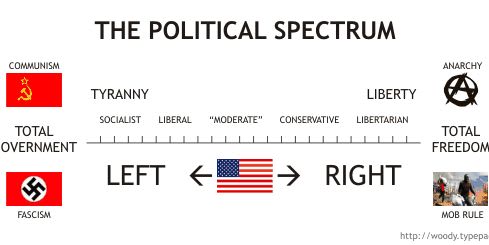
In the game of winner-take-all politics, two competing coalitions tend to form, narrowing the range of allowable opinion. This has given rise to left and right political ideologies, the most popular groups working within the system. Naturally, both accept the concept of government intervention whereas the out-group (libertarians) rejects this notion. The right longs for a romantic past; the left imagines a utopian future. Both advocate government intervention to get there. Like clockwork, the state grows along the path of least resistance despite the appearance of substantive disagreement.

~ Kevin Duffy, The Coffee Can Portfolio, August 11, 2020

Jul 19, 2020

Robert Higgs on how crises heighten ideological expression on both sides

[I]deology becomes most prominent during social crisis.  When the existing order is widely perceived as working poorly, breaking down, or facing serious challenge from foreign or domestic enemies, the incentives for ideological expression are heightened on both sides.  On the one hand, supporters of the status quo find it imperative to articulate and disseminate their ideology to shore up threatened institutions.  On the other hand, crises provide excellent opportunities for ideological entrepreneurs to find a market for their wares among the growing ranks of the disaffected.

~ Robert Higgs, Crisis and Leviathan, p. 47

Anger: When Adults Act Like Children—and Why | Psychology Today

Jul 6, 2020

Kevin Duffy on ideology

The dominant ideology is that the world is chaos and authorities will protect us from the big bad wolf: virus, recession, stock market downturn, terrorists, discrimination, ourselves.

~ Kevin Duffy, Twitter reply, July 6, 2020

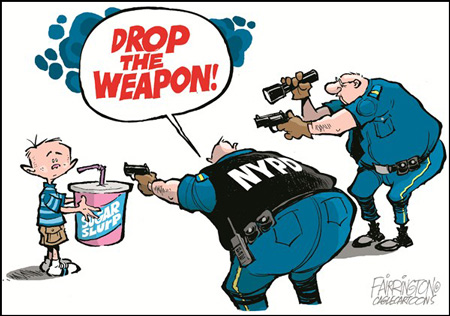
Nanny State

May 29, 2020

Kevin Duffy on ideology

In order to navigate an impossibly complex world, we take shortcuts, build logical frameworks and adopt ideologies. These are lenses through which we view events, our own reality in a sense. Over time, these lenses become hardened and extremely difficult to change, regardless of the counter evidence.

~ Kevin Duffy, "The Expert Model," LewRockwell.com, May 27, 2020

(Excerpt from the May 27 issue of The Coffee Can Portfolio, p. 2)

Dreamy photo effect: look through rose-colored glasses

May 28, 2020

Kevin Duffy on the two predominant ideologies

There are essentially two views of the world: order and chaos.  Some see a natural order: the food chain, pecking orders, innate behaviors, complex adaptive systems, natural selection.  Others see chaos requiring direction by a group of experts.

At least when it comes to economic activity, the overwhelming majority adopt the chaos view.  They fail to grasp Adam Smith’s “invisible hand” of mutually beneficial trade, Friedrich Hayek’s “pretense of knowledge” with regard to central planners, or Frederic Bastiat’s “seen and unseen costs” concerning the unintended consequences of economic policies.

~ Kevin Duffy, "The Expert Model," LewRockwell.com, May 27, 2020

(Excerpt from the May 27 issue of The Coffee Can Portfoliop. 2)

Order vs Chaos - Living an Orderly Life - YouTube

May 5, 2020

Charlie Munger on the danger of ideology

Another thing I think should be avoided is extremely intense ideology, because it cabbages up one’s mind. You’ve seen that. You see a lot of it on TV, you know preachers for instance, they’ve all got different ideas about theology and a lot of them have minds that are made of cabbage.

But that can happen with political ideology. And if you’re young it’s easy to drift into loyalties and when you announce that you’re a loyal member and you start shouting the orthodox ideology out what you’re doing is pounding it in, pounding it in, and you’re gradually ruining your mind. So you want to be very careful with this ideology. It’s a big danger.

~ Charlie Munger

Blinded by Ideology - Dialogue & Discourse - Medium

Mar 30, 2020

Jeffrey Tucker on how the coronavirus has "opened up a barrel full of toxic ideology"

It’s been extremely difficult in these times to think clearly as a professional medical service provider might. To them, this is a virus and the people who contract it need to be identified, isolated, and treated. Maybe that doesn’t sound complicated but sometimes the hardest thing is to think simply. It’s darn-near impossible when a perfect storm of media mania, political ambition, and public ignorance combined to open up a barrel full of toxic ideology that has poisoned people’s ability to be rational.

Even now, many people aren’t reading news or looking at data. They are confirming their biases. Our political culture has fully bled – a tsunami of blood – into one of the most essential tasks of civilization: caring for and curing the sick, and hence drowning rationality, science, and medical professionalism, and doing so at the expense of a billion lives.

Yes, that’s the tragic cost of an ideologically obsessed culture. Instead of defeating the virus, we are using its presence among us to defeat each other.

~ Jeffrey Tucker, "Coronavirus as Ideology," AIER.org, March 30, 2020

Jeffrey Tucker

Jan 13, 2020

Terence McKenna on ideology

Ideology always paves the way toward atrocity.

~ Terence McKenna

Image result for terence mckenna

Dec 13, 2019

Take the ideology quiz!

If your total score is 0-10, you believe the heavy hand of government is needed to restrain innate impulses of man towards chaos and depravity.  You identify ideologically as totalitarian along with people like Joseph Stalin, Adolph Hitler and Pol Pot.  If your total score is 91-100, you believe a free society brings out the best impulses of man towards spontaneous order and goodness, while government intervention brings out the worst.  You identify as anarcho-capitalist along with people like Murray Rothbard, Hans-Hermann Hoppe and Lew Rockwell.

~ Kevin Duffy, "Ideology Quiz," LewRockwell.com, December 13, 2019

Image result for what is your ideology