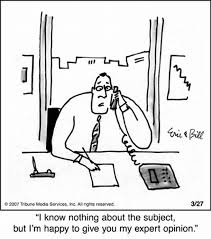
~ Joel Litman, "A 'Not-So Secret Weapon' in Finance," Stansberry Investor Hour, 30:35 mark, September 19, 2022
Showing posts with label media. Show all posts
Sep 20, 2022
Joel Litman on confirmation bias in the media
In many cases I think the media, they come up with a narrative and then they find the data to support it. It's the opposite of the scientific method.
Aug 28, 2022
Stephen Kinzer on the sinking of the Maine and pro-war propaganda
Many Americans already felt a passionate hatred for Spanish colonialism and a romantic attachment to the idea of "Cuba Libre." Their emotions had been fired by a series of wildly sensational newspaper reports that together consitute one of the most shameful episodes in the history of the American press. William Randolph Hearst, the owner of the New York Journal and a string of other newspapers across the country, had been attracting readers for months with vivid denunciations of Spanish colonialists...
[...]
The moment Hearst heard about the sinking of the Maine, he recognized it as a great opportunity. For weeks after the explosion, he filled page after page with mendacious "scoops," fabricated interviews with unnamed government officials, and declarations that the battleship had been "destroyed by treachery" and "split in two by an enemy's secret infernal machine." The Journal's daily circulation doubled in four weeks. Other newspapers joined the frenzy, and their campaign brought Americans to near-hysteria.
~ Stephen Kinzer, Overthrow: America's Century of Regime Change from Hawaii to Iraq, pp. 36-37
(Editor's note: The role of yellow journalism in whipping Americans into a pro-war frenzy may be overstated.)
May 3, 2022
H.L. Mencken on American journalism
American journalism (like the journalism of any other country) is predominantly paltry and worthless. Its pretensions are enormous, but its achievements are insignificant.
~ H.L. Mencken
Labels:
journalism,
journalists,
media,
people - Mencken; H.L.
Sep 30, 2021
Carl Sagan on the dumbing down of America
The dumbing down of America is most evident in the slow decay of substantive content in the enormously influential media... lowest common denominator programming, credulous presentations on pseudoscience and superstitution, but especially a kind of celebration of ignorance.
~ Carl Sagan, 1995
Labels:
ignorance,
media,
people - Sagan; Carl,
pseudoscience,
superstition
Mar 15, 2021
Thomas Jefferson on education and newspapers
The man who reads nothing at all is better educated than the man who reads nothing but newspapers.
~ Thomas Jefferson
Labels:
education,
media,
newspapers,
people - Jefferson; Thomas
Jan 9, 2021
Nov 11, 2020
Rolf Dobelli on how news media distorts risk assessement
As a result of news, we walk around with the completely wrong risk map in our heads.
- Terrorism is overrated. Chronic stress is underrated.
- The collapse of Lehman Brothers is overrated. Fiscal irresponsibility is underrated.
- Astronauts are overrated. Nurses are underrated.
- Britney Spears is overrated. IPCC reports are underrated.
- Airplane crashes are overrated. Resistance to antibiotics is underrated.
~ Rolf Dobelli, "Avoid News," p. 2, 2010
Labels:
media,
people - Dobelli; Rolf,
risk,
risk assessment
Rolf Dobelli on how the news media focuses on the highly visible
News reports do not represent the real world.
Our brains are wired to pay attention to visible, large, scandalous, sensational, shocking, peoplerelated, story-formatted, fast changing, loud, graphic onslaughts of stimuli. Our brains have limited attention to spend on more subtle pieces of intelligence that are small, abstract, ambivalent, complex, slow to develop and quiet, much less silent. News organizations systematically exploit this bias.
News media outlets, by and large, focus on the highly visible. They display whatever information they can convey with gripping stories and lurid pictures, and they systematically ignore the subtle and insidious, even if that material is more important. News grabs our attention; that’s how its business model works. Even if the advertising model didn’t exist, we would still soak up news pieces because they are easy to digest and superficially quite tasty.
The highly visible misleads us.
~ Rolf Dobelli, "Avoid News," p. 2
Labels:
fake news,
media,
people - Dobelli; Rolf,
seen and unseen
Oct 16, 2020
Thomas Sowell on the corruption of journalism
Journalists cannot serve two masters. To the extent that they take on the task of suppressing information or biting their tongue for the sake of some political agenda, they are betraying the trust of the public and corrupting their own profession.
~ Thomas Sowell
Labels:
censorship,
corruption,
journalism,
journalists,
media,
people - Sowell; Thomas
Oct 10, 2020
Robert Higgs on how the mainstream media has changed over the past 50 years
Go back fifty years or so, and you can find news that was, to some extent, actually news: you know, more or less factual answers to the classic journalistic questions: what, who, when, where, and how. I'm not sure exactly when the change happened, but at some point the news became entertainment. Not funny entertainment, mind you, but something aimed less at informing and more at arousing people, especially by stimulating their fears, keeping them in a state of constant apprehension, and confirming people's ideological beliefs and cementing their allegiance with one political team or another.
Discussions of current events became shouting matches between sets of nincompoops who could speak of political trivia, but had no understanding of anything truly important in social, political, and economic affairs. Along the way, truth -- even a clear understanding of how truth differs from falsehood or from one's sentiments or wishful thinking -- fell completely out of favor. It is now no longer "a thing," as the lingo goes.
~ Robert Higgs, Facebook post, October 6, 2020
Labels:
mainstream media,
media,
people - Higgs; Robert
Oct 5, 2020
Jenin Younes on media coverage of the coronavirus
[T]he media’s dereliction of duty is beyond evident. As [Karina] Reiss and [Sucharit] Bhakdi observe, broadcasters and the press became “servile mouthpieces of the government” and never “critically questioned” the “disturbing images and frightening numbers." Incidentally, a letter recently published by 200 Belgian scientists similarly criticized the media: “[t]he relentless bombardment of numbers, unleashed on the population day after day, hour after hour, without indicating those numbers, without comparing them to flu deaths in other years, without comparing them with deaths from other causes, has induced a true psychosis of fear in the population. This is not information, but manipulation.”
As an avid consumer of the New York Times, the New Yorker, and NPR, I can attest to the media having operated no differently in the United States. Apart from a few pieces in early March that questioned the wisdom of the course we had set upon, there was no serious discussion and no debate, at least in the left-leaning media, and anyone who dissented from the prevailing view was and continues to be dismissed as stupid or selfish. Early on, and without any nuanced analysis, Sweden was deemed a failure. The public has been beset by such terror, driven by anecdotes often presented without context, that it has become virtually impossible to dispel these many misconceptions using facts, figures, and logic.
~ Jenin Younes, "Disease Panic vs. Medical Reality," AIER.org, September 28, 2020
Aug 9, 2020
Rolf Dobelli: "our addiction to the news has become a dangerous mania"
In the past 20 years, since the advent of the internet and the smartphone, our addiction to the news has become a dangerous mania. You can barely escape it. It’s high time we reconsidered our approach to this glut of news. It’s high time we realised the impact of consuming it and began a detox.
~ Rolf Dobelli, "Avoid the News," 2011
Labels:
addiction,
information overload,
media,
people - Dobelli; Rolf
Jul 21, 2020
Barbara Tuchman on how negative events are exaggerated
The fact of being reported multiplies the apparent extent of any deplorable development by five- to tenfold.
~ Barbara Tuchman, A Distant Mirror (1978)

Labels:
exaggeration,
fear,
mainstream media,
media,
people - Tuchman; Barbara
Mar 13, 2020
Allan Stevo on trusting coronavirus experts
Now, more than ever, as more people get fearful, as the media stokes that fear, as the grocery store shelves get more empty, as the government steps in to say they are here to help, the more vital it is than ever to trust your BS detector.
~ Allan Stevo, "Suddenly Everyone is a Coronavirus Expert," LewRockwell.com, March 13, 2020

~ Allan Stevo, "Suddenly Everyone is a Coronavirus Expert," LewRockwell.com, March 13, 2020
Labels:
coronavirus,
experts,
fear,
media,
panics,
people - Stevo; Allan
Allan Stevo on news and confirmation bias
There’s an aspect of confirmation bias that marketers have long understood as significant: the more education you have, the more successful you’ve been inside a system, the less likely you are to see contradictory information from unfamiliar sources as valid. Also, the less likely you are to approach the ideas presented to you by a trusted source in a circumspect fashion.
Basically, if you’ve got a PhD, you eat most of what’s fed to you, as long as it’s fed to you by the right people.
And the news doesn’t just have a way of getting people opinionated, it has a way of making one feel educated, almost expert on a topic.
~ Allan Stevo, "Suddenly Everyone is a Coronavirus Expert," LewRockwell.com, March 13, 2020
Basically, if you’ve got a PhD, you eat most of what’s fed to you, as long as it’s fed to you by the right people.
And the news doesn’t just have a way of getting people opinionated, it has a way of making one feel educated, almost expert on a topic.
~ Allan Stevo, "Suddenly Everyone is a Coronavirus Expert," LewRockwell.com, March 13, 2020
Mar 8, 2020
Rolf Dobelli on news consumption
News is for the mind what sugar is for the body.
News is appetizing, easily digestible and at the same time extremely harmful.
The media feed us small snippets of trivial stories, treats that in no way satisfy our hunger for knowledge.
Unlike books and long, well-researched, long articles, there is no saturation when it comes to news consumption.
We can devour unlimited amounts of messages; they remain cheap sugar candies. As with sugar, the side effects only become apparent with a delay.
That's why I haven't read a newspaper, consumed online news, watched a TV or listened to the radio for almost ten years.
~ Rolf Dobelli, "News lunch," Dobelli.com, March 2019
That's why I haven't read a newspaper, consumed online news, watched a TV or listened to the radio for almost ten years.
~ Rolf Dobelli, "News lunch," Dobelli.com, March 2019
Labels:
mainstream media,
media,
people - Dobelli; Rolf
Jan 13, 2020
Joseph Goebbels on the media
Think of the press as a great keyboard on which the government can play.
~ Joseph Goebbels
~ Joseph Goebbels
Mar 5, 2017
Ludwig von Mises on indoctrination in public schools vs. popular culture
On the high school level and even on the college level the handing down of historical and economic knowledge is virtually indoctrination. The greater part of the students are certainly not mature enough to form their own opinion on the ground of a critical examination of their teachers' representation of the subject.
If public education were more efficient than it really is, the political parties would urgently aim at the domination of the school system in order to determine the mode in which these subjects are to be taught. However, general education plays only a minor role in the formation of the political, social, and economic ideas of the rising generation. The impact of the press, the radio, and environmental conditions is much more powerful than that of teachers and textbooks. The propaganda of the churches, the political parties, and the pressure groups outstrips the influence of the schools, whatever they may teach. What is learned in school is often very soon forgotten and cannot carry on against the continuous hammering of the social milieu in which a man moves.
~ Ludwig von Mises, Human Action, pp. 877-878
If public education were more efficient than it really is, the political parties would urgently aim at the domination of the school system in order to determine the mode in which these subjects are to be taught. However, general education plays only a minor role in the formation of the political, social, and economic ideas of the rising generation. The impact of the press, the radio, and environmental conditions is much more powerful than that of teachers and textbooks. The propaganda of the churches, the political parties, and the pressure groups outstrips the influence of the schools, whatever they may teach. What is learned in school is often very soon forgotten and cannot carry on against the continuous hammering of the social milieu in which a man moves.
~ Ludwig von Mises, Human Action, pp. 877-878
Jan 17, 2011
Nassim Taleb on the value of newspapers
To be completely cured of newspapers, spend a year reading the previous week's newspapers.
~ Nassim Taleb, The Bed of Procrustes, p. 21
Nassim Taleb on the media and knowledge
Most info-Web-media-newspaper types have a hard time swallowing the idea that knowledge is reached (mostly) by removing junk from people's heads.
Nassim Taleb, The Bed of Procrustes, p. 58
Subscribe to:
Posts (Atom)