Showing posts with label socialism. Show all posts

Jan 8, 2025

Thomas Sowell on socialism

The strongest argument for socialism is that it sounds good.  The strongest argument against socialism is that it doesn’t work.  But those who live by words will always have a soft spot in their hearts for socialism because it sounds so good. 

~ Thomas Sowell


Apr 16, 2024

Jeffrey Evan Brooks on socialism

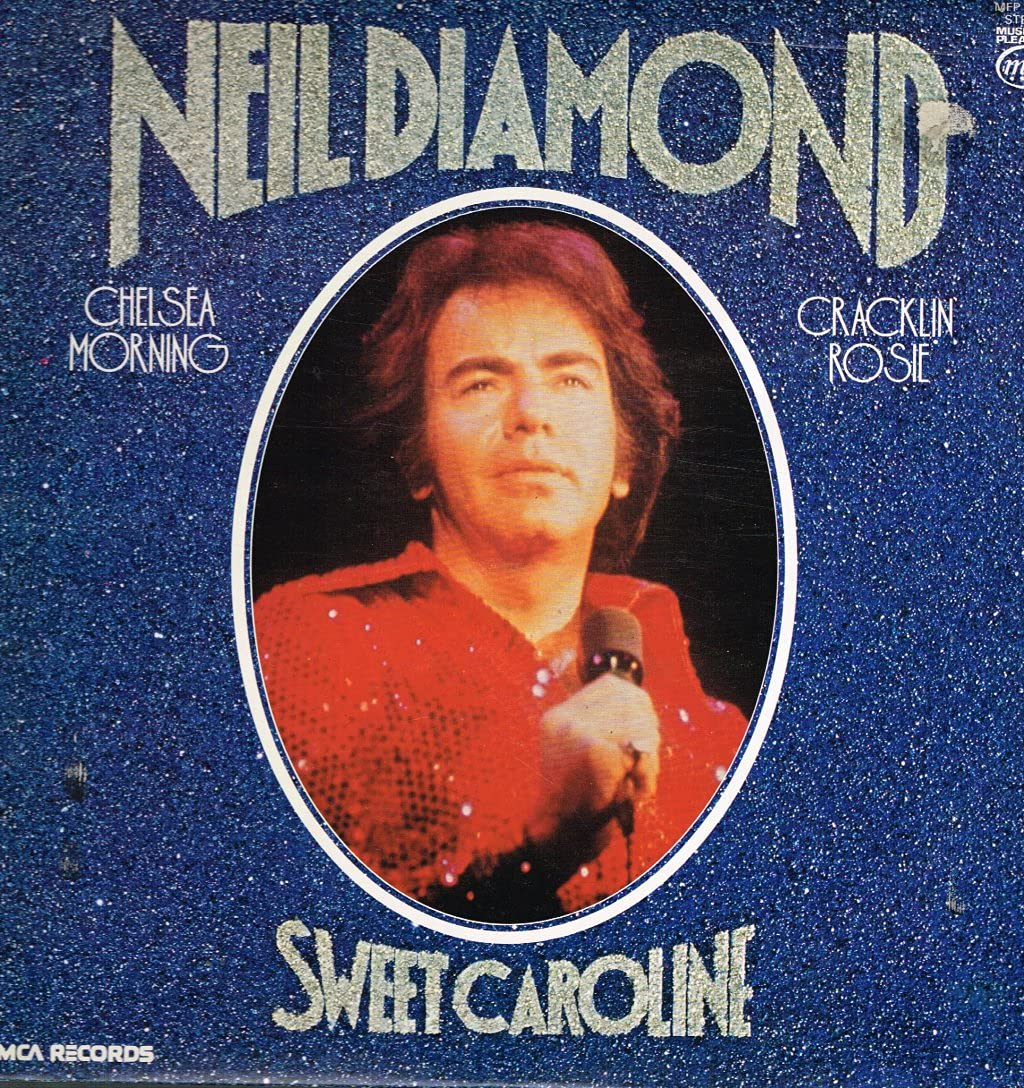
Socialism is like Neil Diamond music.  It's not good and belongs in the past, yet there's a group of people who think that it will eventually catch on if only they keep playing it.

~ Jeffrey Evan Brooks


Apr 7, 2022

Ludwig von Mises on socialism

Socialism cannot be realized because it is beyond human power to establish it as a social system.  The choice is between capitalism and chaos.  The man who chooses between drinking a glass of milk and a glass of a solution of potassium cyanide does not choose between two beverages; he chooses between life and death.  A society that chooses between capitalism and socialism does not choose between two social systems; it chooses between social cooperation and the disintegration of society.  Socialism is not an alternative to capitalism; it is an alternative to any system under which men can live as human beings.  To stress this point is the task of economics as it is the task of biology and chemistry to teach that potassium cyanide is not a nutriment but a deadly poison. 

~ Ludwig von Mises, Human Action, p. 680


Mar 24, 2022

Kevin Duffy on how the socialist sees inequality and wealth creation

Inequality is a blessing, not a problem.  Without it, specialization and trade (the division of labor) would not take place.  Trade, as long as it’s peaceful and voluntary, is mutually beneficial, win-win.  In other words, the more the merrier.  When the division of labor expands, good things happen, i.e. wealth increases. 

Of course, the distribution of this wealth will be uneven, depending on how adept individuals are at serving others.  But there’s nothing nefarious going on here.  In fact, entrepreneurs should be celebrated as they are the key drivers of human progress. 

Sadly, this is not how the socialist sees the world.  Instead, he sees a zero sum game, win-lose.  He assumes that those who accumulate great wealth must have stolen it from those who ended up with far less.  How, precisely, this theft takes place (when all transactions are voluntary), he can’t explain. 

Instead of forming a theory that models reality, the socialist bends reality to fit his theory. This is a fatal error, wreaking havoc on mankind, justifying government theft (win-lose) to correct an injustice that never existed.

~ Kevin Duffy, Quora answer, March 24, 2022


Dec 19, 2021

Friedrich Hayek on how socialism threatens civilization

The demands of socialism are not moral conclusions derived from the traditions that formed the extended order that made civilisation possible.  Rather, they endeavour to overthrow these traditions by a rationally designed moral system whose appeal depends on the instinctual appeal of its promised consequences.  They assume that, since people had been able to generate some system of rules coordinating their efforts, they must also be able to design an even better and more gratifying system.  But if humankind owes its very existence to one particular rule-guided form of conduct of proven effectiveness, it simply does not have the option of choosing another system merely for the sake of the apparent pleasantness of its immediately visible effects.  The dispute between the market order and socialism is no less than a matter of survival.  To follow socialist morality would destroy much of present humankind and impoverish much of the rest.

~ Friedrich Hayek, The Fatal Conceit


Aug 16, 2021

George Watson on an early critique of socialism

In 1901, Max Hirsch (1852-1909), a Prussian disciple of Henry George who in 1890 settled in Australia, completed an extensive book called Democracy versus Socialism which he believed to be the first comprehensive refutation of socialism ever published.  A radical himself, he saw socialism as the road to slavery, promising only 'an all-pervading despotism' by a new managerial class.  That was nearly half a century before George Orwell's Animal Farm.  But Hirsch's preface, characteristically, holds out no realistic hope that his warning against tyranny will be heeded.  That is because socialists cannot listen.  Confident in their conviction that social reform can only mean socialism, they are 'deaf.'  It is a book which, appearing in the first year of the twentieth century, sums up an age to come.  Anti-socialists do not quote it; Orwell and Koestler, a generation on, do not appear to have known of its existence.  It is a warning unheard.

~ George Watson, The Lost Literature of Socialsm (1998), pp. 16-17


Jul 6, 2021

Jonathan Newman on how Ludwig von Mises debunked socialism

Mises destroyed socialism this way: Without ownership, there is no exchange.  Without exchange, there are no prices.  Without prices, there is no economic calculation.  Without economic calculation, production decisions are made in the dark.  When that happens, basic needs go unmet.

~ Jonathan Newman, tweet, July 6, 2021


Nov 29, 2020

L. Q. Cincinnatus on how Ludwig von Mises used deduction and economic calculation to critique socialism

I would argue that Ludwig von Mises’ 1920 analysis of economic calculation is one of the great, unsung thought experiments in modern science, but because it was conducted as an exercise in deductive, as opposed to inductive, reasoning that it is either wholly ignored or, more likely, not understood. 

Through a series of strict deductive inferences anchored in the primary “given” of socialism—the absence of private property—Mises demonstrated that a functioning price system would never emerge, and, as a result, no method of rationally calculating the relative scarcity or necessity for higher order goods of any kind could be used to sustain an economy. Mises stated flatly that a socialist economy was was not merely a contradiction in terms, but impossible (unmöglich). 

His analysis was immediately seized upon by socialist theoreticians and planners and the history of its reception, both in the free world and in the countries behind the former Iron Curtain, makes for fascinating reading. In the final analysis, of course, Mises was proven right. Resoundingly so. Because in 1920, before Lenin had even consolidated power, Mises had already foretold the fate of the Soviet Union. And it would take another seventy years and scores of millions of human corpses for him to finally be vindicated.

~ L. Q. Cincinnatus, "How is an American Left Still Possible? Four Theses," LewRockwell.com, November 28, 2020


Oct 17, 2020

Woodrow Wilson on socialism and democracy

It proposes that all idea of a limitation of public authority by individual rights be put out of view, and that the State consider itself bound to stop only at what is unwise or futile in its universal superintendence alike of individual and of public interests. The thesis of the state socialist is that there is, that no line can be drawn between private and public affairs which the State may not cross at will.

[...]

[I]t is very clear that in fundamental theory socialism and democracy are almost if not quite one and the same. They both rest at bottom upon the absolute right of the community to determine its own destiny and that of its members. Men as communities are supreme over men as individuals. Limits of wisdom and convenience to the public control there may be: limits of principle there are, upon strict analysis, none.

~ Woodrow Wilson, "Socialism and Democracy," 1887

Woodrow Wilson
1922-1925


Oct 2, 2020

Leon Cooperman on Donald Trump

Trump is worse than I feared. However, what I fear more is socialism. 

~ Leon Cooperman, Real Vision interview, September 25, 2020

Sep 7, 2020

Calvin Coolidge on redistribution schemes

Don't expect to help the weak by pulling down the strong.

~ Calvin Coolidge

Calvin Coolidge - Wikipedia

Jul 10, 2020

Judith Acosta on the 1607 socialist experiment at Jamestown

Under the banner of King James, over a hundred men and boys came from England and built their fort in a fertile valley, overflowing with enough wildlife, fruits, and berries for the picking, fresh water, and tillable land to sustain a city. Yet within three years most of those able-bodied men were dead. According to George Percy, governor of the colony, most of them died from starvation. Why?

Their economy failed. They had a common store, no private property, and an attitude of indolence. Many of the colonists were indentured servants. As such, they were expected to contribute all the fruits of their labor to the common store, from which they could also take what they needed. But as any student of human nature knows, people who do not benefit personally from their hard work tend not to work all that hard. The upshot was that more was taken than given. Imagine that.

Enter John Smith, whose colonial version of tough love was the motto, “Work or Starve.” He instituted a work program in which every able-bodied settler performed a minimum of four hours of farming a day. And for a while, things got better until Smith suffered an injury and had to return to England in 1608. That misfortune for Smith turned out to be a disaster for the colonists who returned to their habitual indolence and entered what is called the Starving Time. One colonist ate his own wife.

To me, the danger of socialism is plain. Now, how do we convince the millennials before the starving times begin again?

~ Judith Acosta, "Economic Cannibalism: What Millennials Don't Know Will Hurt Everyone," American Thinker, July 9, 2020

Prices of US Stamps Scott #328: 1907 1c Jameston Exposition
Founding of Jamestown
1607-1907

Jul 1, 2020

Kevin Duffy on the definition of socialism

Socialism: doing the same thing over and over and expecting different results.

~ Kevin Duffy

Bernie Sanders: Soviet Union, Venezuela don't count as examples of ...

Jun 7, 2020

George Watson on Hitler, socialism and genocide

The claim that Hitler cannot really have been a socialist because he advocated and practised genocide suggests a monumental failure, then, in the historical memory. Only socialists in that age advocated or practised genocide, at least in Europe, and from the first years of his political career Hitler was proudly aware of the fact. Addressing his own party, the NSDAP, in Munich in August 1920, he pledged his faith in socialist-racialism: "If we are socialists, then we must definitely be anti-semites - and the opposite, in that case, is Materialism and Mammonism, which we seek to oppose." There was loud applause. Hitler went on: "How, as a socialist, can you not be an anti-semite?" The point was widely understood, and it is notable that no German socialist in the 1930s or earlier ever sought to deny Hitler's right to call himself a socialist on grounds of racial policy. In an age when the socialist tradition of genocide was familiar, that would have sounded merely absurd. The tradition, what is more, was unique. In the European century that began in the 1840s from Engels's article of 1849 down to the death of Hitler, everyone who advocated genocide called himself a socialist, and no exception has been found.

~ George Watson, "Hitler and the Socialist Dream," Independent, November 22, 1998

Adolf Hitler only joined Nazi Party after another far-right group ...

Herbert Hoover on crisis and collectivism

Every collectivist revolution rides in on a Trojan horse of "Emergency."

~ Herbert Hoover

The Humanitarian Hoax of Collectivism, Killing America With Kindness

Mar 2, 2020

Frédéric Bastiat on the three economic "isms"

Protectionism, socialism, and communism are basically the same plant in three different stages of its growth.

~ Frédéric Bastiat

Image result for frederic bastiat

Jan 28, 2020

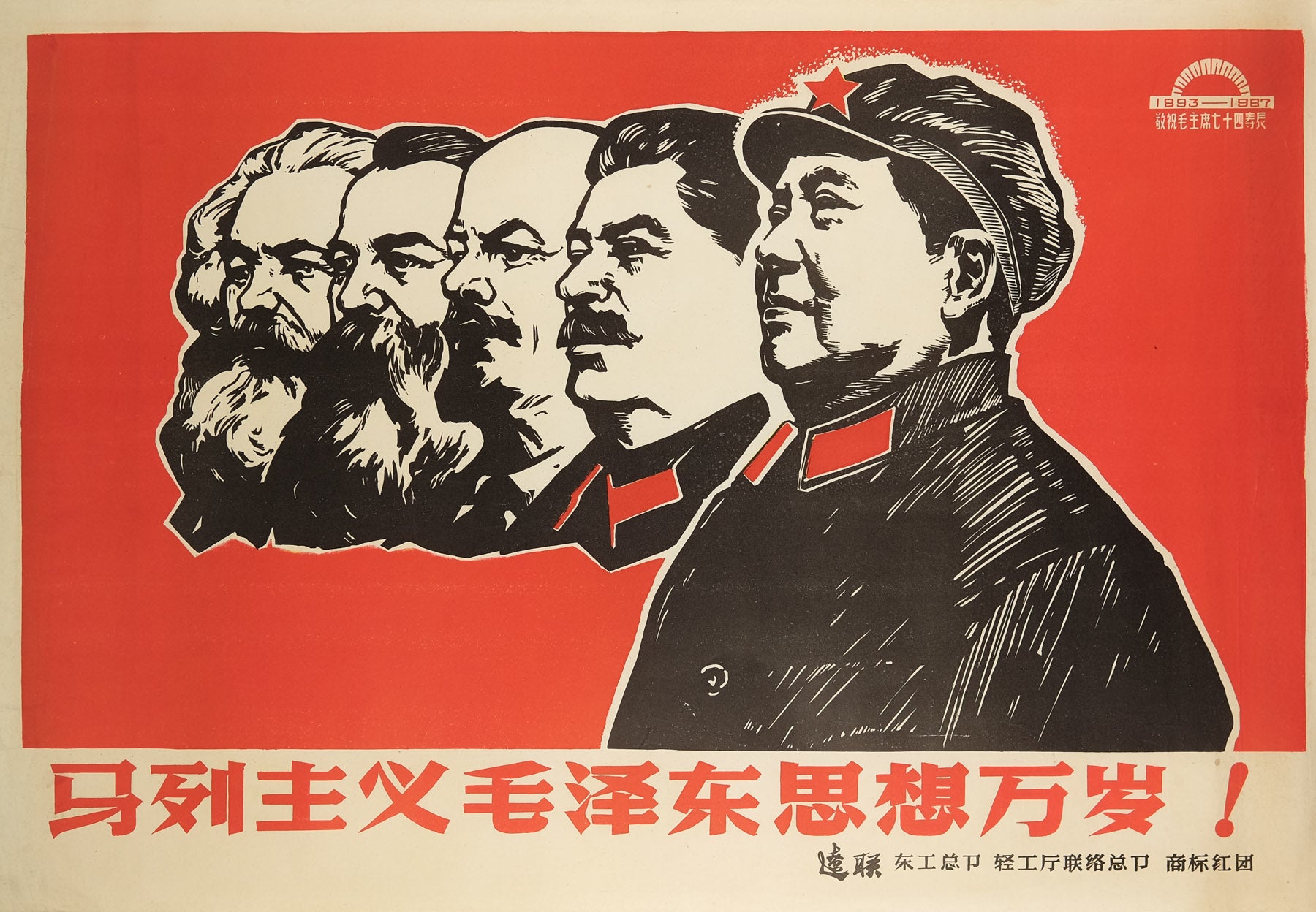
Mao Zedong on the violence behind socialism

Every Communist must grasp the truth, "Political power grows out of the barrel of a gun."

~ Mao Zedong, 1938 speech

Image result for mao zedong propaganda poster

Jan 13, 2020

Joseph Goebbels on socialism

To be a socialist is to submit the I to the thou; socialism is submitting the individual to the whole.

~ Joseph Goebbels

Image result for joseph goebbels

Sep 5, 2019

Journalist lauds Hugo Chavez's economic miracle (2013)

[Hugo] Chavez became the bugaboo of American politics because his full-throated advocacy of socialism and redistributionism at once represented a fundamental critique of neoliberal economics, and also delivered some indisputably positive results. Indeed, as shown by some of the most significant indicators, Chavez racked up an economic record that a legacy-obsessed American president could only dream of achieving.

~ David Sirota, "Hugo Chavez's economic miracle: The Venezuelan leader was often marginalized as a radical. But his brand of socialism achieved real economic gains," Salon.com, March 6, 2013

Jul 10, 2019

Leon Trotsky on what socialism means

In a country where the sole employer is the State, opposition means death by slow starvation.  The old principle: who does not work shall not eat, has been replaced by a new one: who does not obey shall not eat.

~ Leon Trotsky, The Revolution Betrayed: What Is the Soviet Union and Where Is It Going?, 1937

Image result for trotsky the revolution betrayed