Showing posts with label cultures. Show all posts

Sep 17, 2024

Tracy Thurman on why the Amish are a critical control group that must preserved

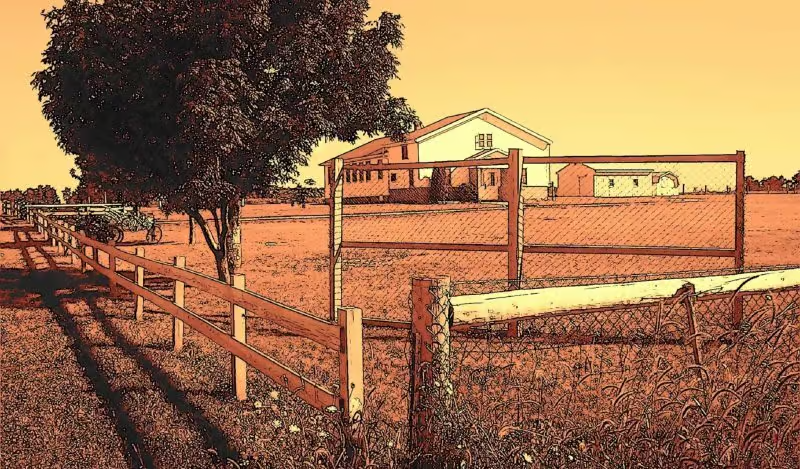
Fifty years ago, most Amish men were farmers.  Twenty-five years ago, it was down to about half.  Today, only a small minority continue to farm, and that number continues to shrink.  The rest become carpenters or tradesmen, and some are forced to adopt technology in order to survive.  Inevitably, their young men bring home influences from the modern world which impact their families.  The culture also depends on sons working alongside their fathers, learning work ethic and mastering manhood.  Because of child labor laws, carpenters and tradesmen cannot bring their sons to work with them the way farmers can – and it’s having a significant impact on the next generation. 

I’ve discussed this issue with hundreds of members of the Amish community, and there is a grave consensus: If they keep losing their farms, they will lose their way of life forever.  Their churches may still meet, the people will still exist, and the name may not change, but Amish culture as we know it will be a thing of the past, and the control group for Big Tech, Big Pharma, Big Medicine, and Big Education and the welfare state will be gone, along with one of the best sources of real food in our nation. 

I believe there are powerful interests that would love such an outcome, because the Amish way of life is drawing far more attention now than it ever has, and is inspiring others to look for ways to escape the control grid.  Many Americans have begun to notice that by opting out of the Great Reset policies, the Amish are healthier, happier, and have stronger communities.  This social control group shows us that you don’t need 16 or 20 years of educational indoctrination from government schools in order to be a productive member of society. 

They demonstrate the benefits of choosing not to be slaves to our technology.  We see that children thrive without screen time, have superior mental health as a result, and fare better when they roam outdoors, get sun exposure, get dirty, and learn to work alongside their family.  Amish health outcomes indicate that kids who are not subjected to dozens of injections have far lower levels of ADHD and autism, and few allergies or autoimmune diseases either.  We can observe that nutrient-dense, farm-fresh foods can help prevent obesity, heal disease, and cut dependence on Big Pharma. 

The Amish show us all these truths, and the would-be controllers of our society don’t like this.  When one runs a society-wide experiment of technological addiction, of social fragmentation, of scaring people out of having children, of government school indoctrination, of universal vaccination, digital ID, digital wallets, and vaccine passports, it’s a problem if the human lab rats in the experiment can look outside the cage and see that another life is possible. 

~ Tracy Thurman, "The Amish: A Control Group for Technofeudalism," Brownstone Institute, September 16, 2024


Oct 26, 2020

Gregg Henrequies on cultural bubbles

Whereas it is usually pretty easy to see outside your cultural bubble at the micro and intermediate levels, to step outside your cultural bubble at the macro level you need to make deliberate efforts. 

One of the best and most reliable ways to get perspective on your cultural bubble is to interact with people who live in very different bubbles. For example, a couple of years ago, I traveled to Costa Rica for a couple of weeks. In the context of a conversation with a Costa Rican, I identified as being an American. The response I received was, “In the Western Hemisphere, we are all from America. You are from the United States.” In my bubble, America and the United States are essentially synonymous. From the vantage point of someone in Costa Rica, that is reflective of an insensitive nationalistic bias that is perceived by many to be prominent feature of folks from the United States.

~ Gregg Henriques, Ph.D., "Cultural Bubbles in the Era of Globalization," Psychology Today, June 6, 2014


Aug 3, 2020

Vasko Kohlmayer on admiration for non-western cultures

It is truly paradoxical that those who charge the West with being oppressive often in the same breath express admiration for non-western cultures, almost all of which grossly violate human rights of their people and often subject them to procedures that can only be rightfully described as barbaric. This glaring contradiction betrays the critics’ true motives and shows that their attack on the West – which is the only civilization willing and capable of producing free and non-oppressive societies – is completely disingenuous. Rather than seeking justice for all people, their criticism is motivated by ideological reasons that has little to do with the reality of the situation on the ground.

~ Vasko Kohlmayer, "The Truth About the West: The Only Non-Oppressive Civilization," LewRockwell.com, August 3, 2020

Vasko Kohlmayer (@VaskoKohlmayer) | Twitter

Jul 2, 2020

Fred Reed on the mixing of cultures

The likelihood of amity between races is proportional to their agreement on values important to them. For example, the Chinese share (what once were) the white values of study, work, courtesy, and obedience to the law. That they eat with chopsticks and celebrate New Year on the wrong day doesn’t matter.

However, again for example, a culture that believes in female genital mutilation and utter subjection of women cannot live amicably with a culture that abhors these things. Black ghetto culture and white are immiscible in so many fundamental values that they will not live well together.

Some cultures can assimilate, for example East Asian and American white, Latino and American white. But, in addition to sharply different cultures, too many blacks live in sprawling, racially isolated urban centers with almost no contact with the outside world other than television.

~ Fred Reed, "A Country Not Salvageable," The Unz Review, June 24, 2020

Fred Reed Columns - The Unz Review

Mar 21, 2020

Kevin Duffy on free enterprise under attack by Barron's

Your cover story, “Crisis Playbook,” reveals a deeply rooted culture at Barron’s antagonistic to free enterprise, a complex adaptive system in which failure of the parts is the key to survival of the whole.
Any healthy system needs a way to correct error and remove waste. Nature has extinction, the economy has loss, bankruptcy, liquidation. Interfering in this process lengthens feedback loops. Error and waste are allowed to accumulate, and you ultimately get a massive collapse.
Barron’s had the courage to publish those words a decade ago in a Q&A with yours truly after the interventionists had their way.  Sadly, they’ve been flushed down the memory hole and forgotten.

~ Kevin Duffy, letter-to-the-editor sent to Barron's (not published), March 18, 2020

Image result for barron's crisis playbook

Jun 21, 2009

Dave McCann on exploring new cultures

I've found that my interest in material things has been almost entirely replaced by my interest in exploring new cultures and making new friends. I have experienced the hospitality of cultures vastly different from my own and forged friendships in almost every corner of the globe.

Spending several months in a sleepy little town with no fast food shops, no night clubs, no Wal-Mart, no sports teams, no TV and not much of anything familiar from our culture could be torture for some people. But being in such a place makes you special in the eyes of the local people. I usually find that they are just as curious about me and American people as I am about them and their customs. It's kind of fun being the object of an entire village's curiosity.

When I show up in such a place, there are often people who have never seen a foreigner. Children are especially curious and sometimes I feel like the Pied Piper with a flock of children following me around. Sharing a meal with a family in a small farming or fishing village, comparing customs and traditions, and laughing with each other as we stumble through the language barriers; these are the moments I enjoy most.

I enjoy spending a day with one of the locals while he does his normal daily activities, like joining a fisherman as he nets fish from his rowboat on the Nile River. I've seen a farmer irrigate his crops using two buckets suspended from a pole across his shoulders and plow his rice paddy with a wooden plow pulled by a pair of water buffalo. I've watched a printer set up his hand-and-foot-operated printing press to print business cards in Arabic.

I have had time to really get to know some people who live a hard but simple life with little or no income and little hope of that ever changing. People adapt. If you cannot afford a car or a TV or a refrigerator or shoes; if you live in a house with a dirt floor and a thatched roof and no running water; if you have to work stooped over in the fields from dawn until dusk from the time you are a child until you are old and feeble; it builds character and teaches you how to relish things that are simple and free, like compassion and humor. I have learned a lot from these people, and I am a better person because of it.

~ Dave McCann, ME '79 from University of Missouri-Rolla, senior field engineer for GE Energy Services, Missouri S&T Magazine, Summer 2009