~ Jörg Guido Hülsmann, "How the State Destroys Families," LewRockwell.com, July 21, 2020
Showing posts with label people - Hulsmann; Guido. Show all posts
Jul 21, 2020
Guido Hülsmann on family and the welfare state
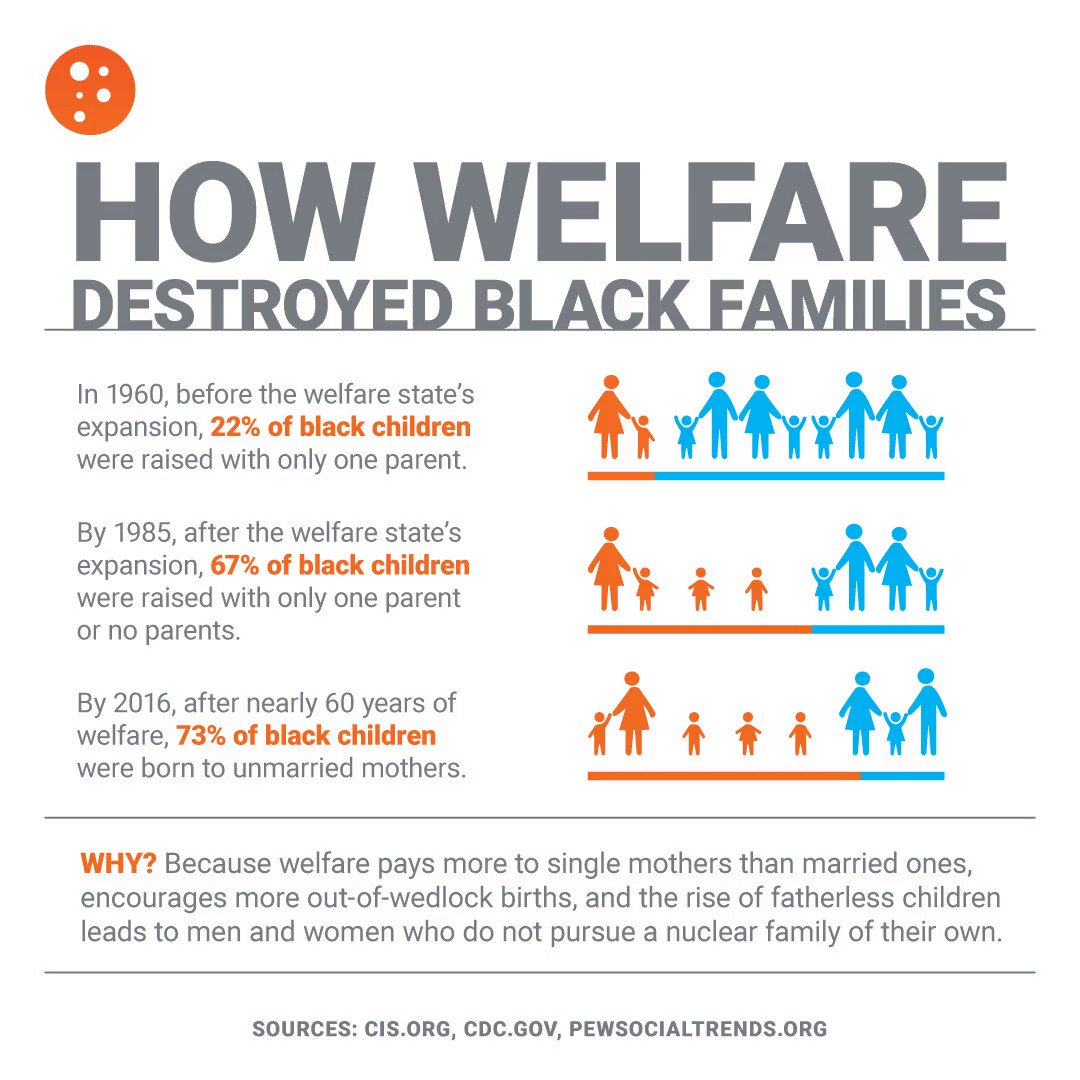
The welfare state has also had a lasting impact on the relationship between the costs and benefits of family life. It, too, has weakened the community of solidarity between the spouses—and between parents and children—if not quite as quickly, brutally, and cynically as the more recent feminist politics. It didn’t slaughter the family, but it slowly decomposed them. This tendency is particularly evident in the relationship between the generations. The state pension system turns this relationship upside down in economic terms. Families must continue to bear the costs of bringing up children but must share their children’s future tax payments with all other citizens, including the childless. The benefits of children are socialized, while the cost of raising children remains private. If you wanted to reduce families, you couldn’t think of anything better.
~ Jörg Guido Hülsmann, "How the State Destroys Families," LewRockwell.com, July 21, 2020
Labels:
family,
people - Hulsmann; Guido,
welfare state
Guido Hülsmann on the economic efficiency of the family
From a purely economic perspective, families are probably the most efficient form of human organization. Unfortunately, this is hardly ever properly appreciated, not even by the economists. This is probably due to the fact that the family’s
many dimensions, most of which are difficult or impossible to measure, in distinct contrast to the performance of a company or of a sports club.
~ Jörg Guido Hülsmann, "How the State Destroys Families," LewRockwell.com, July 21, 2020
Apr 23, 2020
Guido Hülsmann on trusting experts
The typical expert is no expert, at all. How many laureates of the Nobel Prize in economics have earned any significant money by investing their savings? How many virologists or epidemiologists have
established and operated a privately-run clinic or laboratory? I would never trust a colleague who had the folly to volunteer to direct a central planning board. I do not trust an epidemiologist who has the temerity to parade as a Covid19 czar. I do not believe a government that tells me it somehow knows "the experts" who know best how to protect and run an entire country.
~ Jörg Guido Hülsmann, "A Protest From France," LewRockwell.com, April 23, 2020
Feb 22, 2015
Guido Hülsmann on how money printing is not the source of wealth
The classical economists had rejected the notion that overall monetary
spending — in current jargon: aggregate demand — is a driving force of
economic growth. The true causes of the wealth of nations are
non-monetary factors such as the division of labor and the accumulation
of capital through savings. Money comes into play as an intermediary of
exchange and as a store of value. Money prices are also fundamental for
business accounting and economic calculation. But money delivers all
these benefits irrespective of its quantity. A small money stock
provides them just as well as a bigger one. It is therefore not possible
to pull a society out of poverty, or to make it more affluent, by
increasing the money stock. By contrast, such objectives can be achieved
through technological progress, through increased frugality, and
through a greater division of labor. They can be achieved through the
liberalization of trade and the encouragement of savings.
~ Jörg Guido Hülsmann, "Why the Austrian Understanding of Money and Banks Is So Important," Mises.org, February 18, 2015
Subscribe to:
Comments (Atom)
