Showing posts with label people - Lincoln; Abraham. Show all posts

Oct 6, 2026

U.S. presidents on war and sacrifice

Civil War:

It is rather for us to be here dedicated to the great task remaining before us ― that from these honored dead we take increased devotion to that cause for which they gave the last full measure of devotion ― that we here highly resolve that these dead shall not have died in vain.

~ President Abraham Lincoln, Gettysburg Address, November 19, 1863

World War I: 

There are, it may be, many months of fiery trial and sacrifice ahead of us...  To such a task we can dedicate our lives and our fortunes, everything that we are and everything that we have, with the pride of those who know that the day has come when America is privileged to spend her blood and her might for the principles that gave her birth and happiness and the peace which she has treasured.

~ President Woodrow Wilson, war message to Congress, April 2, 1917

World War II:

“It is not a sacrifice for any man, old or young, to be in the Army or Navy of the United States.  Rather it is a privilege.  It is not a sacrifice for the industrialist or the wage-earner, the farmer or the shopkeeper, the trainman or the doctor, to pay more taxes, to buy more bonds, to forego extra profits, to work longer or harder at the task for which he is best fitted.  Rather it is a privilege.  It is not a sacrifice to do without many things to which we are accustomed if the national defense calls for doing without.” 

~ President Franklin D. Roosevelt, radio address after Pearl Harbor, December 9, 1941

This Day in History: FDR's D-Day Prayer 

Korean War:

To do this will require hard work and sacrifice by all of us. I know all of us are prepared to do whatever is necessary in the cause of peace and freedom.

~ President Harry Truman, radio and television report, September 1, 1950

Cold War:

Let every nation know, whether it wishes us well or ill, that we shall pay any price, bear any burden, meet any hardship, support any friend, oppose any foe to assure the survival and the success of liberty.

~ President John F. Kennedy, inaugural address, January 20, 1961

War on Terror:

Two years ago, I told the Congress and the country that the war on terror would be a lengthy war, a different kind of war fought on many fronts in many places. Iraq is now the central front… This will take time and require sacrifice. Yet we will do what is necessary, we will spend what is necessary to achieve this essential victory in the war on terror, to promote freedom and to make our own nation more secure.

~ President George W. Bush, address to the nation, September 7, 2003

Amid all this violence, I know Americans ask the question: Is the sacrifice worth it?  It is worth it, and it is vital to the future security of our country.

~ President George W. Bush, June 28, 2005, speech at Fort Bragg

President Bush Thanks Military on Independence Day at Fort Bragg, North Carolina 

Iran War:

As we celebrate this progress, we think especially of the 13 American warriors who have laid down their lives in this fight to prevent our children from ever having to face a nuclear Iran… And now we must honor them by completing the mission for which they gave their lives.

~ President Donald Trump, address to the nation, April 1, 202

Nov 25, 2021

Abraham Lincoln declares Thanksgiving a national holiday

I do, therefore, invite my fellow citizens in every part of the United States, and also those who are at sea, and those who are sojourning in foreign lands, to set apart and observe the last Thursday of November next as a day of Thanksgiving and Prayer to our beneficent Father who dwelleth in the heavens.  And I recommend to them that, while offering up the ascriptions justly due to Him for such singular deliverances and blessings, they do also, with humble penitence for our national perverseness and disobedience, commend to His tender care all those who have become widows, orphans, mourners or sufferers in the lamentable civil strife in which we are unavoidably engaged, and fervently implore the interposition of the Almighty hand to heal the wounds of the nation, and to restore it, as soon as may be consistent with the Divine purposes, with the full enjoyment of peace, harmony, tranquility, and union.

~ Abraham Lincoln, October 3, 1863


Sep 12, 2021

Tom DiLorenzo on precedents set by the Civil War

Americans are still fascinated by the war because many of us recognize it as the defining event in American history.  Lincoln’s war established myriad precedents that have shaped the course of American government and society ever since: the centralization of governmental power, central banking, income taxation, protectionism, military conscription, the suspension of constitutional liberties, the "rewriting" of the Constitution by federal judges, "total war," the quest for a worldwide empire, and the notion that government is one big "problem solver."

Perhaps the most hideous precedent established by Lincoln’s war, however, was the intentional targeting of defenseless civilians.  Human beings did not always engage in such barbaric acts as we have all watched in horror in recent days [9/11].  Targeting civilians has been a common practice ever since World War II, but its roots lie in Lincoln’s war.

~ Tom DiLorenzo, "Targeting Civilians," LewRockwell.com, September 17, 2001


Dec 18, 2020

Pat Buchanan on Lincoln's crimes against native Americans

A renaming committee of the San Francisco school district wants the Great Emancipator’s name removed from Lincoln High School for crimes against Native Americans. 

Our 16th president ordered the Navajo tribe off their Arizona lands into New Mexico, resulting in a forced march of 450 miles. He approved the hanging of 38 Dakota Indians who had fought in the Dakota War in Minnesota in 1862, the largest mass execution in U.S. history. 

Lincoln’s Homestead and Pacific Railway acts led to the loss of large swaths of tribal lands.

~ Patrick Buchanan, "After Lee, It's Lincoln's Turn," LewRockwell.com, December 18, 2020

Indian Hunting Buffalo
1898


Oct 28, 2020

Walter Williams on West Virginia statehood

So, far as dividing up states, Article IV of our Constitution, in part, says, “but no new State shall be formed or erected within the Jurisdiction of any other State; nor any State be formed by the Junction of two or more States, or Parts of States, without the Consent of the Legislatures of the States concerned as well as of the Congress.” 

By the way, in 1863, President Abraham Lincoln, who claimed that he was fighting against secession, violated the U.S. Constitution when he proclaimed the admission of West Virginia into the Union. The Virginia state legislature did not vote to support West Virginia’s secession from Virginia.

~ Walter Williams, "Is Getting Trump Worth It?," LewRockwell.com, October 28, 2020


Feb 13, 2020

Doris Kearns-Goodwin on Abraham Lincoln's racial bigotry

Armies of scholars, meticulously investigating every aspect of [Lincoln's] life, have failed to find a single act of racial bigotry on his part.

~ Doris Kearns-Goodwin, Team of Rivals: The Political Genius of Abraham Lincoln, p. 207

Image result for team of rivals

Feb 7, 2020

Kevin Peraino on Lincoln's foreign policy

Q: I know this is almost an impossible task, but if you had to describe it, what’s the Lincoln Doctrine?

A: Lincoln said it himself: “One war at a time.” And I think that’s the bumper sticker for Lincoln. He just didn’t want to do anything during the Civil War that was going to make his job at home more difficult.

That’s how he led the country, and set the stage for American power in the decades since.

~ Kevin Peraino, historian, "How Abraham Lincoln's foreign policy helped win the Civil War," Vox, February 18, 2019

Abraham Lincoln, the 16th president of the United States and arguably one of its best presidents on foreign policy.

Jan 25, 2020

Tom DiLorenzo on the Lincoln myth

No respectable historian believes the Deep North/government school fantasy that enlightened and morally-superior Northerners elected Abe Lincoln so that they could go to war and die by the hundreds of thousands solely for the benefit of black strangers in the "deep South."

~ Tom DiLorenzo, "A Disease of the Public Mind," Abbeville Blog, March 29, 2017

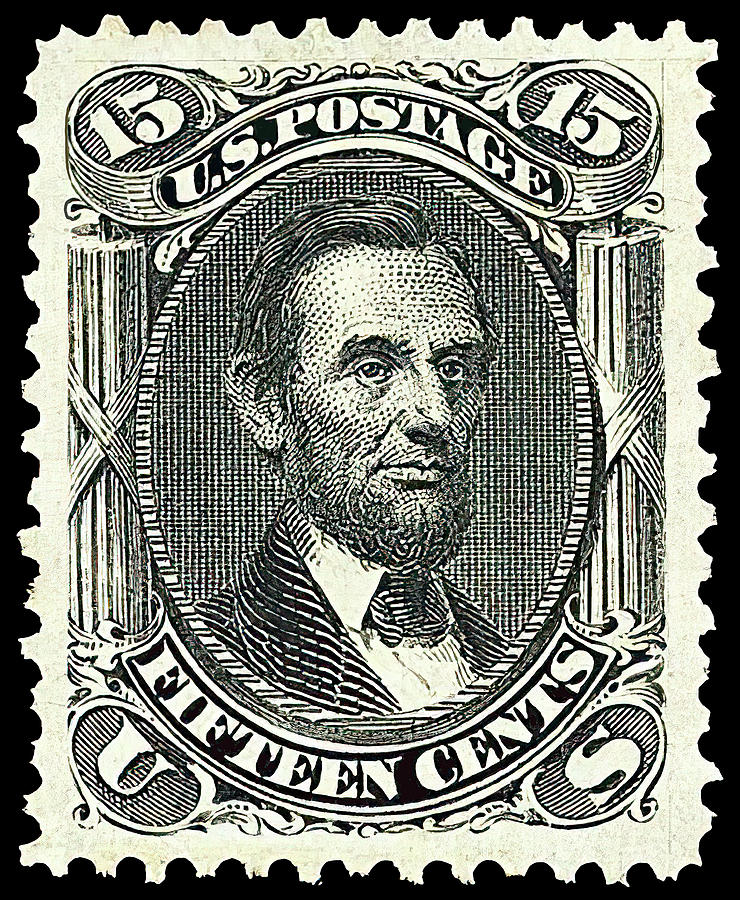
Abraham Lincoln
Centennial of Birth - 1909

Jan 19, 2020

Tom DiLorenzo on how Henry Clay thought ending slavery could harm the cause of liberty

In the eulogy Lincoln claimed that [Henry] Clay, like himself, had a "deep devotion to the cause of human liberty," even though Clay was a slaveowner.  Clay was opposed to slavery "on principle"; however, he not only owned slaves but also was opposed to eliminating slavery.  In Lincoln's words, "[Clay] did not perceive, as I think no wise man has perceived, how [slavery] could be at once eradicated, without producing a greater evil, even to the cause of human liberty itself."

It's hard to imagine a clearer example of circular reasoning: Slavery is an affront to human liberty, but ending slavery would supposedly be even worse.

~ Tom DiLorenzo, The Real Lincoln, pp. 14-15

Henry Clay
1890-1893

Tom DiLorenzo on how Lincoln rationalized the suspension of constitutional liberties


Having suspended habeas corpus, Lincoln ordered the arrest and imprisonment of virtually anyone who disagreed with his views - views that were new, radical, and not yet subject to any debate by the people's representatives in Congress or by the judiciary...  Lincoln rationalized this suspension of constitutional liberties - at least in his own mind - with the rhetorical tool of falsely equating the Constitution with the Union... [even though secession] was certainly the belief of most Americans at the time.  In the end, it was Lincoln's willingness to use brute military force, not his legal reasoning or his rhetorical talents, that allowed him to get away with such a radical assault on constitutional liberties.

~ Tom DiLorenzo, The Real Lincoln, pp. 132-133

Marching in Step to the Music of the Union

Jan 18, 2020

Tom DiLorenzo on the Lincoln myth

Despite being mostly a bundle of lies, [the Lincoln myth] is nevertheless the ideological cornerstone of statism in America and has been for nearly 150 years. The real Lincoln was a dictator and a tyrant who shredded the Constitution, fiendishly orchestrated the mass murder of hundreds of thousands of fellow citizens, and did it all for the economic benefit of the special interests who funded the Republican Party (and his own political career).

~ Tom DiLorenzo, "The Real Lincoln in His Own Words," LewRockwell.com, June 5, 2013

Abraham Lincoln
Centennial of Birth - 1909

Tom DiLorenzo on Lincoln's economic ignorance regarding protectionist tariffs (in his own words)

LINCOLN WAS ECONOMICALLY IGNORANT OF THE BIG ECONOMIC ISSUE OF HIS DAY: PROTECTIONIST TARIFFS

“[A] tariff of duties on imported goods . . . is indispensably necessary to the prosperity of the American people.” (The Collected Works of Abraham Lincoln, Vol. I, p. 307.)

“[B]y the tariff system . . . the man who contents himself to live upon the products of his own country, pays nothing at all.” (CW, Vol. I, p. 311).

“All carrying . . . of articles from the place of their production to a distant place for their consumption . . . is useless labor.” (CW, Vol. I, p. 409).

“I was an old Henry Clay tariff whig. In old times I made more speeches on that subject, than on any other. I have not changed my views.” (CW, Vol, III, p. 487).

“The tariff is to the government what a meal is to a family . . .” (CW, Vol., IV, p. 211).

“I must confess that I do not understand the subject [the economics of tariffs].” (CW, Vol. IV, p. 211).

~ Tom DiLorenzo, "The Real Lincoln in His Own Words," LewRockwell.com, June 5, 2013

Tom DiLorenzo on the real Lincoln

After writing two books and dozens of articles, and giving hundreds of radio and television interviews and public presentations on the subject of Lincoln and the political economy of the American “Civil War”over the past fifteen years, I have realized that the only thing the average American knows about the subject is a few slogans that we are all subjected to in elementary school. I was taught in public elementary school in Pennsylvania that Abe was so honest that he once walked six miles to return a penny to a merchant who undercharged him (and six miles back home). He was supposedly so tendered hearted that he cried after witnessing the death of a turkey. He suffered in silence his entire life after witnessing slavery as a teenager (While everyone else in the country was screaming over the issue). And of course he was “a champion of democracy, an apostle of racial equality, and a paragon of social justice,” Joseph Fallon writes in his important new, must-read book, Lincoln Uncensored. This view of Lincoln, writes Fallon, is only true “in official histories or in Hollywood movies” but not in reality. The reason for this historical disconnect is that “this myth of Lincoln, not the Constitution . . . now confers legitimacy on the political system of the United States.” Despite being mostly a bundle of lies, it is nevertheless the ideological cornerstone of statism in America and has been for nearly 150 years. The real Lincoln was a dictator and a tyrant who shredded the Constitution, fiendishly orchestrated the mass murder of hundreds of thousands of fellow citizens, and did it all for the economic benefit of the special interests who funded the Republican Party (and his own political career).

~ Tom DiLorenzo, "The Real Lincoln in His Own Words," LewRockwell.com, June 5, 2013

Jan 10, 2020

Q&A with Tom DiLorenzo about the Civil War

Q: Were Confederate soldiers fighting to defend slavery even though the vast majority were not slaveholders?

DiLorenzo: There was no need to go to war to "defend slavery." Lincoln guaranteed it in his first inaugural address by endorsing the Corwin Amendment.

Q: South Carolina gave 17 reasons after the 1860 election for seceding, including the protection of slavery. How big a factor was slavery?

A: Why states seceded and why there was a war are two totally different questions. There is no question that Lincoln invaded the South over tax collection, as he promised/threatened in his first inaugural address, his "slavery forever" speech. Tariffs were constitutional, so to justify secession on a constitutional basis some of the southern states cited non-enforcement of the fugitive slave clause of the constitution. In the words of Lincoln and the U.S.Congress (read the Crittenden Compromise), slavery had nothing whatsoever to do with why they invaded the southern states.

Q: How much did the prevalence of economic fallacies, especially the uncertainty of what freed blacks would have on the economy, contribute to the war on both sides?

A: Economic fallacy is the ideological bedrock of mercantilism, and mercantilism is what the Republican Party always stood for.

Q: You’ve written about how Lincoln trotted out practically every economic fallacy in the book. Did he actually believe in these fallacies or was he simply a selfish politician pushing a corrupt policy and using any means at his disposal?

A: Lincoln had a long career as a trial lawyer and as you know, most trial lawyers are in the business of throwing rhetorical mud against the wall to see if it sticks to promote their clients' interests, so I suspect he just adopted any economic fallacy that he could find to justify protectionism, corporate welfare, and a national bank run by politicians. He had spent a quarter of a century doing just that before becoming president.

Q: Did Lincoln’s attitude toward Southerners mellow at all during the war and after?  It seems he greatly underestimated the cost and time it would take.  Did he have any regrets?  Had he not been assassinated, would he have handled Reconstruction any differently than the Andrew Johnson administration?

A: Lincoln celebrated Sherman and Sheridan's war crimes up to the very end, he promoted them, and the Republican Party made national heroes out of them.  His speech writers like Seward made him sound magnanimous, but look at what he did-- orchestrating total war on Southern CIVILIANS to the very end. The party of Lincoln did what their namesake would have done during Reconstruction -- continue to plunder the South for the benefit of party hacks and the Northern plutocracy while doing next to nothing for the ex slaves.

Duffy: Thank you!

~ Tom DiLorenzo, author of The Real Lincoln and Lincoln Unmasked, answers to questions from Kevin Duffy, January 9, 2020

Image result for tom dilorenzo

Kevin Duffy on how libertarians should view the Civil War

To a libertarian, the Civil War is a classic case of both sides being wrong.  At the same time I am critical of the Northern invasion of the South, I can be critical of the institution of slavery. Libertarians naturally oppose conscription, which both sides resorted to in 1862.  Some counties in East Tennessee actually tried to secede from the Confederacy, but were checked by martial law, an action that libertarians would also oppose.  Some of the border states tried to remain neutral in the conflict.  According to Wikipedia, “Maryland's legislature voted overwhelmingly (53–13) to stay in the Union, but also rejected hostilities with its southern neighbors, voting to close Maryland's rail lines to prevent them from being used for war.  Lincoln responded by establishing martial law and unilaterally suspending habeas corpus in Maryland, along with sending in militia units from the North.”  Lincoln’s actions were not only anti-libertarian, they were unconstitutional.

~ Kevin Duffy

Image result for civil war stamps
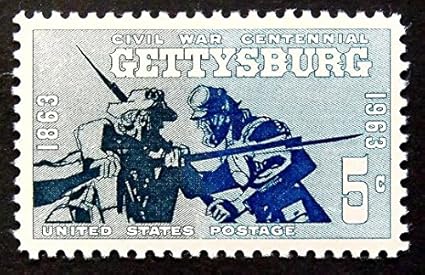
Civil War Centennial - Gettysburg
1863-1963

Jan 5, 2020

Abraham Lincoln on the reason for war against Southern secession

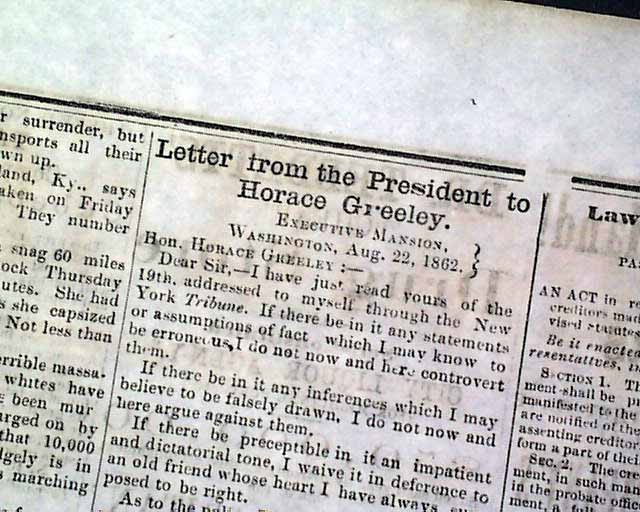
My paramount object in this struggle is to save the Union, and is not either to save or to destroy slavery.  If I could save the Union without freeing any slave I would do it;  and if I could save it by freeing some and leaving others alone I would also do that.  What I do about slavery, and the colored race, I do because I believe it helps save the Union...

~ Abraham Lincoln, public letter to New York Tribune editor Horace Greeley, August 22, 1862

Image result for lincoln letter to horace greeley

Abraham Lincoln on his political agenda

I presume you all know who I am.  I am humble Abraham Lincoln.  I have been solicited by many friends to become a candidate for the legislature.  My politics are short and sweet, like the old woman's dance.  I am in favor of a national bank... in favor of the internal improvements system and a high protective tariff.

~ Abraham Lincoln, upon first running for public office, 1832

(as quoted by Tom DiLorenzo in The Real Lincoln, p. 54)

Image result for lincoln 1832

Jan 4, 2020

Private letter from Abraham Lincoln to Alexander Stephens

Do the people of the South really entertain fears that a Republican administration would, directly, or indirectly, interfere with their slaves, or with them, about their slaves?  If they do, I wish to assure you, as once a friend, and still, I hope, not an enemy, that there is no cause for such fears.

The South would be in no more danger in this respect, than it was in the days of Washington.  I suppose, however, this does not meet the case.  You think slavery is right and ought to be extended; while we think it is wrong and ought to be restricted.  That I suppose is the rub.  It certainly is the only substantial difference between us. 

~ Abraham Lincoln, private letter to Alexander H. Stephens (friend and future vice president of the Confederacy), December 22, 1860

Abraham Lincoln
1873

Robert Morgan on Lincoln's views on slavery and race adjustment

Many Americans think of Abraham Lincoln, above all, as the president who freed the slaves. Immortalized as the "Great Emancipator," he is widely regarded as a champion of black freedom who supported social equality of the races, and who fought the American Civil War (1861-1865) to free the slaves.

While it is true that Lincoln regarded slavery as an evil and harmful institution, it is also true, as this paper will show, that he shared the conviction of most Americans of his time, and of many prominent statesmen before and after him, that blacks could not be assimilated into white society. He rejected the notion of social equality of the races, and held to the view that blacks should be resettled abroad. As President, he supported projects to remove blacks from the United States.

~ Robert Morgan, "Abraham Lincoln's Program of Black Resettlement," The Journal of Historical Review, Sept.-Oct. 1993 (Vol. 13, No. 5), pages 4-25

Related image
Abraham Lincoln
1867

Jan 3, 2020

William Seward on Lincoln's Emancipation Proclamation

We show our sympathy with slavery by emancipating slaves where we cannot reach them and holding them in bondage where we can set them free.

~ William Seward, U.S. Secretary of State, 1861-1869

William Seward
1873