Showing posts with label Treasury bonds. Show all posts

Sep 7, 2022

Jim Grant on bond risks and the 60/40 portfolio

As the upside is limited, so are the risks great.  So bond selection is one of exclusion rather than of selection.  You approach it with the idea of avoiding risk.

So, what about Treasury securities?  They're characterized as super safe in The Wall Street Journal.  They have anchored most retirement portfolios for most of the past four decades.  How do you analyze that?  One way of looking at it is to observe that over the course of 150 years of the national history, bonds have tended - tended - to move over the course of decade-long cycles.  Interest rates will rise for 30, 40 years, and fall for 20, 30, 40 years, and so on, starting from the late 19th century to the present.  They have fallen for 40 years since 1981.  Now, it might be that that cycle has broken...  If indeed the cycle has ended and rates are going to go up, we are in a different investment world because bonds will not provide the hedge that they have against falling stock prices.

Just recollect that for everyone's investment memory really, when stocks got into a rough patch, you had some protection from falling interest rates and rising bond prices.  But if bond prices are falling and interest rates are rising, you are forever not getting a hedge, but rather a drag.  So the 60/40 portfolio or the 70/30 portfolio is not the thing for you.  Now this is still speculative, but I think that is likely to be the case and people ought to be alert to the idea that something new is in the offing.  And what the something might be is kind of in the womb of time, but we can guess a little bit about it.  It might be that... stocks are going to become more important after they reach a point at which they become truly cheap.  It might be that cash, for all the damage that inflation does to cash, that cash is going to be the thing, rather than long-dated bonds.  So one would have a 60/40 or a 70/30 portfolio, but the 30% or 40% portion would be in a near-cash thing.

~ Jim Grant, interview with William Green, 1:05:55 mark, August 20, 2022


Jan 21, 2022

Egon von Greyerz: "preserving wealth by going into bonds is like committing suicide"

The conventional way of preserving wealth by going to bonds - I mean that's absolutely ludicrous.  People doing that is like committing suicide.

~ Egon von Greyerz, founder, Matterhorn Asset Management AG, interview with Dan Ferris, Stansberry Investor Hour, 16:00 mark, January 20, 2022


Feb 23, 2021

Kevin Duffy's bond advice in The Coffee Can Portfolio

February 18, 2020 
30-year T-bond yield = 2.01%

My advice: Reduce your bond exposure and shorten the maturities of your bonds. You should not be holding 30-year bonds for, example. 

May 26, 2020 
30-year T-bond yield = 1.43%

Where this leads is anyone’s guess, but it can’t end well… not for the economy and certainly not for bond investors. 

August 11, 2020 
30-year T-bond yield = 1.37%

Bonds are an especially dubious choice. The interest they pay is the lowest in 5,000 years of recorded history (and in many cases negative), so their future cash flows are of little value. The best outcome is to get your money back 10, 20 or 30 years from now, that is assuming the borrower has survived that long and has the ability to pay. Even if that balloon payment is delivered in full, its value will be ravaged by inflation. 

January 24, 2021 
30-year T-bond yield = 1.86%

U.S. Treasury bonds have one of the worst risk/reward characteristics of any investment I’ve seen in my 35-year career.

February 23, 2021
30-year T-bond yield = 2.20%

~ Kevin Duffy, The Coffee Can Portfolio, Feb. 18 2020 - Jan. 24, 2021


Jan 25, 2021

Kevin Duffy on the Biden economic agenda and T-bonds

The U.S. is clearly in the next Great Leap Forward phase of government growth. Over the next two years at least, the excuses to tax, spend, borrow, regulate, confiscate and print will be head-spinning: Covid, recession, unemployment, student loan debt, college for all, climate change, green energy, systemic racism, wealth inequality, universal health care, universal basic income, not enough inflation, too much inflation, old wars, new wars, domestic terrorism, etc. The price tag for this statist fantasy won’t come cheap and those in charge will act as if the credit card has no limit. 

Who in their right mind would loan money to such a profligate entity at any rate, much less 1.84% fixed for 30 years? U.S. Treasury bonds have one of the worst risk/reward characteristics of any investment I’ve seen in my 35-year career.

~ Kevin Duffy, The Coffee Can Portfolio, January 24, 2021


Jan 23, 2021

Larry Summers on the prospect of the U.S. Treasury issuing 50-year bonds

Doing that would be a major gift to all the fixed income trading desks at all the hedge funds, at the expense of taxpayers.  Given the way it's likely to be priced, it would turn out to be a major setup for arbitrage opportunity, so it won't happen anytime soon.

~ Larry Summers, interview on Bloomberg Wall Street Week, January 22, 2021


Dec 9, 2020

Oct 23, 2020

Scott Minerd predicts negative yields for U.S. Treasury bonds (2020)

We could ultimately see a ‘yield’ of negative 50 basis points on the 10-year note, and corporate yields in the neighborhood of 1 percent for investment grade corporate debt.


Jun 6, 2020

Dan Ferris on the bond market as indicator of political risk

If you really want to know what's happening politically, how politics is impacting the market, keep an eye on the bond market, not the stock market.  The stock market's the least macro sensitive thing; the bond market is the most macro sensitive thing.

~ Dan Ferris, "There's Riots in the Streets - Now What?," Stansberry Investor Hour, June 4, 2020

McCullough: Why We've Been Bullish On Treasuries Since October

Apr 15, 2020

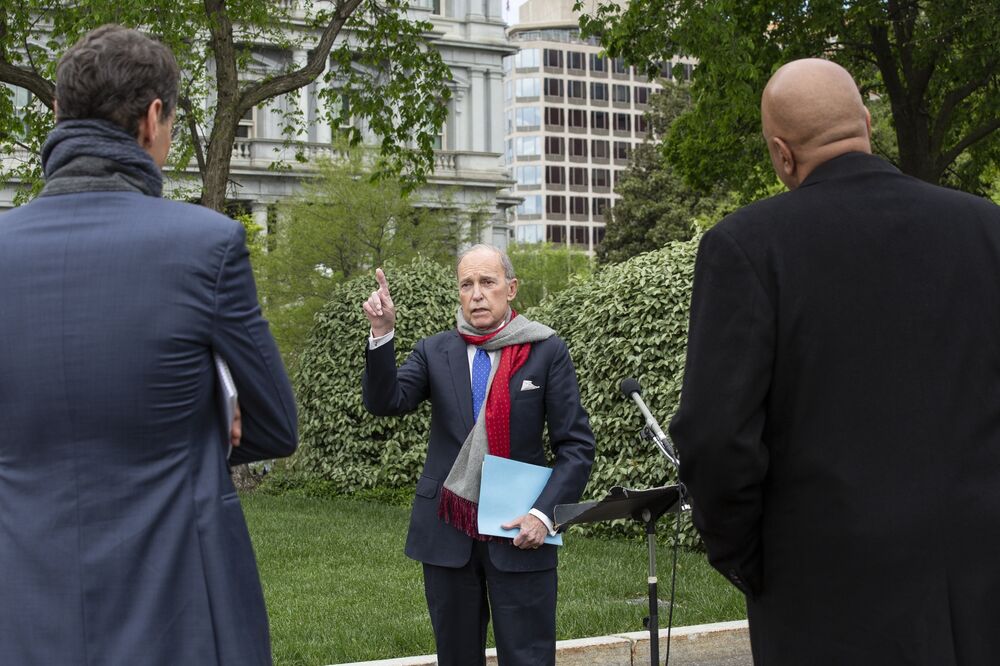
Larry Kudlow proposes "war bonds" to Trump for coronavirus

[Larry] Kudlow says he proposed 'war bonds' for coronavirus to Trump.

The U.S. has used special war bonds in the past, drawing on patriotism to fund military and counter-terrorism operations. Americans lent their government money through purchases of Liberty Bonds in World War I and War Bonds in World War II. In 2001, Treasury Secretary Paul O’Neill introduced “Patriot Bonds” to help finance the fight against terrorism after the Sept. 11 attacks.

~ "Larry Kudlow's War Bonds Are Coming But in a Plain Vanilla Rapper," Bloomberg, April 15, 2020

Larry Kudlow speaks to members of the media in Washington, D.C., on April 14.

Apr 14, 2020

Tavi Costa on the importance of the Treasury bond market

I think the Treasury [bond] market is the most important market.  The U.S. and the whole world can not sustain these debt levels with higher interest rates...  When that happens, there's no bailout anymore.  I think that's the most important message here.

~ Tavi Costa, Interview on Real Investment Show with Lance Roberts Show, 18:45 mark

Otavio (Tavi) Costa (@TaviCosta) | ٹوئٹر

Mar 18, 2020

Kevin Duffy on investing in Treasury bonds

Anyone who would loan money to the U.S. government at 1.55% for the next 30 years needs to have their head examined.

~ Kevin Duffy, "March Madness," LewRockwell.com, March 16, 2020


Mar 16, 2020

Kevin Duffy on finding ports in the storm

From an investment standpoint, sharpen your pencil and look at balance sheets. Avoid highly cyclical companies and anyone who has extended credit. Assume the bills are coming due and cash is king. As Buffett says, "when the tide goes out you find out who's been swimming naked."

There are plenty of sound companies with cash on the balance sheet selling at reasonable prices.

Also, own some gold.  Never a bad idea when a storm hits.

Finally, don't loan a penny to the U.S. government.  Bailouts, bust and boomers are coming... which means that $23 trillion in debt will explode.  The U.S. is now a banana republic credit... currently able to borrow at less than 1%.  That won't last.  Sell T-bonds.

~ Kevin Duffy, Facebook post, March 16, 2020

Image result for forrest gump survives storm


Feb 28, 2020

Warren Buffett on U.S. T-bonds

It makes no sense to lend money at 1.4% to the U.S. government, when it’s government policy to have 2% per year inflation. The government is telling you we’re going to give you 1.4% and tax you on it, and on the other hand we’re going to presumably devalue that money at 2% per year. So these are very unusual conditions.

~ Warren Buffett, interview with CNBC's Becky Quick, February 24, 2020

Image result for warren buffett interview cnbc

Jan 16, 2020

Jim Grant: "Where would the Treasury market be without the Fed?"

We wonder: Where would the Treasury market be without the Fed?  And if, indeed, it's the Fed that's holding the market together, isn't that worrisome?  And, finally, isn't it bearish -- for bonds?

~ Jim Grant, "Penies in the fiscal fuse box," Grant's Interest Rate Observer, January 10, 2020

Image result for hedgeye fed support of bond market

Apr 5, 2017

Jim Grant on how markets do not always look ahead

Markets that supposedly and rightly ought to be looking ahead, sometime look back.

~ James Grant, Grant's podcast, January 27, 2017

(Grant was describing the spring of 1984 when U.S. T-bonds yielded 14% briefly in May while year-over-year CPI was 4% or less.  In other words, real yields were an astounding 10%.)

Mar 22, 2017

Doug Pollitt on the U.S. government bond market

If you are a creditor, the last person you want to see on the other side of the table is Donald Trump.

~ Doug Pollitt, "And the dull pangs of regret...," Pollitt & Co. Research, November 16, 2016

Aug 8, 2011

Alan Greenspan on why US Treasury Bonds are still safe

This is not an issue of credit rating. The United States can pay any debt it has because we can always print money to do that. So, there is zero probability of default.

~ Alan Greenspan, "the Maestro" and former chairman, Federal Reserve, MSNBC's Meet the Press, August 7, 2011

Aug 6, 2011

Warren Buffett says US debt deserves "quadruple A" rating

[The U.S., which was cut Aug. 5 to AA+ from AAA at S&P, merits a] quadruple A [rating].

~Warren Buffett, chairman, Berkshire Hathaway, Bloomberg TV, August 5, 2011

May 23, 2011

Jim Grant says buying US debt will look foolish 10 years from now

I think it's useful to imagine how things might look ten years hence. What will one's children, heirs or successors think about a purchase today of ten-year Treasurys at 3.25 percent? They'll look back and say, `What were they thinking?' The (federal deficit) was running at 10 percent of GDP, the Fed had pressed its interest rates to zero, it had tripled the size of its balance sheet, and they bought bonds? Treasurys are hugely uninteresting, as is similar government debt the world over.

~Jim Grant, editor, Grant's Interest Rate Observer, Associated Press interview, May 20, 2011

Mar 19, 2009

Sung Won Sohn on the Fed's decision to spend up to $300 billion over the next six months to buy long-term government bonds

This is going to help everybody. This might help the Fed put Humpty Dumpty back together again.

~ Sung Won Sohn, economist at the Martin Smith School of Business at California State University, "Fed launches $1.2 trillion bid to revive economy," msnbc.com, March 19, 2008