Showing posts with label people - McKinley; William. Show all posts

Apr 27, 2025

Kenneth Pringle on President McKinley's China agenda

China was also on McKinley’s agenda. 

The Middle Kingdom had been divided into “spheres of influence” by the European powers.  American business feared missing out on this huge untapped market. 

On Sept. 6, 1899, McKinley issued the Open Door Note, demanding the Europeans allow China to become “an open market for the commerce of the world.”  This wasn’t free trade in the modern sense, simply a right for all to share in the pillaging of China’s dying Qing dynasty. 

Today, the Chinese consider this era part of its “Century of Humiliation.”  It drives leader Xi Jinping in his dealings with the West.

~ Kenneth G. Pringle, "McKinley Is a Conservative Darling. Why Trump Admires the 25th President," Barron's, February 2, 2025


Mar 9, 2025

The Economist on the Trump vision: "an ideology from the railroad era mixed with the ambition to plant the flag on Mars"

Historians talk about the long 19th century ending in 1914.  Precisely when the 20th century ended is, in this sense, debatable.  But it is over.  Mr Trump is still constrained by some of America’s oldest institutions, including federalism and the courts.  But he has thrown off many of the recent ones.  The governance reforms after Watergate no longer apply.  The consensus that America should be a benign superpower, born out of the ashes after 1945, has gone, too.  And Mr Trump wants more: to see America unleashed, freed from norms, from political correctness, from the bureaucracy and, in some cases, even from the law.  What’s left is something old and new, an ideology from the railroad era mixed with the ambition to plant the flag on Mars. 

Out of the 19th century comes the idea that the frontier should always be expanding, including by seizing other countries’ territory.  “We’re taking it back,” Mr Trump growled of the Panama Canal, in his inaugural speech.  America must be “a growing nation”, he added, one that “increases our wealth, expands our territory.”  Although this might reflect a passing enthusiasm, presidents have not talked like that for a century.  The only one of his predecessors Mr Trump spent any time on in the speech was that “great president” William McKinley, whose term began in 1897.  Mr Trump is not a reader of presidential biographies.  He is not about to make bimetallism the issue of the day (though both he and the first lady do now have their own competing currencies).  But it was a revealing choice.

McKinley was an imperialist, who added Hawaii, Guam, the Philippines and Puerto Rico to American territory.  McKinley also loved tariffs, at least at first.  Before he was president, he pressed Congress to pass a bill to raise them to 50%, a level exceeding even Mr Trump’s (admittedly hazy) plans.  He was also backed by the commercial titans of the time: J.P. Morgan and John D. Rockefeller both donated about $8m in today’s money to his campaign. 

The new “golden age” Mr Trump envisions thus resembles the Gilded Age, at least superficially. Mr Trump wants to be as unencumbered by 20th-century norms as McKinley was.  But the 21st-century presidency is much more powerful.  Project 1897 is combined with Project 2025. 

McKinley governed when the federal government had 150,000 employees, many fewer than the new Department of Government Efficiency could ever dream of.  By contrast Mr Trump’s executive branch directly employs 4.3m people, including 1.3m men and women in uniform.  The president has at his disposal the mightiest military force ever assembled.  As a share of GDP, the federal government spends nine times more than it did in the 1890s.  In order to fight two world wars and end racial segregation in the 20th century, the executive branch accumulated more and more power.  Writing about this in the 1970s, Arthur Schlesinger described this presidency as “imperial.”  It was meant as a slur: the modern America didn’t do empire.  Yet now it has an imperial president who spies enemies to conquer not only abroad, but at home, too. 


Jan 31, 2025

Tom DiLorenzo on Donald Trump's admiration for William McKinley

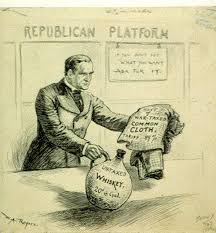
Lo and behold, President Trump has discovered a new political hero to idolize: President (1897-1901) William McKinley of Ohio whose election was orchestrated by the wealthiest man in Ohio (and the U.S.), John D. Rockefeller, who ran the Standard Oil Company out of his Cleveland home.  McKinley is President Trump’s new hero because he was known as a congressman as the most rabid Republican party protectionist in a party that was founded on the principle of protectionism (and of corporate welfare and a national bank) in the mid 1850s.  The 1890 McKinley tariff was named after Representative William McKinley because of his notoriety as a tool of the Northern manufacturing plutocracy.  It created the highest average tariff rate in U.S. history up to that point and targeted such items as wool and tin with especially high tariff taxes, some exceeding 100 percent.  It caused such a spike in the prices of such items that in the next election the Republican party was wiped out, losing both houses of Congress and the White House, with the Democrat party having a 2-1 advantage in the House.  Free trader Grover Cleveland became president.  McKinley himself was defeated and was installed by the Rockefeller machine as the governor of Ohio. 

The Rockefeller machine got McKinley elected president in 1896.  One of his first “accomplishments” in 1897 was to repeat the political disaster of the McKinley Tariff Tax by signing the Dingley Tariff Tax which created another highest average tariff rate in history.  The people be damned; by that point the Republican party had created a government by the Northern corporate plutocracy, for the corporate plutocracy, of the corporate plutocracy.  President Trump’s kind of people.

McKinley was also a notorious imperialist, waging an imperialistic war against Spain (the Spanish-American War) during which the U.S. government conquered Cuba, Puerto Rico, and the Philippines, leading the great Yale University libertarian scholar William Graham Sumner to author his famous article, “The Conquest of the United States by Spain.”  The Spanish-American War, Sumner wrote, turned the U.S. into an imperialist power, just like the thoroughly corrupt and bankrupted Spanish empire.  (All empires, by the way, view their populations as good for two things: as taxpayers and cannon fodder in the empire’s wars.  Fast forward to today’s world and the incoming president is proposing a takeover of Greenland, part of Panama, and Canada “for national security reasons.”

~ Thomas DiLorenzo, "How the McKinley Tariff Almost Destroyed the Republican Party," LewRockwell.com, December 31, 2024


Jan 23, 2025

Donald Trump on McKinley's tariffs, Gulf of Mexico and Panama Canal

America will reclaim its rightful place as the greatest, most powerful, most respected nation on earth, inspiring the awe and admiration of the entire world. 

A short time from now, we are going to be changing the name of the Gulf of Mexico to the Gulf of America — (applause) — and we will restore the name of a great president, William McKinley, to Mount McKinley, where it should be and where it belongs. (Applause.) 

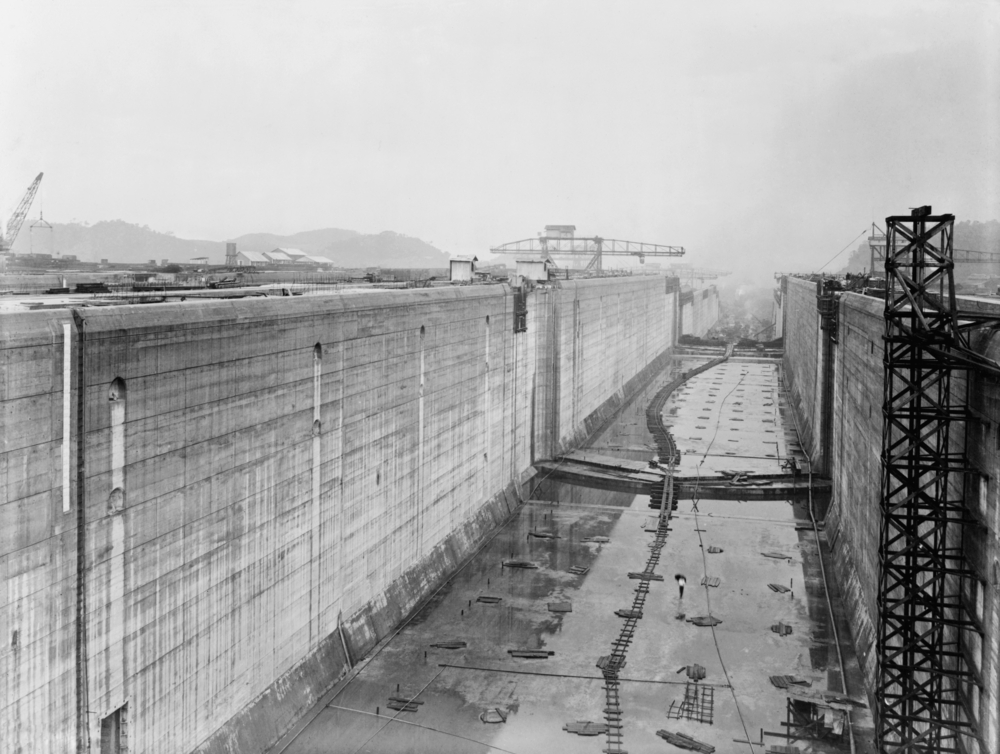
President McKinley made our country very rich through tariffs and through talent — he was a natural businessman — and gave Teddy Roosevelt the money for many of the great things he did, including the Panama Canal, which has foolishly been given to the country of Panama after the United States spent more money than ever spent on a project before and lost 38,000 lives in the building of the Panama Canal.

~ Donald J. Trump, 47th president of the United States, inaugural address, January 20, 2025


Jan 10, 2025

James Bovard and Trump's tariffs

There is a huge danger.  If you look at Trump's trade policy, it's just turning back the clock to President McKinley.  I don't know why anybody would think that's a good idea.  People forget the devastation from McKinley's tariffs, how it helped spur the Spanish-American War, how it left the U.S. with control of the Philippines and thereby helped drag us into World War II.  There were so many follies...  

The Trump policy makers seem to think that you can put a 10% tariff on bananas and somehow it's not going to have an adverse effect on consumers and everything else.  It's like that they have no idea.  Trump likes to talk about the art of the deal, but he doesn't have a magic wand.  If you look at his first term, at the devastation he inflicted on American agriculture, with his trade wars and how it boosted dependency.  People forget, in the 2020 election, Trump tried to buy a lot of farmers' votes by showering extra money on the Midwest.  He bought some farmers' votes; it wasn't enough because Biden was buying other votes.

~ James Bovard, "Draining the Swamp with Jim Bovard," Competitive Enterprise Institute, 8:00 mark, January 9, 2025


Aug 29, 2022

William McKinley on American expansion

The American flag has not been planted on foreign soil to acquire more territory but for humanity's sake.

~ William McKinley's remarks on 1900 US campaign poster of McKinley and his choice for second term Vice President, Theodore Roosevelt, July 12, 1900


William McKinley's benevolent assimilation proclamation

Finally it should be the earnest wish and paramount aim of the military administration to win the confidence, respect, and affection of the inhabitants of the Philippines by assuring them in every possible way that full measure of individual rights and liberties which is the heritage of free peoples, and by proving to them that the mission of the United States is one of benevolent assimilation substituting the mild sway of justice and right for arbitrary rule.

~ President William McKinley, December 21, 1898

William McKinley
1904


Jan 1, 2020

William McKinley on war: "We carry the national conscience wherever we go"

We go to war only to make peace. We never went to war with any other design. We carry the national conscience wherever we go.

~ William McKinley, 25th president

1897-1901


William McKinley on industrial policy

The people of this country want an industrial policy that is for America and Americans.

~ William McKinley

William McKinley on war in the Phllippines

I went down on my knees and prayed to Almighty God for light and guidance and one night late it came to me this way. We could not leave (the Philippines) to themselves - they were unfit for self-government - and they would soon have anarchy and misrule over there worse than Spain's was. There was nothing left for us to do but take them all and educate the Filipinos, and uplift and Christianize them.

~ William McKinley

Related image
William McKinley
1922-1925