Dec 16, 2010

Ludwig von Mises on the government's attempt to eliminate vices

It is an established fact that alcoholism, cocainism, and morphinism are deadly enemies of life, of health, and of the capacity for work and enjoyment; and a utilitarian must therefore consider them as vices. But this is far from demonstrating that the authorities must interpose to suppress these vices by commercial prohibitions, nor is it by any means evident that such intervention on the part of the government is really capable of suppressing them or that, even if this end could be attained, it might not therewith open up a Pandora's box of other dangers, no less mischievous than alcoholism and morphinism.

~ Ludwig von Mises, Liberalism

Image result for ban alcohol

Dec 12, 2010

Ron Paul on the Federal Reserve

Today, there is no principled opposition to the corporate bailouts and the Fed’s trillions of dollars of new credit and the takeover of insurance, mortgages, medical care, banks and the auto industry. The arguments have only been over amounts, financial vehicles, and which political group gets to wield the economic power. If there is no moral argument against the economic takeover of America, there will be no resistance to the dictator who rules over our lives with an iron fist.

"The Fed? Ron Paul's Not a Fan," New York Times, December 12, 2010

Dec 11, 2010

Kevin Duffy on having successful CEOs run government agencies

Even if you put the brightest people in charge of government agencies they will fail. Companies serve customers peacefully and voluntarily; their decisions are rationally guided by the price system, making sure resources aren’t wasted. If they lose money for long they close their doors. Government bureaucrats, on the other hand, serve their customers through coercion (taxes). Their decisions are guided by votes and special interest bribes. They spend other peoples’ money, have no price system to guide them, have a limited feedback system (elections with no real choice every 2 years), and are essentially flying blind.

~ Kevin Duffy, December 10, 2010

Dec 8, 2010

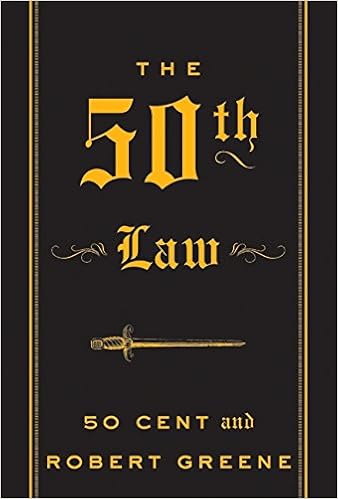
50 Cent and Robert Greene on the decline of America

America was once a country of great realists and pragmatists. This came from the harshness of the environment, the many dangers of frontier life. We had to become keen observers of everything going on around us to survive. In the nineteenth century, such a way of looking at the world led to innumerable inventions, the accumulation of wealth, and the emergence of our country as a great power. But with this growing power, the environment no longer pressed upon us so violently, and our character began to change.

Reality came to be seen as something to avoid. Secretly and slowly we developed a taste for escape - from our problems, from work, from the harshness of life. Our culture began to manufacture endless fantasies for us to consume. And fed on such illusions, we became easier to deceive, since we no longer had a mental barometer for distinguishing fact from fiction.

This is a dynamic that has repeated itself throughout history. Ancient Rome began as a small city state. Its citizens were tough and stoic. They were famous for their pragmatism. But as they moved from being a republic to an empire and their power expanded, everything reversed itself. Their citizens' minds hungered for newer and newer forms of escape. They lost all sense of proportion - petty political battles consumed their attention more than much larger dangers on the outskirts of the empire. The empire fell well before the invasion of the barbarians. It collapsed from the collective softness of its citizens' minds and the turning of their back on reality.

50 Cent and Robert Greene, The 50th Law
Todd Harrision on the stimulus drug

I've also been too cautious in the past few months as I've waited for the other side of the storm to arrive. I'm quite certain the imbalances are cumulative still; the longer we take drugs that mask symptoms rather than medicine that cures the disease, the more profoundly painful the eventual comeuppance will be.

[...]

At the end of the day, we must ask ourselves an honest question: If the capital markets need an IV drip from the government to stay afloat — or if the financial industry remains one FASB 187 accounting change away from technical insolvency — how will that dormant toxicity and ever-expanding largesse manifest as we edge ahead?

~ Todd Harrison,"Conventional Wisdom: Financial Crisis is Over," MarketWatch, December 1, 2010

Andrew Mellon on the 1929 Crash (1930)

There is nothing in the situation to be disturbed about.

~ Secretary of the Treasury Andrew Mellon, February 1930

Bernard Baruch on the 1929 Crash (1929)

The financial storm has definitely passed.

~ Bernard Baruch in a cablegram to Winston Churchill, Nov. 15, 1929.