When you're underperforming and losing more money than the market in a down market, then that's a much more problematic situation. We've performed far worse than I would've predicted we would.
~ Bill Miller, portfolio manager, Legg Mason Value Trust, ""Bottom's been made" in stocks: Legg Mason's Miller," December 3, 2008
(For the year, Miller's flagship Value Trust (LMVTX) fund was down 59.7 percent as of Tuesday, compared to a 41 percent decline in the reinvested returns of the S&P 500 index, according to Lipper Inc., a unit of Thomson Reuters.
Performance over the year-to-date, one-, three- and five-year periods for Value Trust put it at the bottom of the barrel among its peers, Lipper data shows.)
Dec 4, 2008

Dec 3, 2008
Johnny Kramer on the persecution of Plaxico Burress for shooting himself in the leg
To summarize, [Plaxico] Burress is being prosecuted not for damaging another person's body or property, for which that person has filed a complaint, seeking restitution and/or damages; he's being prosecuted for not having a permission slip from the State to carry his own property. And the people who helped him get medical treatment are being threatened for not turning Burress in to the State for not having a permission slip and because the piece of his property, for which he didn't have a permission slip, involved in the victimless incident happened to be a gun; and for not cooperating with the State, once the non-crime came to its attention, in helping it gather evidence to prosecute Burress for the non-crime, and possibly to prosecute them for their involvement in the non-crime too.
The despicable treatment by the State of Burress, and the equally despicable threatening of those who went out of their way to help him with his accidental injury, is another example of the State's hegemonic relationship with the people it "serves," as Butler Shaffer has quipped, "the way a cannibal 'serves' his neighbor."
In a free society, Burress would be responsible for paying his hospital bill and for any damage to the nightclub, after which he could put the whole unpleasant accident behind him and get on with his life.
Instead, the State is going to ruin Burress' career and life, and cause unspeakable anguish for his loved ones, by locking him in a cage inside a socialist hellhole for a "crime" that hurt no one except for himself – and even that, just barely. The only victim in this "crime" is Burress.
~ Johnny Kramer, "The Persecution of Plaxico Burress," LewRockwell.com, December 3, 2008
The despicable treatment by the State of Burress, and the equally despicable threatening of those who went out of their way to help him with his accidental injury, is another example of the State's hegemonic relationship with the people it "serves," as Butler Shaffer has quipped, "the way a cannibal 'serves' his neighbor."
In a free society, Burress would be responsible for paying his hospital bill and for any damage to the nightclub, after which he could put the whole unpleasant accident behind him and get on with his life.
Instead, the State is going to ruin Burress' career and life, and cause unspeakable anguish for his loved ones, by locking him in a cage inside a socialist hellhole for a "crime" that hurt no one except for himself – and even that, just barely. The only victim in this "crime" is Burress.
~ Johnny Kramer, "The Persecution of Plaxico Burress," LewRockwell.com, December 3, 2008
Sheldon Richman on national pride
There certainly are things about America to love. The philosophy expressed in the Declaration of Independence tops the list. The abolitionist movement is another example. Any dedication to liberty and resistance to tyranny are worthy of admiration.
But for that very reason, so much about “America” deserves not love or pride but contempt. From the start, people in power have sought to nullify the ideals that distinguished America from other countries. The record of U.S. interventionist foreign policy, which has required coercion of the American people and others, is a record of shame. American presidents have supported and even installed dictators to advance the U.S. government’s imperial agenda. Their military policy has regarded civilian lives as expendable in the pursuit of an international regime amenable to the American ruling elite’s mercantile interests. Of course, that was justified as spreading freedom and democracy, a charade that fooled far more Americans than foreigners.
Domestically, freedom and free enterprise have taken back seats to other objectives, such as economic stability or national security. Capitalism in practice has meant a system of mercantilist privilege for wealthy interests, with harmful consequences at home and abroad. That is not something to be proud of. It is something to be condemned.
~ Sheldon Richman, "How Can You Love a Country?," Freedom Daily, December 3, 2008
But for that very reason, so much about “America” deserves not love or pride but contempt. From the start, people in power have sought to nullify the ideals that distinguished America from other countries. The record of U.S. interventionist foreign policy, which has required coercion of the American people and others, is a record of shame. American presidents have supported and even installed dictators to advance the U.S. government’s imperial agenda. Their military policy has regarded civilian lives as expendable in the pursuit of an international regime amenable to the American ruling elite’s mercantile interests. Of course, that was justified as spreading freedom and democracy, a charade that fooled far more Americans than foreigners.
Domestically, freedom and free enterprise have taken back seats to other objectives, such as economic stability or national security. Capitalism in practice has meant a system of mercantilist privilege for wealthy interests, with harmful consequences at home and abroad. That is not something to be proud of. It is something to be condemned.
~ Sheldon Richman, "How Can You Love a Country?," Freedom Daily, December 3, 2008
Sheldon Richman on conservatives and nationalism
Worship of the nation and its government is in fact inconsistent with America’s founding ideals. Thomas Jefferson said the appropriate attitude of a free people toward the government is “jealousy” not “confidence,” much less adoration. He spoke of the need to keep it caged. He was right, but if he were around today, conservatives might accuse him of not loving his country. Stripped of its incidental characteristics, government is nothing but physical force. So government, even under the best of circumstances, must always be eyed with suspicion. No Jeffersonian can be comfortable with government activism in foreign affairs. Appeals to security are to be met with high skepticism, for it’s too easy a cover for political intrigue.
That conservatives relish almost any foreign activism shows how un-Jeffersonian they are. They are nationalists and state-worshipers. For them, to love America is to love the government (at least if it is run by one of their own) because it is the government that embodies the nation and the nation is great and deserving of reverence.
~ Sheldon Richman, "How Can You Love a Country?," Freedom Daily, December 3, 2008
That conservatives relish almost any foreign activism shows how un-Jeffersonian they are. They are nationalists and state-worshipers. For them, to love America is to love the government (at least if it is run by one of their own) because it is the government that embodies the nation and the nation is great and deserving of reverence.
~ Sheldon Richman, "How Can You Love a Country?," Freedom Daily, December 3, 2008
Dec 2, 2008
Benjamin Franklin on virtue and freedom
Only a virtuous people are capable of freedom. As nations become corrupt and vicious, they have more need of masters.
~ Benjamin Franklin
~ Benjamin Franklin
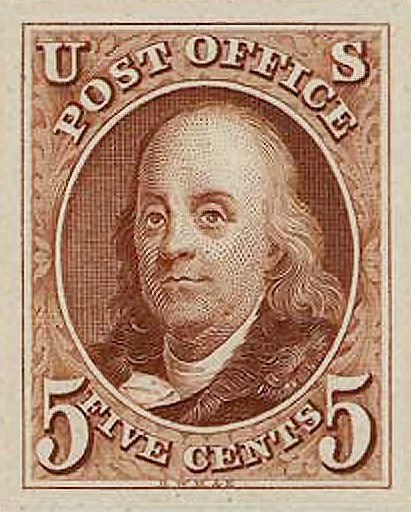 |
| Benjamin Franklin 1847 |
Alexis de Tocqueville on individual rights
It is therefore most especially in the present democratic times that the true friends of the liberty and the greatness of man ought constantly to be on the alert, to prevent the power of government from lightly sacrificing the private rights of individuals to the general execution of its designs. At such times, no citizen is so obscure that it is not very dangerous to allow him to be oppressed; no private rights are so unimportant that they can be surrendered with impunity to the caprices of a government.
~ Alexis de Tocqueville, Democracy in America (1835)
~ Alexis de Tocqueville, Democracy in America (1835)
Ron Paul on capitalism
Capitalism is not a system, but rather the result of free individuals taking economic actions without interference by government. A true capitalist economy is neither planned by bureaucrats nor steered by regulators.
~ Ron Paul

~ Ron Paul
Subscribe to:
Posts (Atom)
