Oct 30, 2026

Kevin Duffy on the AI bubble unwinding

The AI capex appears to be clearly unraveling, yet on CNBC this is met with complacency and buy-the-dip bravado.  This is exactly what the beginning of a bursting bubble looks like: no one wants the party to end.  Meanwhile, other parts of the market - the anti-bubble - are beginning to catch a bid.  Shades of 2000...

~ Kevin Duffy, note to subscribers, The Coffee Can Portfolio, October 26, 2026

The AI bubble is so big it's propping up the US economy (for now) 

Oct 27, 2026

Ben Bernanke on the wealth effect

Higher stock prices will boost consumer wealth and help increase confidence, which can also spur spending.  Increased spending will lead to higher incomes and profits that, in a virtuous circle, will further support economic expansion.

~ Fed chairman Ben Bernanke, Washington Post op-ed, November 4, 2010

Ben Bernanke Loosens Up During His Post-Crisis Years - WSJ 

Ronald Reagan on government spending

Government is like a baby.  An alimentary canal with a big appetite at one end and no sense of responsibility at the other.

~ Ronald Reagan

How to Increase Baby's Appetite - 10 Effective Tips 

Oct 22, 2026

Nassim Taleb on the Problem of Inductive Knowledge

The überphilosopher Bertrand Russell presents a particularly toxic variant of my surprise jolt [like dropping an ice cube down someone's collar] in his illustration of what people in his line of business call the Problem of Induction or Problem of Inductive Knowledge (capitalized for its seriousness) - certainly the mother of all problems in life.  How can we logically go from specific instances to reach general conclusions?  How do we know what we know?  How do we know that what we have observed from given objects and events suffices to enable us to figure out their other properties?  There are traps built into any kind of knowledge gained from observation.

Consider a turkey that is fed every day.  Every single feeding will firm up the bird's belief that it is the general rule of life to be fed every day by friendly members of the human race "looking out for its best interests," as a politician would say.  On the afternoon of the Wednesday before Thanksgiving, something unexpected will happen to the turkey.  It will incur a revision of belief.

[...]

Let us go one step further and consider induction's most worrisome aspect: learning backward.  Consider that the turkey's experience may have, rather than no value, a negative value.  It learned from observation, as we are all advised to do (hey, after all, this is what is believed to be the scientific method).  Its confidence increased as the number of friendly feedings grew, and it felt increasingly safe even though the slaughter was more and more imminent.  Consider that the feeling of safety reached its maximum when the risk was at the highest!  But the problem is even more general than that; it strikes at the nature of empirical knowledge itself.  Something has worked in the past, until - well, it unexpectedly no longer does, and what we learned from the past turns out to be at best irrelevant or false, at worst viciously misleading.

~ Nassim Taleb, "One thousand and one days, or how not to be a sucker," The Black Swan: The impact of the highly improbable, 2007

Nassim Taleb's Black Swan Thanksgiving Turkey - Business Insider

Oct 21, 2026

Steve Eisman: "private equity is going to go through a long period of very troubled times"

This industry really took off post-GFC, like exploded.  Now it its defense, one of the reasons why it exploded is because the banks had to pull back, so somebody had to replace them.  But on the other hand, there's another aspect to this which I think is really hurting them, which is:

You're an institution.  You are not previously invested in private equity.  You were in public markets.  '08 was unbelievably painful because you lost basically 40% of your money like that [snaps fingers].  You don't want that volatility anymore, so what you did was you put money into private equity because at least you could pretend that is wasn't volatile.  Now private equity is just as volatile as the public markets.  It's just that you don't get a price every single day.  So you could sleep at night pretending to yourself, "I got my money with some great professionals in private equity who are going to make me a lot of money and it's not volatile."

And I think that's one of the big reasons why that industry grew so much.  Now no one's getting monetized, rates keep going higher - this business only works on low rates because it's a leverage business.  I think the private equity business is going to go through a long period of very troubled times.

~ Steve Eisman, "Big Short Reunion w/ Danny Moses: Rising Rates, AI & Private Equity, The Real Eisman Playbook, 25:05 mark, October 19, 2026


George Eliot (Mary Ann Evans) on the Problem of Inductive Knowledge

The lapse of time during which a given event has not happened, is, in this logic of habit, constantly alleged as a reason why the event should never happen, even when the lapse of time is precisely the added condition which makes the event imminent.  A man will tell you that he has worked in a mine for forty years unhurt by an accident as a reason why he should apprehend no danger, though the roof is beginning to sink; and it is often observable, that the older a man gets, the more difficult it is to him to retain a believing conception of his own death. 

~ George Eliot (Mary Ann Evans) in Silas Marner (1861), Chapter 5

Silas Marner: The Weaver of Raveloe cover with brick wall, children on ledge, and title by George Eliot.
1861


Oct 13, 2026

Lew Rockwell on the likely ratchet effect after 9/11

Robert Higgs, author of Crisis and Leviathan, has shown how government grows the most during times such as these.  In a usual wartime situation, the government massively expands and then falls back only partially after it is over.  This creates a ratchet effect that guarantees a relentless march of the state.  Every new spending program creates a precedent said to apply in peace time.  How often have we heard calls for a "Marshall Plan" to solve this or that social issue?

~ Lew Rockwell, “What Not To Do,” Mises Daily, September 14, 2001

1987


Oct 12, 2026

Lew Rockwell on the aftermath of 9/11

The US government didn’t stop with wars.  It violated the civil liberties of Americans and established enormous new bureaucracies.  It trampled on the rights of states and localities.  It turned flying into a massive police operation.  It began a series of protectionist campaigns. 

The Bush administration busted the budget and saddled the country with the largest deficit in history.  Congress and the presidency engaged in a transparent logrolling whereby the warmongers gave the welfare statists what they want, in exchange for which the welfare statists gave the warmongers what they want.  The rest of us watched freedom melt.  We did what we could, in our writings and public advocacy, but the government tide was too high to hold back. 

 ~ Lew Rockwell, “Times Change, Principles Don’t,” Mises Wire, September 11, 2003


Lew Rockwell on Iraqi deaths before and after the 2003 invasion

What has been the result of our efforts to bring to Iraq the “benefits” of democracy?  There’s one thing Americans don’t talk about: the lives of Iraqis, or, rather, the deaths of Iraqis.  It’s interesting because we live in an age of extreme multiculturalism and global concern.  We adore international aid workers, go on mission trips abroad, weep for the plight of those suffering from hunger and disease, volunteer in efforts to bring plumbing to Ecuador, mosquito nets to Rwanda, clean water to Malawi, human rights to Togo, and medicine to Bangladesh. 

But when “we” cause the calamity, suddenly there is silence.  There is something odd, suspicious, even disloyal about a person who would harp on the deaths of Iraqis since the US invasion in 2003.  Maybe a person who would weep for Iraq is really a terrorist sympathizer.  After all, most of the deaths resulted from “sectarian violence,” and who can stop crazed Islamic sects from killing each other.  Better each other than us, right? 

Well, it’s about time that we think about the numbers, even though the US military has decided that body counts are not worth their time.  Here is the grisly bottom line: more than one million people have been murdered in Iraq since the US invasion, according to Opinion Research Business, a highly reputable polling firm in the UK.  Yes, other estimates are lower, but you have to be impressed by what they have found.  It seems very credible. 

In Baghdad, where the US presence is most pronounced, nearly half of households report having lost a family member to a killing of some sort.  Half the deaths are from gunshot wounds, one-fifth from car bombs, and one-tenth from aerial bombs.  The total number of dead exceeds the hugely well-publicized Rwandan genocide in 1994. 

Aside from the astonishing detail, what jumps out at me is the number of dead who are neither Sunni nor Shia.  It is also striking how the further geographically you move from US troop activity, the more peaceful the area is.  Americans think they are bringing freedom to Iraq, but the data indicate that we are only bringing suffering and death. 

If you have ever lost a family member, you know that life is never the same again.  It causes every manner of religious, social, and marital trauma.  It’s bad enough to lose a family member to some disease.  But to a cold-blooded killing or a car bomb or an airplane bomb?  That instills a sense of fury and motivation to retribution.

So we are speaking of some 1.2 million people who have been killed in this way, and that does not count the numbers that were killed during the invasion itself for the crime of having attempted to oppose invading foreign troops, or the 500,000 children and old people killed by the US-UN anti-civilian sanctions in the ten previous years. 

The US has unleashed bloodshed in Iraq that is rarely known even in countries we think of as violent and torn by civil strife.  It is amazing to think that this has occurred in what was only recently a liberal and civilized country by the region’s standards.  This was a country that had a problem with immigration, particularly among the well-educated and talented classes.  They went to Iraq because it was the closest Arab proxy to Western-style society that one could find in the area. 

It was the US that turned this country into a killing field.  Why won’t we face this?  Why won’t we take responsibility?  The reason has to do with this mysterious thing called nationalism, which makes an ideological religion of the nation’s wars.  We are god-like liberators.  They are devil-like terrorists.  No amount of data or contrary information seems to make a dent in this irreligious faith.  So it is in every country and in all times.  Here is the intellectual blindness that war generates.

Such blindness is always inexcusable, but perhaps more understandable in a time when information was severely restricted, when technological limits actually prohibited us from knowing the whole truth at the time.  What excuse do we have today?  Our blindness is not technological but ideological.  We are the good guys, right?  Every nation believes that about itself, but freedom is well served by the few who dare to think critically.

~ Lew Rockwell, "The War System," Against the State (2014)

Chart: The Death Toll Of Wars Since 9/11 | Statista 

Lew Rockwell why the neocons started the 2003 Iraq War

Why did the United States get involved? 

One of the key reasons was pressure from a group that has come to exercise more and more influence on American foreign policy — the neocons. Paul Wolfowitz, William Kristol, Robert Kagan, and a number of others were not satisfied with American foreign policy. They disclosed their plans in an important book by Kristol and Lawrence Kaplan, The War Over Iraq: Saddam’s Tyranny and America’s Mission, published in 2003. These neocon authors said that foreign policy must avoid “realism.” The realists favored working within the balance-of-power tradition of European diplomacy. “This in turn led to the realists’ key recommendation: A state must limit itself to the protection of its ‘vital interests,’ lest it disrupt the balance of power.” 

A foreign policy realist will not hesitate to ally, if conditions require it, with an undemocratic state, but this strikes at the heart of Kaplan and Kristol’s ideas.  The key to their approach is that America should embark on a worldwide crusade for democracy.  To do so, they claim, will result in a world at peace.

They contend that the “strategic value of democracy is reflected in a truth of international politics: Democracies rarely, if ever, wage war against one another.”  Given this premise, isn’t the conclusion obvious?  If only we establish democracy everywhere, the millennium is at hand. 

Democracy should be spread worldwide, but one area is the most important for the neocons — the Middle East. Kaplan and Kristol hate all of the political systems of the Arab world, and they propose to replace them: “There is today not a single Arab state that qualifies as a democracy. ...  But promoting democracy in the Middle East is not a matter of national egoism.  It has become a matter of national well-being, even survival.”

In particular, the royalist government of Saudi Arabia must go.  Why not replace it as an American ally with a democratic Iraq?  “Iraq’s experience of liberal democratic rule in turn could increase the pressure already being felt by Teheran’s mullahs. . . .  Iraq could even replace Saudi Arabia as the key American ally and source of oil in the region.” 

America should therefore strike at Saddam Hussein — remember, they wrote before the invasion began.  Incredibly, Kaplan and Kristol predicted that the Iraqis would welcome us with open arms.  Then we could start preventive wars against other dictatorships.

~ Lew Rockwell, "The War System," Against the State (2014)

Against the State: An Anarcho-Capitalist Manifesto - Kindle edition by  Rockwell, Llewellyn. Politics & Social Sciences Kindle eBooks @ Amazon.com.
2014


President George W. Bush on motivation for 9/11 attacks: "They hate our freedoms"

Americans are asking, why do they hate us?  They hate what they see right here in this chamber—a democratically elected government.  Their leaders are self-appointed.  They hate our freedoms—our freedom of religion, our freedom of speech, our freedom to vote and assemble and disagree with each other.

~ President George W. Bush, address to a joint session of Congress, September 20, 2001

2001 George W. Bush speech to a joint session of Congress - Wikipedia 

Steve Eisman on stress cracks at Oracle

Blue Owl [Capital] is developing an AI data center called Project Jupiter for Oracle.  Oracle sent a notice citing force majeure, a legal term, to Blue Owl.  The notice is an attempt to put off payments if the data center gets derailed and fails to come online on time.  Now the debt tied to Project Jupiter was already trading at stress levels at around 90 cents on the dollar.  I'm sure it's under more pressure today, Thursday.  Although this shows Oracle is becoming increasingly nervous about its lack of cash flow, its high debt levels and its weak credit ratings.

~ Steve Eisman, "The Enron-Era Tricks Are Back in AI: How These Companies Are Hiding Their Debt," The Real Eisman Playbook, 3:45 mark, September 25, 2026

Oracle Confirmed as Anchor Tenant for $165B Project Jupiter Data Center Campus in New Mexico | Oliver D. posted on the topic | LinkedIn 

Oct 9, 2026

Peggy Noonan on whether Sam Altman can be trusted

In a less friendly profile for the [New Yorker] published this April, titled “Sam Altman May Control Our Future—Can He Be Trusted?,” Ronan Farrow and Andrew Marantz wrote that Mr. Altman is “often described, either with reverence or with suspicion, as the greatest pitchman of his generation.” Many around him say he lacks extensive expertise in coding or machine learning. Messrs. Farrow and Marantz report “multiple engineers recalled him misusing or confusing basic technical terms.” 

Most of those interviewed shared the critics’ judgment that “Altman has a relentless will to power that, even among industrialists who put their names on spaceships, sets him apart.” A board member who had worked with Mr. Altman told the authors: “He’s unconstrained by truth.” 

Messrs. Farrow and Marantz report that in the fall of 2023, when the OpenAI board famously fired Mr. Altman as CEO, the company’s chief scientist told another board member: “I don’t think Sam is the guy who should have his finger on the button.” Board members believed he had “deceived them about internal safety protocols.” 

Mr. Altman famously fought back and was reinstated. Still, “the colleagues who facilitated his ouster accuse him of a degree of deception that is untenable for any executive and dangerous for a leader of such a transformative technology.”

~ Peggy Noonan, "Sam Altman Is No Oppenheimer: Neither a scholar nor a scientist, someone like him shouldn’t be in charge of the future of humanity," WSJ, October 9, 2026

OpenAI has become one of the most valuable companies in the world. It is reportedly preparing for an initial public offering at a potential valuation of a trillion dollars. The company’s C.E.O., Sam ... 

Oct 6, 2026

U.S. presidents on war and sacrifice

Civil War:

It is rather for us to be here dedicated to the great task remaining before us ― that from these honored dead we take increased devotion to that cause for which they gave the last full measure of devotion ― that we here highly resolve that these dead shall not have died in vain.

~ President Abraham Lincoln, Gettysburg Address, November 19, 1863

World War I: 

There are, it may be, many months of fiery trial and sacrifice ahead of us...  To such a task we can dedicate our lives and our fortunes, everything that we are and everything that we have, with the pride of those who know that the day has come when America is privileged to spend her blood and her might for the principles that gave her birth and happiness and the peace which she has treasured.

~ President Woodrow Wilson, war message to Congress, April 2, 1917

World War II:

“It is not a sacrifice for any man, old or young, to be in the Army or Navy of the United States.  Rather it is a privilege.  It is not a sacrifice for the industrialist or the wage-earner, the farmer or the shopkeeper, the trainman or the doctor, to pay more taxes, to buy more bonds, to forego extra profits, to work longer or harder at the task for which he is best fitted.  Rather it is a privilege.  It is not a sacrifice to do without many things to which we are accustomed if the national defense calls for doing without.” 

~ President Franklin D. Roosevelt, radio address after Pearl Harbor, December 9, 1941

This Day in History: FDR's D-Day Prayer 

Korean War:

To do this will require hard work and sacrifice by all of us. I know all of us are prepared to do whatever is necessary in the cause of peace and freedom.

~ President Harry Truman, radio and television report, September 1, 1950

Cold War:

Let every nation know, whether it wishes us well or ill, that we shall pay any price, bear any burden, meet any hardship, support any friend, oppose any foe to assure the survival and the success of liberty.

~ President John F. Kennedy, inaugural address, January 20, 1961

War on Terror:

Two years ago, I told the Congress and the country that the war on terror would be a lengthy war, a different kind of war fought on many fronts in many places. Iraq is now the central front… This will take time and require sacrifice. Yet we will do what is necessary, we will spend what is necessary to achieve this essential victory in the war on terror, to promote freedom and to make our own nation more secure.

~ President George W. Bush, address to the nation, September 7, 2003

Amid all this violence, I know Americans ask the question: Is the sacrifice worth it?  It is worth it, and it is vital to the future security of our country.

~ President George W. Bush, June 28, 2005, speech at Fort Bragg

President Bush Thanks Military on Independence Day at Fort Bragg, North Carolina 

Iran War:

As we celebrate this progress, we think especially of the 13 American warriors who have laid down their lives in this fight to prevent our children from ever having to face a nuclear Iran… And now we must honor them by completing the mission for which they gave their lives.

~ President Donald Trump, address to the nation, April 1, 202

The Economist: "America's attempts to impose its designs on the Middle East have run their course"

America seems to be stuck in the Middle East.  It has no easy way out of its war with Iran.  Yet the conflict, however it ends, will in fact mark something quite different: the moment when America pulls back from the region—in the sense that it finally relinquishes its hegemony there.  For the first time since the great powers dismembered the Ottoman empire a century ago, the Middle East’s overarching order will no longer be imposed from afar.  Will that herald an orgy of score-settling and violence, or a new beginning? 

After three wars, countless covert operations and seemingly endless rounds of diplomacy, America's attempts to impose its designs have run their course.  Like Britain, France and Russia, America will still be involved.  It will occasionally use military force to pursue its interests, including for counter-terrorism.   But it will abandon its role as architect.

The signs of America's looming retrenchment are unmistakable—even as President Donald Trump uses the annual meeting of the UN to threaten Iran with "annihilation" for the umpteenth time.  Two stand out.  Earlier this month America declined to join its ally Saudi Arabia in striking the Houthis in Yemen, who are endangering shipping in the Red Sea.  Instead it held talks behind the Saudis' backs to spare American vessels from attack.  That may seem like a detail, but when a superpower does deals with an insurgent militia, everyone understands it wants to cut its commitments.

The other sign is the expectation that America will limit its presence in the Middle East.  In peacetime it has 30,000-40,000 troops on 19 bases, eight of which are permanent.  However, the war has exposed how vulnerable they are to drones and cheap missiles.

~ "When America walks away: For decades America has enjoyed hegemony over the Middle East. That is about to end," The Economist, September 24, 2026


Sep 28, 2026

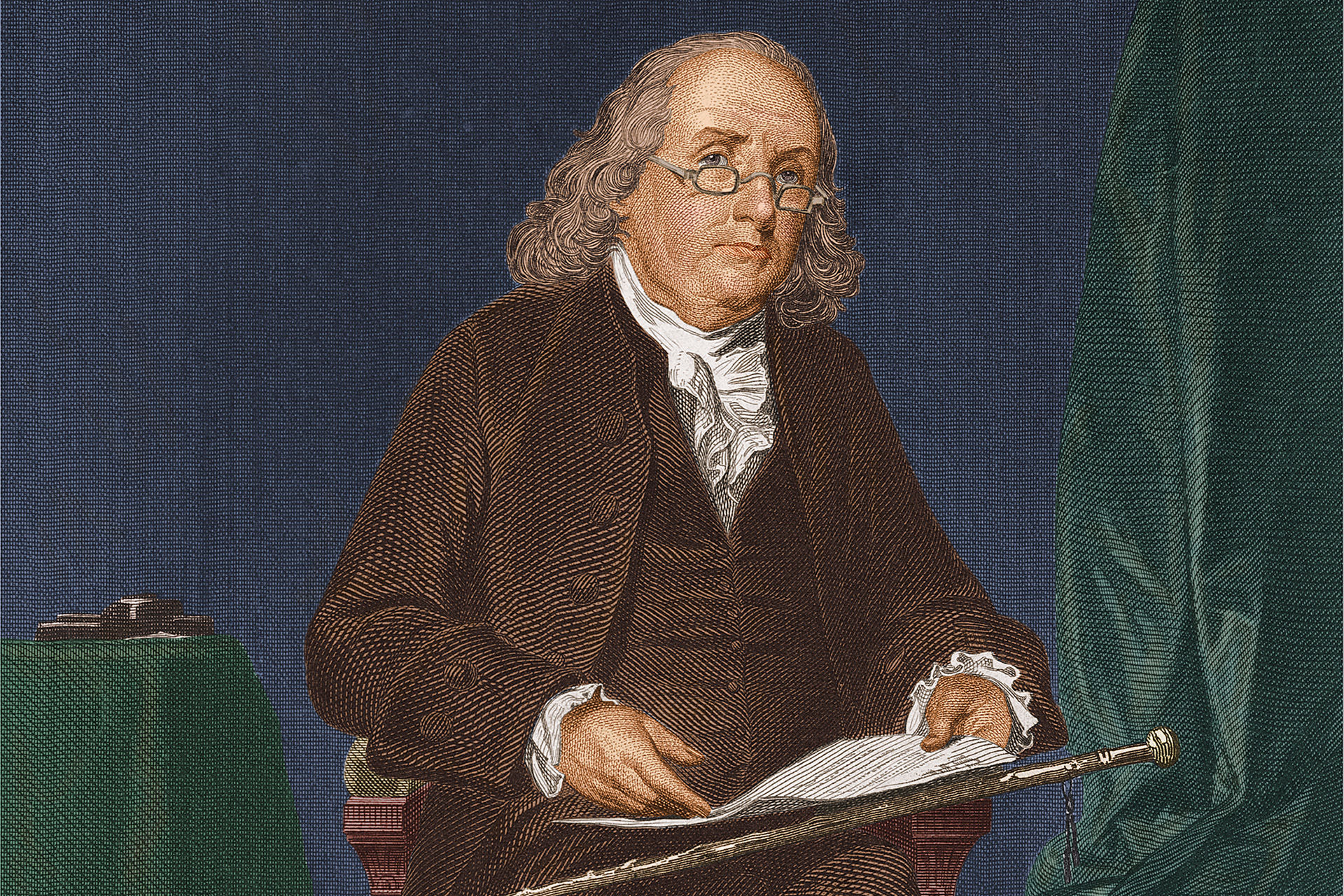
Ben Franklin on investing and compounding

Money makes money.  And the money that money makes, makes money. 

~ Benjamin Franklin

TIME for Kids | Benjamin Franklin | G3-4 

Sep 24, 2026

Lew Rockwell on how libertarians were right about 9/11

A libertarian must never tire of saying “I told you so.” Nor is there a dearth of opportunities to do so. Before 9-11, for example, it was the libertarians who said that 1990s sanctions against Iraq and broader intervention in the Middle East would inspire terrorism. The libertarians also warned that FAA regulations weren’t really making the airlines secure. The libertarians further saw that hundreds of billions spent on “defense” and “intelligence” weren’t really providing either. 

Thus was 9-11, two years ago, a big “I-told-you-so” moment for libertarians. The hijackers, seething in anger at US policy in the Gulf region and the Middle East, exploited a FAA-regulated system with plenty of loopholes for bad guys, to crash into a major financial center, and the US government, despite all its spending and promises, was powerless to stop it. 

And yet, in this upside-down world, the big message after 9-11 was not that the government and its ways had failed us. Quite the opposite. We were told that the government would save us. It was libertarianism that failed. 

Remember? Hillary Clinton, always exploiting the political moment, said of the efforts to cope on that awful day, “we saw government in action.… It was the elected officials who were leading and comforting.” That’s an odd way to describe running for their lives, prior to seizing power from their bureaucratic bunkers.

Vice President Dick Cheney said, “one of the things that’s changed so much since September 11th is the extent to which people do trust the government, big shift, and value it, and have higher expectations for what we can do.” The triumph of hope over experience! 

George Will wrote that “Sept. 11 forcefully reminded Americans that their nation-state…is the source of their security.… Events since Sept. 11 have underscored the limits of libertarianism.” He is speaking here of the same nation-state that stood by and did nothing as 19 guys with box cutters took down the twin towers.

Francis Fukuyama joined in to proclaim the “fall of the libertarians”: 

[9-11] was a reminder to Americans of why government exists, and why it has to tax citizens and spend money to promote collective interests. It was only the government, and not the market or individuals, that could be depended on to send firemen into buildings, or to fight terrorists, or to screen passengers at airports. 

Albert Hunt of the Wall Street Journal typified this genre of commentary. “It’s time to declare a moratorium on government-bashing,” he wrote. 

For a quarter-century, the dominant public culture has suggested government is more a problem than a solution.… But, as during previous catastrophes, America turns to government in crisis.… For the foreseeable future, the federal government is going to invest or spend more, regulate more and exercise more control over our lives… We will hear much less about the glories of privatization in areas like airport security.… Top Bush administration officials will have to dramatically alter their views on regulation.… Moreover, more muscular authority must be given to the new Office of Homeland Security…Tougher security measures at home are unavoidable.… But there is no real debate over expansion in general. Sept. 11 has underscored the centrality of government in our lives. 

So it went, across the political spectrum. The idea was that the events of that day had somehow refuted all our slogans about cutting government, privatization, personal liberty, markets, and peace. Clearly, they said, it was excessive liberty that had led to this disaster. It was cuts in government, and too little foreign belligerence, that brought it on, while the public sector, from the New York firemen to the military bosses who exacted vengeance abroad, saved us.

~ Lew Rockwell, "Times Change, Principles Don't," Mises Wire, September 11, 2003

Lew Rockwell - Wikipedija 

James Bovard on warnings prior to 9/11

I think if the American people had known how [many] warnings, how many signals the U.S. had ahead of time of this potential hijack conspiracy, there would’ve been far less of a reaction to rally around the flag and more criticism of the president.  Commentators thought it was great in the weeks after 9/11 that trust in government skyrocketed…  People need to keep their minds open.  People need to keep skeptical and critical.

~ James Bovard, C-SPAN Booknotes, September 25, 2003 (aired November 2, 2003)

2003


Sep 23, 2026

Nassim Taleb on the need for individual business failure

For the economy to be antifragile and undergo what is called evolution, every single individual business must necessarily be fragile, exposed to breaking - evolution needs organisms (or their genes) to die when supplanted by others, in order to achieve improvement, or to avoid reproduction when they are not as fit as someone else.  Accordingly, the antifragility of the higher level may require the fragility - and sacrifice - of the lower one.

[...]

Now, by disrupting the model, as we will see, with bailouts, governments typically favor a certain class of firms that are large enough to require being saved in order to avoid contagion to other business.  This is the opposite of healthy risk-taking; it is transferring fragility from the unfit to the collective.

~ Nassim Taleb, Antifragile: Things that gain from disorder, pp. 74-75


Steve Eisman on the AI ecosystem

I think about it like a chain.  So you've got Nvidia selling the chips.  Nothing wrong with selling chips.  You've got the hyperscalers buying the chips.  Nothing wrong if somebody buys the chips.  Where it starts to get squishy is something like 70% of AI revenue of the hyperscalers is just from OpenAI and Anthropic, and that's about 25% to 35% of their entire cloud revenue.  So basically, if you follow the entire chain down, the entire ecosystem is dependent on two companies - to say that they lose billions is a euphemism - and one of them I think is in trouble, which is OpenAI.

~ Steve Eisman, "Stock Picking in Difficult Times with George Noble," The Real Eisman Playbook, 16:40 mark, September 21, 2026