Mar 31, 2025

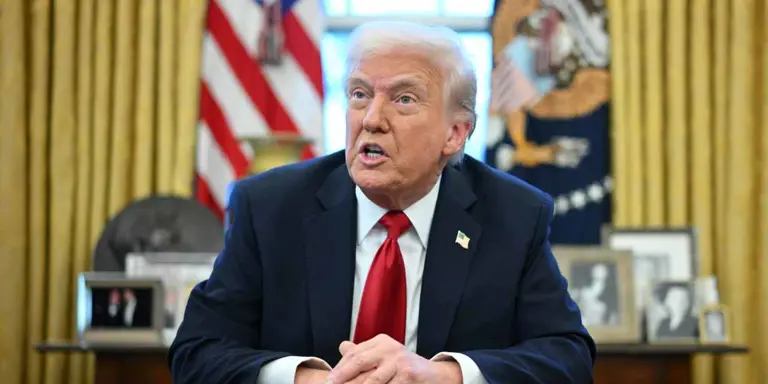
Donald Trump on the impact of tariffs on foreign car prices

I couldn’t care less, because if the prices on foreign cars go up, they’re going to buy American cars.  I hope they raise their prices, because if they do, people are gonna buy American-made cars.  We have plenty.

~ President Donald Trump, interview, NBC News, March 30, 2025

(The new 25% tariffs on foreign-made cars and auto parts are set to take effect on April 3, a day after Trump is scheduled to announce reciprocal tariffs on imports from more of America’s trading partners.  While there were reports last week that the reciprocal tariffs would be targeted and less ornery, the Wall Street Journal reported Sunday that the Trump administration is considering stiff tariffs of up to 20% against almost all U.S. trading partners.)


Mar 30, 2025

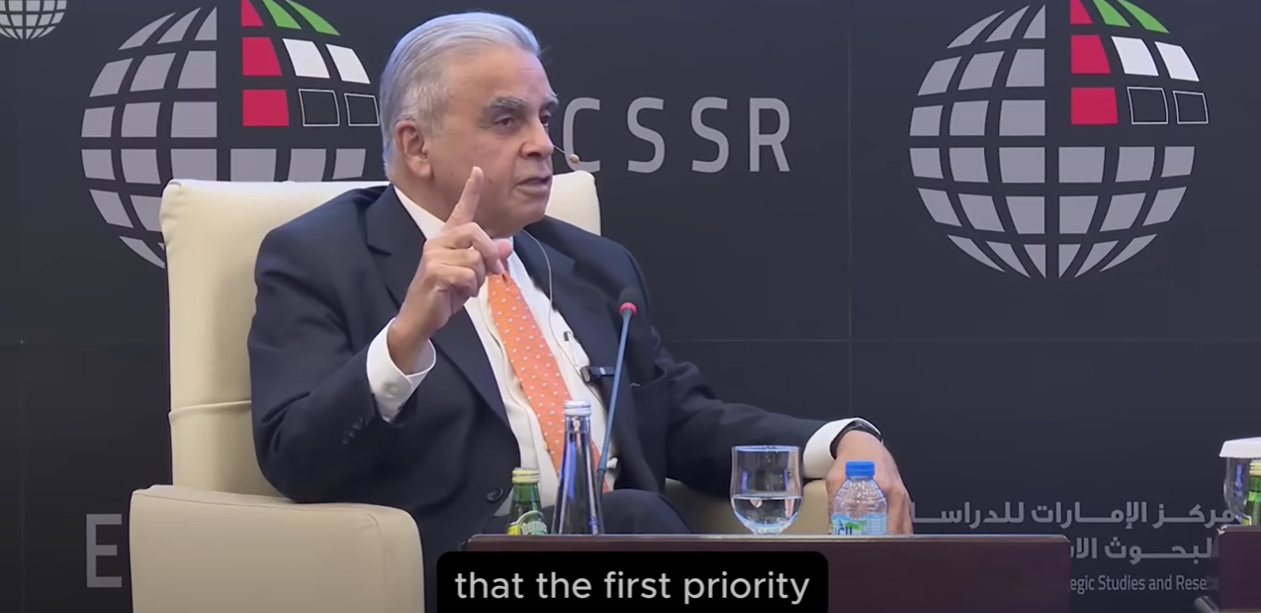
Kishore Mahbubani on how China learned from the collapse of the Soviet Union

I think out of necessity they [the Chinese] have to have a strategy.  And they do have one.  So for example, they ask themselves the obvious question: "Why did the United States successfully defeat the Soviet Union?  Why?"  And I must say, the one country that has studied the collapse of the Soviet Union more carefully than any country in the world is China because China knows that the dream of the United States is to make China the second Soviet Union that collapses.

So how does China prevent a collapse?  First point, the Soviet Union didn't collapse because of external pressures; it collapsed because of internal weaknesses.  And so China realizes, "To make sure I survive, I must have a very strong dynamic economy and strong dynamic society."  [...]

So the Chinese know that the first priority is to make sure your economy is strong and your society is strong, which is why they're massively educating their people and growing their economy, so that they don't become a second Soviet Union.  

The second thing that the Chinese learned from the collapse of the Soviet Union was that the United States succeeded because it managed to get a lot of the neighbors of the Soviet Union to join the containment policy everywhere: Western Europe, Japan, South Korea, both ends of the Soviet Union.  So what did the Chinese do?  The Chinese launched a preemptive strike against a containment policy by making sure that its neighbors depended on the Chinese economy.

I'll give you a simple example.  Singapore is part of Southeast Asia and we are part of an organization called ASEAN and ASEAN started as a pro-American organization.  In fact, when ASEAN was created on August 8th, 1967, both the Soviet Union and China denounced the creation of ASEAN as a pro-American organization.  It's true, ASEAN was pro-American, pro-Western.  And what was stunning was that even though ASEAN was pro-American, pro-Western and we had longer dialogues with the United States, European Union, Australia, Japan, everybody, none of our Western friends proposed a free trade agreement to ASEAN.  The first country to propose a free trade agreement to ASEAN was China in 2001.

And the impact of that China-ASEAN agreement was phenomenal.  Because in the year 2000..., ASEAN's trade with the United States was $135 billion and our trade with China was only $40 billion.  So U.S. trade was more than 3 1/2 times what China's trade with ASEAN was.  But as a result of the free trade agreement, by 2022, even though ASEAN's trade with the United States has gone from $135 billion to $450-500 billion, an increase of over three times, China's trade with ASEAN went from $40 billion to $975 billion dollars, almost $1 trillion dollars, the world's largest trading relationship in 2022!  So there's no way ASEAN can join a containment policy against its largest trading partner, right?  It's crazy.

~ Professor Kishore Mahbubani, "Kishore Mahbubani REVEALS China's Strategy to Counter USA," Rise of China, 6:35 mark, March 25, 2025

(The Association of Southeast Asian Nations was established in 1967 by Singapore, Thailand, Malaysia, Indonesia and the Philippines.  It has since been joined by Brunei, Vietnam, Laos, Myanmar and Cambodia.)


Mar 27, 2025

WSJ on the 1963 chicken tax

Nothing is more American than the pickup truck. One big reason why: the “chicken tax.”

The U.S. has imposed a 25% tariff on imported trucks ever since President Lyndon Johnson hit back at European levies on American poultry in 1963, less than two weeks after the assassination of President John F. Kennedy.

As the Trump administration pursues a barrage of new tariffs, the longstanding tax on pickup trucks bears witness to the power of high duties to reshape global trade, competition and industry over decades, with effects far exceeding their original purpose.

Like today’s tensions, the dispute that became known as the “chicken war” was punctuated by worries about the trade deficit, accusations of protectionism and threats to cut Europe loose from America’s defense umbrella. 


In the 1980s, Subaru imported a small pickup that circumvented a 25% tariff on trucks because it had two backward-facing seats bolted to the open bed.


Stephen Miran: "I think that a lot of folks have got the effects of tariffs wrong"

I think that a lot of folks have got the effects of tariffs wrong...  The number one point is a general point about economics, which is that when you think about any economic policy, a tariff, a tax, anything else, the economists believe that the party that bears the burden or the benefit of that policy is the party that's more inflexible, because if you're flexible, you can change your behavior to avoid the costs...  

U.S. consumers are flexible.  We have options.  We can produce stuff at home, we have a variety of countries we can import stuff, we can substitute into home production, whereas countries that sell to the United States are inflexible.  They've only got the United States to sell to.  There's no alternative.  So they're the ones who will bear the burden of these tariffs, which means that there's going to be very limited pass through into downside economic risk or into higher prices.

~ Stephen Miran, "Trump's Economic Adviser Rejects Short-Term Pain From Tariffs," Bloomberg Podcasts, 0:30 mark, March 24, 2025


Mar 26, 2025

Our World in Data on comparative advantage

To see the difference between comparative and absolute advantage, consider a commercial aviation pilot and a baker.  Suppose the pilot is an excellent chef, and she can bake just as well, or even better than the baker.  In this case, the pilot has an absolute advantage in both tasks.  Yet the baker probably has a comparative advantage in baking, because the opportunity cost of baking is much higher for the pilot.

At the individual level, comparative advantage explains why you might want to delegate tasks to someone else, even if you can do those tasks better and faster than them.  This may sound counterintuitive, but it is not: If you are good at many things, it means that investing time in one task has a high opportunity cost, because you are not doing the other amazing things you could be doing with your time and resources.  So, at least from an efficiency point of view, you should specialize on what you are best at, and delegate the rest. 

The same logic applies to countries.  Broadly speaking, the principle of comparative advantage postulates that all nations can gain from trade if each specializes in producing what they are relatively more efficient at producing, and imports the rest: “do what you do best, import the rest.” 

~ "Trade and Globalization," Our World in Data, 2014

(Look under subtitle, "Theory: What is 'comparative advantage' and why does it matter to understand trade?.")


Mar 25, 2025

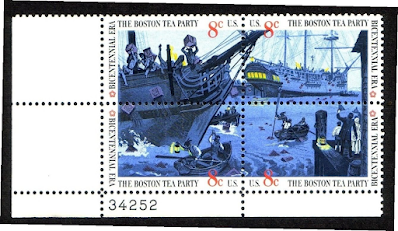
Ryan McMaken on the Boston Tea Party, mercantilism and the American Revolution

On the night of the Boston Tea Party in 1773, American insurrectionists donned disguises and destroyed a shipment of tea imported by the East India Company.  The protestors boarded privately owned ships in the harbor and threw the tea overboard.  Later that night, the activists discovered another tea shipment that had been unloaded at a warehouse.  Not content with having destroyed most of the company's import, they broke into the warehouse and destroyed that tea, too.  The total damages amounted to more than $1.5 million in today's dollars.

This was the work of the Sons of Liberty, a group which would become known for acts of resistance, arson, and violence against tax collectors and other agents of the crown.

But why destroy the tea of a private company if the group's target was the British state?  The answer, of course, is that the East India Company was essentially an adjunct of the regime and private in name only.  This was the era of mercantilism, when colonial governments used protectionism and monopoly powers to enrich the state and its supporters through supposedly private companies.  The Sons of Liberty understood the system well and targeted the "private" East India Company.

The success of the American Revolution struck a heavy blow against the mercantilist system.  But unfortunately, the wound was not mortal.  Many old mercantilist policies persisted under new labels and were promoted with new claims of helping "the people."  The regime of the new republic, too, used the tools of cartelization, monopoly, regulation, and taxation to support certain corporate friends at the expense of the ordinary people.

~ Ryan McMaken, "From the Editor," The Misesian, p. 5, January-February 2025

1973


Mar 23, 2025

Stanley Druckenmiller: "The economy looks very, very strong" (2025)

The economy's very interesting.  We're at a very low unemployment rate, 4% essentially, we've got 3% GDP growth and I've been doing this for 49 years and we're probably going from the most anti business administration to the opposite.  We do a lot talking to CEOs and companies on the ground and I'd say CEOs are somewhere between relieved and giddy.

We're a big believer in animal spirits.  Paul Ryan was on your show last week talking about a 32% increase in business confidence over the last 12 months.  I think that's probably a record in terms of chain.  So the economy looks very, very strong at least for the next six months, which is about as far out as one can see with any degree of confidence.

~ Stanley Druckenmiller, CNBC interview, March 23, 2025