Showing posts with label stamps - history. Show all posts

Jan 25, 2020

Tom DiLorenzo on why the soldiers on both sides fought the Civil War

[A]ll of this editorializing about the war being waged over the “sacredness” of “the flag” is consistent with what Lincoln cultist James McPherson wrote in his book, What They Fought For: 1861-1865. After reading hundreds of letters home and diaries of “Civil War” soldiers on both sides of the conflict, McPherson concluded that the average Yankee soldier believe he was fighting for “the flag,” whereas the average Confederate grunt believed that he was fighting against a tyrannical government that had invaded his country, bombed his town, and threatened to harm his family.

~ Tom DiLorenzo, "The American Religion of Violence," LewRockwell.com, July 7, 2014
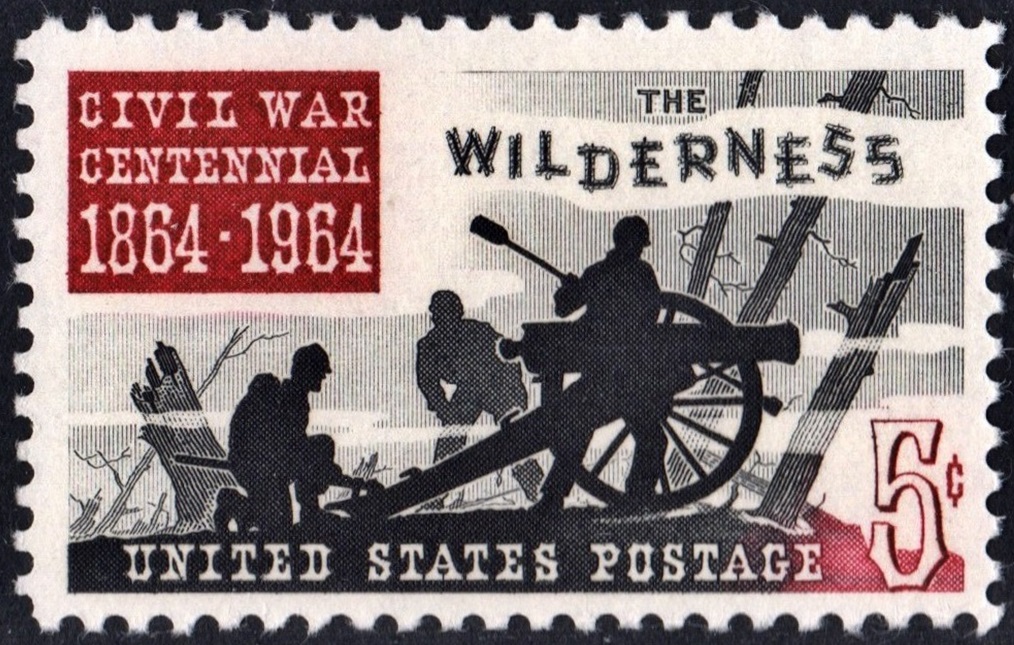
Civil War Centennial - The Wilderness
1864-1964

Jan 20, 2020

Declaration of Independence on the right of secession

To secure these rights  [of Life, Liberty, and the Pursuit of Happiness] Governments are instituted among Men, deriving their just powers from the consent of the governed... Whenever any Form of Government becomes destructive of these ends, it is the Right of the People to alter or to abolish it, and to institute new Government.

~ Declaration of Independence, 1776

Image result for scott 1691-1694 stamp
Declaration of Independence - July 4, 1776
1976

Jan 10, 2020

Kevin Duffy on how libertarians should view the Civil War

To a libertarian, the Civil War is a classic case of both sides being wrong.  At the same time I am critical of the Northern invasion of the South, I can be critical of the institution of slavery. Libertarians naturally oppose conscription, which both sides resorted to in 1862.  Some counties in East Tennessee actually tried to secede from the Confederacy, but were checked by martial law, an action that libertarians would also oppose.  Some of the border states tried to remain neutral in the conflict.  According to Wikipedia, “Maryland's legislature voted overwhelmingly (53–13) to stay in the Union, but also rejected hostilities with its southern neighbors, voting to close Maryland's rail lines to prevent them from being used for war.  Lincoln responded by establishing martial law and unilaterally suspending habeas corpus in Maryland, along with sending in militia units from the North.”  Lincoln’s actions were not only anti-libertarian, they were unconstitutional.

~ Kevin Duffy

Image result for civil war stamps
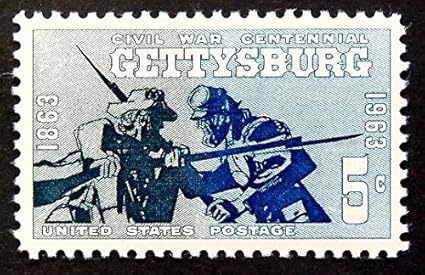
Civil War Centennial - Gettysburg
1863-1963

Jan 5, 2020

Tom DiLorenzo on how the Louisiana Purchase agitated New England secessionists

Jefferson's Louisiana Purchase infuriated the New England Federalists, who wanted America to remain as "ethnically pure" as possible.  Most of them agreed with William Smith Shaw that "the grand cause of all our present difficulties may be traced... to so many hordes of foreigners immigrating to America."  Given such strong feelings about ethnic purity, for New Englanders the Louisiana Purchase, which encouraged the settlement of even more "horders of foreigners" in the United States, was intolerable.  Josiah Quincy was so outraged that he believed the only recourse for the New England states was secession.  The Louisiana Purchase meant that "the bonds of this Union are virtually dissolved; that the States which compose it are free from their moral obligation; and that, as with be the right of all, so it will be the duty of some, to prepare definitely for a separation, amicably if they can, violently if they must."

~ Tom DiLorenzo, The Real Lincoln, p. 96

Image result for louisiana purchase stamps
Map of Louisiana Purchase
1904

Jan 3, 2020

Thomas Jefferson on self-government

May [our Declaration of Independence] be to the world, what I believe it will be (to some parts sooner, to others later, but finally to all), the signal of arousing men to burst the chains under which monkish ignorance and superstition had persuaded them to bind themselves, and to assume the blessings and security of self-government... All eyes are opened, or opening, to the rights of man.

~ Thomas Jefferson

Signing of Declaration
1869


Jan 2, 2020

Michael Fellman on the post-Civil War "final solution to the Indian problem"

Related image
Sherman, Grant and Sheridan
1937
[T]he great triumvirate of the Union Civil War effort [Grant, Sherman and Sheridan] formulated and enacted military Indian policy until reaching, by the 1880s, what Sherman sometimes referred to as "the final solution of the Indian problem," which he defined as killing hostile Indians and segregating their pauperized survivors in remote places . . . . These men applied their shared ruthlessness, born of their Civil War experiences, against a people all three despised, in the name of Civilization and Progress.

~ Michael Fellman, Citizen Sherman (1995)

(As quoted by Tom DiLorenzo, "How Lincoln's Army 'Liberated' the Indians," LewRockwell.com, February 12, 2003


Dec 31, 2019

Charles Lindbergh on risk taking

Life without risks is not worth taking.

~ Charles Lindbergh

Image result for scott c10 stamp
Lindbergh - "Spirit of St. Louis"
May 26, 1928

May 22, 2019

Philip Duffy clears up the difference between democracy and a constitutional republic

The United States is not a democracy in spite of the nonsense that students learn in school.  It is a federation of sovereign state republics with limited, enumerated powers defined in a constitution.  That doesn't fit on a bumper sticker, whereas democracy does, which probably reflects its appeal.  The framers of the Constitution had a different perspective, choosing to not mention democracy once in the text of the Constitution.  It is not that they didn't think about the term.  Democracy is actually mentioned five times in The Federalist, all in a negative context.  The founders feared democracy as much as they feared monarchy.

~ Philip Duffy, March 22, 2019

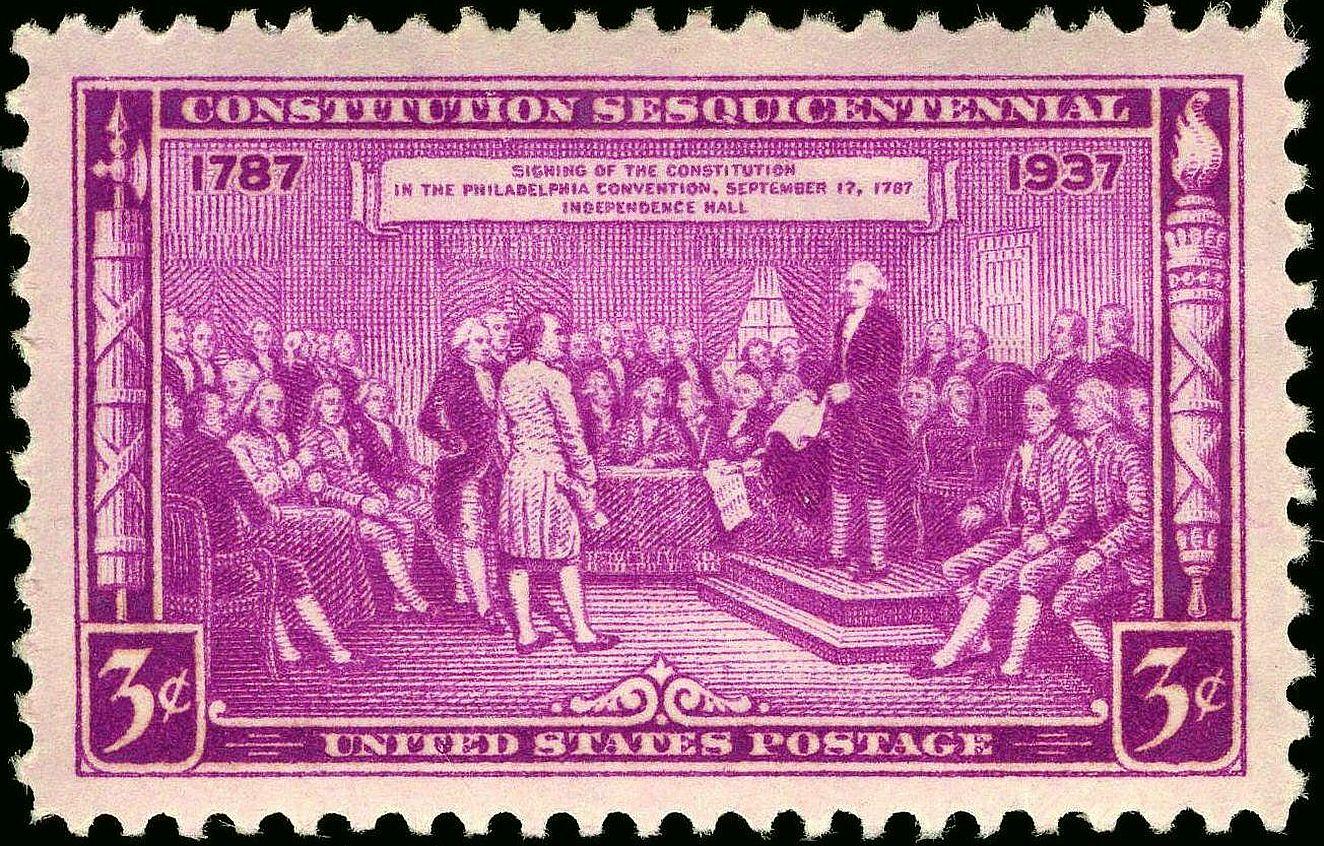
Constitution Sesquicentennial
1787-1937

Jul 19, 2010

The London Times on the Civil War

Democracy broke down, not when the Union ceased to be agreeable to all its constituent States, but when it was upheld, like any other Empire, by force of arms.

~ The London Times, 1865

Civil War Centennial - Appomattox
1865-1965

Feb 9, 2009

The Constitution on states rights and republican government

The United States shall guarantee to every State in this Union a Republican Form of Government.

~ U.S. Constitution, Article IV, Section IV

Related image
The States Ratify the Constitution
1788-1938

Nov 25, 2008

Alexander Hamilton on Fiat Money

To emit an unfunded paper as the sign of value ought not to continue a formal part of the constitution, nor ever hereafter to be employed; being, in its nature, repugnant with abuses and libel to be made the engine of imposition and fraud.

~ Alexander Hamilton, as quoted in G. Edward Griffin, The Creature from Jekyll Island, page 316

Related image
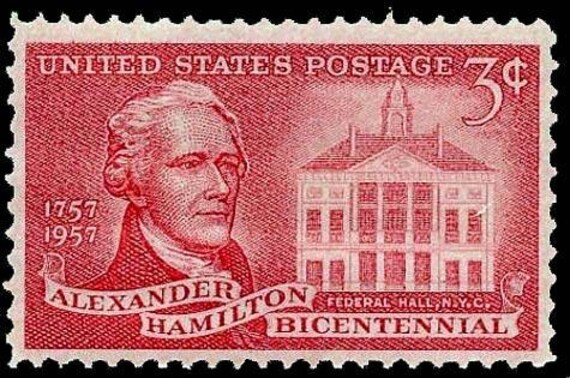
Alexander Hamilton Bicentennial
1757-1957

Sep 3, 2008

Alexis de Tocqueville on the American work ethic

In the United States, as soon as a man has acquired some education and pecuniary resources, he either endeavors to get rich by commerce or industry, or he buys land in the bush and turns pioneer. All that he asks of the state is, not to be disturbed in his toil, and to be secure of his earnings.

~ Alexis de Tocqueville, Democracy in America (1835)

Image result for trans-mississippi stamps
Hardships of Emigration
1898
 

Aug 29, 2008

Thomas DiLorenzo on slavery in New York

Last Friday I toured the New York Historical Society's exhibit on "Slavery in New York," accompanied by Butler Shaffer and his daughter Bretigne. We were quite surprised at the high ratio of historical truth to political correctness. I purchased the book on the subject published by the Society, which says this in the introductory chapter:
"For nearly three hundred years, slavery was an intimate part of the lives of all New Yorkers, black and white, insinuating itself into every nook and cranny of New York history. For portions of the seventeenth and eighteenth centuries, New York City housed the largest urban slave population in mainland North America, with more slaves than any other city on the continent. During those years, slaves composed more than one quarter of the labor force in the city and perhaps as much as one half of the workers in many of its outlying districts. Slavery died with glacial slowness; slaves could be found in New York into the fifth decade of the nineteenth century."
There were still slaves in New York in the 1850s and, according to the Society's publication, New Jersey did not end slavery until 1865.

Bet you didn't learn that in school.

~ Thomas DiLorenzo, "The Myth of the Morally Superior Yankee," LewRockwell.com Blog, January 8, 2006

Image result for 13th amendment stamp
13th Amendment - 75th Anniversary
1865-1940

Jul 7, 2008

John Maynard Keynes on bankers

A sound banker, alas, is not one who foresees danger and avoids it, but one who, when he's ruined, is ruined in a conventional and orthodox way along with his fellows, so that no one can really blame him.

~ John Maynard Keynes, 1931

Image result for american bankers association stamps
American Bankers Association
1875-1950

Mar 8, 2008

Robert Higgs on the congressional investigation into alleged steroid use of Roger Clemens

Where in the Constitution does it say that Congress may interfere in the internal affairs of a private baseball league or its players? How exactly have these vainglorious congressional publicity hounds come by the idea that their jurisdiction has no limits?

~ Robert Higgs, “There's a Time and a Place for a BeanballLewRockwell.com, March 3, 2008

Related image
Centennial of Baseball
1839-1939

Feb 17, 2008

Warren Buffett on gold

It gets dug out of the ground in Africa, or someplace. Then we melt it down, dig another hole, bury it again and pay people to stand around guarding it. It has no utility. Anyone watching from Mars would be scratching their head.

~ Warren Buffett, speech given at Harvard, 1998

Image result for gold discovery stamp
California Gold Centennial
1848-1948

Feb 13, 2008

Walter Lippmann on war propaganda

We must remember that in time of war what is said on the enemy’s side of the front is always propaganda and what is said on our side of the front is truth and righteousness, the cause of humanity and a crusade for peace. Is it necessary for us the height of our power to stoop to such self-deceiving nonsense?

~ Walter Lippmann, former advisor to Woodrow Wilson

Related image
World War I Victory
1919

Nov 23, 2007

Governor William Bradford on how common ownership of property failed at Plymouth Plantation

At last after much debate of things, the governor gave way that they should set corn everyman for his own particular... That had very good success for it made all hands very industrious, so much [more] corn was planted than otherwise would have been ... The experience that has had in this common course and condition, tried sundrie years, and that amongst Godly and sober men, may well evince the Vanities of the conceit of Plato's and other ancients, applauded by some of later times; that the taking away of propertie, and bringing into commone wealth, would make them happy and flourishing, as if they were wiser than God.

~ Governor William Bradford, Of Plimouth Plantation: 1620-1647 (1650)

Image result for pilgrim stamps
Pilgrim Tercentenary
Signing of the Compact
1620-1920

Nov 20, 2007

Dr. Lee DeForest on space exploration

Man will never reach the moon regardless of all future scientific advances.

~ Dr. Lee DeForest, "Father of Radio & Grandfather of Television"

Image result for first man on the moon stamp
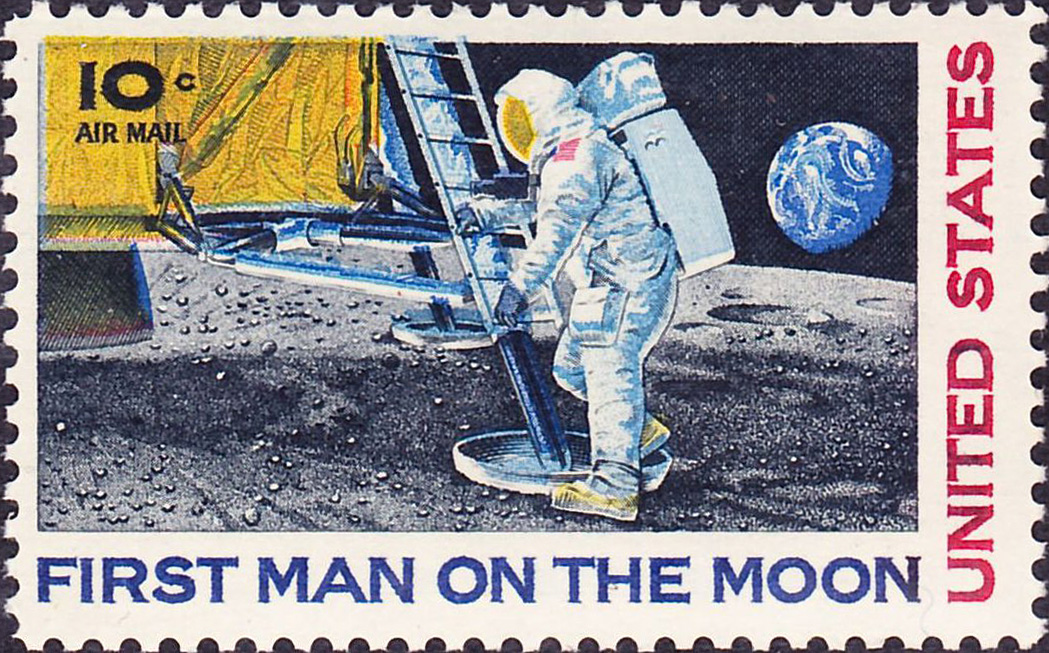
Moon Landing
1969

Nov 3, 2007

Tom DiLorenzo on the "robber barons"

The late nineteenth and early twentieth centuries are often referred to as the time of the "robber barons."

It is a staple of history books to attach this derogatory phrase to such figures as John D. Rockefeller, Cornelius Vanderbilt, and the great nineteenth-century railroad operators — Grenville Dodge, Leland Stanford, Henry Villard, James J. Hill, and others. To most historians writing on this period, these entrepreneurs committed thinly veiled acts of larceny to enrich themselves at the expense of their customers. Once again we see the image of the greedy, exploitative capitalist, but in many cases this is a distortion of the truth.

As common as it is to speak of "robber barons," most who use that term are confused about the role of capitalism in the American economy and fail to make an important distinction — the distinction between what might be called a market entrepreneur and a political entrepreneur. A pure market entrepreneur, or capitalist, succeeds financially by selling a newer, better, or less expensive product on the free market without any government subsidies, direct or indirect. The key to his success as a capitalist is his ability to please the consumer, for in a capitalist society the consumer ultimately calls the economic shots. By contrast, a political entrepreneur succeeds primarily by influencing government to subsidize his business or industry, or to enact legislation or regulation that harms his competitors.

~ Thomas J. DiLorenzo, "The Truth About the 'Robber Barons'," Mises.org, September 23, 2006, excerpted from How Capitalism Saved America, chapter 7

Troops Guarding Train
1898