~ Sheldon Richman, "'Ancient History': U.S. Conduct in the Middle East Since World War II and the Folly of Intervention," Cato Institute, August 16, 1991
Showing posts with label Law of Unintended Consequences. Show all posts
Showing posts with label Law of Unintended Consequences. Show all posts
Dec 17, 2023
Sheldon Richman on the U.S. subsidizing Israel's behavior
The primary source of unintended consequences in foreign policy is the irresponsibility that attends the subsidization of client states. Elementary economics would teach that a subsidized agent will probably behave differently than one who must bear all the costs of his actions. Throughout the postwar period, Israel has been reasonably sure that it will be
kept militarily superior to its Arab opponents, and that its treasury will be replenished, almost regardless of what it does. Even its "miscalculation" in the 1956 Suez intervention did not bring about a cutoff of U.S. aid. Such an arrangement makes irresponsibility inevitable. Conversely, the Palestinian conclusion that no compromise can possibly change the official U.S. attitude also is conducive to irresponsibility--and indiscriminate violence. A policy that helps to create, repress, and demoralize hundreds of thousands of refugees and second-class citizens will inevitably breed demagogues and their attendant horrors. Thus, U.S. policy in the Middle East has been complicitous in fostering recklessness and atrocities on all sides.

Sep 10, 2021
Thomas Sowell on good intentions
Nothing is easier than to have good intentions but, without an understanding of how an economy works, good intentions can lead to disastrous consequences for a whole nation.

~ Thomas Sowell, Basic Economics
Mar 25, 2021
Henry Hazlitt on economics
The whole of economics can be reduced to a single lesson, and that lesson can be reduced to a single sentence. The art of economics consists in looking not merely at the immediate but at the longer effects of any act or policy; it consists in tracing the consequences of that policy not merely for one group but for all groups.

~ Henry Hazlitt, Economics in One Lesson, Chapter 1: "The Lesson," p. 17
May 28, 2020
Kevin Duffy on the two predominant ideologies
There are essentially two views of the world: order and chaos. Some see a natural order: the food chain, pecking orders, innate behaviors, complex adaptive systems, natural selection. Others see chaos requiring direction by a group of experts.
At least when it comes to economic activity, the overwhelming majority adopt the chaos view. They fail to grasp Adam Smith’s “invisible hand” of mutually beneficial trade, Friedrich Hayek’s “pretense of knowledge” with regard to central planners, or Frederic Bastiat’s “seen and unseen costs” concerning the unintended consequences of economic policies.
~ Kevin Duffy, "The Expert Model," LewRockwell.com, May 27, 2020
(Excerpt from the May 27 issue of The Coffee Can Portfolio, p. 2)
Mar 31, 2020
Jim Grant on unintended consequences of ZIRP and complacency about inflation
So one of the other unintended consequences of this 10 years of suppressed interest rates and predictable Financial interventions by the Fed, well they’ve given us near record-high equity valuations — they did about 15 minutes ago until it ended or at least paused. We don’t know. They gave us, perhaps, more corporate debt for unit of corporate earning power than ever before, and much of this debt is very low quality. They have given us unicorns. They have given us zombies. They have given us all manner of things, some pleasant to be sure but many corrosive.
What they have not given us is any economy wide or political community wide new revelation into the dangers of the manipulation of the most sensitive prices and capital, namely interest rates. That’s my hobby horse but I think it’s a very dangerous road. We haven’t even talked about inflation. Nobody talks about inflation, right?
Imagine we were even in this conversation, like 35 or 40 years ago, when inflation was still at thing, and I said, Albert, what do you suppose the consequences might be of an immense infusion of new bank credit and to the fiscal program that is likely to reach 10% of GDP? How will you guess that would affect the price level?
And you would think to yourself, that idiot. And you would say, because you’re polite, Jim, I suspect that might lead to above higher inflation. But today no one thinks that. You can look at the futures curve and various interest rate derivatives that reflect current thinking on the likely course of rates and inflation and they’re flat.
Nobody is anticipating any adverse inflationary outcome from this, which I find is a remarkable commentary on the complacent thinking. You’re not thinking of complacency with, on most days, VIX readings at 75 and 80. But with respect to inflation and its prospects, there is certainly complacency rampant[ly] so.
~ Jim Grant, "Nobody Knows Anything," interview with Albert Lu of Sprott Media, March 24, 2020
Jan 1, 2020
William H. Taft on the limits of legislation
The world is not going to be saved by legislation.
~ William H. Taft, 27th president
~ William H. Taft, 27th president
 |
| William H. Taft 1909-1913 |
Jun 5, 2019
Kevin Duffy on Trump's targeting of Huawei in the trade war with China
It's interesting how the Law of Unintended Consequences plays out. Firms like Huawei will probably never allow themselves to be as dependent on U.S. semiconductor suppliers as they have in the past.
Trump's trade war is also driving Chinese consumers away from iPhones... benefiting Huawei. The damage Trump has done will never be undone, even if a "deal" is signed.
~ Kevin Duffy
~ Kevin Duffy
Apr 11, 2017
The Economist magazine on regulation
The collateral and permanent effects on legislation... are so very complicated, and very often much more important than the direct and temporary effects, that to make good laws seems a work fit rather for God than man.
~ The Economist, 1846
~ The Economist, 1846
Sep 17, 2016
Albert Jay Nock on the Law of Unintended Consequences
Any contravention of natural law, any tampering with the natural order
of things, must have its consequences, and the only recourse for
escaping them is such as entails worse consequences.
~ Albert Jay Nock
~ Albert Jay Nock
Jun 28, 2009
Kevin Duffy on legislating morality
It is impossible to legislate morality. In fact, any attempt requires an immoral act: coercion, thus achieving the exact opposite.
~ Kevin Duffy
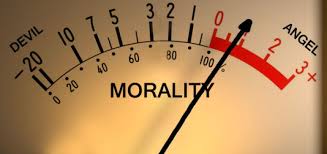
~ Kevin Duffy
Feb 29, 2008
Ludwig von Mises on alcohol and drug prohibition
It is an established fact that alcoholism, cocainism, and morphinism are deadly enemies of life, of health, and of the capacity for work and enjoyment; and a utilitarian must therefore consider them as vices. But this is far from demonstrating that the authorities must interpose to suppress these vices by commercial prohibitions, nor is it by any means evident that such intervention on the part of the government is really capable of suppressing them or that, even if this end could be attained, it might not therewith open up a Pandora's box of other dangers, no less mischievous than alcoholism and morphinism.
~ Ludwig von Mises, Liberalism (1927)

~ Ludwig von Mises, Liberalism (1927)
Jan 12, 2008
Lao Tzu and laws and security
The more laws and order are made prominent, the more thieves and robbers there will be.
~ Lao Tzu, 6th century BC poet and father of Taoism
~ Lao Tzu, 6th century BC poet and father of Taoism
Subscribe to:
Posts (Atom)
