Showing posts with label stamps - Series of 1902-1903. Show all posts

Aug 29, 2022

Sheldon Richman on the early days of American imperialism

Unfortunately, even many critics of the American empire think it is relatively new.  Some do understand that its origins preceded the 20th century and that the empire did not begin with the Cold War or U.S. entry into the world wars.  They would likely see the Spanish-American War in 1898 as the beginning, when America acquired territory as far away as the Philippines.  But I would look even further back than that.  How far back?  The second half of the 18th century.  The earliest days of American empire-building shed light on how America's earliest rulers perceived their constitutional powers and hence on the Constitution itself...

Even the government's schools teach, or at least taught during my 12-year sentence, that America's founders had - let us say - an expansive vision for the country they were establishing.  The historian William Appleman Williams's extended essay, Empire as a Way of Life (1980), provides many details.  Clearly, these men had empire on their minds.

Before he became an evangelical for independence from Great Britain, Benjamin Franklin proposed a partnership between Great Britain and the American colonists to help spread enlightened empire throughout the Americas.  His proposal was rejected as impractical, so he embraced independence from Britain - without giving up the dream of empire in the New World.  George Washington would have shared the vision; he spoke of the "rising American empire" and described himself as living in an "infant empire."

Thomas Jefferson - "the most expansion-minded president in American history," (writes Gordon S. Wood in Empire of Liberty: A History of the Early Republic: 1789-1815 - set out a vision of an "Empire of Liberty," later revised as an "Empire for Libery," and left the presidency believing that "no constitution was ever before as well calculated as ours for extensive empire and self-government."  Before leaving office, of course, he acquired the gigantic Louisiana territory from France (828,000 square miles) without constitutional authority, a violation he was fully aware of.

[...]

Indeed, in the eyes of the founders, the American Revolution was largely a war between a mature, exhausted empire and a nascent one.  Many - but assuredly not all - Americans of the time would have cheerfully agreed...

The Indian Wars were among the first steps in empire building.  The unspeakable brutality and duplicity - the acts of ethnic cleansing and genocide, as we say today - were crimes, not merely against individuals, but also against whole societies and nations.  "Imperialism" was not yet a word in use, but that's what this was, as were the designs and moves on Canada (one of the objects of James Madison's War of 1812), Mexico, Cuba, Florida, the Mississippi and New Orleans, Louisiana, the Northwest, and the Pacific coast (the gateway to Asia).  The wishes of the inhabitants - who were "as yet incapable of self-government as children," as Jefferson said of Louisiana's residents - didn't count.  (Lincoln's war is thus understood as an exercise in empire preservation.)

~ Sheldon Richman, America's Counter-Revolution, "Empire on Their Minds," pp. 101-102


Mar 20, 2021

Daniel Webster on fiat money

Of all the contrivances for cheating the laboring classes of mankind, none has been more effective than that which deludes them with paper money.

~ Daniel Webster, as quoted by Andrew Dickson White, first president of Cornell University, in Fiat Money Inflation in France, p. 69

Daniel Webster,
1902-1903


Jan 2, 2020

John Marshall on federalism

No political dreamer was ever wild enough to think of breaking down the lines which separate the States and compounding the American people into one common mass.

~ John Marshall, 4th U.S. Chief Justice from 1801-1835

John Marshall
1902-1903

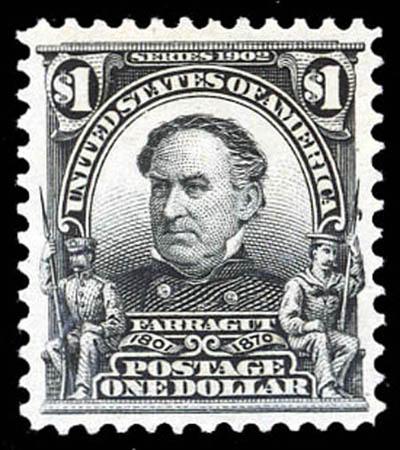
David Farragut on conquest

Conquer or be conquered.

~ David Farragut, U.S. Navy admiral

Image result for scott #313 stamp
David Farragut
1902-1903

Jan 1, 2020

James Garfield on money supply and the business cycle

Whoever controls the volume of money in our country is absolute master of all industry and commerce...when you realize that the entire system is very easily controlled, one way or another, by a few powerful men at the top, you will not have to be told how periods of inflation and depression originate.

~ James Garfield

Image result for scott #305 stamp
James Garfield
1902-1903

Dec 31, 2019

Tom DiLorenzo on Henry Clay: "corrupt statist"

[Henry] Clay was a corrupt statist who spent his political career promoting mercantilism, protectionism, inflationary finance through central banking, and military adventurism in the quest for empire. Upon entering Congress in 1811 he helped persuade the government to attempt to conquer Canada, which it tried to do three times. He waged a thirty-year battle with James Madison, John C. Calhoun, Andrew Jackson, and other defenders of the Constitution over federally funded corporate welfare.

~ Tom DiLorenzo, "Henry Clay: National Socialist," The Free Market, March 1998

Related image
Henry Clay
1902-1903

Sep 30, 2018

Ben Franklin on thrift

Your net worth is determined by what remains after your bad habits are subtracted from your good habits.

~ Ben Franklin

Image result for series of 1902-03 stamps jackson
Benjamin Franklin
1902-1903

May 29, 2017

Ulysses S. Grant on the Civil War and slavery

If I thought this war was to abolish slavery, I would resign my commission and offer my sword to the other side.

~ Ulysses S. Grant, Union general

(The veracity of this quote is in question.)

Outstanding Genuine Scott #303 F-Vf Mint OG NH 1902-03 Brown 4¢ Ulysses Grant
Ulysses S. Grant
1902-1903

Apr 10, 2012

Thomas Jefferson on the tyranny of taxes

To compel a man to furnish contributions of money for the propagation of opinions which he disbelieves and abhors, is sinful and tyrannical.

~ Thomas Jefferson

Thomas Jefferson
1902-1903


Oct 29, 2009

Andrew Jackson on central banking

[The Bank of the United States (precursor to the Fed)] is a monster, a hydra-headed monster... equipped with horns, hoofs, and a tail so dangerous that it impaired the morals of our people, corrupted our statesmen, and threatened our liberty. It bought up members of Congress by the Dozen... subverted the electoral process, and sought to destroy our republican institutions.

~ Andrew Jackson, March 1829

Related image
Andrew Jackson
1902-1903

Jul 2, 2008

James Madison on the right to bear arms

Americans have the right and advantage of being armed — unlike the citizens of other countries whose governments are afraid to trust the people with arms.

— James Madison, Federalist No. 46 (January 19, 1788)

James Madison
1902-1903